What is the nuclear model of atoms?
There is a small nucleus surrounded by electrons arranged into energy levels
What is the problem with Rutherford’s model of the nuclear atom?
- Since electrons are charged, they should emit electromagnetic radiation all the time
- Their speed should decrease due to th loss of energy and the electron should move closer and closer to the nucleus in a spiral path until the atom collapses
What does the Bohr model state?
Electrons in an atom can only have certain specific potential energies (electrons energy is quantized)
What is the relationship between the speed of light, the frequency, and the wavelength of emitted electromagnetic radiation (light), when electrons fall from their excited state?

What provides evidence for atomic energy levels?
Emission and absorption spectra
Define nuclide
Atoms with the same nucleon number as well as proton number (isotopes)
Distinguish between nuclide and isotope
When referring to the nuclei of different atoms → nuclide
When referring to the whole atom → isotope
Define nucleon
The total number of protons and neutrons together in the nucleus = mass number A
Describe the interactions in a nucleus
- Coulomb (repulsive) interactions between protons
- Strong, short-range nuclear interaction between nucleons pulling them together
List the types of radiation
- Alpha radiation
- Beta radiation
- Gamma radiation
Describe alpha radiation
- Consists of a helium-4 nuclei
- Nuclei have a relative mass of four and a relative charge of +2
- Emission results in the loss of two protons and two neutrons from a nucleus
- The atomic number decreases by two and a new element is formed
Describe beta radiation
- Consists of streams of high-velocity electrons moving at velocities close to the speed of light
- An electron is emitted from an unstable nucleus as the result of a neutron having converted into a proton
- The no. of nucleons stays the same but no. of protons increases by one, a new element is formed
- In addition to the beta particle, an additional antineutrino is released:
This is called beta-negative (B-) decay

Describe gamma radiation
- High-energy electromagnetic radiation released from the nucleus
- Shorter wavelengths and higher energies than X-rays
- Long range and high penetrating power
- Often a by-product of beta or alpha
- Occurs when excited nuclei return to their ground state
Describe the properties of alpha, beta, and gamma radiation
- Since alpha and beta are particles, they can be deflected by magnetic and electric fields
- Alpha particles have greater mass:charge ratio hence undergo less deflection
- Gamma radiation is uncharged and is not deflected
Describe the ionising properties of alpha, beta, and gamma radiation
Alpha particles are large and massive so they are efficient ionisers. They collide with atoms and cause them to lose one or more electrons. Ion pairs are created. Since they lose their energy rapidly their penetrating power is low.
Beta particles have much more energy but smaller charge and mass so are less efficient ionisers but can penetrate better.
Gamma rays hardly ionise but penetrate matter very well.
Outline the biological effects of ionising radiation
- Damages tissues of the body, more specifically cells
- Can cause cells to stop functioning (cell division) and may cause death
- Also long-term delayed effects such as sterility and cancers, and inherited mutations (DNA)
- Short term effects include radiation burns (beta and gamma), blindness, radiation sickness (nausea, fever, hair loss)
- Long-term effects of exposure to low doses remains unknown
Explain why some nuclei are stable while others are unstable
There is a balance between electric force and nuclear force in the nucleus that needs to be maintained. Neutrons help to achieve this balance, since they increase the nucleus’ size.
The main factor that determines stability is the ratio of protons to neutrons. For light nuclei to be stable N = Z. For heavy nuclei to be stable N > Z. Heavy nuclei (Z > 80) are likely to alpha decay to reach more stable status.
What is radioactive decay?
A random and spontaneous process, of which rate decreases exponentially with time
Define radioactive half-life
The time taken for half the atoms in any given sample of a radioactive substance to decay and release their radiation.
What is nuclear transmutation?
The transforming (changing) of one element/isotope into another element/isotope
Why are artificial transmutations carried out?
Many artificial transmutations are carried out to prepare nuclides in medicine.
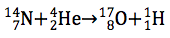
Describe and give an example of an artificial (induced) transmutation
The nucleus of an atom is bombarded by neutrons, protons, deuterons, or alpha particles to change one element into another.
The kinetic energy needs to be high enough to overcome the Coulomb repulsion.
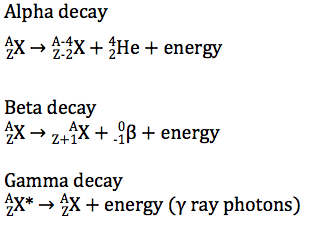
Construct nuclear equations for alpha, beta, and gamma radiation
Define unified atomic mass unit
One twelfth of the mass of a carbon-12 atom
u = 1.661 X 10⁻²⁷ kg



-
Topic 1 - Physics and physical measurement20
-
Topic 2 - Mechanics59
-
Topic 3 - Thermal physics27
-
Topic 4 - Oscillations and waves41
-
Topic 5 - Electric currents28
-
Topic 6 - Fields and forces25
-
Topic 7 - Atomic and nuclear physics33
-
Topic 8 - Energy, power and climate change76
-
Topic 9 - Motion in fields30
-
Topic 10 - Thermal physics20
-
Topic 11 - Wave phenomena36
-
Topic 12 - Electromagnetic induction36
-
Topic 13 - Quantum physics and nuclear physics40
-
Topic 14 - Digital technology36
-
Option E - Astrophysics104
-
Option I - Medical physics75



