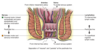
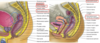
Describe the gross anatomy of the intestines briefly
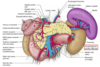
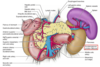
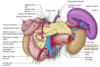
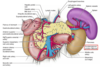
[*] The intestines are concerned with digestion and absorption. The gross and microscopic structure of the duodenum, jejunum, ileum and large bowel relates to these functions.
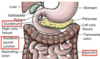
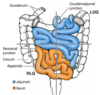
[*] The small intestine is subdivided into 3 regions: the duodenum, jejunum and ileum which are defined by the distinctive features of the mucosa that enhance digestion and absorption.
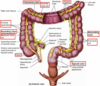
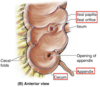
[*] The large intestine is that part of the alimentary canal between the ileocaecal junction (orifice) and anus: it consists of the caecum, appendix, the ascending, transverse, descending and sigmoid colon.
[*] The terminal segments of the large intestine are the rectum, anal canal and anus.
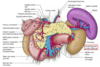
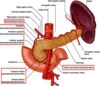
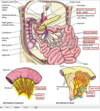
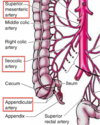
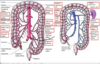
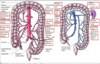
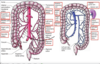
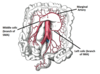
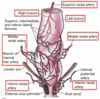
[*] The blood supply to the small and large intestine is from two direct branches of the abdominal aorta; the blood supply to each segment (fore-, mid- and hindgut) of the intestine is discrete, although arterial anastomoses occur with its neighbours.
Describe the conditioning chyme and absorption in the small intestines
[*] Chyme delivered to the duodenum is hypertonic, acid and only partly digested.
[*] It is conditioned by osmotic movement of water, hepatic and biliary secretion of HCO3- and a cocktail of enzymes into a neutral isotonic solution which progresses slowly through the small intestine (where most absorption takes place).
[*] Absorption requires a very large surface area, to which the luminal contents need to be exposed through gentle agitation for hours.
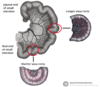
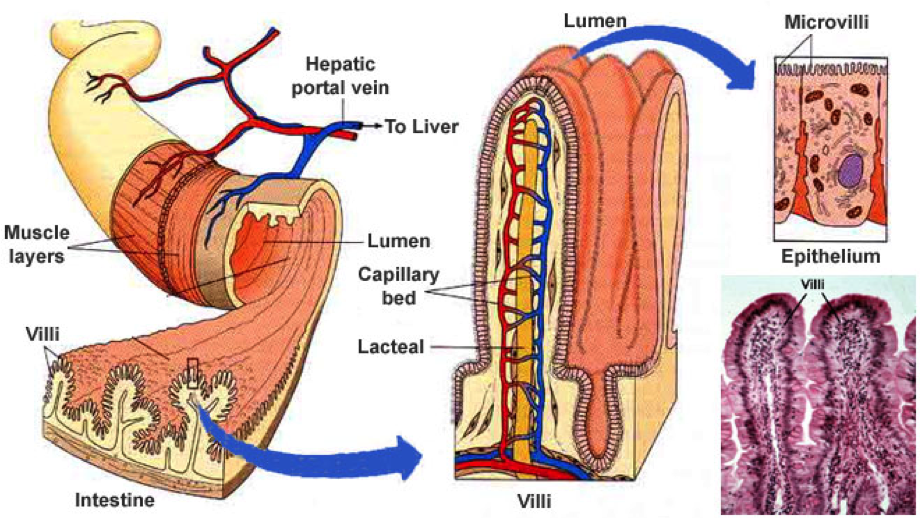
[*] The small intestine is very long and the surface area for absorption is increased by millions of villi (folds of mucosa) projecting into the lumen.
[*] Epithelial cells (enterocytes) arise by rapid division (multiply) in the crypts between the villi, and then migrate towards the tips, from which they are shed. They mature as they migrate, acquiring the capacity to absorb and their luminal surface is covered with millions of microvilli, increasing surface area further still and forming the brush border. The mucosa is therefore constantly renewed.
What is meant by the unstirred layer?
[*] The brush border forms an ‘unstirred layer’ where almost digested nutrients diffuse into.
- The cells on villi (the enterocytes) are very active and secret enzymes into brush border ‘unstirred layer’
- The almost digested nutrients diffuse into the unstirred layer where trapped enzymes complete digestion, steadily releasing small molecules for absorption.
Outline the functions of different parts of the bowel
[*] Small Intestine – All Sections:
- Secrete protease / cabohydrase enzymes to complete digestion
- Secrete hormones: secretin, gastrin, cholecystokinin
[*] Duodenum
- Bile and pancreatic secretions added (at the Ampulla of Vater)
- Secretes HCO3- to neutralise Chyme
- Osmotic movement of water into the Duodenum, making chyme more hypotonic
[*] Jejunum
- Absorption: carbohydrates, amino acids
- Small enough to soak through the villi: fatty acids, vitamins, minerals, electrolytes, water
[*] Ileum
- Absorption: Vitamin B12, Bile, Anything not absorbed by the jejunum
[*] Large Intestine: takes about 16 hours to finish the digestion of food.
- Absorption: water, any remaining absorbable nutrients and vitamins created by colonic bacteria – Vitamin K, B12, Thiamine, riboflavin
- Sends indigestible matter to the rectum
[*] Rectum: stores and compacts faecal matter
Which enzymes help break down sugar?
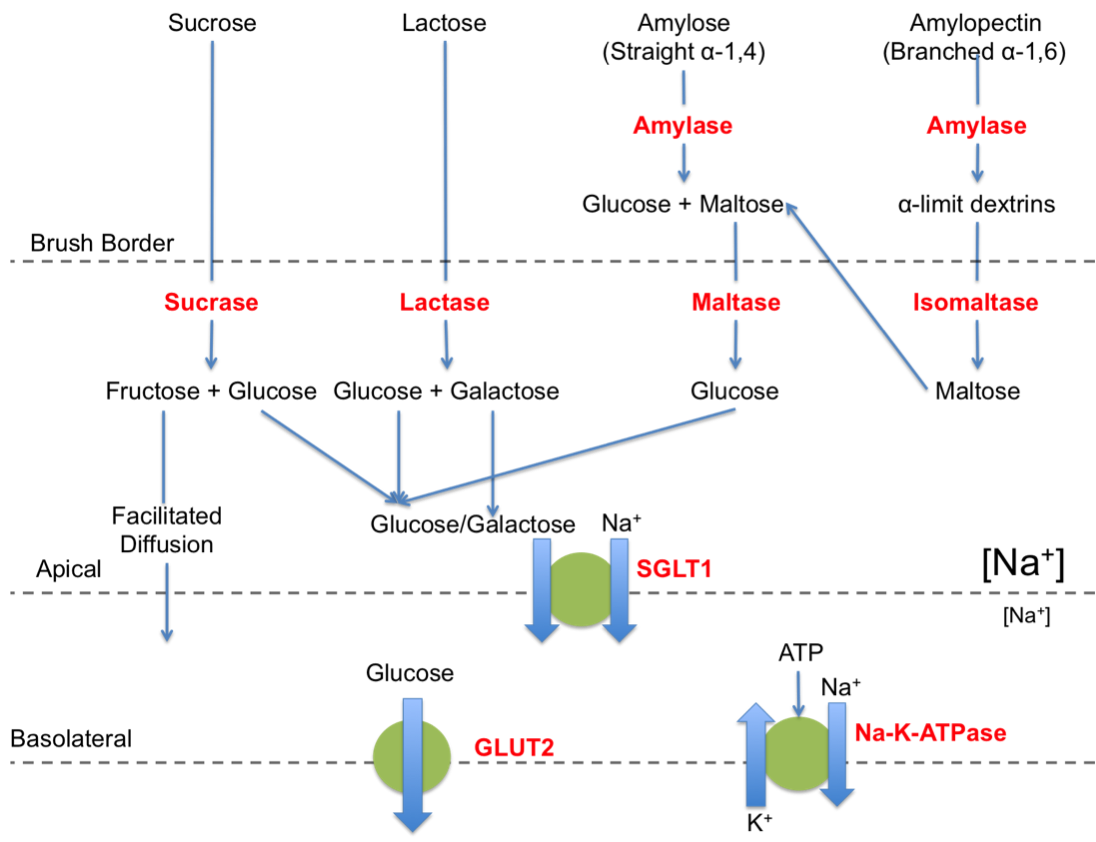
[*] Most ingested carbohydrates are in the form of amyloses (straight chains with alpha1,4 bonds), amylopectins (branched with alpha1,6 bonds at branches) or disaccharides such as sucrose.
[*] Alpha amylases from saliva and the pancreas cleave the alpha-1,4 bonds of straight chain amyloses => glucose and maltose, and breack the alpha1-1,4 bonds of the branched amylopectins into alpha limit dextrins.
[*] Brush border enzymes complete breakdown to glucose.
- Branch points (alpha-1,6 bonds) are broken down by isomaltases
- Maltose is broken down to glucose by maltases.
- Sucrose is cleaved into glucose and fructose by sucrase.
- Lactase.
Describe the absorption of glucose
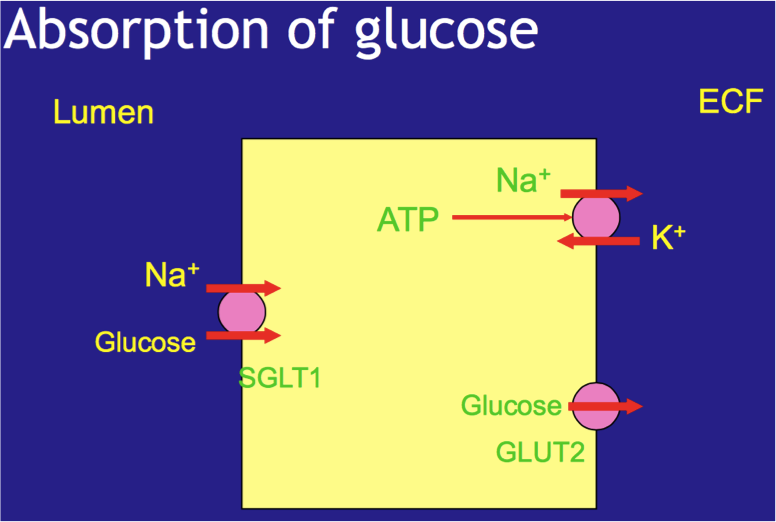
[*] Glucose is absorbed actively using energy from sodium gradient. Glucose enters mucosal cells via Na+/glucose transporter (SGLT1)
- This transporter also transports galactose
- Fructose and lactose enter by facilitated diffusion not linked to Na+
- Glucose leaves cell to ECF by facilitated diffusion (GLUT 2 transporter)
- Energy from movement of Na+ down concentration gradient drives glucose up concentration gradient into cell.
- Sodium pump on basolateral membrane pumps out Na+.
- The more Na+ enters the mucosal side, the harder the sodium pump works.
Describe the absorption of amino acids
[*] Proteins are broken down into oligopeptides (short peptides, 10-20 AA’s long) by the action of pepsin (from chief cells) in the stomach, which cleaves peptide bonds near to aromatic amino acids.
[*] Proteins are also broken down in the duodenum by a cocktail of enzymes from pancreas including trypsin, which cleaves peptide bonds near to basic amino acids, chymotrypsin near aromatic amino acids and carboxypeptidase which cleaves C-terminal amino acids with basic side chains.
[*] Brush border enzymes break down oligopeptides further.
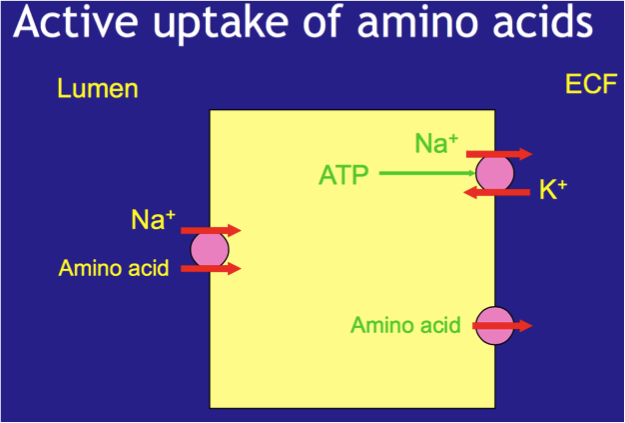
[*] Amino acids and small peptides (2/3 AA’s) are absorbed via a number of active and passive processes, each specific to different classes of amino acids and mostly by active transport linked, like glucose to the inward movement of Na+ ions.
- Further to this, in neonates our guts are ‘open’ so they are able to pick up whole proteins. This allows breast milk to confer passive immunity on babies via IgA absorption.
Describe the active uptake of amino acids
[*] Active uptake of amino acids: at least 5 Na+/amino acid co transporters. Like the uptake of glucose.
- Small neural amino acids
- Neutral amino acids, basic amino acids and cysteine
- Acidic amino acids
- Imuno-amino acids
- Beta-amino acids (mainly taurine)
[*] Some uptake of amino acids by facilitated passive diffusion.
[*] Dipeptides and tripeptides can also be absorbed by mechanisms linked to the active expulsion of H+ ions into lumen.
Return of H+ by co-transport with peptide
Describe the absorption of fats
[*] Fats are relatively insoluble in water, making them tend to aggregate into large globules, preventing the effective action of digestive enzymes. Acid in the stomach exacerbates this.
[*] In the duodenum, bile acids enable fats to be incorporated into small (4-6nm) micelles, with fats in the middle and the polar components of bile acids on the outside. These micelles generate a high surface area for the action of lipases, which cleave the fatty acids from glycerol.
[*] These micelles also carry these products into the ‘unstirred layer’ immediately next to the mucosa, where fatty acids can be released to slow diffuse into the epithelial cells.
[*] Once inside the epithelial cells they are reconstituted into triacylglycerols and re-expelled as chylomicrons, structured small particles made up of lipids covered in phospholipids, which facilitate the transport of fat in the lymphatic system from the gut to systemic veins.
Describe the absorption of salts and water
[*] Sodium, chloride, other electrolytes and water are taken up by mechanisms related to the sodium pump. Water follows osmotic gradients produced from all absorption => uptake of water.
- Sodium taken up via diffusion into cell and active transport across basolateral membrane.
- Chloride follows the movement of Na+.
[*] The absorption of calcium is key. Only about 10% of ingested Ca2+ (~700mg absorbed out of 6g consumed) is normally absorbed. Ca2+ enters cells by facilitated diffusion (low intracellular concentration) and is then expelled actively across the basolateral membrane by Ca2+-ATPase. Both processes are dependent upon Vitamin D and stimulated by parathyroid hormone.
Describe the absorption of iron
[*] Iron is absorbed, mostly as Fe2+.
- About 20mg a day of Fe consumed.
- Mostly in haem or related pigments (Fe2+)
- Iron can only be absorbed in it’s ferrous form (Fe2+)
- Gastric acid important for Fe absorption – solubises iron complexes (makes it ferrous)
- Stomach also secretes gastroferrin (solubises Fe by binding iron and keeping it ferrous)
Uptake of iron:
- Mucosal cells (enterocytes) secrete transferrin which binds Fe2+ in lumen
- Complex taken into cells by endocytosis
- Fe2+ liberated and exported to blood, where it once again binds to transferrin.
Describe the absorption of vitamins
[*] The absorption of many vitamins occurs by diffusion or facilitated diffusion.
- Water soluble vitamins absorbed largely via passive diffusion (Vitamin C and B vitamins)
- One key vitamin B12 requires attachment to a carrier molecule, a co-factor – Intrinsic Factor for absorption. Intrinsic Factor binds to B12 in the stomach to keep it soluble.
- Intrinsic factor is secreted by stomach mucosa and absorption of B12 intrinsic factor complex happens almost exclusively in the terminal ileum.
- Damage to the stomach, preventing it from secreting intrinsic factor or the terminal ileum has been damaged (e.g. Crohn’s) or removed may lead to pernicious anaemia, as B12 is essential for erythropoiesis.
Describe the basis of oral rehydration therapy
[*] Glucose is absorbed actively using energy from the movement of sodium down a concentration gradient across the mucosal membrane of the enterocyte.
- Low intracellular [Na+] is maintained by the active pumping of sodium across the basolateral membrane.
- Glucose then leaves the cell via facilitated diffusion across the basolateral membrane.
- The more glucose and sodium which enter the cell, the more sodium is pumped out.
- Uptake of Na+ generates osmotic gradient.
- Water follows.
- Glucose uptake stimulates Na+ uptake and generates an osmotic gradient of its own.
- So a mixture of glucose and salt (NaCl) will stimulate maximum water uptake.
- This is the basis of oral rehydration fluid.
What is meant by segmenting?
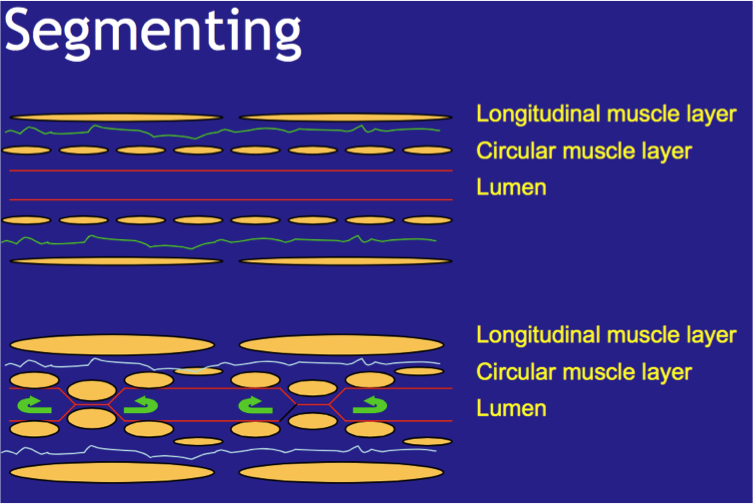
[*] The luminal contents of the small intestine must move very slowly in a caudal direction (transit time in hours), whilst being gently agitated to expose them to the large surface area for absorption. This is achieved by a pattern of motility known as segmenting, which is very different to the peristalsis, which occurs in the oesophagus and stomach.
[*] The small intestine is divided into sections, each with a pacemaker. The frequency of the pacemaker gets less from the duodenum to the terminal ileum, a phenomenon known as the intestinal gradient (about 12 times a minute in the duodenum, falling to about 8 times a minute in the terminal ileum)
[*] Within each section of the intestine, the firing of the pacemaker sends activity through the nerve plexuses which causes intermittent contraction of the smooth muscle at intervals along its length.
[*] These contractions separate the intestine into segments where the muscle is not contracted, whose contents are effectively mixed by movement from the portions which do contract. After a few seconds the contractions relax, and at the next pacemaker firing different areas contract.
[*] Segmenting itself does not propel contents along the intestine. It merely mixes and agitates them. The intestinal gradient however, means that differential segmenting rates in adjoining sections of the intestine cause a net movement of material in a caudal direction, albeit at a slow rate.
More rapidly segmenting cephalic segment squirts more frequently into adjacent caudal segment than that segments does into it.
Describe the functions of the large intestine and what is meant by Haustral Shuttling?
[*] Most absorption occurs in the small intestine but the process continues in the large intestine so that the remaining material becomes semi-solid – the large intestines absorb water from the indigestible residues of chyme, converting it into semi-solid stool or faeces that is stored temporarily and allowed to accumulate until defecation occurs.
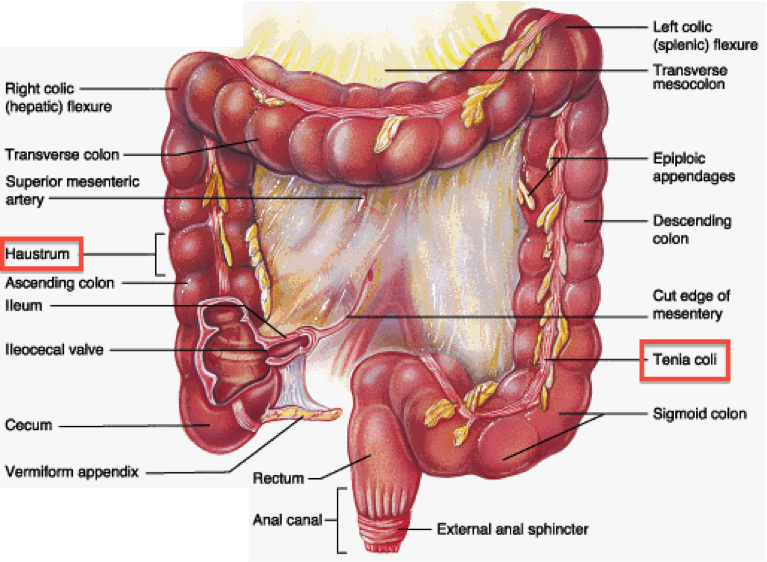
[*] The large intestine is divided naturally into segments known as ‘Haustra’, as the circular muscles are more complete than the longitudinal, which have been reduced to the taenia coli (thickened bands of smooth muscle).
- The taenia coli run the length of the large intestine because their tonic contraction shortens the part of the wall with which they are associated, the colon becomes sacculated or ‘baggy’ between the taenia, forming Haustra.
[*] Haustral Shuttling agitates the contents and propels them very slowly towards the sigmoid colon.
- Contraction of smooth muscle in walls of haustra shuffles contents back and forth.
- Slow absorption of most remaining water and salts – forming faces.
- With gentle progression towards sigmoid colon
- Control like segmenting
What is meant by mass movement?
[*] Once or twice a day there is a coordinated peristalsis-like, propulsive movement from the transverse colon through descending colon towards the rectum which is known as a mass movement.
[*] This forces faeces rapidly into the rectum, which is normally empty. The resulting distension produces the urge to defaecate.
[*] Mass movements are often trigged by eating – the ‘gastro-colic reflex’ but also often occur at fixed times of the day.
Describe the mechanisms of defaecation.
[*] Once the rectum has been filled, pressure receptors detect this and defaecation reflexes are activated voluntarily.
[*] This leads to enhanced waves of contraction contraction of the rectal smooth muscle, relaxation of the smooth muscle internal anal sphincter and skeletal muscle external sphincter, combined with expiration against a closed glottis and abdominal muscle contraction to increase intra-abdominal pressure, so expelling the faeces by forcing the faeces to towards anus.
- Internal smooth sphincter: parasympathetic control – relaxes
- External – voluntary striated muscle: voluntary (normally) control - relaxes
[*] Once both sphincters are relaxed, intra-abdominal pressure is increased (forces expulsion and there is an expulsion of faces_
[*] If defecation is not initiated voluntarily sacral reflexes will eventually trigger it involuntarily as rectal pressure rises.
- Control via sacral reflexes modified by higher centres
- High centres overridden if rectal pressure too high.
What is Inflammatory Bowel Disease?
[*] Inflammatory bowel disease affects around 0.3% of the population, with an incidence of around 20 per 10000. It refers to a group of related conditions characterized by idiopathic inflammation of the gastrointestinal tract.
- Ulcerative colitis
- Crohn’s disease
- Diversion colitis
- Diverticular colitis
- Radiation, drug, infectious, ischaemic colitis
[*] The 2 most common types are Ulcerative colitis and Crohn’s disease. Both usually follow a prolonged, often remitting relapsing time course and can be very debilitating. They both cause macroscopic inflammation.
[*] Microscopic colitis is less common and does not cause significant macroscopic abnormalities.
[*] The pathophysiology is not well understood, but most likely involves immune dysfunction, genetically mediated that causes inappropriate immune activation in response to luminal microorganisms.
[*] Although several features may differentiate Crohn’s disease from ulcerative colitis, there is significant overlap.
[*] Even after diagnostic evaluation, 10% have disorders that cannot be classified (indeterminate colitis)
Describe Ulcerative Colitis and Crohn’s Disease briefly and what are some other colitudes?
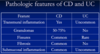
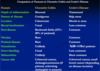
[*] In ulcerative colitis, there is chronic inflammation and ulceration of the mucosa principally of the rectum and extends proximally in continuity to affect a variable extent of the colon (especially sigmoid colon). The inflammatory process is limited to the mucosa.
[*] In Crohn’s disease, there is chronic inflammation which extends through the bowel wall (transmural inflammation – can be Ileitis, Colitis or Illeocolitis) and may occur anywhere in the GI tract. It mostly commonly affects the terminal ileum and the more proximal colon, but may occur anywhere.
[*] Other colitudes
- Microscopic colitis
- Diversion colitis
- Diverticular colitis
- Pouchitis
What are triggers of IBD (onset and reactivation)?
- Altered microflora
- Antibiotics
- Diet
- Stress (increases risk of CD)
- Smoking
- NSAIDs (altered intestinal barrier)
- Acute infections
- Early appendectomy – increased UC incidence
- Smoking – protects against UC, increases risk of CD
Describe the epidemiology, genetics and pathogenesis of Crohn’s Disease and Ulcerative Colitis
[*] Epidemilogy
- CD: 1st peak 15-30 years of age, 2nd peak around 60 years
- UC: high incidence areas: US, UK, northern Europe.
- Young adults, commoner in females
[*] Genetics
- 1st degree relatives have a *4-20 risk higher than that of general population
- The best replicated linkage region, IBD1, on chromosome 16q contains the CD susceptibility gene NOD2/CARD15
- Having one copy of the risk alleles confers a 2-4-fold risk for developing CD, whereas double-dose carriage increases the risk 20-40 fold
[*] Pathogenesis: IBD is associated with genetic predisposition, immunological abnormalities and environmental factors
- The mucosa of CD patients is dominated by TH1, which produce interferon-gamma and IL-2
- In contrast, UC is dominated by TH2 phenotype which produce transforming growth factor (TGF-) and IL-5
- Activation of TH1 cells produce the down-regulatory cytokines IL-10 and TGF-
Describe the clinical presentation of ulcerative colitis
[*] Ulcerative colitis is characterised by urgent diarrhoea with mucus and often bloody stools.
After the first, often most serious event, it tends to follow a relentless remitting relapsing course which has a major effect on quality of life.
Describe the clinical presentation of Crohn’s Disease
[*] Crohn’s disease is slightly less prevalent but may be increasing in incidence in western countries. It is uncommon in developing countries. The presentation of Crohn’s depends on what part of the bowel is affected:
- If the ileum is affected, then the condition often presents with pain, often associated with diarrhoea. There is commonly malabsorption which may lead to weight loss.
- If the terminal ileum is affected, there may be anaemia due to poor absorption of vitamin B12.
- Effects of inflammation can be severe and may present with intestinal obstruction, requiring urgent intervention.
- If only the colon is affected the presentation is similar to ulcerative colitis with bloody diarrhoea, passage of mucus and constitutional symptoms such as malaise, anorexia and weight loss.
- Upper GI involvement can present as nausea and vomiting, dyspepsia, small bowel obstruction, anorexia, weight loss, loose stools
- Many patients have involvement of both the ileum and colon and so present with symptoms of both.
- Various imaging techniques may reveal the principal sites affected.
Describe the common methods used for investigating inflammatory bowel disease.
[*] Colonoscopy
- Biopsies of involved mucosa
- Ulceration
[*] Stool analysis
- Parasites
- Clostridium difficile toxins
- Culture
[*] Barium radiographs
- CT scan
- Capsule endoscopy
- Plain X-ray if bowel obstruction or perforation suspected