Describe the range of toxins that the GI tract and liver may be exposed to
[*] Chemical
[*] Bacteria
[*] Viruses
[*] Protozoa
[*] Nematodes (Roundworms)
[*] Cestodes (Tapeworms)
[*] Trematodes (Flukes)
Describe the Physical aspect of the Innate Defence System of the GI tract
- Sight: if food looks bad you don’t eat it.
- Smell: if food smells bad you don’t eat it.
- Memory: if food tastes bad, you don’t eat it next time
- Saliva
- Gastric acid
- Small intestinal secretions
- Colonic mucus
- Anaerobic environment (small bowel, colon)
- Peristalsis / Segmentation (normal intestinal transit time is 12-18 hours. If peristalsis is slowed gut infections are prolonged e.g. shingellosis)
Describe the Cellular aspect of the Innate Defence System of the GI tract
- Neutrophils (good at killing bacteria but cannot kill worms
- Macrophages (circulating monocytes become tissue macrophages when activated) including Kupffer cells in the liver). Other locations of macrophages include gut, lungs and spleen
- Natural killer cells (kill virus infected cells)
- Basophils also circulate – become mast cells in the tissues.
- Tissue mast cells which contain histamine.
- Eosinophils (release substances that can attack worms)
Describe the Adaptive Defence System of the GI tract
Cellular
- B lymphocytes produce antibodies including IgA and IgE that are particularly effective against extracellular microbes.
- T lymphocytes are directed against intracellular organisms.
Lymphatic tissues: mucosal associated lymphoid tissue (MALT) in the GI tract is called Gut Associated Lymphoid Tissue (GALT). GALT is diffusely distributed but also nodular in 3 locations:
- Tonsils (drain into cervical lymph nodes)
- Peyer’s patches in the gut (large bowel contains large amounts of bacteria)
- Appendix
Sore throats and cervical lymphadenopathy are a very common clinical problem/presentation. 80% of sore throats are due to a virus.
Describe how Saliva is part of the GI’s defence system
- 1.5 litres/day
- pH 7.0 (acid would dissolve teeth otherwise)
- Contains lysozyme (good at attacking gram positive bacteria), lactoperoxidase (good at attacking gram negative bacteria), complement, IgA and polymorphs
- Washes toxins including bacteria down into the stomach
Describe how Gastric acid is part of the GI’s defence system
- The stomach is a storage, sterilizing digestive tank
- The 2.5 litres of gastric juice produced each day can have a pH as low as 0.87
- Gastric acid kills the majority, but not all bacteria and viruses
Describe how Small Intestinal Secretions and the Colonic Mucus are part of the stomach’s defence systems
[*] Small intestinal secretions
- To survive in the small intestine bacteria need to be able to resist bile (a detergent), proteolytic enzymes, lack of nutrients, an anaerobic environment, shedding of epithelial cells and rapid transit (peristalsis)
- The small bowel is normally sterile so bacteria can only grow there if something is abnormal e.g. stasis or obstruction
[*] Colonic mucus:
- The main role of the colon is water recovery. It is an anaerobic environment. Faeces are 40% bacteria by weight.
- Mucus is the layer that protects the colonic epithelium from its contents.
What can severe dehydration/illness lead to (affecting saliva production)?
[*] Severe illness and/or dehydration results in reduced salivary flow (xerostomia) which then leads to microbial overgrowth in the mouth and dental caries. This could lead to parotitis (inflammation of the parotid glands) caused by Staphylococcus aureus. Parotitis has a 25% chane of mortality.
What happens if there is reduced or absent production of gastric acid?
Reduced/Absent production of Gastric acid: Patients who have achlorhydria (absent or low Gastric Acid production) e.g. pernicious anaemia, drugs such as H2 antagonists, proton pump inhibitors are more susceptible to shigellosis, cholera and salmonella infections. In a hospital environment, patients taking proton pump inhibitors are at increased risk of acquiring Clostridium difficile.
What organisms are resistant to Gastric acid?
- Myobacterium tuberculosis is resistant to gastric acid (acid and alcohol fast bacterium). Thus gastric washings can be used to collect the bacteria for diagnostic purples. It is a difficult bacteria to culture
- Helicobacter pylori produces urease which acts on urea to produce a protective cloud of ammonia.
- Enteroviruses such as Hepatitis A, Polio and Coxsackie are resistant to gastric acid.
When would you see in Eosinophilia (can be used a diagnostic marker)
Asthma
Hay fever
Parasitic infections (due to worms)
What happens when Gut infections activate complement?
Gut infections which activate complement recruit mast cells => release of histamine from granules.. Histamine causes vasodilatation and increased capillary permeability. Can get massive fluid loss.
In cholera, may get losses of 1 litre/hour – 60% mortality if untreated
What are GALT problems (including Appendicitis)?
- Tonsillitis
- Ileocaecal lymphatic tissue:
- Mesenteric adenitis (the inflammation causes stretching of the lymph nodes => pain) is a common cause of right iliac fossa pain in children. It can easily be mistaken for appendicitis. Caused mostly by adenovirus/coxsackie virus.
- Typhoid fever causes inflamed Peyer’s patches in terminal ileum which can perforate and kill patients.
- Appendicitis:
- Many cases arise from lymphoid hyperplasia (enlargement of the lymphatic nodules) at the appendix base leading to an obstructed outflow, stasis and infection (drainage cannot occur)
- Stasis = Infection! (There is not a single fluid in the human body that is normally static)
- Purulent appendicitis is commoner during epidemics of chickenpox in children.
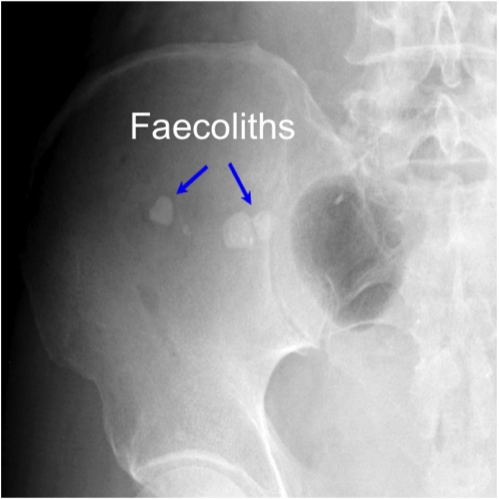
- Another cause of an obstructed appendix is a faecolith (calcified faecal matter, visible on an X-ray)
- Appendix may be obstructed by a worm
- Bugs causing appendicitis tend to be anaerobic.
Which chemicals are toxins?
[*] Chemical toxins: modern chemistry has exposed humans to toxins that they have not had time to develop ‘resistance’ to as a consequence of evolution. These toxins include metals, metalloids, solvents and drugs. Therefore lead, aluminium, mercury etc are highly toxic.
Arsenic: unsafe levels of arsenic have been found in Bangladesh, India, Nepal and Pakistan.
What do the GI’s defence mechanisms require?
[*] The GI’s defensive mechanisms require the GI tract itself to have an intact blood supply
Intestinal/hepatic ischaemia due to arterial disease, systemic hypotension or intestinal venous thrombosis can (and frequently doses) lead to overwhelming sepsis and rapid death (within hours)
Describe Liver failure (generally)
- Viral hepatitis (main cause worldwide)
- Alcohol (main cause in the UK)
- Drugs such as paracetamol, halothane
- Industrial solvents
- Mushroom poisoning
- Increased susceptibility to infections – 80% are bacterial but also fungal. High mortality.
- Increased susceptibility to toxins, drugs, hormones as the liver has the lost ability to excrete these toxins.
- Increased blood ammonia due to failure to clear ammonia via urea cycle. Ammonia produced by colonic bacteria and deamination of amino acids. Ammonia causes hepatic encephalopathy
Describe cirrhosis
- At the beginning liver becomes enlarged => eventually shrinks and fibroses.
- Hepatic fibrosis leads to portal venous hypertension.
- Portal venous hypertension leads to portosystemic shunting and therefore toxin shunting
- Portosystemic shunting leads to oesophageal varices haemorrhoids and caput medusa.
Describe acute hepatitis and chronic hepatitis
[*] Acute Hepatitis: acute hepatocyte breakdown
- Aminotransferase release (AST/ALT)
- Jaundice
[*] Chronic Hepatitis: prolonged/chronic damage
- Synthetic failure
- Decreased albumin
- Decreased clotting factors
What are the causes of hepatitis?
- *Alcohol**
- *Viral**
- Hepatitis A: RNA virus, faecal oral (shellfish), no progression
- Hepatitis B: DNA virus, blood/saliva/sexual/vertical spread (mother to unborn child), acute and chronic, hepatocellular carcinoma, 1% fulminant hepatitis (onset of encephalopathy within 8 weeks)
- Hepatitis C: RNA virus, blood spread, 50% chronic liver disease – 30% cirrhosis and 5% hepatocellular carcinoma
- Hepatitis D, EBV, CMV, Yellow fever
Autoimmune
- Drugs: methyldopa, isoniazid
- Hereditary: alpha1-antitrypsin disease, Wilson’s disease
Describe Fulminant Hepatic Failure
- An acute and/or severe decompensation of hepatic function, defined as “…onset of hepatic encephalopathy within 2 months after diagnosis of liver disease” which may be linked to brain oedema
- Decompensation due to increased metabolic demand.
Causes
- Hepatitis A, D, E
- Drugs: paracetamol, isoniazid, ectstasy
- Wilson’s disease
- Pregnancy
- Reye’s syndrome
- Alcohol
Features
- Jaundice
- Encephalopathy (due to hyperammonia and low protein content which leads to oedema => brain swelling and toxins in CNS)
- Decreased LOC (liver organotypic culture)
- Hypoglycaemia
- Renal failure
- Decreased K+/Ca2+
- Haemorrhage (coagulopathy – bleeding blood that does not clot)
Management
- Specialist liver unit
- Supportive therapy
- Liver transplant
Describe Hepatic encephalopathy
- Reversible neuropsychiatric deficit
- Inability of liver to remove toxic substances e.g. ammonia
Precipitated by
- Sepsis/infection
- Constipation
- Diuretics
- GI bleeding
- Alcohol withdrawal
Diagnosis:
- Chemical and biochemical (e.g. ammonia levels)
- Radiology
- Exclude other mimics/identify cause
- Infection
- SBP
- Chest
Clinical features
- Flapping tremor
- Decreased LOC (liver organotypic culture)
- Personality changes
- Intellectual deterioration – constructional apraxia, slow, slurred speech
Describe the hepatic tumour
Benign
- Haemangioma
- Focal nodular hyperplasia
- Liver cell adenoma
- Liver cysts
- Polycystic liver disease
- Cystadenoma
Malignant
- Primary: hepatocellular carcinoma (HCC)
- Secondary metastases (from other parts of the body): Colorectal (50% will get liver metastases: 33% at diagnosis and 25% will develop later), Neuroendocrine, Pancreas, Breast, Stomach, Lung, Ovary, Kidney
- For every 1 case of HCC, there are 20 cases of liver metastases. Majority of metastases are due to portal venous drainage.
- These malignant tumours have a cheesy “caseous necrosis” appearance as parts of the tumour has outgrown its blood supply.
What is meant by the portal system?
[*] Portal System: two capillary systems in series. There are 2 portal systems in the body.
- Hepatic portal system: all venous blood from the GI tract passes through the liver before returning to systemic circulation.
- Hypothalamo-hypophyseal portal system
Describe the role of the liver in the handling of bile pigments, hormones, drugs and toxins, including alcohol
[*] Portal System: two capillary systems in series. There are 2 portal systems in the body.
- Hepatic portal system: all venous blood from the GI tract passes through the liver before returning to systemic circulation.
- Hypothalamo-hypophyseal portal system
[*] Bile pigments: bile pigments are excretory products. The most common bile pigment is Bilirubin, produced as a result of haemoglobin breakdown.
- Bilirubin is conjugated in the liver and secreted in the bile to be excreted in faeces.
- If it cannot be excreted, it accumulates in the blood giving the condition known as jaundice.
[*] Hormones: the liver breakdown many hormones notably insulin
[*] For more information on how the liver breaks down drugs, toxins and alcohol revise Metabolism!!!






