Describe the key properties of chyme leaving the stomach
[*] Acidic
Corrected by the addition of alkali secreted by the pancreas, liver and duodenal mucosa, derived from the excess HCO3- added to the blood as a result of gastric acid secretion
[*] Hypertonic
Corrected by osmotic movement of large quantities of water across the permeable duodenal wall (stomach wall is impermeable). If gastric emptying is too fast or food is too acidic, too much fluid moves into the lumen from the circulation => potentially low blood pressure.
[*] Partially digested
Digestion is completed by a cocktail of enzymes from the pancreas and small intestinal (duodenal) mucosa, and bile acids (salts) secreted by the liver
Describe briefly the functions of the liver
[*] The liver is the largest single organ with a multitude of functions.
[*] Blood related functions include energy storage, synthesis of blood components especially plasma proteins e.g. albumin and detoxification of various substances
[*] Gut related functions include the secretion of bile and its components, and the excretion of the bile pigments, especially bilirubin. Secretion of bile: 0.25-1.0 L/day
Describe the components of bile
[*] Bile is made up of 2 components – the bile acid dependent fraction, which is secreted by cells lining the canaliculi and the bile acid independent fraction secreted by cells lining the intra-hepatic bile ducts (hepatocytes)
The bile acid dependent fraction includes bile acids (salts), cholesterol and bile pigments
- The two main bile acids (salts) are derivatives of cholesterol: cholic acid and chenodeoxycholic acid.
- They are conjugated with amino acids and travel in the mile in micro particles – micelles made up of bile acids, cholesterol and phospholipids. They play a major role in the digestion and absorption of fat.
- Bile pigments are excretory products, the majority of which is bilirubin. Bilirubin is a breakdown product of haemoglobin. This is conjugated in the liver and excreted in bile. Problems in the liver or biliary tree often result in the accumulation of bilirubin in the blood – jaundice.
The bile acid-independent fraction consists of alkaline juice (HCO3-) like that from pancreatic duct cells.
Describe how the microscopic structure of the liver relates to its functions
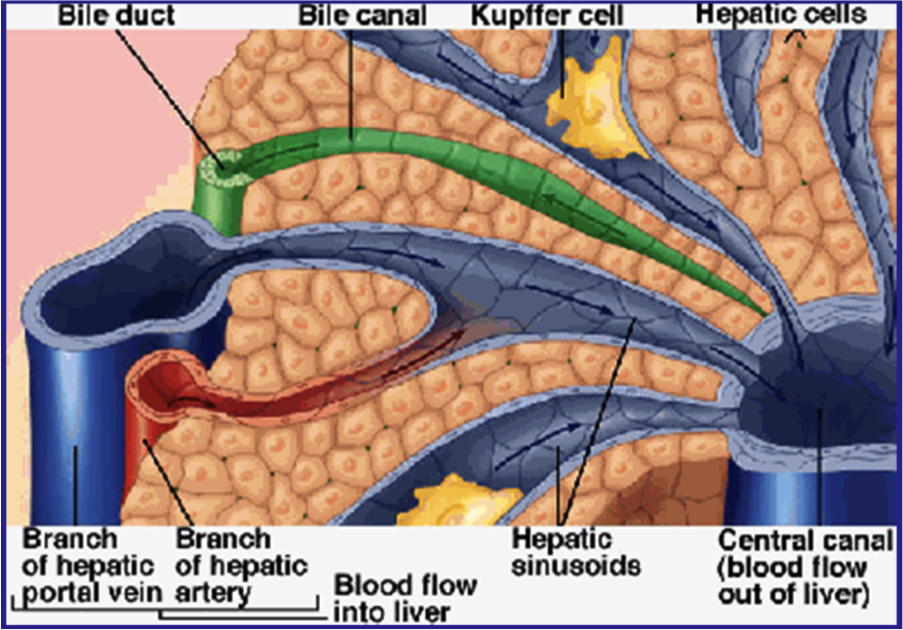
[*] The microscopic structure of the liver supports its function. The basic functional unit is a lobule, surrounding a central vein which drains blood from the liver to the systemic veins.
[*] Blood from the hepatic portal vein and hepatic arteries enters vessels at the periphery of the lobule, and flows through sinusoids lined by hepatocytes to the central vein.
[*] Bile is formed in canaliculi and flows towards the periphery, from where it drains into bile ducts.
[*] Hepatocytes are very complex cells which support most of liver functions
Describe the secretion of bile acids and the entero-hepatic circulation of bile acids
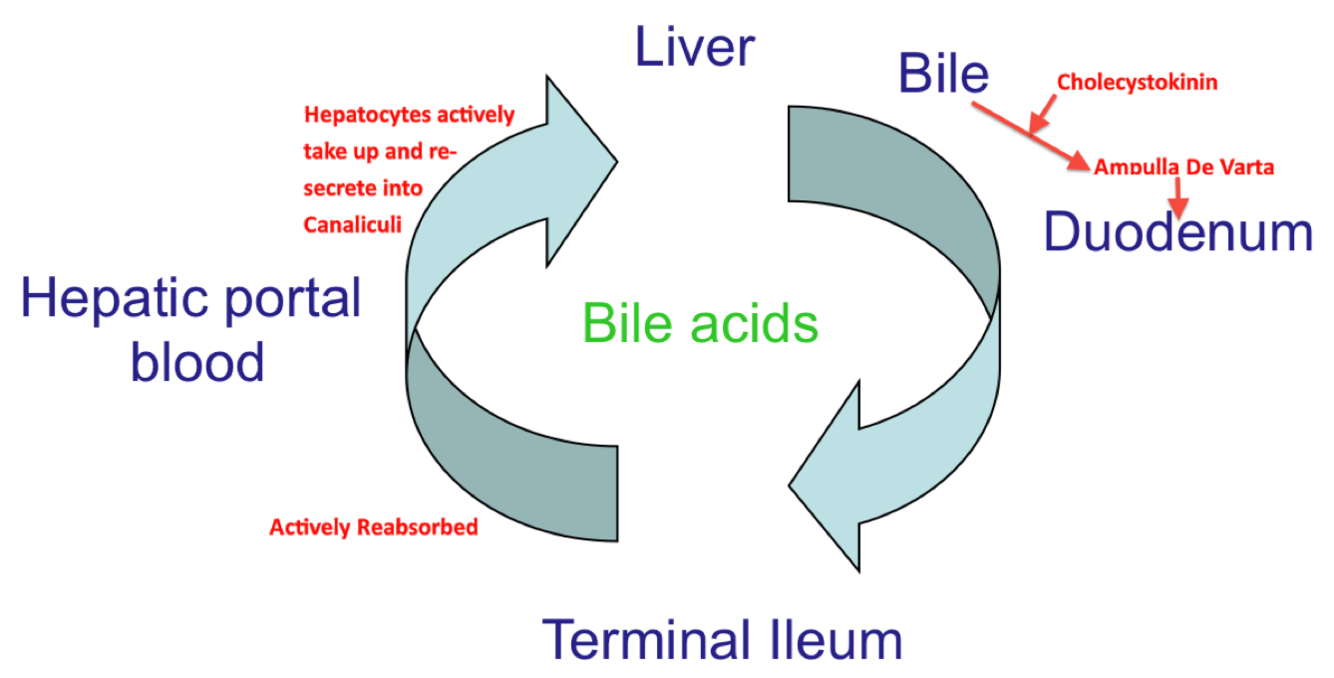
[*] In response to Gastric emptying chyme into the duodenum, the duodenum secretes Cholecystokinin (CCK). This stimulates the contraction of the smooth muscle in the wall of the Gallbladder, ejecting concentrated bile acids together with enzymes from the pancreas.
[*] Alkali from the pancreas and liver is also released in response to Secretin.
[*] Bile acids are released through the Ampulla of Vater and aid with the digestion and absorption of fats.
[*] After enabling fats to diffuse into epithelial cells, the bile acids remain in the gut and apart from a small proportion deconjugated by bacterial action, they are actively absorbed in the terminal ileum and returned to the liver via the hepatic portal vein, from which they are re-secreted (hepatocytes actively take up Bile acids and re-secrete them into Canaliculi).
[*] The entero-hepatic circulation preserves a pool of bile acids. Losses are replaced by hepatic synthesis (by the hepatocytes(,
[*] Bile acids return to the liver and are secreted into bile between meals. Bile is secreted by canalicular cells well before needed next.
The bile acid-dependent fraction of bile therefore must be stored until the next meal. This occurs in the gallbladder (bile acids are diverted up the cystic duct into the gallbladder)
Describe the function of the gall bladder and the relationship to the formation of gallstones
[*] The gall bladder stores the bile acid-dependent fraction of bile (bile acids) in between meals. The volume stored is reduced by removal of salts and water across the gallbladder epithelium, so concentrating the bile and increasing the risk of precipitation to form gall stones.
[*] These are often asymptomatic but they move into the neck of the gallbladder or the biliary tree, causing very painful biliary colic or even obstruction, which is often followed by inflammation (cholecystitis) and infection of the Gallbladder.
[*] Pain from gallstones can be worse after eating, as the secretion of cholecystokinin (CCK) will cause the gallbladder to contract.
[*] Bile is released from storage by contraction of smooth muscle in the wall of the gallbladder, stimulated by cholecystokinin.
[*] If fats are not properly absorbed, faeces will contain lipids – pale, floating, smelly. This is steatorrhoea.
List the secretions of the exocrine pancreas
[*] The exocrine component is made up of blind ended acini and ducts.
[*] The acini secrete enzymes in a neutral isotonic fluid.
[*] Trypsin(ogen) is the major peptidase, supplemented by chymotrypsin, carboxypeptidases and elastase which attack different amino acid-amino acid bonds in proteins. Carboxypeptidase attacks the ends of peptides and Elastase attacks elastin.
[*] Peptidases are excreted as inactive precursors activated by enzymatic cleavage in the gut lumen. Should they be inappropriately activated in the pancreatic ducts, they cause severe inflammation – pancreatitis.
[*] The pancreas also secretes amylases which break down polysaccharides and lipases which cleave fatty acids from triacylglycerols.
[*] All enzymes are proteins synthesized on ribosomes, then packaged via the golgi apparatus into zymogen granules (condensing vacuoles) which are released by exocytosis. They are then activated in the intestine by enzymatic cleavage.
[*] If pancreatic cells are damaged (e.g. in pancreatitis) these enzymes, especially amylase, find their way into the bloodstream producing a clear diagnostic sign.
[*] The pancreatic duct cells secrete HCO3- (alkaline juice – water, a few ions and lots of HCO3-)
Relate the structure of the endocrine pancreas to its secretions
[*] The endocrine component, which is located in the islets of Langerhans, secretes insulin and glucagon
REVISE METABOLISM!!!
Describe the mechanism of secretion of alkaline juice
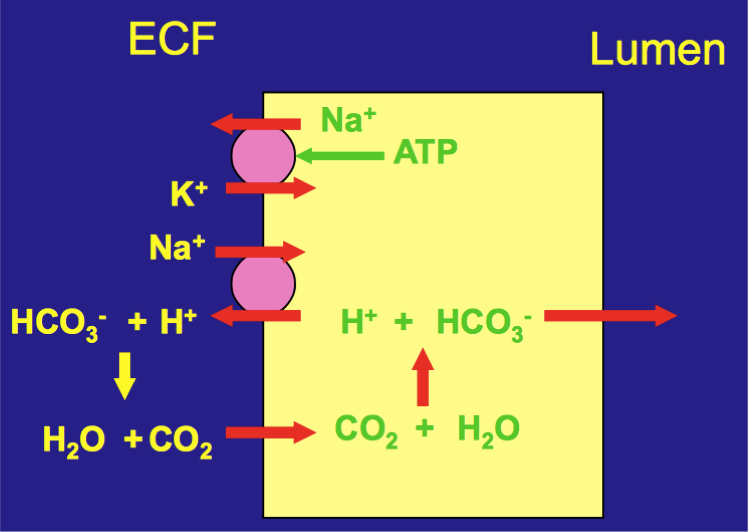
[*] The mechanism of pumping HCO3- is similar to that of other cells which secrete HCO3-.
[*] HCO3- is present in the blood at elevated concentrations due to gastric acid secretion.
[*] Na-K-ATPase sets up a Na+ concentration gradient.
[*] H+ ions are expelled across the basolateral membrane from the duct cell into ECF, using energy derived from the inward movement of Na+ (due to the Na+ concentration gradient)
[*] H+ ions combine with HCO3- to form H2O and CO2 which are taken up into the cell.
[*] H2O and CO2 reform H+ and HCO3- inside the cell.
[*] The HCO3- is exported into the duct lumen and H+ is recycled to bring in more HCO3- from the ECF to the lumen
[*] Duct secretion is stimulated by Secretin, which is released from jejunal cells in response to low pH. Cholecystokinin (CCK) facilitates secretin’s action.
Describe the control of pancreatic and biliary secretion
[*] Secretion from acinar cells is stimulated principally by the hormone cholecystokinin (CCK), secreted from I cells in the duodenum (duodenal APUD cells) in response to hypertonicity and the presence of peptides in the lumen
- CCK is a hormone of the gastrin family and its structurally related to Gastrin itself.
- The same receptors are also stimulated by Gastrin
- The acinar cells are also stimulated by acetylcholine from parasympathetic postganglionic nerves activated via the vagus nerve.
- The acinar cells are stimulated by hypertonicity and fats.
[*] The ducts secrete alkali by pumping HCO3- actively from the ECF into the lumen. Secretion of duct cells is controlled by secretin, a polypeptide hormone produced by S cells in the jejunum in response to acidity of the jejunal contents (low pH). The action of secretin is potentiated by CCK.
[*] Biliary secretion: cholecystokinin secreted by the duodenum in response to gastric emptying stimulates contraction of gallbladder muscle, ejecting concentrated bile acids together with enzymes from pancreas.
Describe the mechanisms of digestion of fats
[*] Fats are relatively insoluble in water and tend to aggregate into large globules, preventing effective action of digestive enzymes (low surface area for enzymes to act).
[*] Acid in the stomach exacerbates this tendency
[*] In the duodenum, the bile acids act to enable fats to be incorporated into small (4-6nm) micelles, with fats in the middle and the polar (hydrophilic) components of the bile acids on the outside.
- Released fatty acids form micelles, each with ~20 lipid molecules.
- Need bile acids to be above a critical concentration to form
- Also sequester cholesterol, fat soluble vitamins and phospholipids
- Micelles are a vehicle to carry hydrophobic molecules through acequous luminal contents into ‘unstirred layer’ next to epithelial cells.
[*] The micelles generate a high surface area for the action of lipases which cleave fatty acids from glycerol and also carry these products into the ‘unstirred layer’ immediately next to the mucosa, from which fatty acids can be released slowly to diffuse into epithelial cells.
Colipase links bile acids and lipases to spread them over surface.
[*] Once inside, they are reconstituted into triacylglycerols and re-expelled as chylomicrons (structured small particles made up of lipids covered with polar protein and phospholipid coat), which facilitate transport of fat in the lymphatic system from the gut to systemic veins and then onto the tissues of the body. Chylomicrons transport fat in blood to tissues.
[*] Steatorrhoea: if bile acids or pancreatic enzymes are not secreted in adequate amoutns, fat appears in faces. This makes them pale, float and smell foul. This is relatively common and is called Steatorrhoea or ‘Fatty Faeces’.
Describe the gross anatomy of the liver
[*] The liver is the largest gland in the body and the second largest single organ
- Except for fat, all nutrients absorbed from the digestive tract are initially conveyed to the liver by the portal venous system
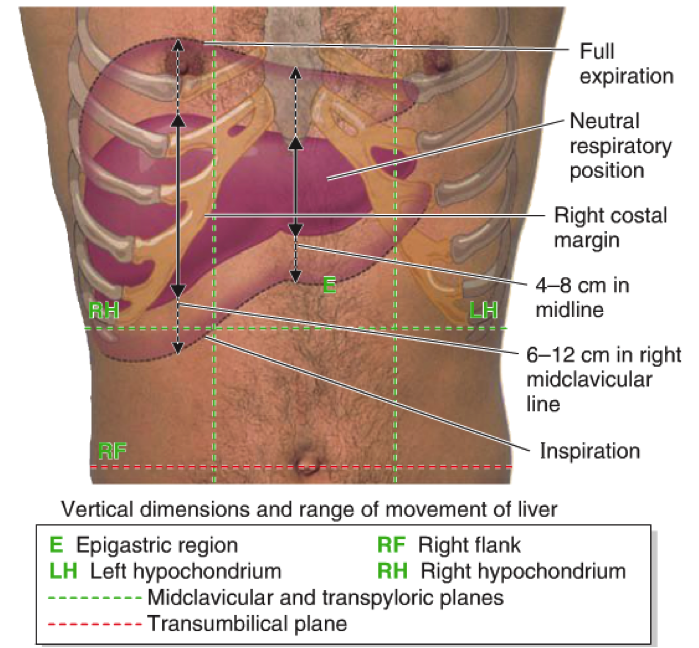
- The liver lies mainly in the right upper quadrant of the abdomen, where it is protected by the rib cage and diaphragm. The normal liver lies deep to ribs 7-11 on the right side and cross the midline towards the left nipple. Consequently the liver occupies most of the right hypochondrium and upper epigastrium and extends into the left hypochondrium
- The entire liver is covered by a fibrous layer, known as Glisson’s capsule. The ligaments and surface depressions of the liver divide it into four lobes.
- The liver moves with the excursions of the diaphragm and is located most inferiorly when standing due to gravity.
Describe the surfaces of the liver
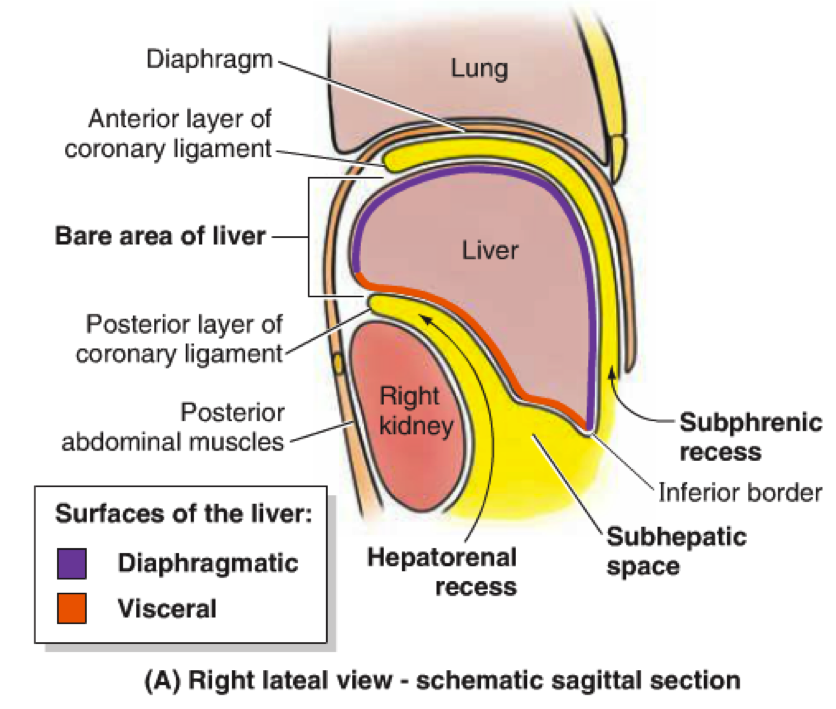
The liver has a convex Diaphragmatic surface (anterior, superior and some posterior) and a relatively flat or even concave Visceral surface (posteroinferior). The surfaces are separated anteriorly by its sharp Inferior Border that follows the right costal margin inferior to the diaphragm.
Describe the subphrenic spaces
[*] Subphrenic recesses (superior extensions of the peritoneal cavity (great sac)) exist between the diaphragm and the anterior and superior aspects of the diaphragmatic surface of the liver.
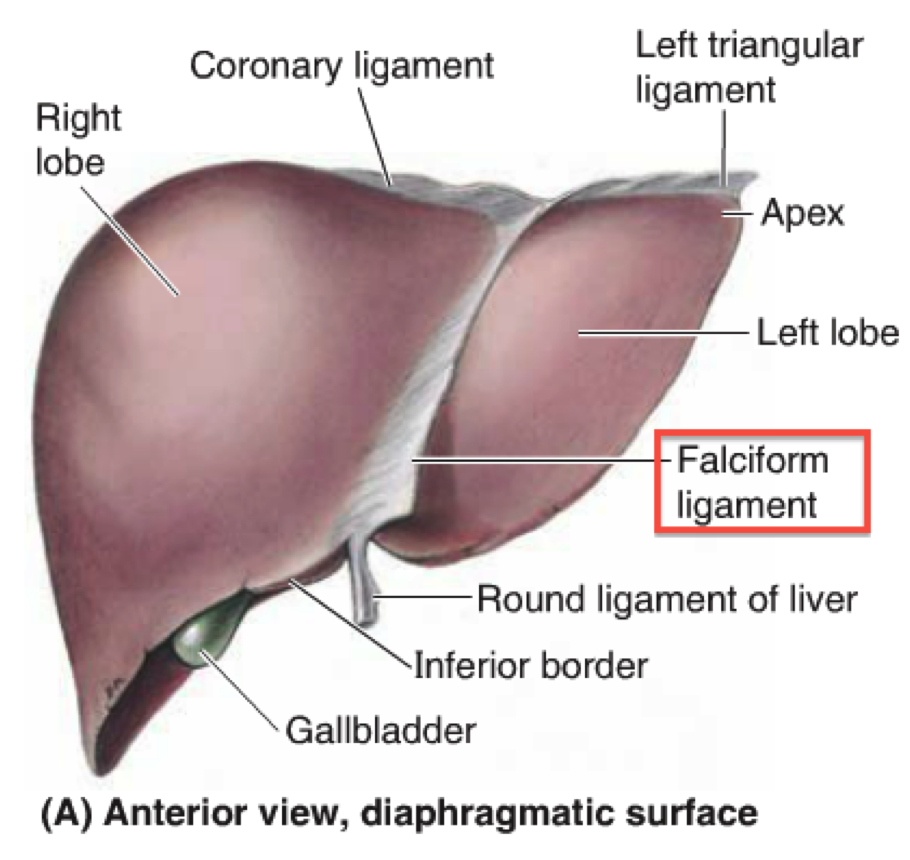
- The subphrenic recesses are separated into the right and left recesses by the Falciform ligament, which extends between the liver and the anterior abdominal wall.
- The portion of the supracolic compartment of the peritoneal cavity immediately inferior to the liver is called the subhepatic space.
- The round ligament, or ligamentum teres is contained within the Falciform ligament. It is the embryonic remnant of the umbilical vein.
What is the Bare Space of the liver?
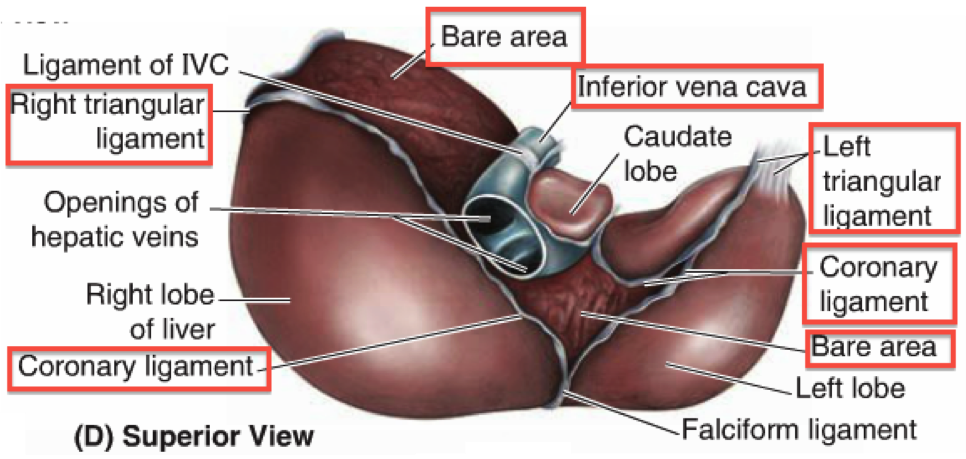
The diaphragmatic surface of the liver is covered with visceral peritoneum except posteriorly in the Bare Area of the liver, where it lies in direct contact with the diaphragm. There is a deep groove in the bare area, where the inferior vena cava travels.
- The bare area is marked out by the reflection of the peritoneum from the diaphragm to it as the anterior (upper) and posterior (lower) layers of the coronary ligament.
- These layers meet on the right to form the Right Triangular Ligament and diverge towards the left to enclose the triangular bare area.
- Near the apex of the wedge-shaped liver, the layers meet on the left to form the Left Triangular Ligament
Describe the visceral surface of the liver
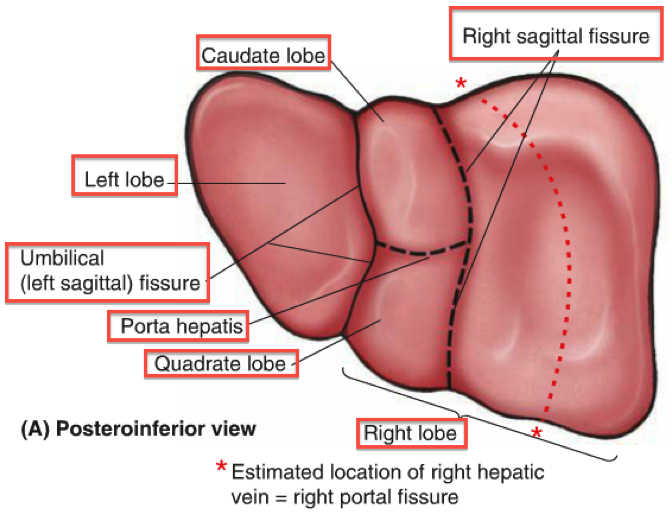
[*] The visceral surface of the liver is covered with peritoneum, except at the fossa for the gallbladder and the porta hepatis a transverse fissure where vessels (hepatic portal vein, hepatic artery and lymphatics) that supply and drain the liver enter and leave it.
In contrast to the smooth diaphragmatic surface, the visceral surface bears multiple fissures and impressions from contact with other organs
Describe the lobes of the liver
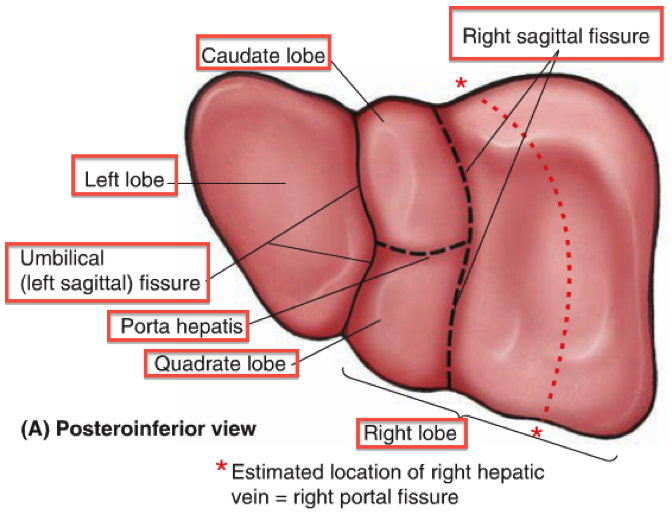
[*] The liver is split into two anatomical and two accessory lobes by the reflections of peritoneum from its surface, the fissures formed in relation to those reflections and the vessels serving the liver and gallbladder.
- The attachment of the Falciform ligament divides the Right Lobe from the much smaller Left Lobe.
- On the visceral surface the right and left saggital fissures split the right lobe with the porta hepatis being anterior and inferior to the Quadrate Lobe , and posterior and superior to the Caudate Lobe. The porta hepatis is between the 2 lobes. The right and left lobes are functional
Describe the gallbladder
- 7-10cm long
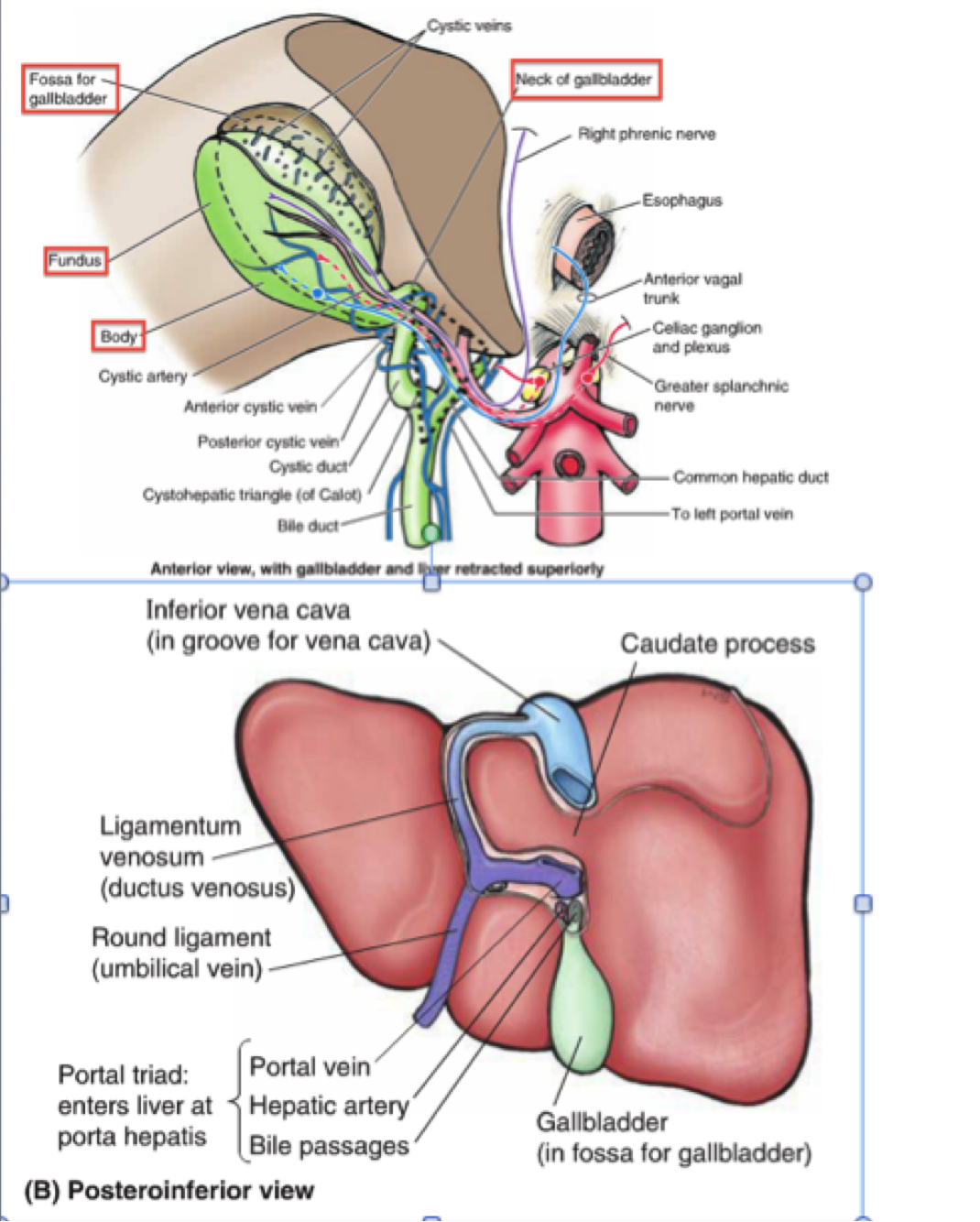
- Lies in the fossa for the gallbladder on the visceral surface of the liver. The fossa lies at the junction of the right and left lobes of the liver
- Gallbladder is pear-shaped and can hold up to 50ml of bile.
- Peritoneum completely surrounds it’s fundus and binds it’s body and neck to the liver
- 3 parts: fundus, body and neck
- The neck of the gallbladder joins the cystic duct
- The hepatic surface of the gallbladder is attached to the liver by connective tissue of the fibrous capsule of the liver
Describe the biliary tree
The Biliary Ducts convey bile from the liver to the duodenum
Hepatocytes produce bile continuously, secreting it into canaliculi.
- The canaliculi drain into the small interlobular biliary ducts and then into the large collecting bile ducts, which in turn merge to form the right and left hepatic ducts
- Shortly after leaving the porta hepatis (transverse fissure on the visceral surface of the liver), the right and left hepatic ducts unite to form the common hepatic duct.
- The cystic duct joins on the right side to form the bile duct which conveys the bile to duodenum through the Ampulla of Vatar
- Shortly before this, the Pancreatic Duct joins the bile duct
Where might gallstones cause problems?
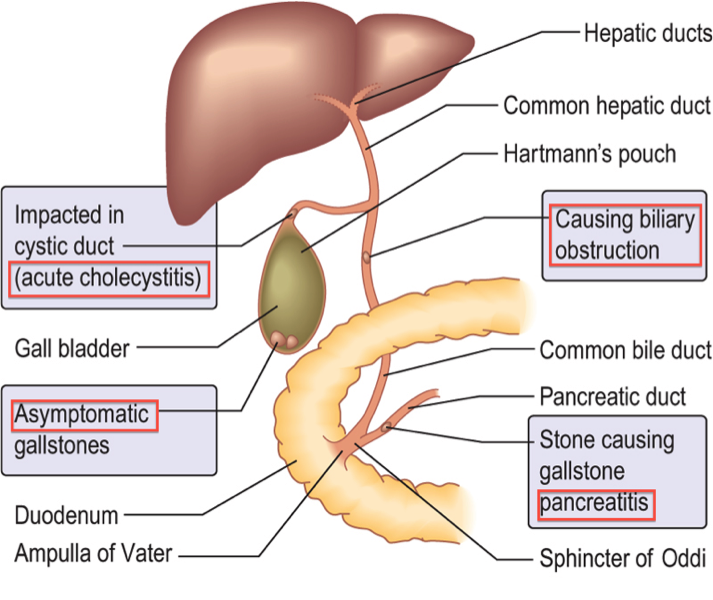
In Gallbladder: asymptomatic
Cystic Duct: acute cholecystitis
Common Bile Duct: biliary obstruction
Terminal Duct: pancreatitis
Describe the vasculature of the gallbladder and biliary tree
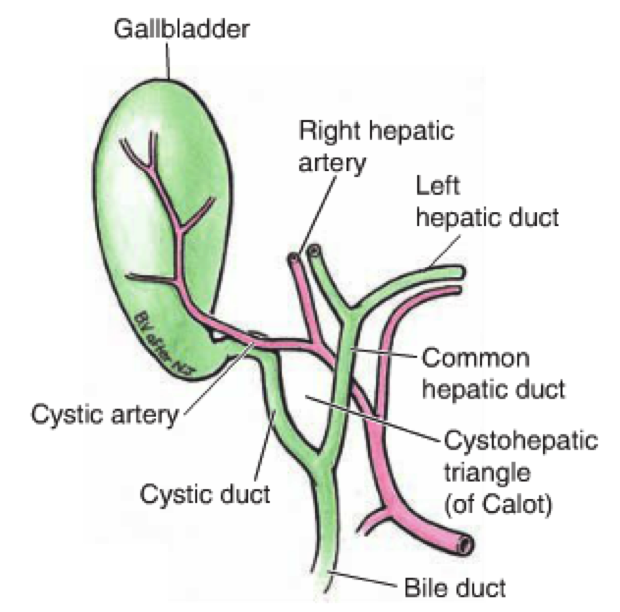
- The Cystic Artery supplies the gallbladder and cystic duct
- The cystic artery commonly arises in the triangle between the common hepatic duct, cystic duct and visceral surface of the liver. This triangle is known as the Cystohepatic triangle (of Calot)
- Coeliac Trunk => Common Hepatic => Right Hepatic => Cystic Artery
- The venous drainage from the neck of the gallbladder and cystic duct flows via the Cystic Veins. These small and usually multiple veins enter the liver directly or drain through the hepatic portal vein.
- The venous drainage from the fundus and body of the gallbladder pass directly into the visceral surface of the liver and drain into the hepatic sinusoids.
Describe the pancreas
- Elongated accessory digestive gland that lies retroperitoneally, overlying and transversely crossing the bodies of the L1 and L2 vertebrae (the level of the transpyloric plane) on the posterior abdominal wall
- It lies posterior to the stomach, between the duodenum on the right and spleen on the left.
- The transverse mesocolon attaches to its anterior margin.
- The pancreas is divide into four parts: head, neck, body, tail
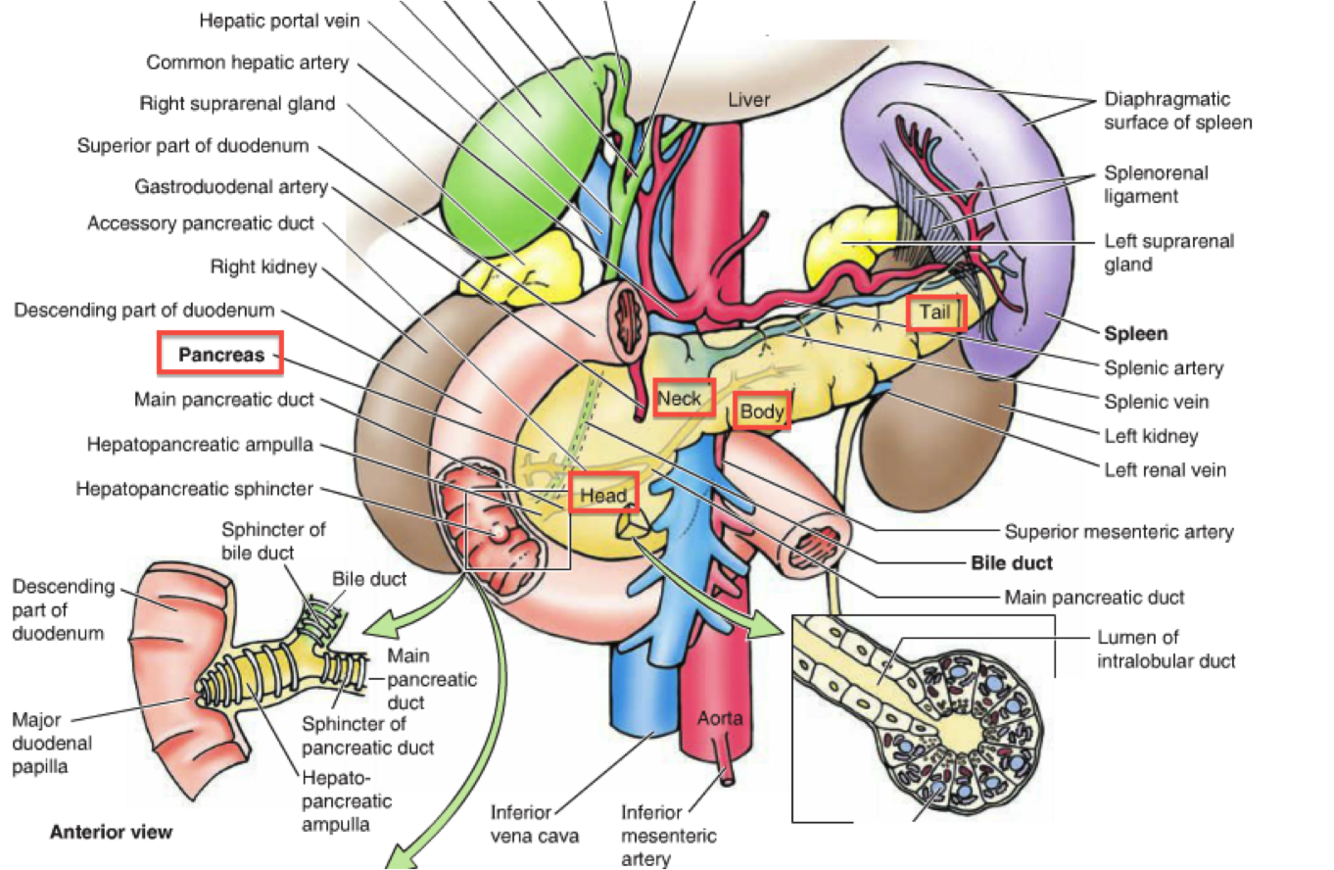
Describe the parts of the pancreas
[*] Head of the pancreas: the expanded part of the gland, embraced by the C-shaped curve of the duodenum to the right of the superior mesenteric vessels and just inferior to the transpyloric plane
[*] Neck of the pancreas:
- Short, and overlies the superior mesenteric vessels, which form a groove in it’s posterior surface
- The anterior surface of the neck is covered with peritoneum and adjacent to the pyrlous of the stomach
- The superior mesenteric vein joins the splenic vein posterior to the neck to from the hepatic portal vein.
[*] Body of the pancreas:
- Continues from the neck and lies to the left of the superior mesenteric vessels, passing over the aorta and L2 vertebra, continuing just above the transpyloric plane posterior to the omental bursa
- The anterior surface is covered with peritoneum and forms part of the stomach bed
- The posterior surface is devoid of peritoneum and is in contact with the aorta, superior mesenteric artery, left suprarenal gland, left kidney and renal vessels.
[*] Tail of the pancreas:
- Lies anterior to the left kidney where it is closely related to the splenic hilum and the left colic flexure. The tail is relatively mobile and passes between the layers of the splenorenal ligament with the splenic vessels.
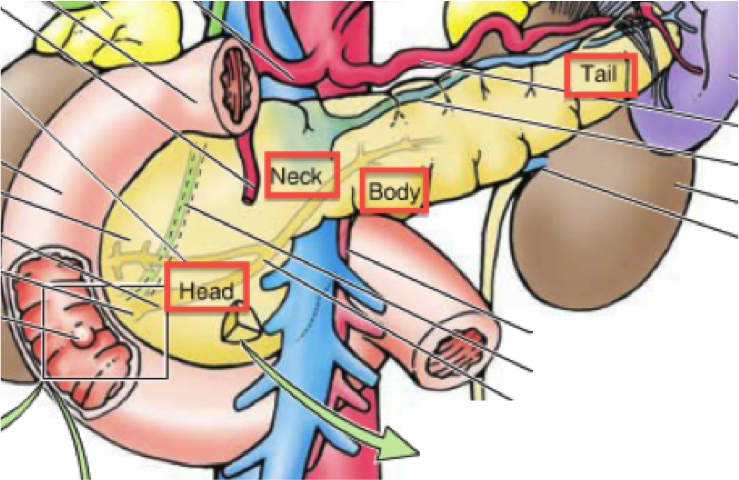
Describe the pancreatic duct
[*] The Main Pancreatic Duct begins at the tail of the pancreas and runs through the gland to the head. It then turns inferiorly and is closely related to the bile duct. The two usually unite to form the short, dilated hepatopancreatic Ampulla of Vater, which opens into the descending part of the duodenum.






