Describe the role bacteria play in supporting the normal function of the GI tract
[*] It has been estimated that a human adult houses about 10^10 bacteria in the mouth, 10^12 bacteria on the skin.
[*] There are approximately 10^14 bacteria in the GI tract, the majority of which are in the colon. This is normal flora and has several beneficial roles:
- Synthesise and excrete vitamins: Vitamin K, Vitamin B12 and Thiamine and many other B-vitamins
- Prevent colonisation by pathogens: space, bacteriosides
- Kill non-indigenous bacteria: bacteriosides
- Stimulate the development of MALT (in caecum and Peyer’s patches)
- Stimulate the production of natural antibodies – development of natural immunity to bacterial infection, development of immune system especially in the GI tract
[*] NB: colonic mucus protects colon from the flora
Describe the broad categorisation of bacteria present in the GI tract
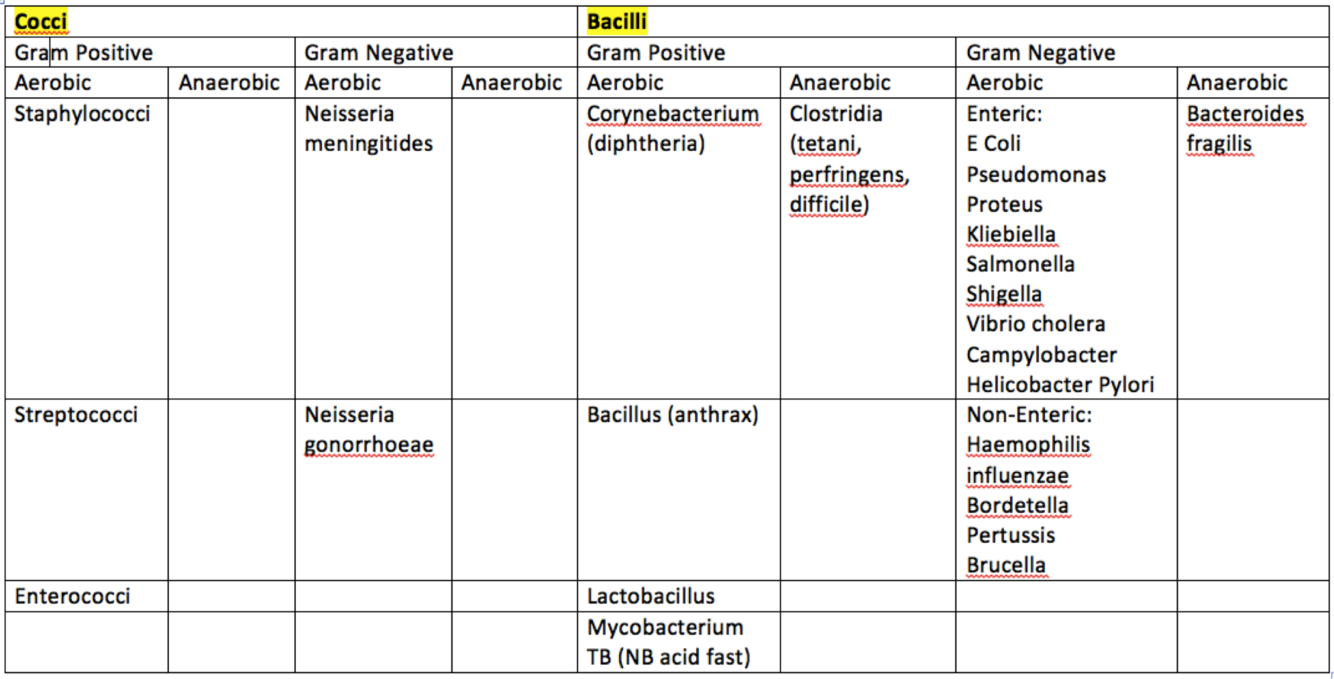
[*] Cocci/Bacilli
[*] Gram Positive / Gram Negative
[*] Aerobic / Anaerobic (obligate or facultative)
- Obligate aerobes must have oxygen e.g. Pseudomonas and Mycobacterium TB
- Obligate anaerobes die in the presence of oxygen e.g. Bacteroides fragilis/Clostridial organisms. But Clostridia form protective spores
- Facultative anaerobes prefer oxygen but can live without it e.g. Gram-negative enteric bacteria such as E. coli and Gram-positive skin-dwellers such as Staphylococcus.
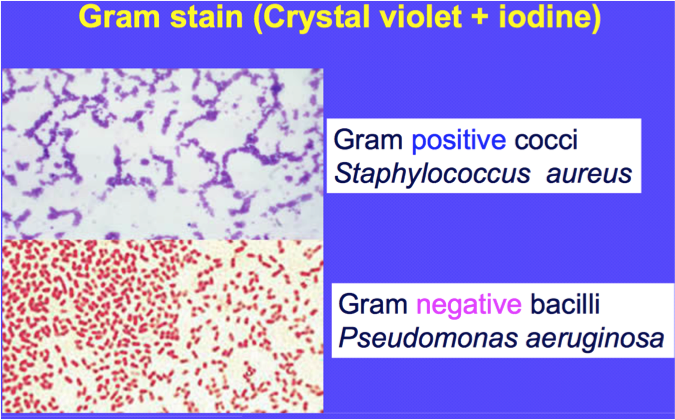
What are gram positive aerobic cocci?
Staphylococci
Streptococci
Enterococci
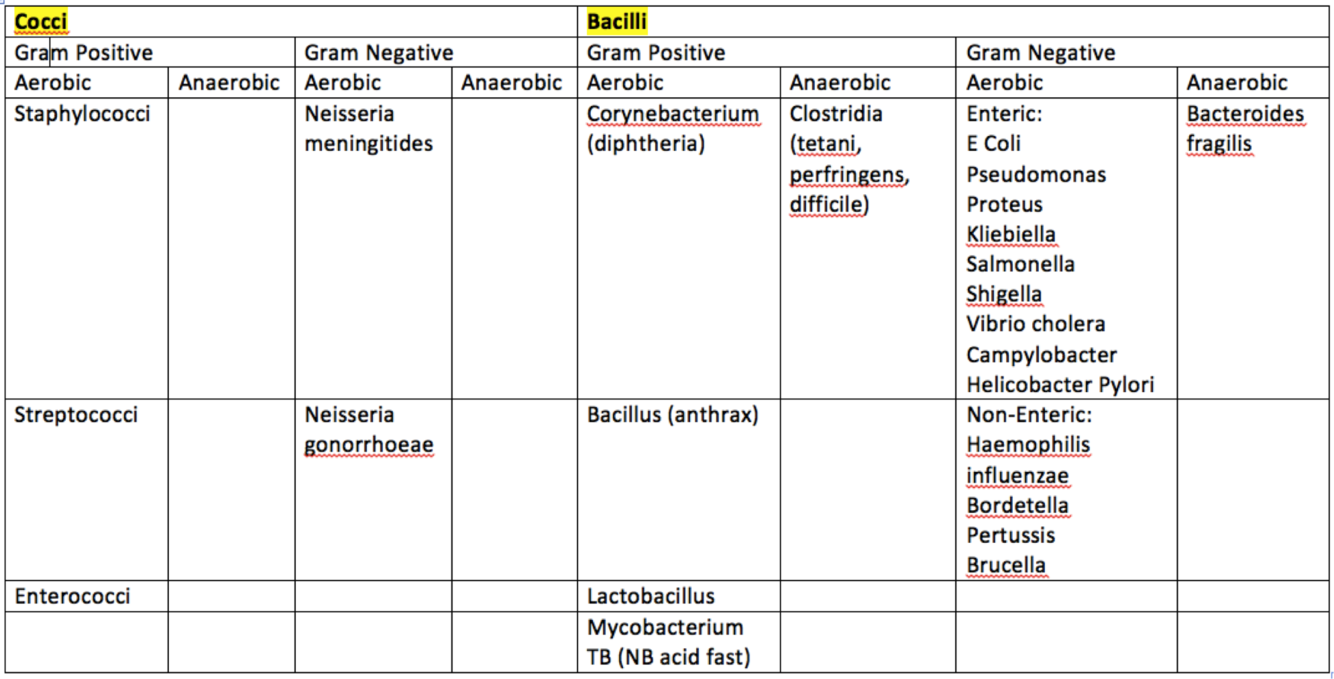
What are gram negative aerobic cocci?
Neisseria meningitides
Neisseria gonorrhoeae
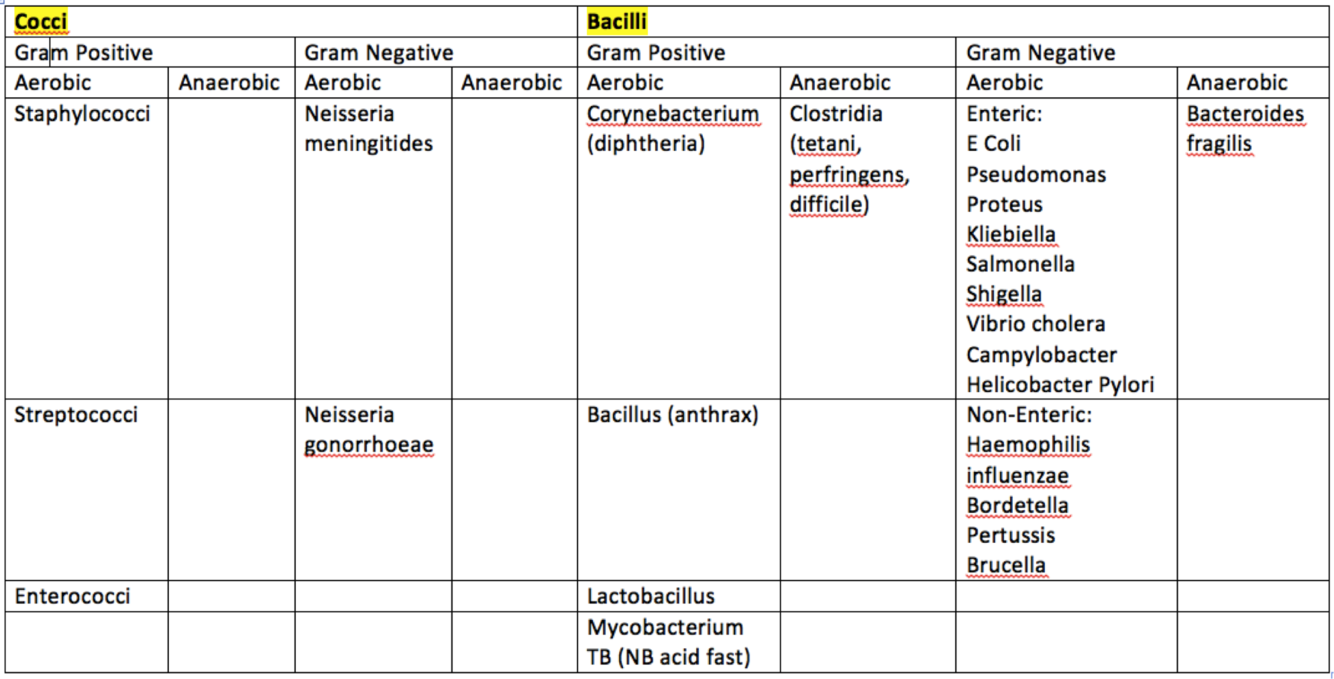
What are gram positive aerobic bacilli?
Corynebacterium (diphtheria)
Bacillus (anthrax)
Lactobacillus
Mycobacterium TB (NB acid fast)
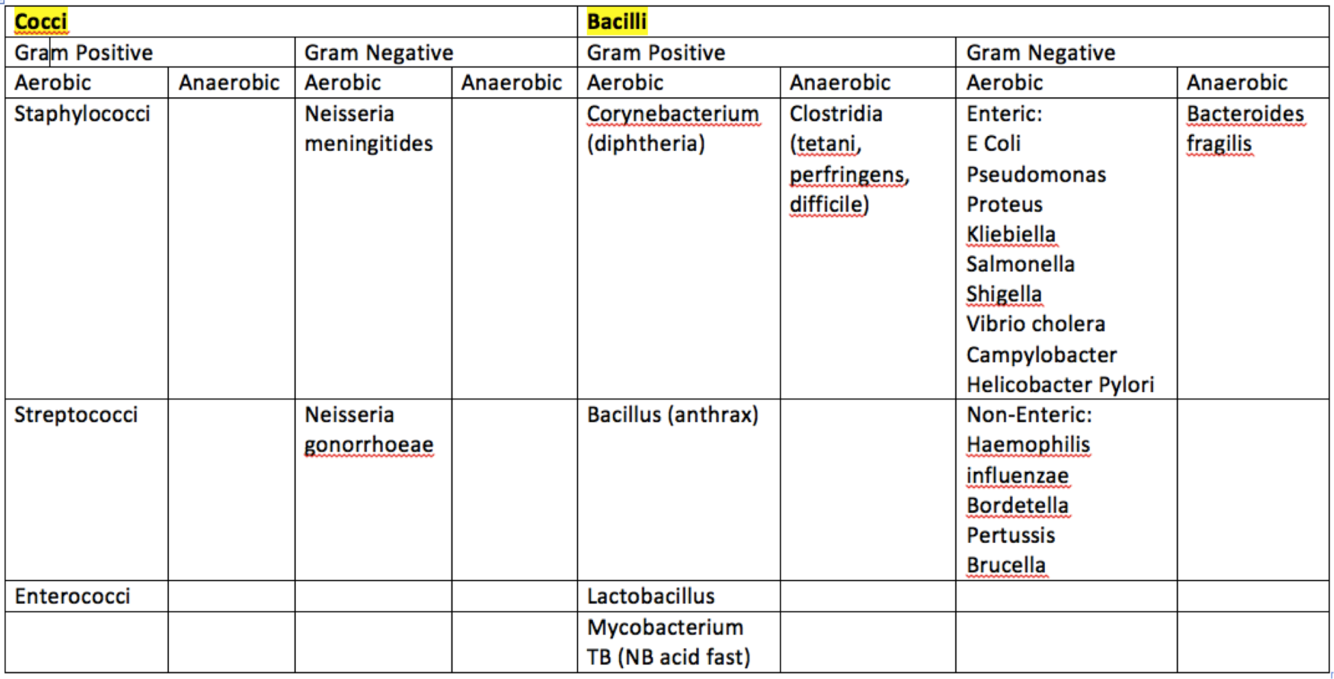
What are gram positive anaerobic bacilli?
Clostridia (tetani, perfringens, difficile)
What are gram negative aerobic bacilli?
Enteric:
- E Coli
- Pseudomonas
- Proteus
- Kliebiella
- Salmonella
- Shigella
- Vibrio cholera
- Campylobacter Helicobacter Pylori
Non-Enteric:
- Haemophilis influenzae
- Bordetella
- Pertussis
- Brucella
What is a gram negative anaerobic bacilli?
Bacteroides fragilis
Give examples of bacteria that form endospores, use pili or produce biofilms
[*] Some bacteria form protective endospores
- Bacillus anthrax
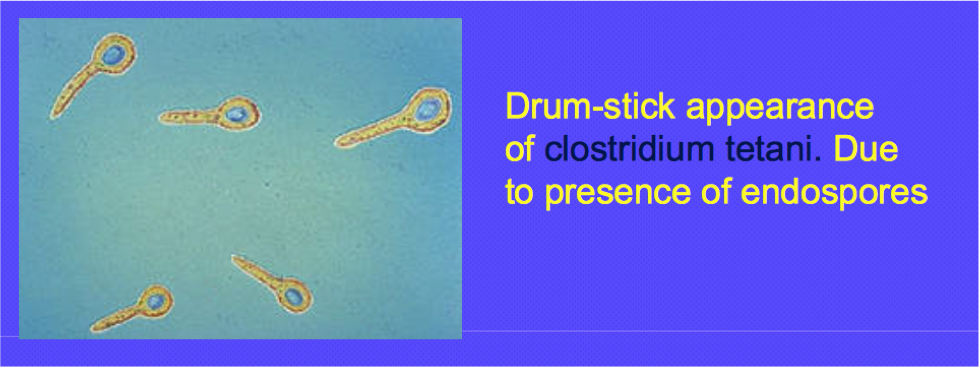
- Clostridium tetani
[*] Bacteria can stick to surfaces using pili and/or slime e.g. E.coli sticks to bladder wall using pili
[*] Some bacteria produce a biofilm of slime (layers upon layers of bacteria sticking onto a surface) e.g. Staph aureus.
What are the anaerobic zones in the GI Tract?
- Parts of the mouth: tongue, deep in tastebuds, biofilm between teeth, gingival crevice areas
- Small bowel
- Colon
Describe mouth bacteria and different infections (Parotitis, Oral Thrush, Ludwig’s Angina, Noma/Cancrum ORis etc)
[*] Mouth Bacteria: the mouth has many anaerobic bacteria (700 species have been identified in the mouth), therefore human bites can cause very nasty/fatal infections
- Streptococci e.g. Streptococcus mutans can colonise teeth and cause dental caries/ gingivitis (dental plaque)
- Staphylococci e.g. Staphylococcus aureus can cause Parotitis
- Candida e.g. Oral Thrush caused by Candida Albicans. Risk factors of developing Oral Thrush
Newborns, diabetes (Candida albicans grows well in glycosuria), antibiotics, inhaled steroids, immune deficiency
Treatment: Amphotericin lozenges, Nystatin (antifungal) suspension
- Lactobacillus
- Enterococcus
- In a malnourished, dehydrated, immunocompromised or systemically unwell patient, these bacteria can cause tissue destruction, known as Noma / Cancrum Oris
- Ludwig’s Angina: a serious, potentially life-threatening cellulitis or connective tissue infection, of the floor of the mouth usually occurring in adults with concomitant dental infectiosn and if left untreated, may obstruct the airways. Dental infections account for ~80% of cases and mixed infections due to both aerobes and anaerobes, which typically include alpha-haemolytic streptococci, staphylococci and bacteroides groups.
Describe the bacteria in the nose
- the nose has Staphylococcus and Streptococcus amongst many others. The nose is one of 3 sites for MRSA screening swabs (Nose, Throat, Perineum) as these are the 3 sites where Staphyloccoci are normally found.
Describe throat bacteria and fungi and different infections
Streptococcus Viridians
- 100% of people
- Non-pathogenic throat commensal
- During teeth brushing, dental procedures and general anaesthesia may enter the bloodstream (Bacteraemia)
- May stick to prostheses such as heart valves, vascular grafts, orthopaedic implants and cause infection.
Streptococcus Pyogenes
- Tonsillitis (30% bacterial, 70% of cases are viral
Streptococci Pneumoniae
- Community acquired pneumonia (30%)
Staphylococci
- 100% of people
Neisseria Meningitidis
- 100% of people
Haemophilus Influenzae
- Community acquired pneumonia (13%)
Lactobacilli
- Makes vagina acidic, so Candida Albicans can’t grown
Corynebacterium Diptheriae
Candida albicans
- Oral/vagina thrush
Describe tonsilitis
- 70% viral: Adenovirus, Rhinovirus, Epstein-Barr Virus (EBV)
- 30% bacterial: Streptococcus pyogenes (Beta-haemolytic)
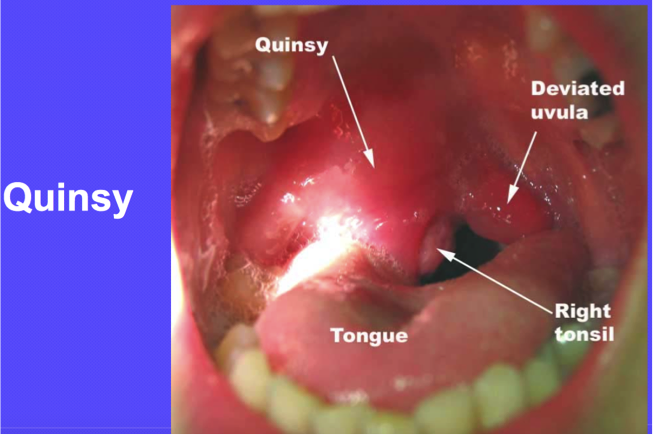
- A rare complication of tonsillitis is Quinsy, aka peritonsillar abscess
Describe bacteria in the stomach
- Helicobacter pylori: at least 50% of the world’s population is infected
- Only 10-20% infected develop gastric/duodenal ulcers
- Associated with 90% of Duodenal and 70% of Gastric ulcers
What bacteria are found in the colon?
[*] Colonic: more than 100 species regularly exist in the colon of humans, 95-99% of which are anaerobes particularly Bacteroides and Clostridial species
Always present in the colon
- Bacteroides fragillus (gram-negative, non-sporeforming anaerobic bacillus) – main one
- Bacteroides oralis
- Bacteroides melaninogenicus
- E. Coli – most common cause of UTI
- Enterococcus faecalis – second most common cause of UTI
Other Colonic Bacilli (Gram-negative aerobic enteric bacilli)
- Pseudomonas (loves moisture/fluids, Pseudomonas in endoscope ‘cleaning fluid’ has killed many patients)
- Proteus
- Kliebsiella
- Salmonella
- Shigella
- Vibrio cholera
- Campylobacter
Gram positive aerobic bacilli): Lactobacillus
Describe what is meant by dirty surgery and prophylactic antibiotics
- Although it is only the colon that normally contains large numbers of bacteria, if we are operating on the small bowel it will be abnormal. Thus all gut surgery is viewed as ‘dirty surgery’ with a high risk of wound infection – need to avoid wound dehiscence
- To reduce surgical wound infection, antibiotics are given prophylactically. They need to be able to cover anaerobes, gram negative bacilli and gram positive cocci.
- Metronidazole kills anaerobes so it is given with a broad-spectrum antibiotic such as Gentamicin or Cephalosporin
- An alternative regimen is co-amoxiclav (Augmentin) which is a PENICILLIN which cover gram positive and gram negative bacteria. Do not prescribe if patient has a penicillin allergy!
- Follow the local regime!
Describe Faecal Peritonitis and Perianal Abscess
- Faecal peritonitis (faeces in peritoneum): has a high mortality rate, even in young fit people due to the large numbers of bacteria floating free in the peritoneum.
- Perianal abscess: glands in the anal canal produce mucus for lubrication to aid with passing faeces. Infection of them leads to abscess around the anus – perianal abscess.
Describe the vaginal flora
- Lactobacillus (gram positive bacilli) is a normal vaginal flora organism. It converts glycogen into lactic acid, providing an acidic environment to prevent other bacteria and candida albicans from growing.
- Broad spectrum antibiotic treatment can kill lactobacilli and can lead to vaginal thrush
Describe the survival of colonic bacteria on perianal skin
- Bacteroides => cannot survive in O2 => not present
- E. coli => can survive in O2 => present
- Enterococcus faecalis => can survive O2 => present
- Lactobacillus => can survive O2 => present
Describe UTIs
- 90% of UTIs occur in women as there is a much shorter distance from the anus to the urethra.
- The commonest causative organism is E. coli (75%)followed by Enterococcus faecalis and thereafter various Gram –‘ve enteric bacilli (Klebsiella, Proteus, Pseudomonas)
- Relevance of urgent MSU Gram Stain in a patient with lower abdominal pain
Gram negative bacilli? Yes, E Coli
Gram-positive bacilli? No, (cannot be lactobacillus)
Gram-negative cocci? No (cannot be gonococcus)
Gram-positive cocci? Yes, can be Enterococcus
Describe Clostridia
Tetani – tetanus.
- Neonatal tetanus kills 60,000 a year
Difficile – Pseudomembranous colitis
- Severe inflammation of the colon
- Often arises after antibiotic treatment
- Produces spores, which are present in hospitals
Perfringens – gas/wet gangrene
- Anaerobic digestion of glucose leads to ethanol + CO2 (fluid pus gas), thus wet or gas gangrene. Treatment may be amputation/debridement
Describe Norovirus and Gastroenteritis
[*] The ecology of this system is easily disrupted leading to gastrointestinal disturbances, such as diarrhoea, as often happens after treatment with antibiotics.
[*] Patients may also become infected with a variety of pathogens.
[*] Norovirus: every year there are epidemics of viral infections, often noro-viruses that produce a short period of vomiting and diarrhoea
[*] Gastroenteritis (food poisoning) may follow consumption of contaminated food or drink. This may be caused by ingested organisms or ingested toxins, often of bacterial origin but already present in food. In both cases, there is vomiting and diarrhoea. Onset is very rapid if toxins are ingested, within a small number of hours but may take up to 48 hours if caused by organisms.
- The most common organisms are strains of Salmonella, Campylobacter and Listeria.
- Toxins may come from Staphylococcus and Clostridium
[*] In hospitals Clostridium Difficile can be a real problem for patients who are vulnerable because of their general poor condition. Many travellers suffer from gastro-enteritis, especially when travelling to developing countries, which may produce severe diarrhoea, though often the organism is not identified.
Describe Cholera
[*] Cholera is a severe acute infection which is endemic in many parts of the world and periodically occurs in epidemics, often a real risk after natural disasters. The organism survives in water supplies, which can be a main source of infection. The organism – vibrio cholera has a very specific effect on the ileum, leading to massive movement of water and salt into the lumen by active secretion.
- This can lead to very serious diarrhoea, which after initial evacuation has a characteristic ‘rice-water’ appearance made up of intestinal secretions plus mucus.
- Rapid severe dehydration follows, which is severely life-threatening.
- Management must replace lost water and electrolytes with appropriate replacement fluids.




