What are common GI cancers and describe the clinical features of oesophageal carcinoma?
[*] Malignant tumours of the GI tract are common. The commonest GI malignancy is colorectal cancer. Other common GI malignancies include cancers of the oesophagus, stomach, large intestine, pancreas and liver.
[*] Clinical features of oesophageal carcinoma
- Dysphagia – progressively worsening as tumour grows and occludes lumen – progressive from liquids to solids
- Weight loss
- Anorexia and lymphadenopathy are also common
What are clinical features of gastric cancer?
- Symptoms often vague
- Epigastric pain
- Vomiting and nausea (especially if the tumour is at the pylorus, causing obstruction)
- Weight loss
- Anorexia
- Anaemia, most likely iron-deficient from occult bleeding
- Hematemesis
- Palpable epigastric mass (in 50% of patients)
- Signs of metastatic spread such as ascites, hepatomegaly and jaundice
- Never ignore it if one of the supraclavicular lymph nodes on the left side of the body is enlarged. Lymph from the cardiac region of the stomach drains to these nodes and they may become enlarged due to metastatic spread from gastric carcinoma (Virchow’s node, also called Toisier’s sign)
What are clinical features of colorectal cancer?
- Altered bowel habits for greater than 6 weeks – including tenemus, increased bowel frequency
- Rectal bleeding (more common in left-sided tumours).
- Iron-deficient anaemia (often how right-sided tumours present).
- Colicky abdominal pain
- Palpable mass (either abdominal or on rectal examination)
- Weight loss
- Left sided tumours also tend to present with looser, more frequent stool and tenesmus
- Right sided tumours tend to asymptomatic leading to advanced disease at presentation.
What are clinical features of pancreatic carcinoma?
- Early symptoms vague
- Diagnosis usually delayed
- Carcinomas arising in the head and obstructing the ampulla of Vater or common bile duct causes obstructive jaundice leading to enlarged gallbladder. Classical presentation is painless, progressive jaundice.
- Carcinomas arising in other parts of the pancreas are less likely to produce symptoms and so are discovered late. Consequently, they have a worse prognosis, often having metastasized before diagnosis.
- Pain, diabetes mellitus, and general features of malignancy e.g. weight loss.
- Tousseau’s sign – migrating thrombophlebitis (pathological phenomenon of clots forming, resolving and then appearing again elsewhere in the body)
- Imaging allows diagnosis – often a biopsy is not possible
Describe how GI derived infection or cancers may spread within the body (including GI lymphomas)
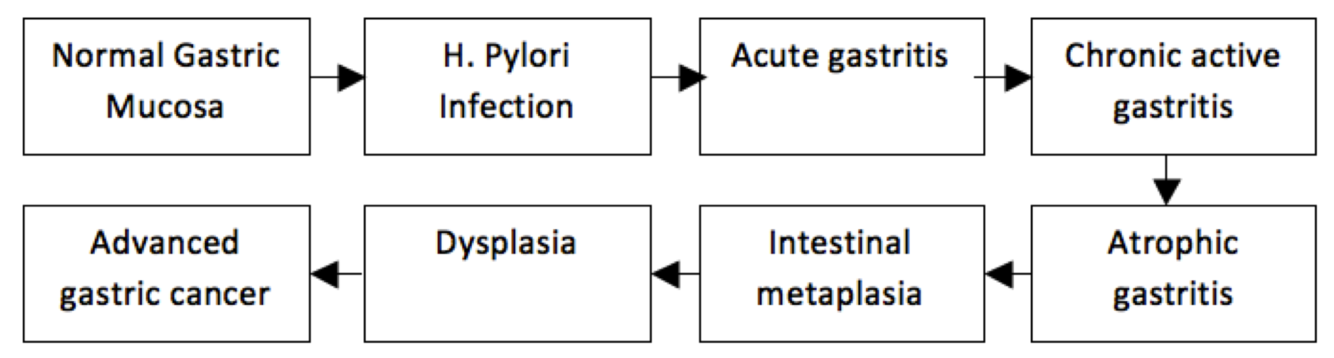
[*] There is a general association of chronic inflammation with cancer. Gastric cancer is common in countries with high H. Pylori prevalence e.g. Columbia. The association is supported by serological and epidemiological evidence.
[*] Gastric Lymphoma
- The commonest GI lymphoma
- Starts as a low-grade lesion
- Strong association with H. Pylori
- Eradication of H. Pylori may lead to regression of tumour (therefore not technically malignant – but very narrow treatment window)
- Prognosis much better than gastric cancer.
What’s the most common GI malignancy?
[*] Common => Rare (New Cases per year in England and Wales): Colorectal (25,000) => Stomach (11,000) => Pancreas (5,500) => Oesophagus
[*] The commonest GI malignancy is colorectal cancer and approximately 25,000 new cases are reported in England and Wales per year. 2nd biggest cause of cancer death in the UK. More common in males.
- Peak at 60-70
- High in UK/USA, low in Japan (western diets high in fat and low in fibre carry a greater risk)
- Polyposis syndromes - majority of tumours are adenocarcinomas which evolve from polyps
- UC and Crohn’s
- Aetiology: low residue diet, slow transit time, high fat intake, genetic predisposition
- Fibre increases the bulk of faeces as long as fluid intake is adequate which reduces the time taken for the contents of the intestines to pass through and out of the rectum. In a low-fibre diet, faeces remain in the intestine for longer, altering the normal flora. This is thought to predispose to cancer.
- Outcome: the survival rate reduces with increasing Duke’s Stage (now TNM staging system is used), and metastases to the liver are common in advanced disease. Following this, other common sites include lung, brain and bone.
- Surgery is the mainstay of treatment if the disease is confined to the colon. Depending on the site of the tumour, an end-to-end anastomosis or end colostomy will be performed. Chemotherapy is often useful in metastatic disease.
- Resection of liver deposits (metastases) can prolong survival
- Local radiotherapy
- Chemotherapy – palliative treatment
What’s the 2nd most common GI malignancy?
[*] Carcinoma of the stomach is the second most common GI malignancy with approximately 11,000 new cases registered in England and Wales per year. The incidence is falling in the UK but carcinoma of the stomach remains a very common malignancy in global terms.
- Common – 15% of cancer deaths worldwide
- Men > women
- Geographical variation – common in Japan, Columbia and Finland. Dietary factors may act to initiate or promote carcinogenesis. A diet high in salt increases the risk. Also, dietary nitrates are converted to carcinogenic nitrosamines by bacteria. Therefore diets high in nitrates predispose to carcinoma.
- Associated with Gastritis
- Commoner in Blood Group A – genetic predisposition?
What’s the third most common GI malignancy?
[*] The pancreas may also be considered to be part of the GI tract and approximately 5500 new cases of carcinoma of the pancreas are registered in England and Wales per year. This tumour tends to present at an advanced stage and little is known of its aetiology. Because of the late presentation, prognosis is very poor indeed.
[*] Carcinoma of the Pancreas: accounts for about 5% of all cancer deaths in the USA and in the UK
- Particularly common in diabetic females, being most common over the age of 60 years.
- Associated with smoking.
What’s the 4th most common GI malignancy?
[*] The next most common malignancy is carcinoma of the oesophagus which may arise from the squamous or so-called columnar epithelial lined oesophagus. Dysphagia is common presenting symptom and many tumours are inoperable at the time of presentation.
- Epidemiology: wide geographical variation – incidence low in USA, and high around Caspian Sea and parts of China
- 2% of malignancies in the UK, more common in males then females.
Oesophageal Squamous Carcinoma aetiology/pathogenesis
- HPV? Tanning? Vit A deficiency? Riboflavian Deficiency>
- Caused by smoking, alcholhol
- Presumed progressed through dysplasia (squamous dysplasia => squamous carcinoma)
Oesophageal Adenocarcinoma aetiology/pathogenesis
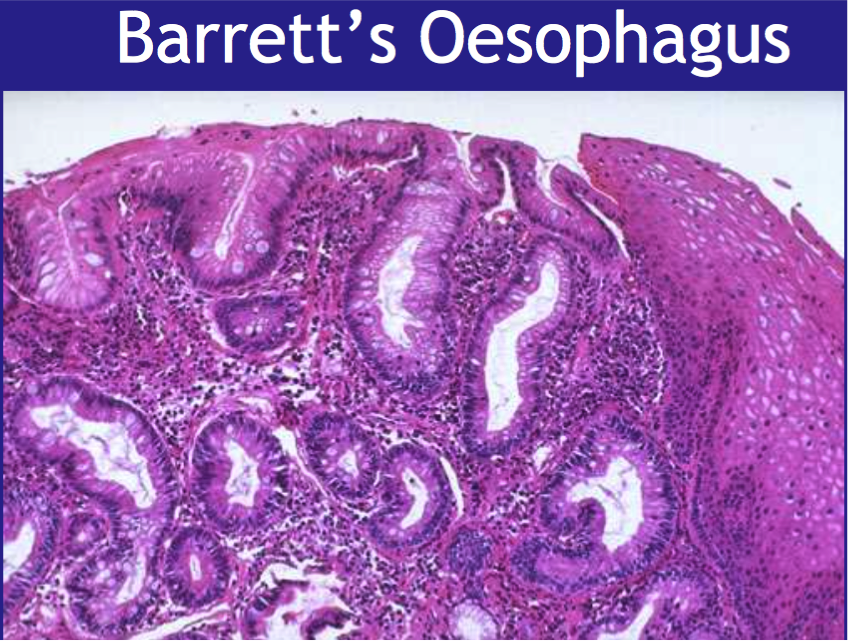
- Arises in metaplastic epithlium of Barretts oesophagus – to protect against gastric reflux
- Progresses through dysplasia (through inflammation and acquired gastric mutations)
- Controversy over follow up (not everyone Barrett’s oesophagus gets adenocarcinoma)
What investigations would you do for an oesophageal carcinoma and describe the pathological features
[*] Oesophageal carcinoma Investigation:
- Endoscopy
- Biopsy
- Barium
[*] Oesophageal carcinoma pathological features
Squamous Cell Carcinoma
- Commonest Type
- May occur at any level
Adenocarcinoma
- Uncommon
- Lower third, near gastro-oesophageal junction
- Association with Barrett’s Oesophagus (in cases of prolonged injury, the normal squamous epithelium may be replaced by columnar epithelium which is covered by mucin (a metaplastic change) which may be followed by dysplasia which predisposes to malignancy). Adenocarcinoma is 30-40 times more likely to occur in patients with Barrett’s oesophagus
Describe the prognosis of oesophageal carcinoma
- Advanced disease at presentation in most cases
- Direct spread through the oesophageal wall (into lymphatics and blood vessels)
- Only 40% resectable (but in older patients who have resectable tumours, they may not be suitable for surgery due to other comorbidities)
- Treatment is mainly palliative and consists of surgery, radiotherapy and endoscopic placement of an oesophageal stent – a tube passed through the tumour to facilitate swallowing (but tube has no sphincter mechanism – reflux occurs when you lie flat)
- 5% five-year survival
What investigations would you do for Gastric Cancer
- Endoscopy
- Biopsy
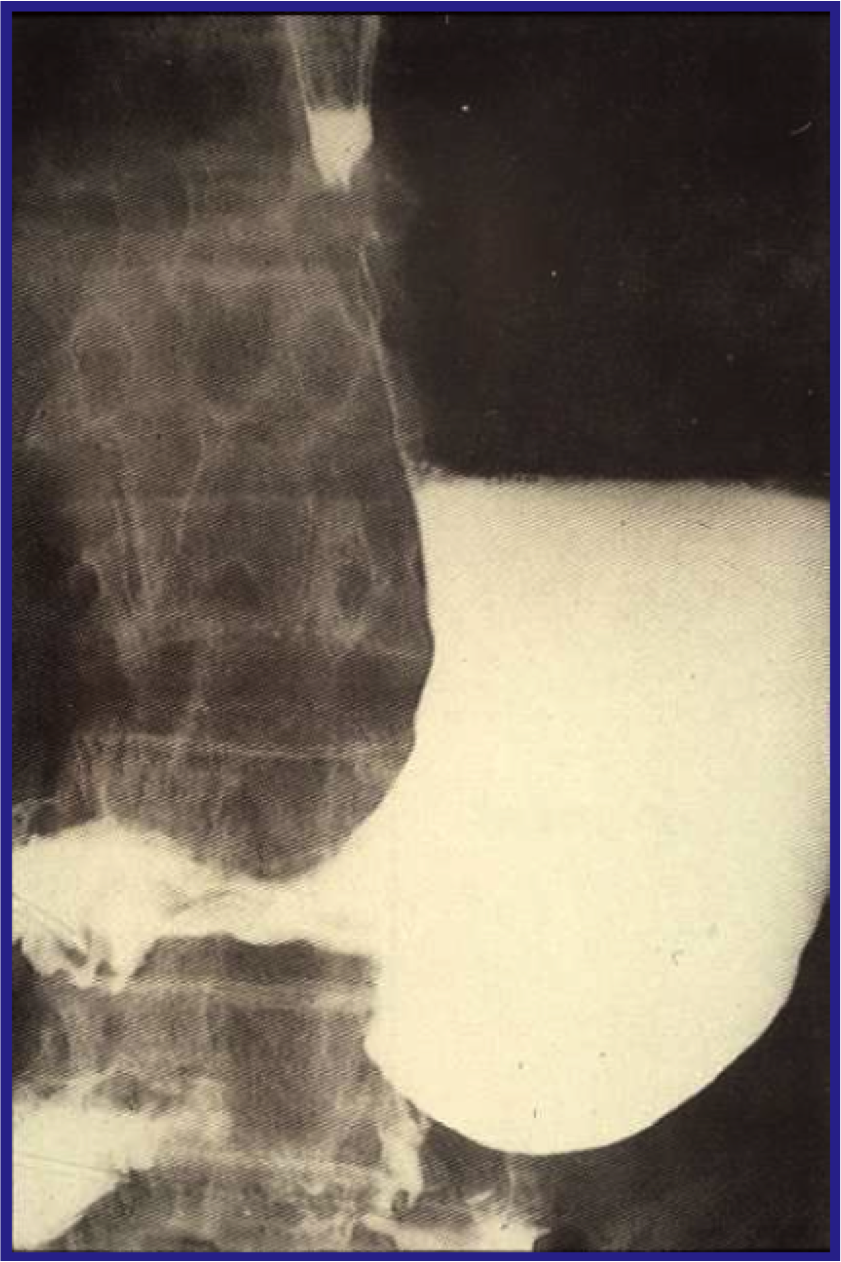
- Barium ( image shows apple core stricture in the antrum – indicative of gastric carcinoma)
- CT is usually performed to look for any metastatic spread.
Describe the macroscopic features of gastric carcinoma
- Fungating (when a cancer breaks through the skin to create a wound – radiating folds of mucosa around a central ulcer)
- Ulcerating
- Infiltrative (Linitis plastica) – leather bottle stomach due to diffuse infiltration of the carcinoma into the gastric wall. The stomach becomes small, thick and contracted (doesn’t collapse). These present very late and so have a very poor prognosis. Unfortunately, they comprise a third of all gastric carcinomas.
- Polypoid tumours – these tend to present early with discomfort, as they protrude into the lumen and so are subject to trauma. It has the best prognosis of all the pathological types as it is most suitable for surgical excision.
- Colloid tumours: large tumours which appear gelatinous
Describe the microscopic features of Gastric Carcinoma
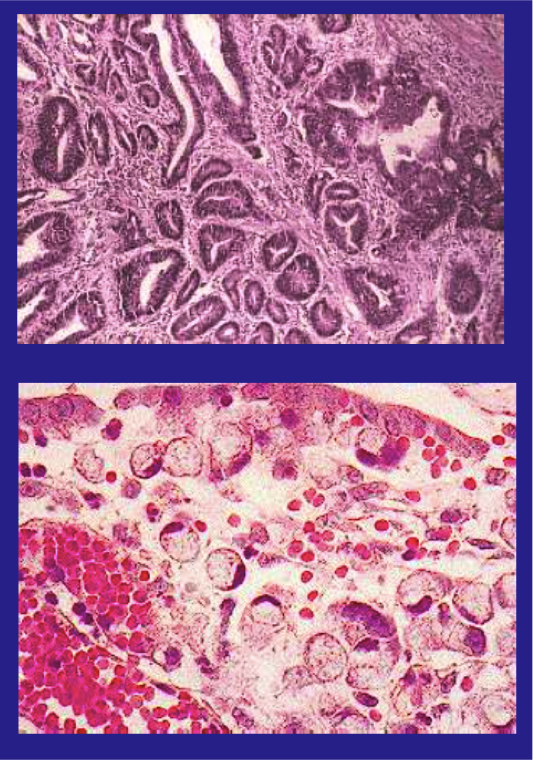
- Intestinal: variable degree of gland formation
- Diffuse: single cells and small groups, signet ring cells (peripheral nucleus, big globs of mucin) – histology shows sheets of anaplastic cells, many with a single vacuole displacing the nucleus to one side ‘signet ring cell’.
Describe the prognosis and spread of Gastric Cancer
[*] Early Gastric Cancer
- Confined to mucosa / sub-mucosa
- Good prognosis (dependent on how far spread)
[*] Advanced Gastric Cancer
- Further spread
- Common in the UK
- ~10% 5 year survival
[*] Gastric Cancer Spread
- Direct: through gastric wall into duodenum, transverse colon, pancreas
- Lymph nodes
- Liver
- Transcoelomic (through the gastric wall into the peritoneum, cells can be shed into the peritoneal cavity)
- Peritoneum
- Ovaries (through peritoneal seeding, metastases can also be found in the ovary – Krukenberg tumour)
- Metastases can occur in the liver, bone, brain and lung.
Describe the treatment for gastric cancer
- Surgery to excise the tumour and any affected lymph nodes. Partial or total gastrectomy may be necessary in some cases.
- Chemotherapy
- Radiotherapy
- Herceptin – HER2 gene is sometimes amplified in gastric cancer and oesophageal adenocarcinoma
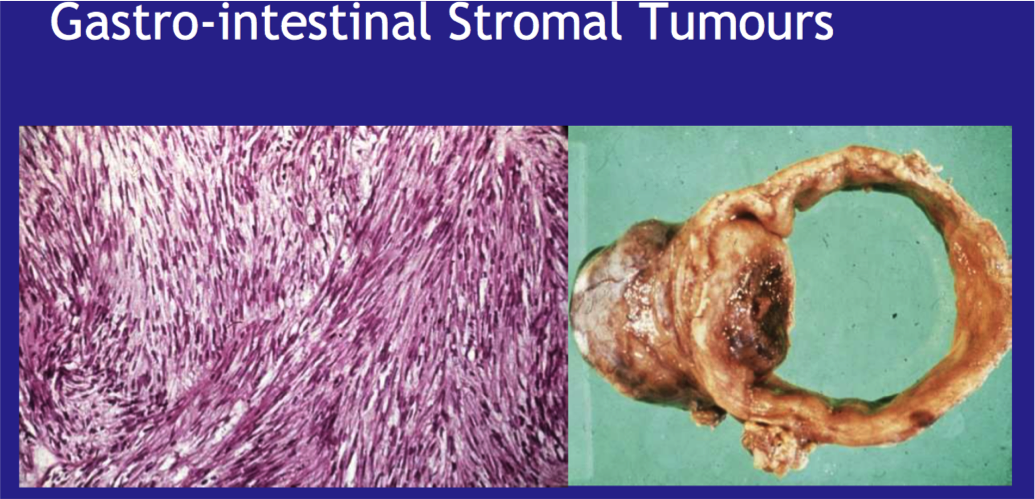
Describe Gastrointestinal stromal tumours
- Uncommon
- Derived from interstitial cells of Cajal (pacemaker cells involved in initiation and maintenance of peristalsis)
- The causative mutation, C-kit (CD117) makes it vulnerable to targeted treatment - Imatinib (usually given after surgical treatment for residual disease)
- Unpredictable behaviour
Pleomorphism
Mitoses
Necrosis
What are the different types of tumours that can occur in the Large Intestine?
Adenomas:
- Benign, neoplastic lesions in the large bowel (Dysplasia)
- Familial Adenomatous Polyposis (FAP)
- Gardner’s Syndrome
Adenocarcinomas
Polyps
Anal Carcinoma
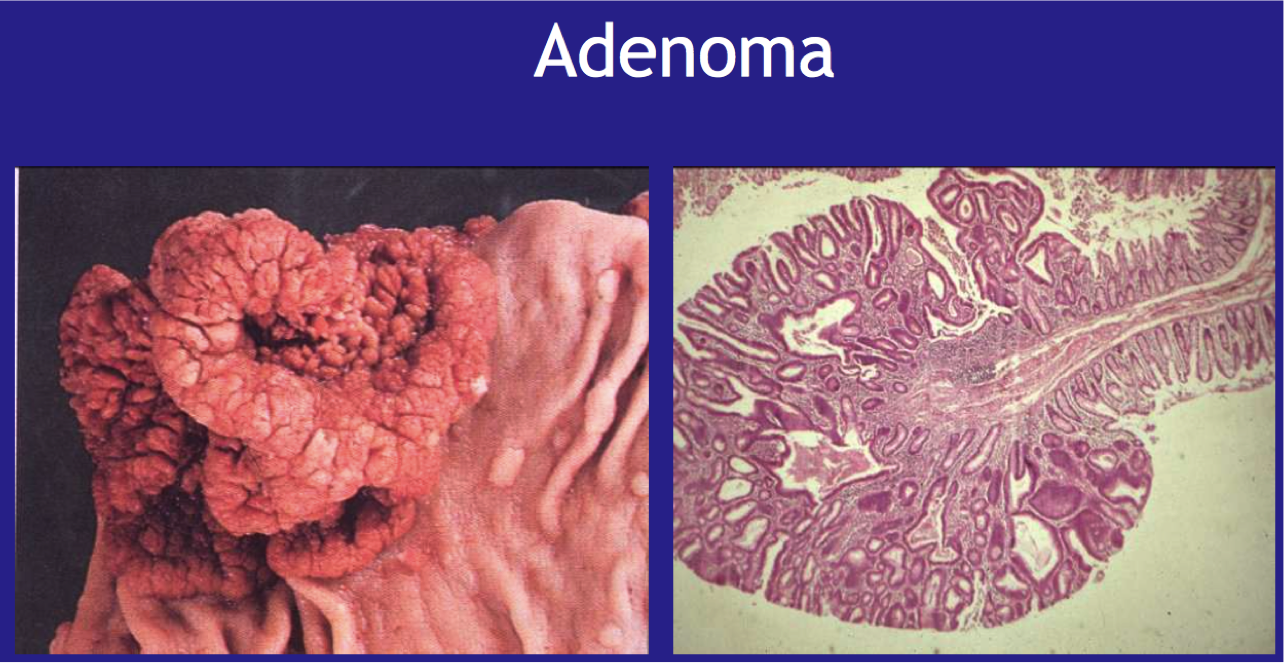
Describe Large Intestinal Adenomas
- Benign, neoplastic lesions in the large bowel (Dysplasia) – derived from glandula epithelium
- Macroscopic: sessile (attached directly by its base) or pedunculated (attached by elongated stalk)
- Of all adenomas, 75% are tubular, 10% are villous and the remainder a mixture of the two (tubulovillous).
- Villous adenomas are usually sessile and larger (up to several cm in diameter) and have villi lined with dysplastic columnar epithelium protruding from their surface.
- Almost all colonic carcinomas originate from an adenomatous polyp.
- Behaviour: definite malignant potential – related to increasing polyp size and the histological type, with villous adenomas having a greater tendency to malignant change.
- Microscopic: variable degree of dysplasia
- Incidence increases with age in western population and associated with genetic syndromes. Relatively common.
What is FAP and Gardner’s Syndrome?
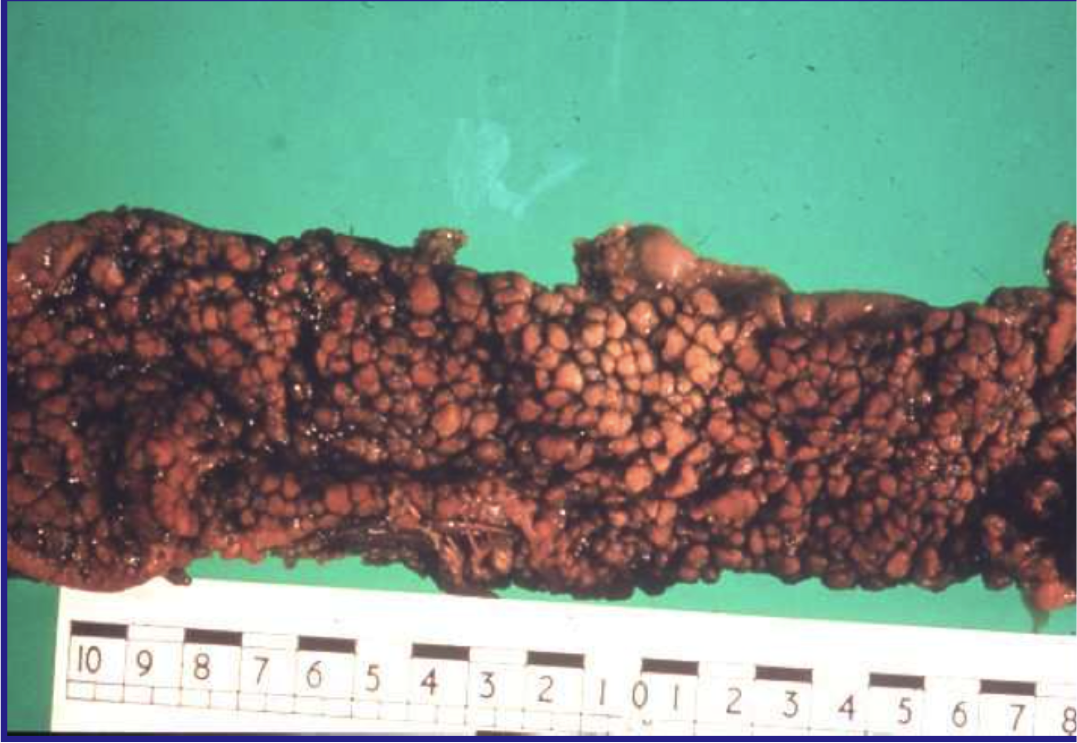
[*] Familial Adenomatous Polyposis (FAP):
- An autosomal dominant condition involving the APC gene Chromosome 5 (between q21 and a22).
- By the time the patient is 20, there are thousands of adenomas in the large intestine, giving a high risk of cancer and to a lesser extent, the small intestine. Normally develop cancer by the age of 35 years.
- NSAIDS are thought to be protective.
[*] Gardner’s Syndrome:
- Similar to FAP, with bone and soft tissue tumours.
Describe the adenoma-carcinoma sequence
- Geographical distribution of adenomas and carcinomas very similar
- Anatomical distribution of adenomas and carcinomas very similar
- Synchronous lesions (2 or more histologically different lesions detected at the same time)
- Metachronous lesions – appearing at different times
- Adenomas with invasion e.g. Adenoma => In-situ carcinoma => Invasive carcinoma
Describe the macroscopic features of Colorectal Cancer
[*] Macroscopic features of Colorectal Cancer (adenocarcinomas)
- 60-70% rectosigmoid (especially sigmoid colon)
- Fungating (especially right side)
- Stenotic (especially left side)
- Colonoscopy is the gold standard investigation as it also allows biopsies to betaken for a histological diagnosis.
- Can spread
- Directly through bowel wall to adjacent organs e.g. bladder
- Via lymphatics to mesenteric lymph nodes
- Via portal venous system to liver
Describe the microscopic features of colorectal cancer
[*] Microscopic features of Colorectal Cancer: moderately different adenocarcinomas
- Mucinous
- Signet ring cell type
How would you measure the spread of colorectal cancer?
[*] Spread of Colorectal Cancer
Duke’s
- A – invaded submucosa and muscle layer of the bowel, but confined to the wall. (correspondingly good prognosis)
- B – Through muscle layer and bowel wall but no involvement of lymph nodes
- C1: spread to immediately draining pericolic lymph nodes
- C2: spread to higher mesenteric lymph nodes
- D: distant visceral metastases (5-year survival – 5%)
TMN (is used these days as well)






