what are the 3 major regions of the integument
Epidermis - outermost superficial region
Dermis - middle region
Hypodermis (superficial fascia) - deepest region
what are the cells of the epidermis
- composed of kertainized stratified squamous epithelium
- 4 cell types and 4-5 layers
Keratinocytes: produce fibrous protein keratin
melanocytes: produce bown pigment melanin
langerhans cells: macrophages, part of immune system
merkel cells: function as touch receptors in association with sensory nerve endings
what are the layers of the epidermis
dermis, stratum basale, stratum epinsosum, stratum granulosum, stratum corneum
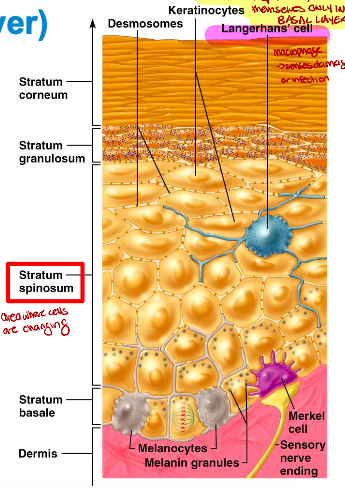
describe the stratum basale
- basal layer
- deepest epidermal layer, firmly attached to dermis
- consists of single row of youngest keratinocutes cells undergo rapid division, hence its alternate name stratum germinativum
*single layer of cells
describe the stratum spinosum
aka prickly layer
- keratinocytes in this layer appear irregular in shape
- web-like system of intermediate filaments attached to desmosomes
- melanin granules and langerhans cells are abundant in this layer
*area where cells are aging
where are melanocytes located
ONLY in basal layer
- have membrane proejctions that go into stratnum spinosum
- keratinocytes take up melanin granules
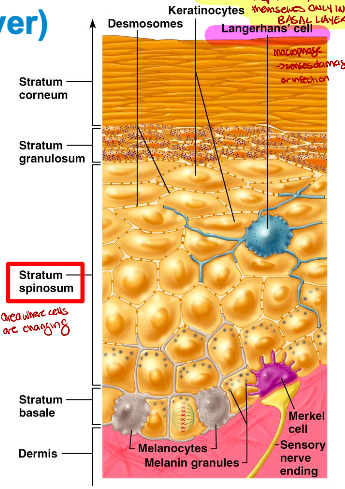
what are the two types of granules in the stratum spinosum
keratohyaline granules: involved in cross linking keratin and cellular dehydration
*make tissue stronger by cross linking keratin
lamellar granules: waterproofing glycolipid grandules that are spewed into extracellular space
*main reason the skin is waterproof
describe the stratum granulosum
*as cells go clsoer to skin go farther from nutrient soruce
- cells flatten, their nuceli, organelles begin to dsiintegrate
- accumulate keratohyaline granules and lamellar granules
- PMs thicken, cytosol proteins bind to inner membrane face and released lipids coats their external surfaces
- above stratum granulosum, the epidermal cells are too fat from dermal capillaries and die
*process thought of as toughening up
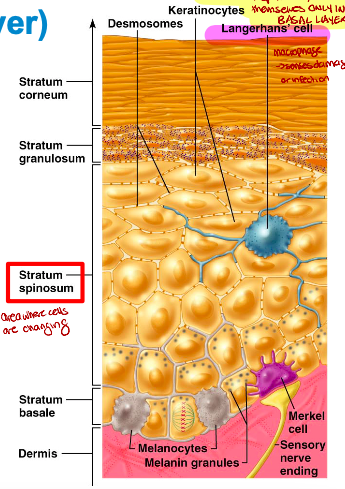
what is the stratum lucidum
- celar layer
- thin trasnparent band superficial to stratum granulosum
- few rots of flat dead keratinocytes
- Oily layer that is the result of exocytosis of lamellar bodies
only in thick skin: palsm fo ahnds and soles of feet
**only in thick skin like palsm of hands and soles of feet, not elsewhere
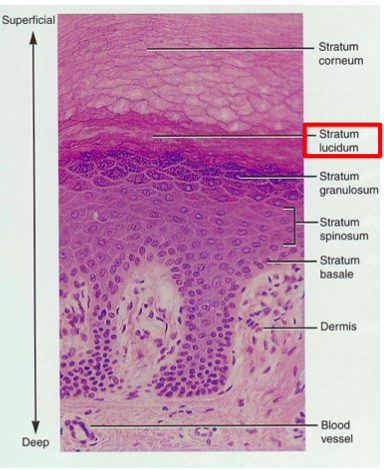
describe the stratum corneum
- horny layer
- outermost layer of keratinized cells (3/4 thickness of epidermid)
*most of epidermis is stratum corneum
- dandruff is the shingle-like remnants of the stratum corneum that shed from scalp and dry skin
functions include:
- > waterproofing (glycolipids)
- . protection from abrasion and penetration (keratin and thickcened plasma mem)
- rendering body less sensitive to biolgoical and chemical and physical assults
what are the alyers of the epidermid
most superfisical -> deep
corneum, lucidum, granulosum, spinosum , basale
*come lets get sun burnt
*lucidim is only in thick skin like palsm and soles
what is the dermis
- contains strong, flexible connective tissue
- cell ypes inclueL fibroblasts, macrophages, mast cells and WBC
- has two layers:
- > Papillary (loose areolar conencive tissues)
- > returcular layer (dense irregular)
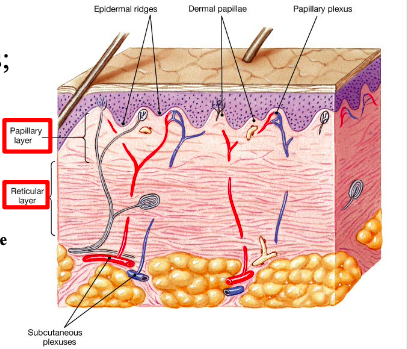
describe the appillary layer of the dermis
- areolar connective tissue (collagen and elastic fibers)
- sueprior surface contains Peg-like projections called dermal papillae
- dermal papillae contains: capillary loops, meissner corpuscles and free nerve endings
describe the reticular layer of the dermis
- apporx 80% of the thickness of skin
- dense irregualr conenctive tissue
- collagen fibers add strength and resiliency
elastin fibers provide stretch recoil properties
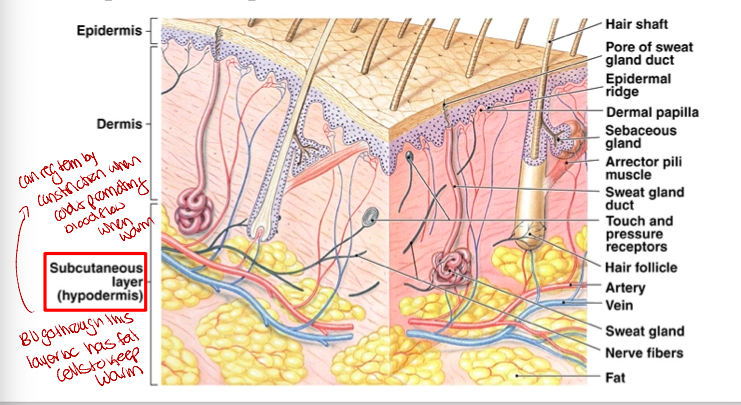
what is the hypodermis
- subcutaneous layer deep to the skin
- composed of adipose and areolar conenctive tissue
- blood vessles go through this layer bc has fat to keep them warm -> can reg temp by constriction when cold and promoting blodo flow when warm
what causes variations in skin colour
3 pigments: melamin, carotene and hemoglobin
- Melanin:
- yellow - black pigment responsible for dark skin colours
- freckles and males are local accumulatoins of meanin in karatinocyttes
- Carotene:
- yellow-orange pigment, most obvious in the palms and soles of feet
- accumulates in corneum and hypodermis (high conc of fat)
- yellow-orange pigment, most obvious in the palms and soles of feet
- hemoglobin:
- Reddish pigment responsible for the pinkish hue of the skin
- *cyanosis due to poorly oxygenated blood (blueish purple)
what are the 4 types of sweat glands
sudoriferous glands, ceruminous, mammary and sebaceous
descibe sudoriferous sweat glands
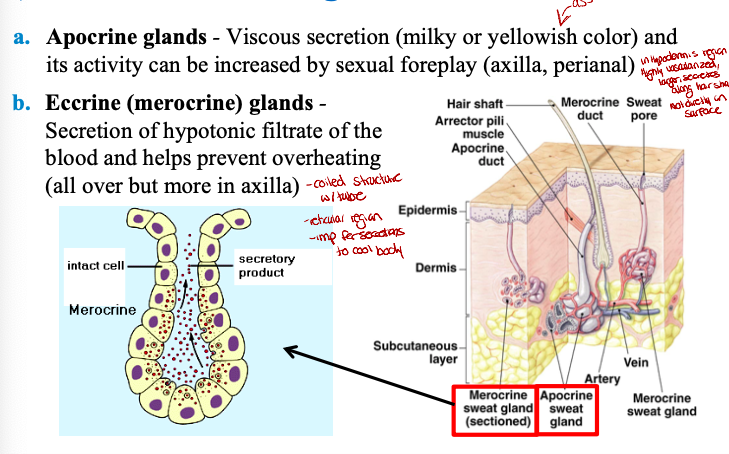
2 typres
- Apocrine glands
- viscous secretion (milky yellowish colour)
- activity can be increased by sexual foreplay (axilla, perianal)
- associated with hair follicle
- Eccrine (merocrine) glands
- secretion of hypotonic filrate of the blood
- helps to prevent overheating (all over but more in axilla)
- coiled strucute with tube
desrcibe the ceruminous gland
Secrete cerumen or earwax
thought to deter insects and block entry of foreign material
describe mammary glands
specialized sweat glands that secrete milk
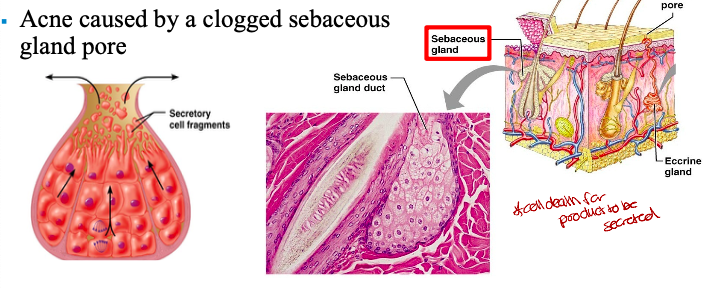
describe sebaceous oil glands
- holocine oil secretion called sebum (made of colesterol, proteins, fats and salts)
- keeps hair and skin soft and pliable, inhibits growth of bacteria and fingu (ringworm)
- activated during puebrty when androgens begin torise
- acne caused by clogged sebaceous gland pore
what are the functions of hair
Alerting the body to presence of insects on the skin
Guarding the scalp against trauma, heat loss and sunlight
Eyelashes shield the eyes and nose hairs filter large particles
what locations on the body do not have hair
Palms, soles, lips, nipples and portions of
the external genitalia
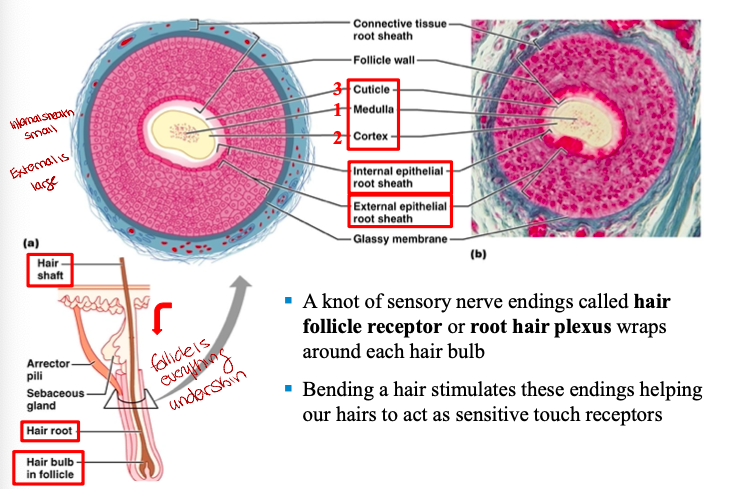
describe the layers of the hair follicle
- a knot of sensory verve endings called bhiar follicle receptor or root hair plexus wraps around each hair bulb
- bending of hair stimulates these endings helping our hairs to act as sensitive touch receptors
- has a cuticle, medulla and cortex


-
orientation30
-
3.1 Bone Marking terminology10
-
3.0 skeleton overview8
-
3.1 Skeleton: skull29
-
3.2 Skeletons: Vertebral Column & thoracic cage20
-
3.3 Skeletons: Appendicular Skeleton34
-
2.1 Cells42
-
2.2 parts of cells38
-
2.3 Tissues55
-
4.2 Muscles of the Head41
-
4.3 Muscles of back/ vertebral column22
-
4.4 Muscles of breathing/abdominal cavity33
-
4.5 Shoulder/Arms34
-
4.6 Muscles Crossing hip and knee joints33
-
4.7 Muscles of lower leg37
-
5.1 Nervous tissue43
-
5.2 Nervous tissue: Action potentials33
-
5.3 Neurotransmitters27
-
6.1 Central Nervous System37
-
6.2 Regions and organization of CNS42
-
6.3 Functional brain system37
-
6.4 Spinal chord29
-
7.1 Peripheral nervous system42
-
7.2 Cranial nerves24
-
7.3 Spinal nerves20
-
7.419
-
7.1 Autonomic Nervous System25
-
7.2 Neurotransmitters26
-
8.0 eye anatomy29
-
8.1 vision27
-
8.3 Taste and Smell28
-
8.4 Equilibrium and orientation12
-
9.0 Endocrine20
-
9.1 Amino Acid Hormones9
-
9.2 Release of hormones24
-
9.3 Endocrine38
-
10.0 Integument system52
-
11. Lymphatic system31
-
11.2 immunity22
-
12. Bones and skeletal tissues15
-
blood supply and cortex function3



