what are the 4 types of tissues
epithelial, connecive, nerve and muscle
what are the characteristics of Epithelial Tissue
- Polarity
- Apilcal surfaces: can have microvilli or villia
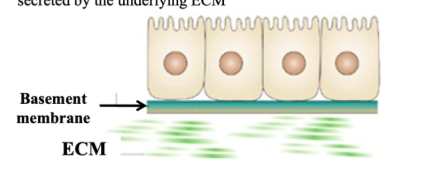
- basement membrane: involved in anchoring epithelial later, acts as selective filter
- contains basal lamina: mostly glycoproteins and collagen secreted by epithelial cells
- reticular lamina: fine network of collagen and fibronectin fibers secreted by the underlying ECM
- Special contacts
- tight junctions and desmosomes
- Supported by connective itssue
- all epithelial sheets rest on supporting connective itssue
- provides nutrients, site for waste prod exchance
- all epithelial sheets rest on supporting connective itssue
- aascular but innervated
- contains no blood vessels but supplied by nerve fibers
- Regenerative
- Rapidly replaces lost cells by cell division
what are the different types of Epithelial Tissues?
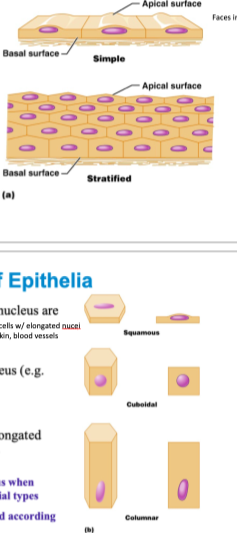
- Simple vs Stratefied
- simple: typical where abs and filtration occur (lining of lungs)
- only one layer
- Stratified: common highly abrasive areas (skin, esophagus)
- want highly regenerative layer thats always adding more layers to skin
- simple: typical where abs and filtration occur (lining of lungs)
- Squamous, cuboidal or columnar
- squamous: cells and nucleus are flattened (ex skin, blood vessels)
- cuboidal: round nucleus (ex kidney tubules)
- Columnar: upright elongated nucelus (ex intestines)
what type of tissue is this
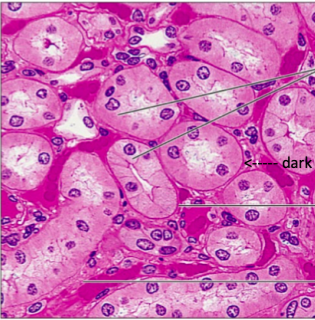
simple cuboidal epethelial
- nuceli relatively round and only one layer
what type of tissue is this
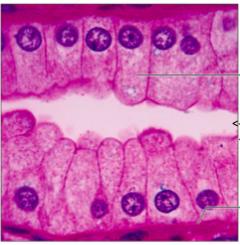
simple columnar epethelial tissue
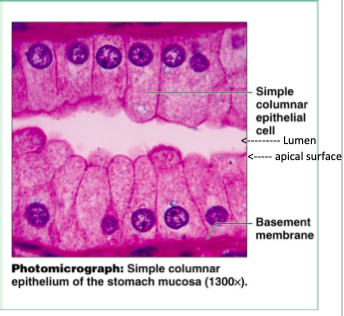
what is the role of simple columnar epethelial tissue, where are they found
- function absorption, secretion of musuc, enzymes and toher substances
- can be cilliated or non cilliated
non cilliated type: lines most of digestive tract, gallbladder and excretory ducts, some glands
cilliated: line small bronchi, uterine tubes, some regions of uterus
* can contain goblet cells of mucus
where cna you find simple cuboidal epithelia tissue?
can find in kidney tubules. duct and secretory protions of small glands, overay surface
*function is for secretion and absorption
what mofoications are made to the epithelia of the digestive tract?
* talking about simple columnar
- have two modifications:
1. dense microvilli: on paical surface of absorptive cells
2. goblet cells: that secrete a protective lubricating mucus
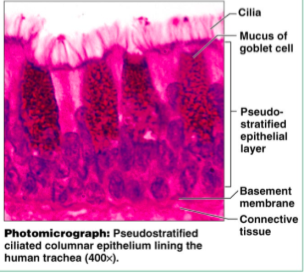
what are pseudostratified columnar?
- cells vary in hieght, but all cells rest on basement membrane however some do not reach the free surface
*simple in nature but look multilayered, not actually stratified
- because nuclei are seen at different layers it gives the false pseudo impression that there are several layers
Noncilliated type: in males sperm carying ducts and ducts of large glands
ciliated: lines trachea, most of upper respiratory tract
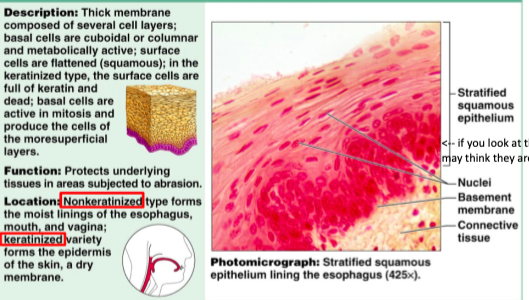
describe stratified squamous epithelia
- thick membrane composed of several cell layers
- basal cells are suboidal or columnar and metabolically active, surface cells are flattened (squamous)
- function: underlying tissues in areas subjected to abrasion
Nonkeratinized type forms the moist linings of the esophagus, mounth, vagina
keratinized: forms epidermid of skin, dry membrane
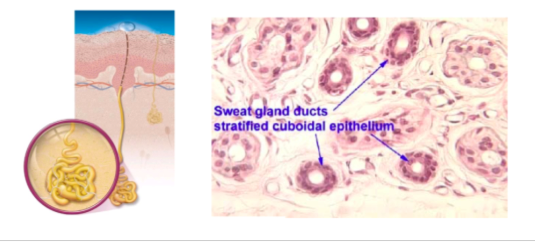
describe stratified cuboidal
- cuboidally shaped cells arranged in multiple layers
- protect areas as ducts of sweat glands, male urethra and mammary glands
- typically two cell layers thick, quite rare in body
*look to see the two layers, thats how you know its not the simple cuboidal like those in kidney
describe stratified columnar
- also occurs at transition areas between two other types of epithelia
- some exocrine glands have areas of stratified columnar epithelium
*also in anoractal junction, pharynx and male urethra
- nuceli elongated and overall rectangular in shape
- as hint look for cillia, if see cillia its pseudostratefied
-
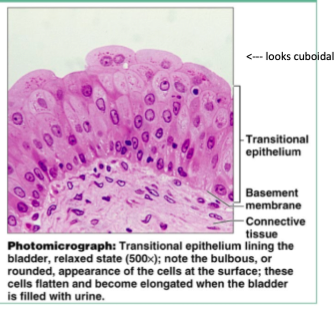
describe transitional epithelia
Appearance of cuboidal and squamus, Depends on strucutre of tissue at that time
When bladder is empty looks cuboidal when full looks squamous
Found in lining of ureter, bladder
*basal cells cuboidal or columnar, suface cells dome shaped or squamours like depending on degree of stretch
*lines uteters bladder and part of urethra
** if has more than two layers it cant be stratefied cuboidal, so if more than two alyers and look cuboidal its transitional
describe the cutaneous membrane
Cutaneous - Parts you can see visually
Dry mem bc exposed to outside of the body (skin)
Combo of stratified squamous and underlying connective tissue
describe the mucous epithelial membrane
- mucosae line body cavities that open to the exterior
- mucous membranes are often adapted for absorption and secretion
- digestive and respiratory tracts secrete copious amounts of lubricating mucus
- urinary tract does not have any secretion but mucus membrane is bathed in urine
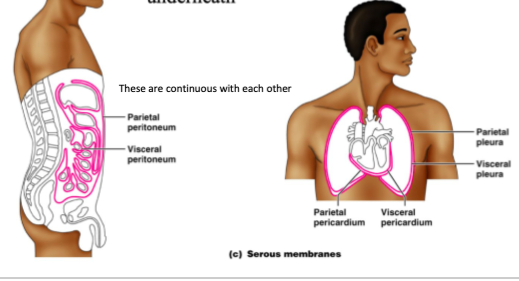
describe epithelial serous membranes
- composed of a secretory epithelial layer (serous fluid) and a connective tissue layer underneath
- Lines internal body cavities (abdominal and thoracic)
*Associated with simple squamous
Makes serious fluid, provides lubrication for the organs inside of the civity
*visceral means surounding organ itself, parietal means it surrounds the cavity it is in
describe glandular epithelia
- gland = one or more cells that makes and secretes particular product
- two key ways to classify this gland:
1. Site of product release (endocrine or exocrine)
2. Number of cells forming the gland: unicellular or multicellular (most are multi)
*some unicellular glands are along digestive tract mucosa and in brain (diffuse endocrine system)
-secretions include aa, proteins, glycopeprides, steroids
*ductless glands secret directly into blood stream or extracellular space
exocrine glands
- more numerous than endocrine
- secrete products onto body surfaces (skin) or into body cavities
- ex: mucous, sweat, oil and salivary glands, the liver (secretes bile) nd pancrease (secretes digestive enzymes)
what is goblet cells an example of
unicellular exocrine glands
- Found in simple columnar and simple cuboidal layers
found in epithelial linings of intestine and resp tract amid columnar cells
- These cells have a lot of golgi and ER, produce a ton of mucin which forms muscus in water
*mucin is secreted into lumen
what are the two features of multicellualr exocrine glands?
- epithelium derives duct
- secretory unit (acinus) consisting of secretory cells
- most have supportive connective tissue surrounding the secretory unit, blood vessels and nerve fibers
- components form a fibrous capsule
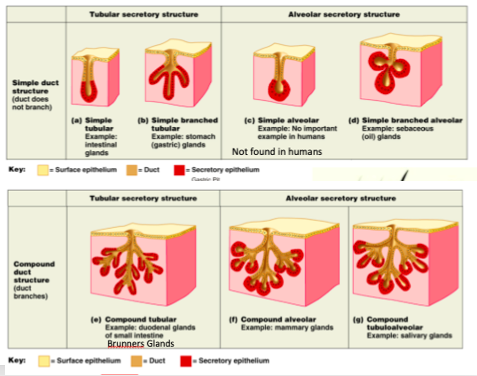
how can you classify Multicellular exocrine glands?
- Duct structure: simple (unbranched) or compound (branched)
- secretory unit structure: tubular (tubes), alveolar (flask like) or tubuloalveolar
what are the modes of secretion
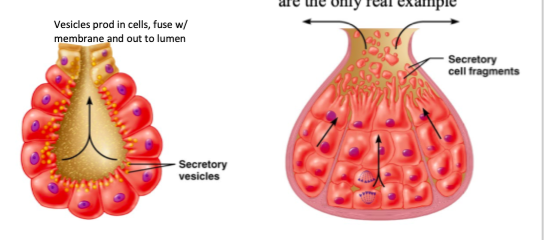
Merocrine: products are secreted by exocytosis (pancrease, sweat, salivary)
*vesicels produced in cells, fuse w/ membrane and then out to lumen
Holocrine: products are secreted by the rupture of gland cells (proliferation at bottom, produces new cells and oil cells move up
ex: Sebaceous oil glands of skin (only real example)
what is connective tissue? what are the main classes?
- Found throughout the body; most abundant and widely dsitributed in primary tissues
- amount in each tissue varies (skin is primarily connective, brain has very little)
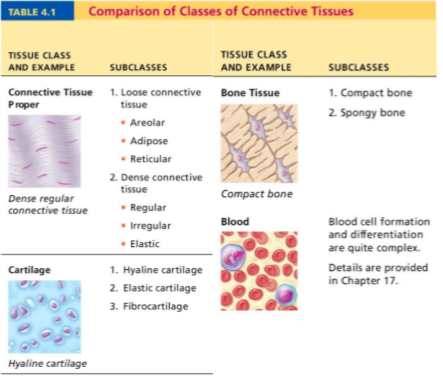
Main classes: connective tissue proper, cartilage, bone, blood


-
orientation30
-
3.1 Bone Marking terminology10
-
3.0 skeleton overview8
-
3.1 Skeleton: skull29
-
3.2 Skeletons: Vertebral Column & thoracic cage20
-
3.3 Skeletons: Appendicular Skeleton34
-
2.1 Cells42
-
2.2 parts of cells38
-
2.3 Tissues55
-
4.2 Muscles of the Head41
-
4.3 Muscles of back/ vertebral column22
-
4.4 Muscles of breathing/abdominal cavity33
-
4.5 Shoulder/Arms34
-
4.6 Muscles Crossing hip and knee joints33
-
4.7 Muscles of lower leg37
-
5.1 Nervous tissue43
-
5.2 Nervous tissue: Action potentials33
-
5.3 Neurotransmitters27
-
6.1 Central Nervous System37
-
6.2 Regions and organization of CNS42
-
6.3 Functional brain system37
-
6.4 Spinal chord29
-
7.1 Peripheral nervous system42
-
7.2 Cranial nerves24
-
7.3 Spinal nerves20
-
7.419
-
7.1 Autonomic Nervous System25
-
7.2 Neurotransmitters26
-
8.0 eye anatomy29
-
8.1 vision27
-
8.3 Taste and Smell28
-
8.4 Equilibrium and orientation12
-
9.0 Endocrine20
-
9.1 Amino Acid Hormones9
-
9.2 Release of hormones24
-
9.3 Endocrine38
-
10.0 Integument system52
-
11. Lymphatic system31
-
11.2 immunity22
-
12. Bones and skeletal tissues15
-
blood supply and cortex function3



