How is the skull organized?
Cranial bones
- enclose brain in cranial cavity
- provide attachemnt site for head and neck muscles
- cranial valut (calvaria = superior aspect)
- cranial base (made up of 3 cranial fossae)
Facial bones
- framework of face
- anchor facial muscles & attachment site for teeth
- cavities for special sense organs (orbits for eyes, nasal cav for olofactory)
- openings for air passage
Associated bones
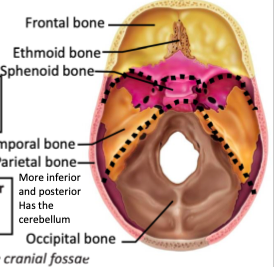
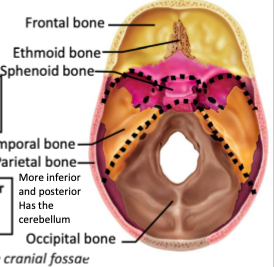
parts of the cranial fossae
* fossae = basin like depression in bone
anterior, middle and posterior
” steps down from anterior”
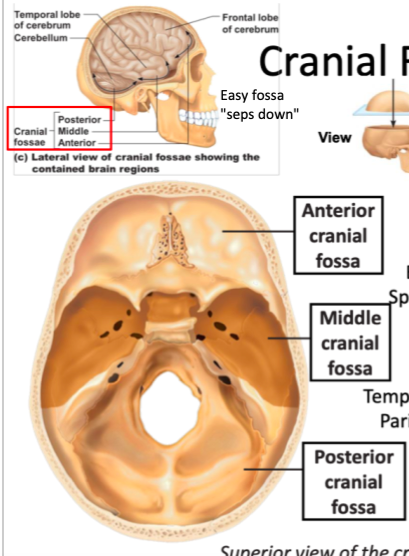
what bones can be found in the anterior cranial fossa
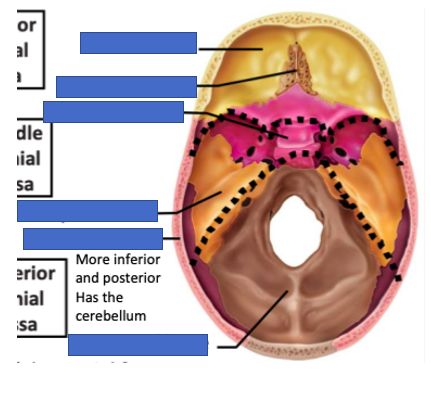
- frontal bone, ethmoid bone and sphenoid bone
*sphenoid bone is central
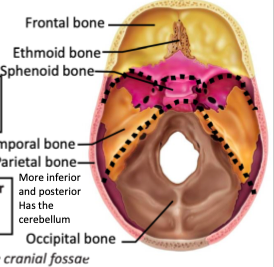
what bones can be found in the middle cranial fossa
sphanoid, 2 temporal bones and parietal bone
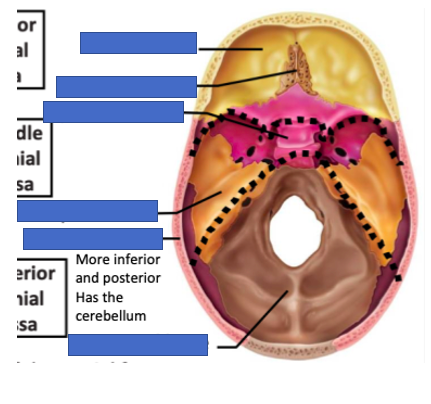
what bones can be found in the posterior cranial fossa
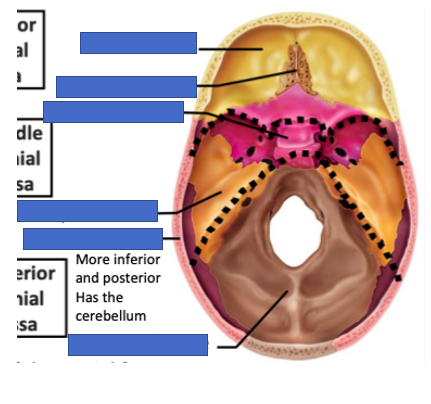
primarily occipital bone
- small amount of sphenoid occupies posterior
- also temporal and parietal
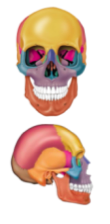
what are the bones in the cranium
frontal bone (1)
parietal bones (2)
Occipital bone (1)
Temporal bones (2)
sphenoid (1)
Ethmoid (1)
what facial bones are found in the skull?
mandible (1)
maxillary bones (2)
zygomatic bones (2)
nasal bones (2)
lacrimal bones(2)
palatine bones (2)
inferior nasal chonchae (2)
vomer (1)
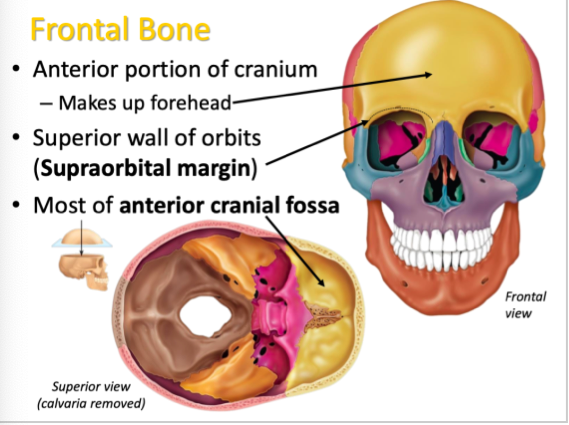
describe the frontal bone
Anterior portion of the cranium
*makes up forehead
- Superior wall of orbits (supraorbital margin)
- occupies most of the anterior cranial fossa
describe the parietal bones
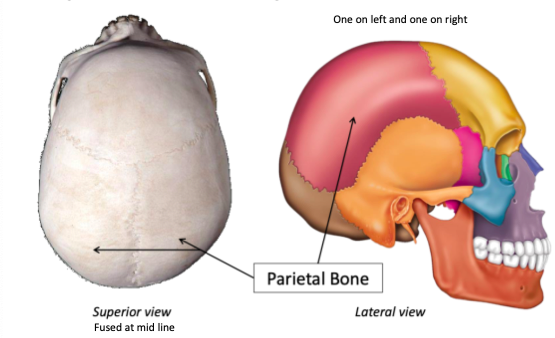
- are located at superior and lateral aspects of the calvaria
- fused at midline
*calvaria is the top part of the skull
- sagittal suture is between right and left parietal bones
- lamdboid suture is between the patietal and occipital bones
describe the features of occipital bone
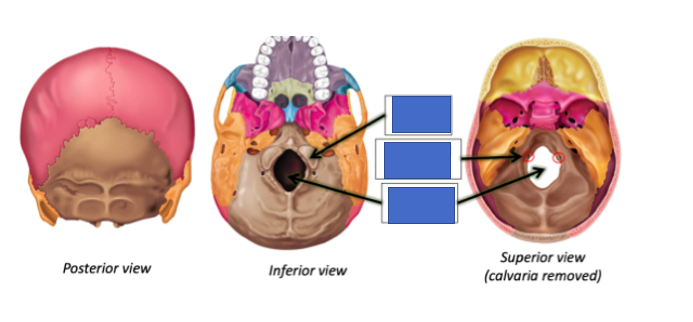
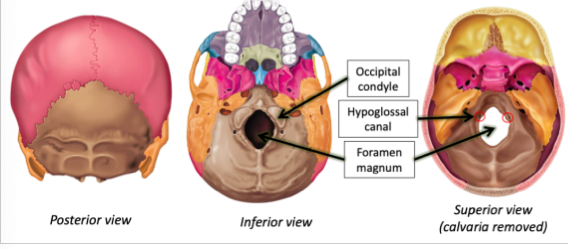
- occupies most of posterior wall and posterior cranial fossa
- contains foramen magnum BIG HOLE for passage of spinal cord
- articulates with 1 vertebra via occipital condyles
(articulates = juncture between bones or cartilages in the skeleton of a vertebrate)
(condyles = rounded articulating surface since its occipital bone its the occipital condyle)
- Hypoglossal canal: passage of CN XII (hypoglossal nerve)
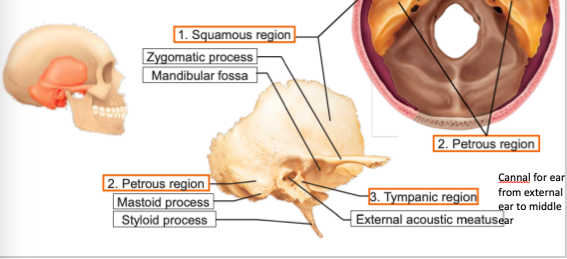
describe the main regions of the temportal gone
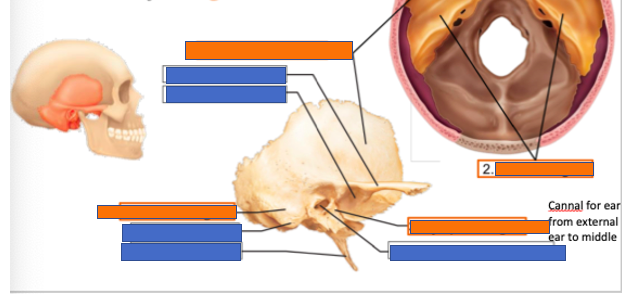
- inferolateral aspects of the skull & parts of cranial floor
1. Squamous region: zygomatic process and mandibular fossa
(squamus = fish scale bc its thin ans scale like, zyg.. means cross bar, mandicular = jaw)
- Petrous region: mastoid process and styloid process
(styloid = pillar,
- Tympanic region: external acoustic meatus (canal for ear from external to middle)
(tympanic relates to ear drum)
*contributes to cheek bones
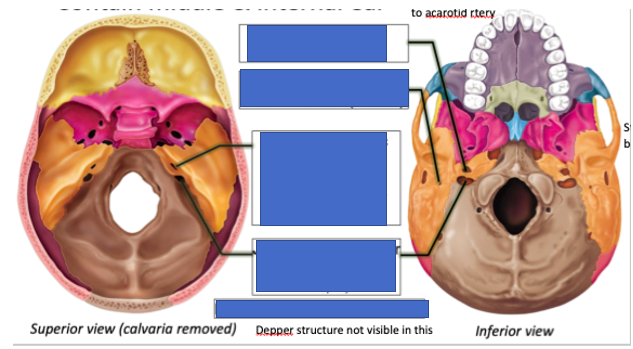
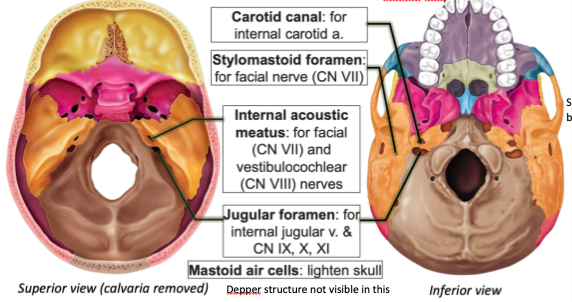
what are the openings of the temporal bone?
*contains middle and internal ear
- Carotid canal: for internal carotid artery (aupplied clood to carotid)
- Stylemastoid foramen: for facial nerve CN VII (hole bwn mastoid and stylo)
- Inernal acoustic Meatus: for facial CN VII and vestibulucochlear CN VIII nerves
** Jugular foramen: for internal jugular nein and CN IX, X, XI
Mastoid air cells; lighten skull
describe the structure of the sphenoid bone
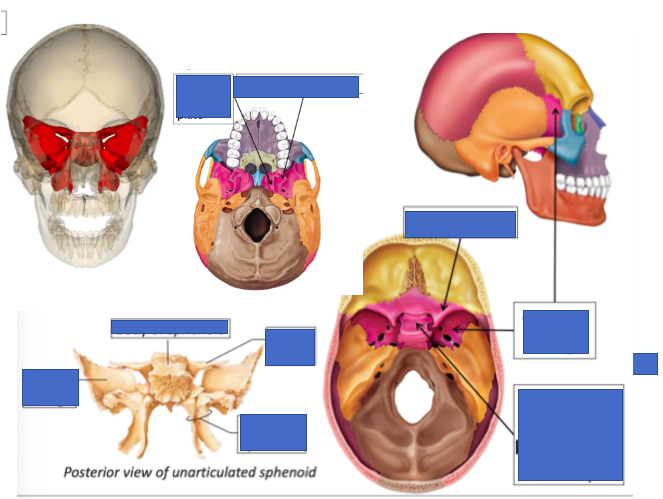
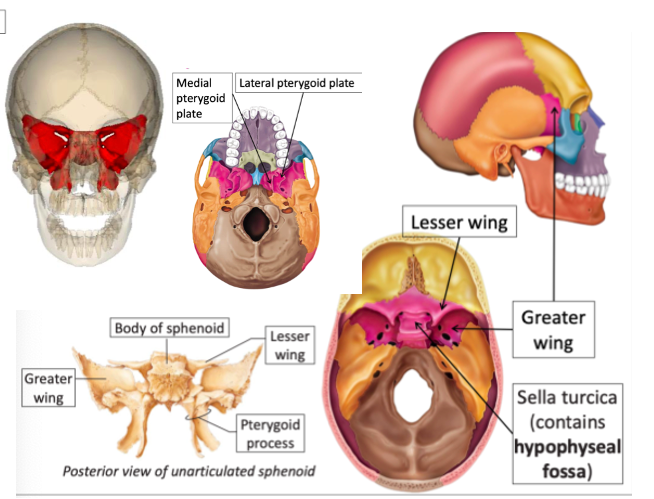
* kinda like a bat, in centre/middle so interacts w/ a lot
- greater wings
- lesser wings (more superior and anterior, contribute to anterior cranial fossa)
- pterygoid process: comes out inferiorly and splits into medial and laterla plates
(pterygoid = shaped like wing)
- Sella turcica (contains the hypophyseal fossa)
what are the passageways int eh Sphenoid Bone
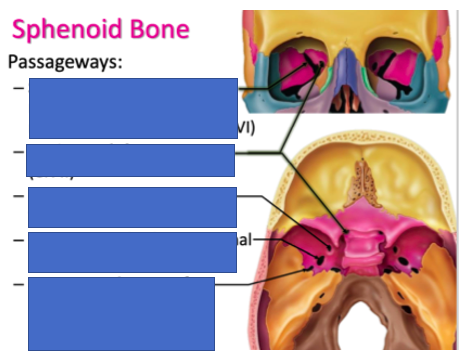
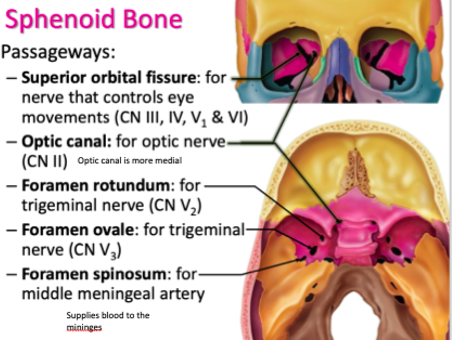
- Superior orbital Fissure: for nerve that controlls eye movements (CN III, IV, V1 & VI)
- Optic Canal: For optic nerve (CN II) *its more medial
- Foramen rotundum: for trigemental nerve CN v2
- Foramen ovale: for trigmental nerve CN V3
Foramen Spinosum: for middle meningeal artery (supplies blood to mininges
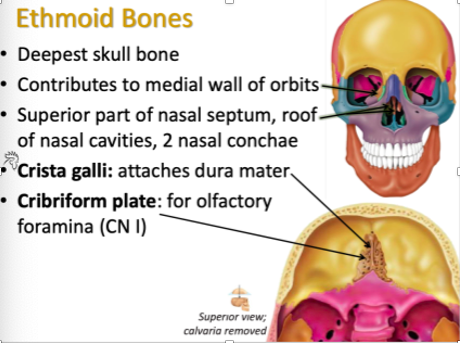
describe the Ethmoid Bones
deepest skull bone
- contributes to medial wall of orbits
- superior part of ansal septum, roof of nasal cavities, 2 nasal conchae
Crista galli: attaches dura matter
(tough outer layer of tissue that covers and protects the brain and spinal cord)
Cribfiform plate: for olofactora foramina (CN 1)
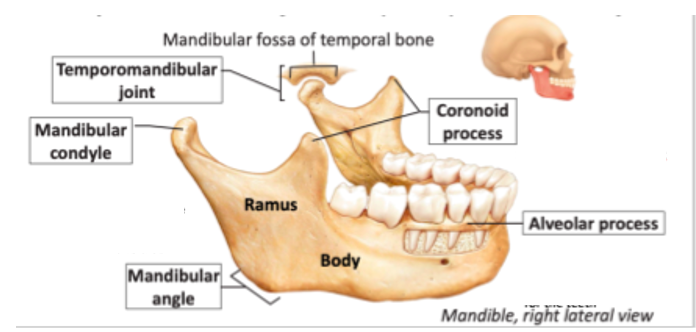
what is the mandible
lower jaw
largest, strongest bone in face
- contains sockets for lower teeth
Temporomandicular joint: only freely movable skull joint
parts of mandible
*condyle and angle
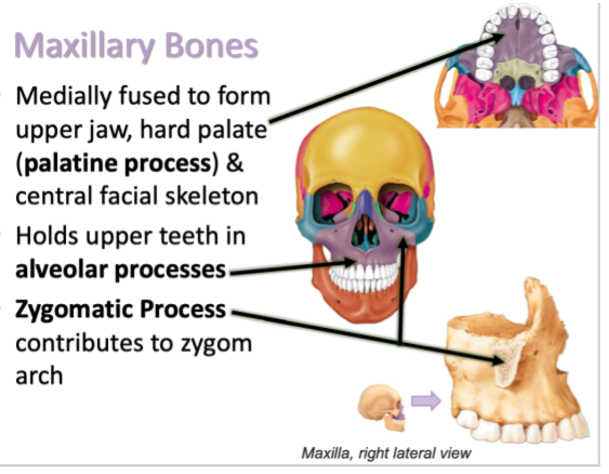
describe the maxillary bones
- medially fused to form upper jaw, hard palte (palatine process) & central factial skeleton
- Maxillary bones holds upper teeth in aleolar processes
- has a zygomatic process contriuting to zygomatic arch
(zygomatic bone refers to cheek bone, below and lateral to the orbit)
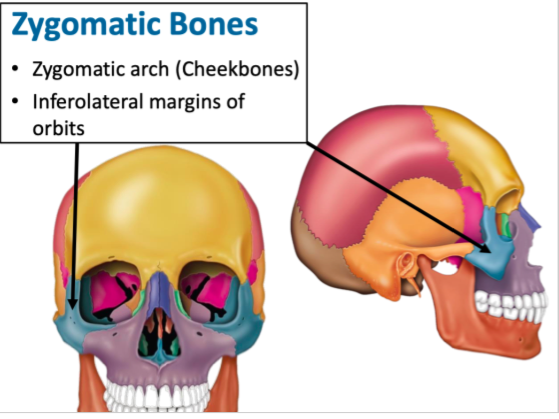
describe Zygomatic bones
zygomatic arch (cheekbones)
- inferolateral margins of orbits
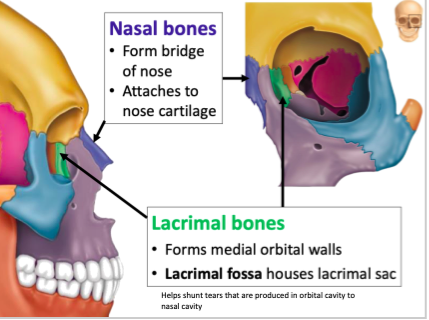
dsecribe nasal bones and lacrimal bones
Nasal: form bridge of nose and attach to nose nartilage
Lacrimal bones: forms medial orbital walls
*contain lacrimal fossa houses lacrimal sac
(helps shut tears products in orbital cavity to nasal cavity)
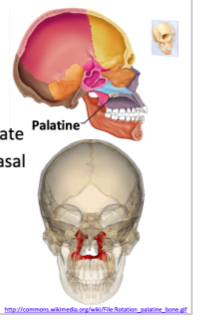
describe the Palatine bones
- L shaped
forms: posterior 1/3 of hard palate, posterolateral walls of nasal cavity, very small part of orbits
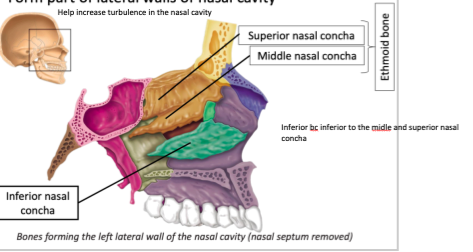
Describe the inferior nasal conchae
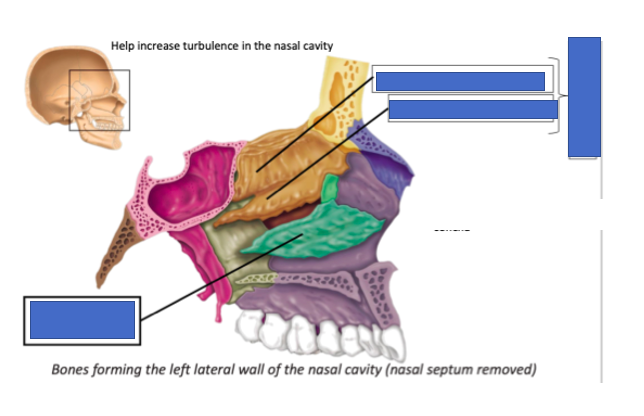
-forms part of lateral walls of ansal cavity
*helps to inc turbulence in the nasal cavity
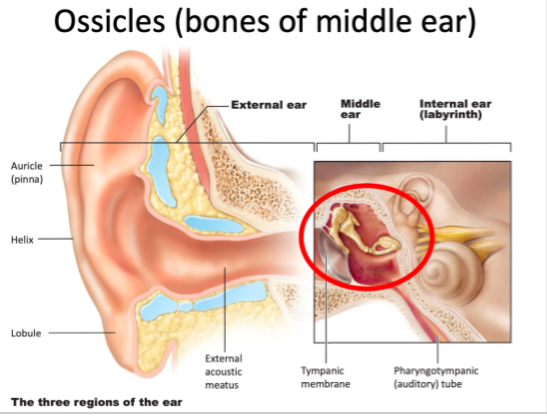
Ossicles
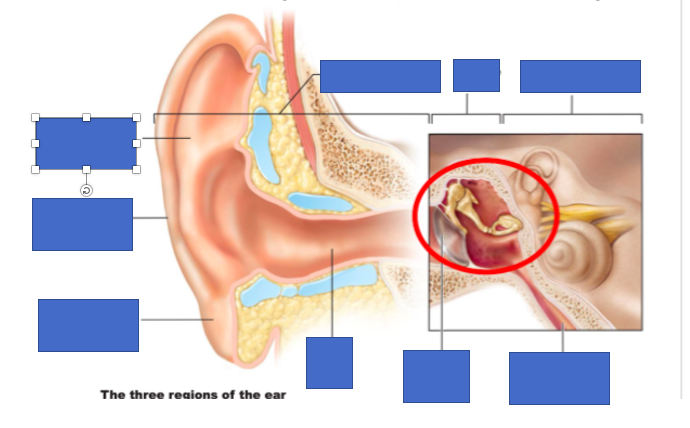
what are the 3 regions of the eat
Bones of middle ear
regions: external ear, middle eat and labyrinth (internal ear)


-
orientation30
-
3.1 Bone Marking terminology10
-
3.0 skeleton overview8
-
3.1 Skeleton: skull29
-
3.2 Skeletons: Vertebral Column & thoracic cage20
-
3.3 Skeletons: Appendicular Skeleton34
-
2.1 Cells42
-
2.2 parts of cells38
-
2.3 Tissues55
-
4.2 Muscles of the Head41
-
4.3 Muscles of back/ vertebral column22
-
4.4 Muscles of breathing/abdominal cavity33
-
4.5 Shoulder/Arms34
-
4.6 Muscles Crossing hip and knee joints33
-
4.7 Muscles of lower leg37
-
5.1 Nervous tissue43
-
5.2 Nervous tissue: Action potentials33
-
5.3 Neurotransmitters27
-
6.1 Central Nervous System37
-
6.2 Regions and organization of CNS42
-
6.3 Functional brain system37
-
6.4 Spinal chord29
-
7.1 Peripheral nervous system42
-
7.2 Cranial nerves24
-
7.3 Spinal nerves20
-
7.419
-
7.1 Autonomic Nervous System25
-
7.2 Neurotransmitters26
-
8.0 eye anatomy29
-
8.1 vision27
-
8.3 Taste and Smell28
-
8.4 Equilibrium and orientation12
-
9.0 Endocrine20
-
9.1 Amino Acid Hormones9
-
9.2 Release of hormones24
-
9.3 Endocrine38
-
10.0 Integument system52
-
11. Lymphatic system31
-
11.2 immunity22
-
12. Bones and skeletal tissues15
-
blood supply and cortex function3



