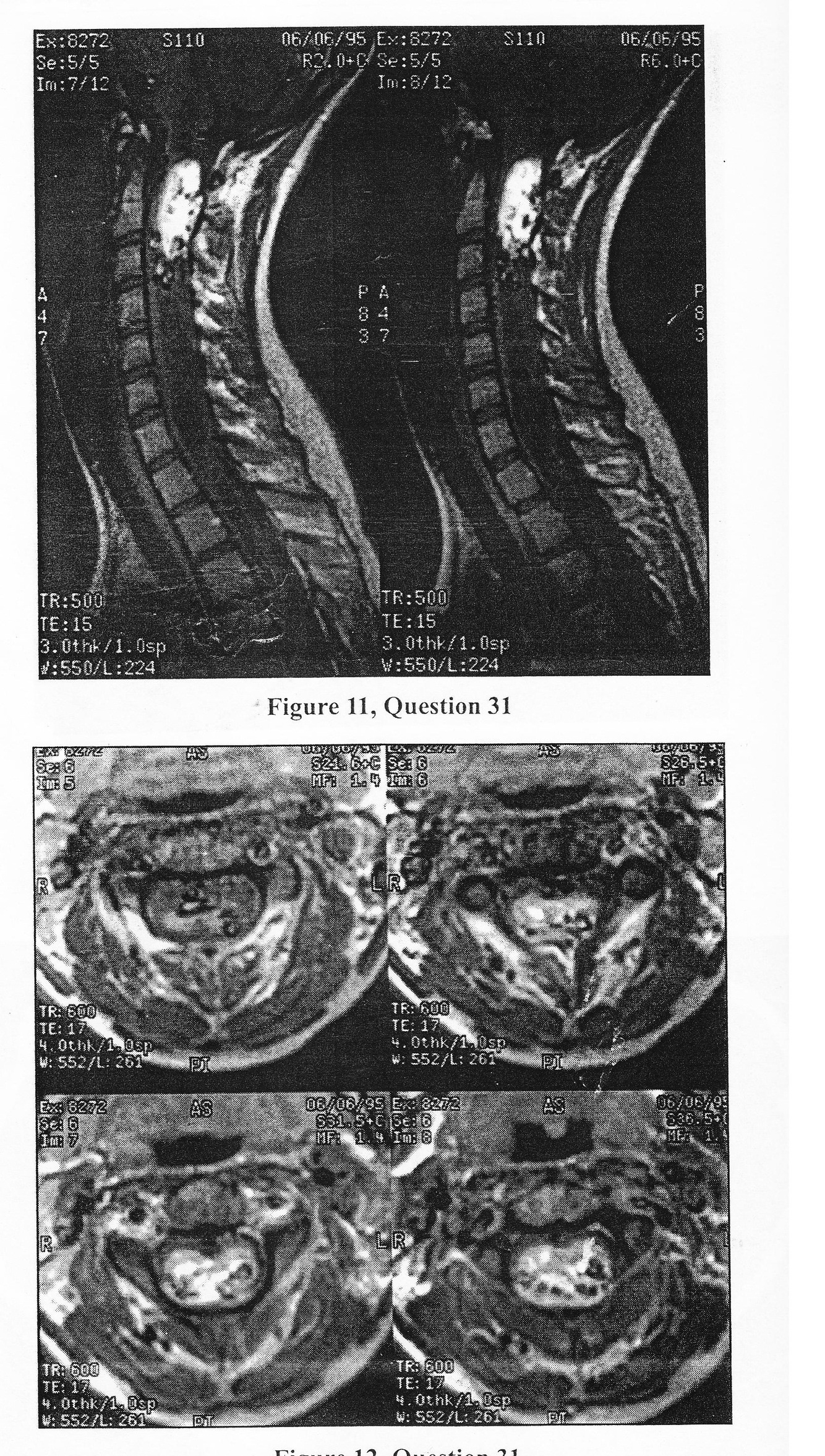
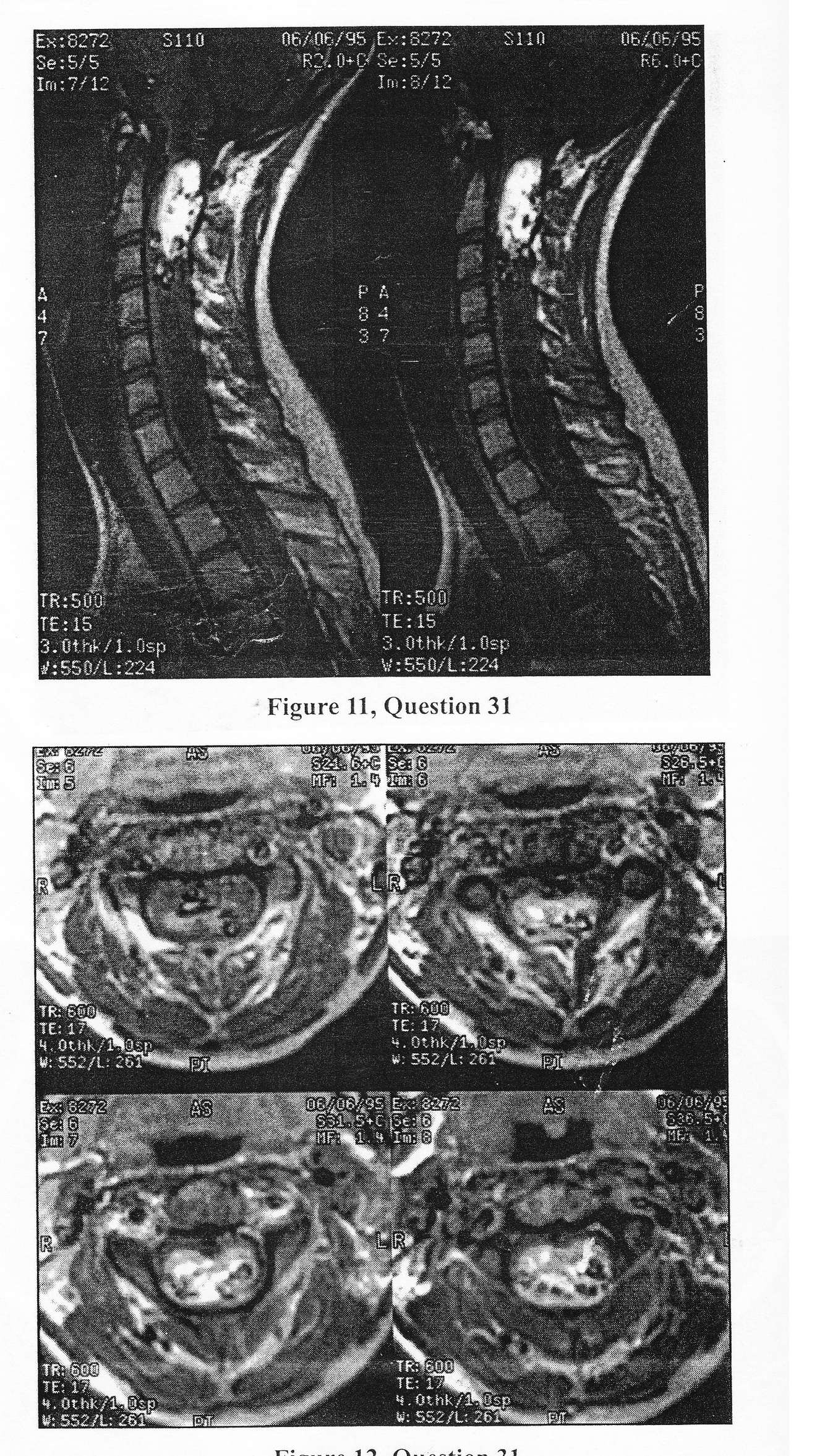
Following a motor-vehicle accident, this 17-year-old female was noted to have a mild central cord syndrome. An MRI of the cervical spine (Figures 11 and 12) revealed a massive tumor which was felt to represent a hemangio-blastoma. Which one of the following statements is MOST IMPORTANT regarding treatment of this lesion?
A. Preoperative embolization is crucial for a successful outcome.
B.Dissection must be scrupulously performed along the outside of the tumor capsule.
C. Feeding arteries must be identified and obliterated early in the dissection.
D. Because of the risk of respirator dependency and quadriplegia, therapy should be postponed until there is a definite progression.
E. Intraoperative ultrasound should be performed after resection of the lesion to be sure all of the syrinx cavities are drained prior to closure.
B.Dissection must be scrupulously performed along the outside of the tumor capsule.
A 27-year-old right-handed man presents with headache and confusion. A CT scan shows a ring-enhancing lesion in the frontal lobe adjacent to the frontal horn of the lateral ventricle. The patient is HIV (human immunodeficiency virus) positive. Which of the following statements is FALSE?
A. The differential diagnosis includes toxoplasmosis, lymphoma, cryptococcal abscess, and metastatic carcinoma
B. Stereotactic biopsy is not indicated because a definitive diagnosis will not alter the patient’s outcome.
C. A diagnosis of toxoplasmosis can be made on a biopsy even if tachyzoites are not identified.
D. The risk of transmission of human immunodeficiency virus (HIV) from the patient to the surgeon and surgical team can be reduced by the use of universal precautions and double gloving.
B. Stereotactic biopsy is not indicated because a definitive diagnosis will not alter the patient’s outcome.
A 6-year-old girl with myelodysplasia of the lumbar spine and shunted hydrocephalus has developed weakness in her hands. The most appropriate first step in the surgical management of her problem would be which of the following?
A. Posterior fossa decompression for her Chiari II malformation.
B. Syringo-subarachnoid shunt for her syringomyelia.
C.Ventriculoperitoneal shunt revision for her malfunctioning shunt
D. Surgical release of her tethered cord at the site of her previous myelomeningocele repair.
C.Ventriculoperitoneal shunt revision for her malfunctioning shunt
A number of chromosomal deletions have been identified in astroglial tumors. These deletions are thought to encode for tumor suppressor genes. Which of the following chromosomes is NOT thought to have a tumor suppressor gene for glial neoplasms?
A.Chromosome 2
B. Chromosome 9
C. Chromosome 10
D. Chromosome 17
A.Chromosome 2
A 30-year-old male presents with bilateral ptosis and diplopia. His symptoms are intermittent and variable in intensity. He has no weakness in respiratory or extremity muscles at the present time. He has no sensory symptoms. The following statements are true EXCEPT:
A. The probable diagnosis can be confirmed after the administration of 10 mg edrophonium, which results in improvement in muscle weakness.
B. Thymectomy is a preferred treatment option for this patient.
C. Anticholinesterase drug therapy, such as with pyridostigmine, is standard therapy for this patient.
D. This patient is at risk for the development of a crisis of respiratory insufficiency
B. Thymectomy is a preferred treatment option for this patient.
Which of the following statements about subacute combined degeneration of the spinal cord is INCORRECT?
A. The posterior columns and corticospinal tracts are involved due to myelin destruction.
B. Patients often have megaloblastic anemia.
C. Dementia is often present.
D.Treatment consists of replacement of Vitamin B.
D.Treatment consists of replacement of Vitamin B.
- What characteristic of the sympathetic nervous system is CORRECT?
A. Sympathetic output originates in the anterior hypothalamus
B. The sympathetic system has diffuse widespread innervation in the periphery.
C. The preganglionic neurotransmitter is always norepinephrine.
D. The postganglionic neurotransmitter is always norepinephrine.
B. The sympathetic system has diffuse widespread innervation in the periphery.
- Which of the following neuronal responses does NOT occur in the calcarine cortex?
A. Responses formed by the side-by-side arrangement of excitatory and inhibitory fields.
B. Responses to slits of light, edges, or dark bars with specific orientation
C.Responses to onset of light and onset of dark in circular fields
D. Responses to the length and direction of stimulus
C.Responses to onset of light and onset of dark in circular fields
- A 10-year-old boy presented with seizures. His CT scan showed a cystic lesion with a focal area of homogenous enhancement and some calcifications, measuring 5 cm x 6 cm x 4 cm, in the right parietal lobe. At surgery, a complete resection was thought to be performed. The pathologist described the tumor as a Grade II ganglioglioma. Which of the following is CORRECT?
A.The patient does not have a ganglioglioma, because the radiographic appearance of ganglioglioma is different from that described.
B.The patient should have radiation therapy after recovery from surgery to have the best long-term outcome.
C.Further therapy with radiation or chemotherapy should be deferred at present.
D. Most patients with ganglioglioma do not present with seizures.
C.Further therapy with radiation or chemotherapy should be deferred at present.
- Which of the following lesions is NOT appropriate for treatment with stereotactic radiosurgery?
A. An arteriovenous malformation (volume 3 cm 3 ) which previously hemorrhaged into the left thalamus.
B. Metastatic carcinoma from the lung to the left frontal lobe (2 cm diameter) and rightemporal lobe(1 cm diameter). C.Recurrent glioblastoma multiforme in the right parietal lobe with a tumor volumeof 8cnf
D. A cavernous angioma (2 cm diameter) in the right frontal lobe which had previously hemorrhaged.
D. A cavernous angioma (2 cm diameter) in the right frontal lobe which had previously hemorrhaged.
- Which of the following statements regarding treatment for vestibular schwannomas is INCORRECT?
A. Stereotactic radiosurgery has a much better likelihood of preserving hearing than direct surgical intervention.
B. The facial nerve is found superiorly and anteriorly in the porous acoustics.
C. If the patient does not have functional hearing, a translabyrinthine approach is appropriate
D. A common complication of the translabyrinthine approach is a CSF leak
A. Stereotactic radiosurgery has a much better likelihood of preserving hearing than direct surgical intervention.
- A 46-year-old female presents with a one-year history of nausea and a three-month history of progressive ataxia and morning headaches. She is found on MRI to have a large tentorial mass causing obstructive hydrocephalus and compression of the medulla. A gross total resection is accomplished. The pathologic diagnosis is typical menigiom features. The patient’s next therapeutic intervention MOST LIKELY will be:
A.observation with serial MRIs every six months
B.course of intravenous cisplatin, dacarbazine, and doxorubicin
C. hormone therapy
D. radiation therapy (52 Gy)
E. combined radiation therapy and chemotherapy
A.observation with serial MRIs every six months
- Recent basic science studies have found that meningiomas are associated with the expression of progesterone receptors. Where are these receptors located in the meningioma cell and are they considered functional?
A. intranuclear progesterone receptors, considered nonfunctional
B.intranuclear progesterone receptors, considered functional
C.cytoplasmic progesterone receptors, considered nonfunctional
D. progesterone receptors found on the cell membrane, considered nonfunctional
E.progesterone receptors found on the cell membrane, considered functionary
B.intranuclear progesterone receptors, considered functional
- A 38-year-old male underwent anterior cervical discectomy and fusion for cervical radiculopathy using autologous iliac crest bone graft. Three months later he presented with burning lateral thigh pain on the side of the bone graft. The BEST treatment option at this point is:
A. conservative management; the pain should resolve within six additional months
B. antidepressant therapy
C. neurolysis of the lateral femoral cutaneous nerve
D. decompression and transposition of the lateral cutaneous nerve
E.transection of the lateral femoral cutaneous nerve
E.transection of the lateral femoral cutaneous nerve
- A 57-year-old female presents with a history of adenocarcinoma of the lung diagnosed three years ago. She is referred to you after suffering a seizure. On MRI there is a 3 cm mass in the right premotor area that enhances with gadolinium. She is restaged and found not to have evidence of systemic disease other than the brain mass The BEST recommendation for therapy for the cerebral mass is:
A. surgical resection
B. whole-brain radiation
C. chemotherapy
D. surgical resection followed by whole brain radiation
E. surgical resection followed by chemotherapy
D. surgical resection followed by whole brain radiation
- Your patient undergoes successful surgical excision followed by whole beam radiation. She had no evidence of intracranial disease until one year later, when she presented with left upper extremity paresis. She was found on follow-up MRI to have additional metastases in the cerebellum (2 cm), the right frontal lobe (4 cm), and the left occipital lobe (1 cm). She has no other systemic disease and is otherwise healthy. The BEST recommendation for treatment now is:
A. intravenous chemotherapy
B. radiation therapy
C.surgical resection of all three lesions
D. surgical resection of the posterior fossa lesion
E. surgical resection of the symptomatic lesion followed by chemotherapy
C.surgical resection of all three lesions
- Central nervous system growth factors are associated with the following findings EXCEPT:
A. They can be produced by neurons and glia.
B. They bind specific cell-surface receptors such as tyrosine kinase.
C. They can stimulate intracellular second messenger molecules via phosphorylation of the receptor and the second message.
D. They can exert a change in nuclear gene transcription.
E. One factor, neurotrophin 3, will not influence neuron proliferation and differentiation.
E. One factor, neurotrophin 3, will not influence neuron proliferation and differentiation.
- The syndrome of mesial temporal lobe epilepsy is associated with the following EXCEPT:
A. The most common pathologic finding in temporal lobe resections is severe hippocampal neuron loss, termed hippocampal sclerosis
B. Hippocampal sclerosis consists of neuron loss which is greatest in CA2 and least in CA1 (Sommer’s sector).
C. Synaptic reorganization of granule cell mossy fibers is a pathologic feature associated with hippocampal sclerosis.
D. The chances of successfully stopping seizures with surgical resection are best if focal pathologies are found within the temporal specimen.
B. Hippocampal sclerosis consists of neuron loss which is greatest in CA2 and least in CA1 (Sommer’s sector).
- Based on clinical-pathologic studies of patients with temporal lobe epilepsy, the pathogenesis of hippocampal sclerosis MOST LIKELY:
A. always begins as a result of an initial seizure (i.e., febrile convulsions, status epilepticus)
B.occurs only with childhood seizures
C.requires some sort of an initial cerebral injury, such as status epilepticus and/or ischemia, and is not the consequence of repeated temporal lobe epilepsy
D. is the consequence of repeated temporal lobe epilepsy
C.requires some sort of an initial cerebral injury, such as status epilepticus and/or ischemia, and is not the consequence of repeated temporal lobe epilepsy
- In patients with intractable epilepsy from mass lesions in the temporal lobe the following is true EXCEPT: A.Lesionectomy is just as effective in controlling chronic seizures as is anterior temporal lobectomy
B.The location of the mass lesion in the temporal lobe influences the amount of hippocampal neuron loss.
C. There is a good chance that anterior temporal lobectomy will be associated with material specific reductions in tests of memory after surgery.
D. A history of seizures over many years is associated with larger reductions of hippocampal neurons.
A.Lesionectomy is just as effective in controlling chronic seizures as is anterior temporal lobectomy
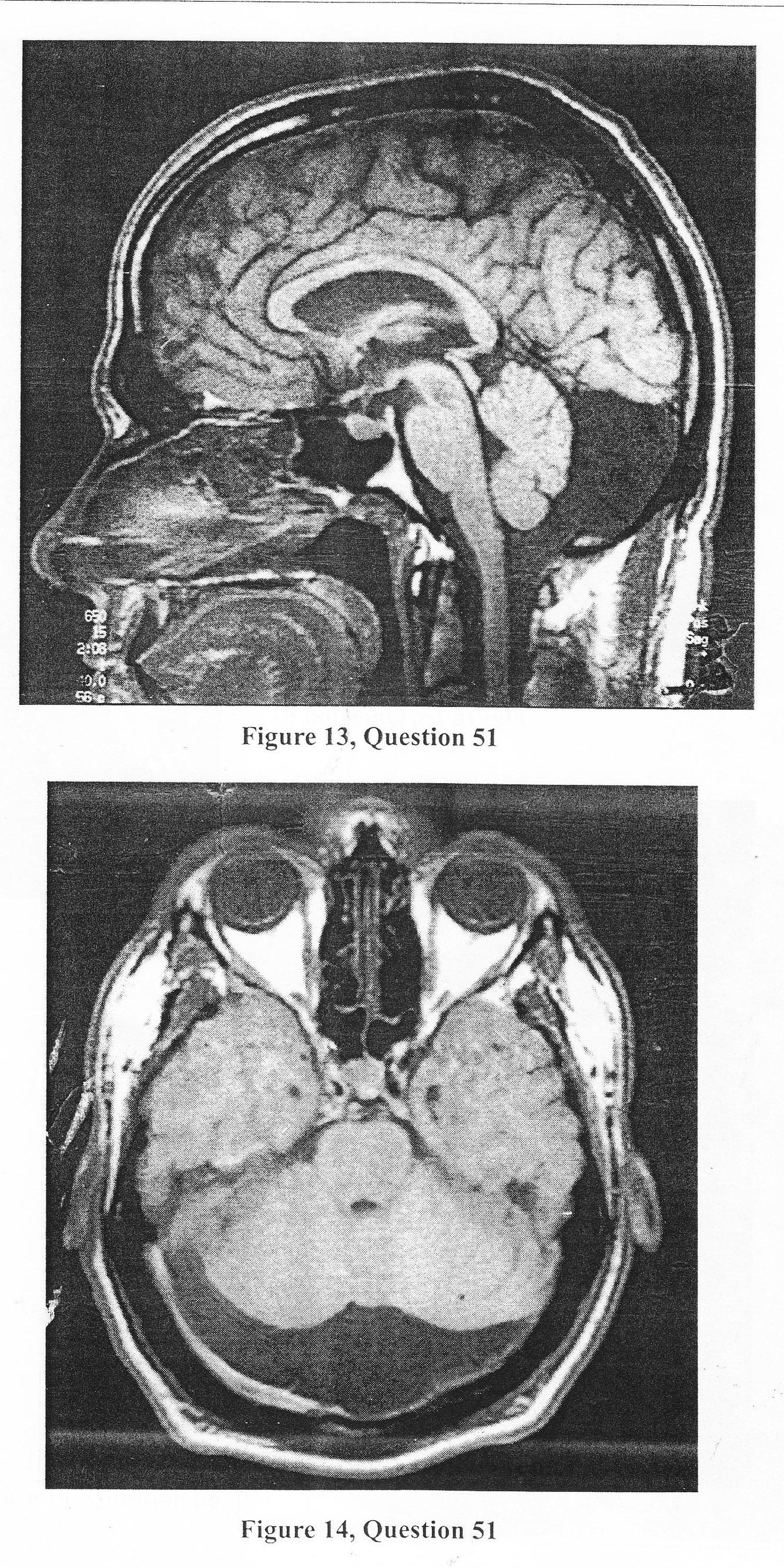
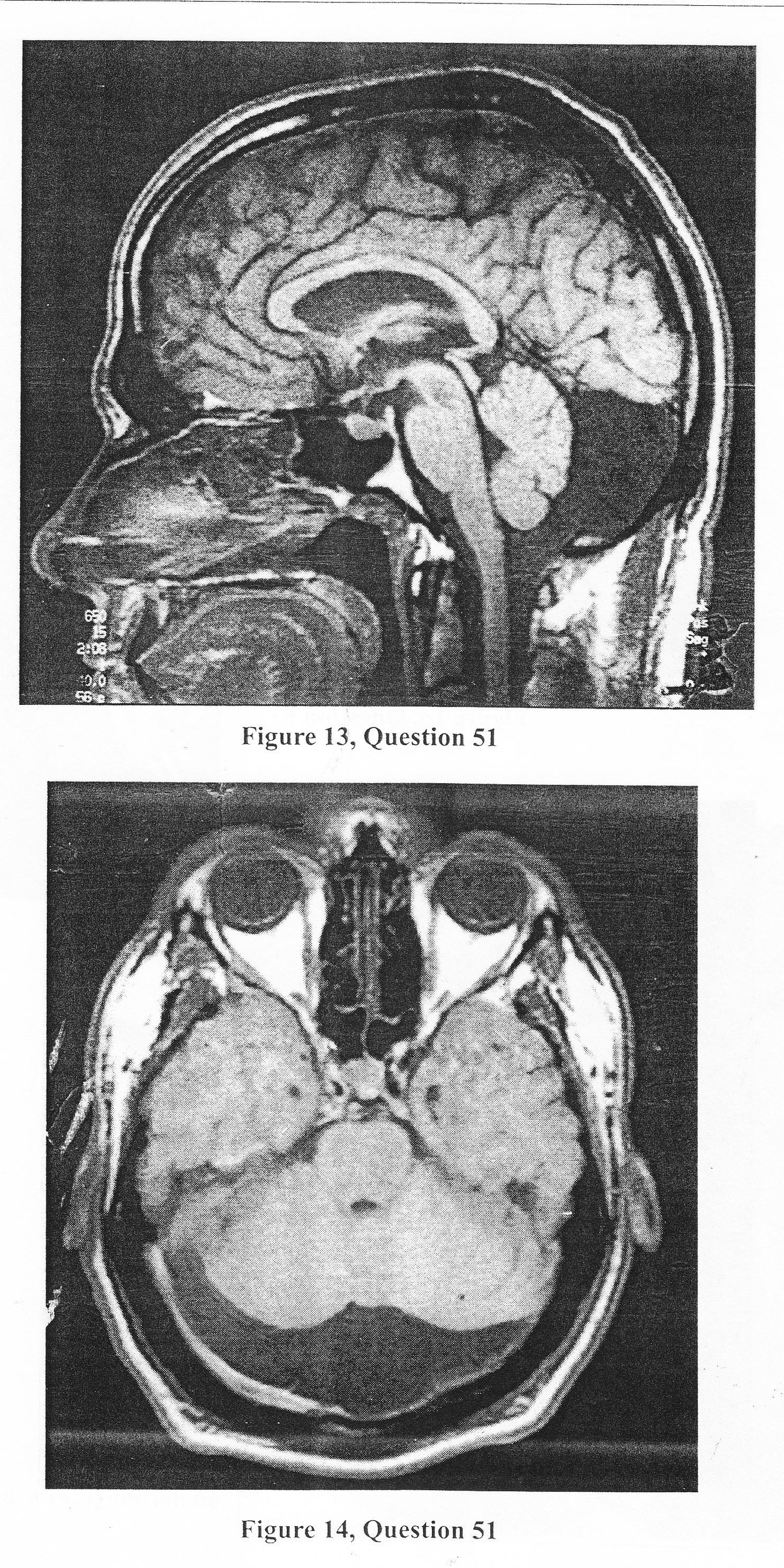
- A 27-year-old male presents with chronic headaches. Neurological examination reveals downbeat nystagmus, a hoarse voice, and increased tone in all four extremities. MRI was obtained (Figures 13 and 14). Before considering surgical options, which of the following statements is the MOST CORRECT?
A.The differential diagnosis includes a mega cisternal cavity, retrocerebellar intra-arachnoid cyst, a Dandy- Walker malformation, and a Blake’s pouch.
B. The differential diagnosis includes a mega cisternal cavity and retrocerebellar intra-arachnoid cyst.
C. The MRI only depicts a mega cisternal cavity.
D. The MRI shows thinning of the occipital bone and deformation of the cerebellum.
E. Cisternography is not indicated.
A.The differential diagnosis includes a mega cisternal cavity, retrocerebellar intra-arachnoid cyst, a Dandy- Walker malformation, and a Blake’s pouch.
- Treatment considerations include the following EXCEPT:
A. ventriculoperitoneal shunt
B. resection of the posterior wall of the cyst, if defined by cisternography
C. cystoperitoneal shunt -
D.whatever the surgical therapy, patients typically improve following decompression of the posterior fossa space
D.whatever the surgical therapy, patients typically improve following decompression of the posterior fossa space
A 57-year-old male underwent an arteriogram for evaluation of a carotid bruit. In addition to a significant stenosis of 80%, the radiologist comments about a vessel that arises from the intracavernous internal carotid artery (ICA) and connects with the basilar artery between the superior cerebellar and anterior inferior cerebellar arteries.
- This vessel may represent all of the following EXCEPT:
A.primitive hypoglossal artery
B. a possible cause of trigeminal neuralgia
C. an important source of blood flow to the hindbrain in the developing fetus 1
D. an angiographic variant with an incidence of approximately 0.1 to 0.6%
E. a rare association with aneurysms and carotid-cavernous sinus fistulas
A.primitive hypoglossal artery
A 57-year-old male underwent an arteriogram for evaluation of a carotid bruit. In addition to a significant stenosis of 80%, the radiologist comments about a vessel that arises from the intracavernous internal carotid artery (ICA) and connects with the basilar artery between the superior cerebellar and anterior inferior cerebellar arteries.
- Regarding the anatomy of the intracavernous ICA, all of the following vessels can be found arising from the intracavernous ICA or its branches EXCEPT:
A. inferior hypophyseal artery
B. ophthalmic artery
C, artery of Bernasconi arid Cassinari
D. McConnell’s capsular arteries
E.superior hypophyseal artery
E.superior hypophyseal artery




