What pathology should you investigate after an ECG after a TIA? [1]
arrhythmias
Name two clinical signs of CO2 retention [2]
- Flap (asterixis): ask a patient to extend arms out, close eyes, should be able to hold for 30 secs
- Bounding pulse
A patient suffering from an asthma attack would use which of the following
Simple face mask
Nasal cannulae
Venturi mask
Face mask with reservoir bag
A patient suffering from an asthma attack would use which of the following
Simple face mask
Nasal cannulae
Venturi mask
Face mask with reservoir bag
A patient suffering from an sepsis attack would use which of the following
Simple face mask
Nasal cannulae
Venturi mask
Face mask with reservoir bag
A patient suffering from an sepsis attack would use which of the following
Simple face mask
Nasal cannulae
Venturi mask
Face mask with reservoir bag
Label A & B [2]

A: Lung failure
B: Pump failure
LEARN ! Name 4 reasons that could cause hypoventilation
Increased resistance as a result of airway obstruction (e.g.COPD)
Reduced compliance of the lung tissue/chest wall (e.g. pneumonia, rib fractures, obesity).
Reduced strength of the respiratory muscles (diaphragm) (e.g. Guillain-Barré, motor neurone disease)
Drugs acting on the respiratory centre reducing overall ventilation (e.g. opiates)
Name three consequences of CO2 retention [3]
State for each their clinical signs [3[
End-organ hypoxia
- Altered mental status
- Bradycardia and hypotension (late)
Haemoglobin desaturation
- Cyanosis
CO2 Retention
- Flap (asterixis): ask a patient to extend arms out, close eyes, should be able to hold for 30 secs
- Bounding pulse
Explain MoA of how atherosclerosis causes ischaemic stroke
Endothelial damage allows lipoproteins and monocytes to adhere to the vessel wall and enter the intima.
Monocytes differentiate into macrophages and engulf the lipoprotein and become known as foam cells.
Further accumulation of cholesterol and foam cells forms a fatty streak.
Foam cells release pro-inflammatory cytokines which leads to smooth muscle cell proliferation. and connective tissue to deposition in the fatty streak.
These changes form a fibrous cap over the lipid core.
A necrotic core can form due to the lack of capillaries.
Plaque rupture removes the endothelium which exposes the fibrous cap leading to thrombosis and occlusion of the artery

What are the 3 overlying causes of cellular death in stroke? [3]
Mechanical compression
Cerebral Oedema
Excitotoxicity
How would you treat acute ischameic stroke:
- if within 4.5 hrs of onset [1]
- if outside 4.5 hrs of onset [1]
Thromboylsis:
- using drug - Alteplase
- Must occur within 4.5 hours of onset
- haemorrhage has to be excluded
Mechanical thrombectomy
- endovascular removal of a thrombus from a large artery.
Histopathological features of adenocarcinoma? [3]

irregular, closely packed glands effacing normal lung appearance with atypical cells lining the gland lumen
glandular hyperplasia
desmoplastic (fibrotic) stroma around them.
Describe that immune pathophysiology of granuloma formation
- Antigen taken up by macrophage & presented to CD4+ helper T cells
- CD4+ helper T cell convert to TH1 subtype
- TH1 cells screte IL-2 and INy
- T cell proliferation and macrophage activation
- Macrophages and T cells secrete TNFa
- Causes increase in inflammatory cells
- Causes repeat of TH1 cells screte IL-2 and INy etc
A patient’s investigations reveal pancytopenia and macrocytosis. His peripheral smear shows hyper-segmented neutrophils. Serological tests reveal positive anti intrinsic factor antibodies. What other biochemical derangements might be observed in this patient?
A. Increased plasma metanephrines
B. Elevated ferritin levels
C. Increased urinary 5-hydroxytryptamine
D. Elevated plasma homocysteine
A patient’s investigations reveal pancytopenia and macrocytosis. His peripheral smear shows hyper-segmented neutrophils. Serological tests reveal positive anti intrinsic factor antibodies. What other biochemical derangements might be observed in this patient?
D. Elevated plasma homocysteine
This patient likely has megaloblastic anemia due to a deficiency of vitamin B12. Vitamin B12 is an essential co-factor involved in two important enzymes. One of these enzymes is methionine synthase, which converts homocysteine to methionine. The deficiency of cobalamin will lead to the impaired functioning of this enzyme. This will result in an accumulation of homocysteine which can be detected in the blood.
Explain what bundle branch block is [1]
Which part of ECG can see bundle branch block occur in? [1]
Explain what bundle branch block is [1]
Disruption to the electrical signal that causes your heart to beat [0.5]
Causes altered pathways for depolarisation [0.5]
Which part of ECG can see bundle branch block occur in? [1]
Prolongs QRS

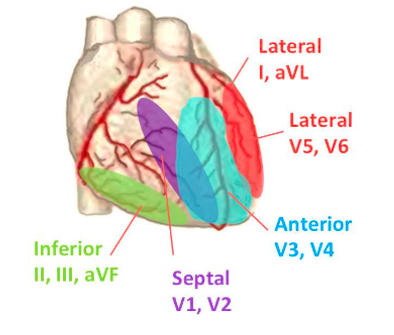
Which views of the heart are seen by each type of ECG lead on a standard 12-lead ECG? [4]
- *S**eptal: V1, V2
- *A**nterior: V3, V4
- *L**ateral: V5, V6, AVL, I
- *I**nferior: II, III, AVF
AVR: neutral
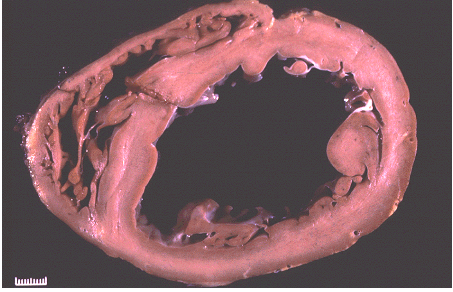
Eccentric hypertrophy:
- Caused by? [4]
- Characterised by? [2]
Eccentric hypertrophy:
Caused by? [1]
- Aortic and mitral regurgitation
- Systolic dysfunction (loss of cardiac inotrophy
- -Volume overload (hypervolaemia due to ventricular or renal failure)
- Alcohol / cocaine
Characterised by? [2]
- Chamber dilation - lumen gets bigger, wall gets smaller: cant contract properly
Which of the following forms the ventricular outflow tracts?
Truncus ateriosus
Bulbus cordis
Sinus venosus
Primitive ventricle
Primitive atria
Which of the following forms the ventricular outflow tracts?
Truncus ateriosus
**Bulbus cordis**
Sinus venosus
Primitive ventricle
Primitive atria
Which structures of the heart are formed from the bulbus cordis?
The smooth outfow of the left and right ventricles. The muscular right ventricle. The muscular intraventricular septum.

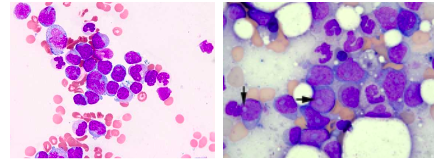
How would you ID acute myeloid leukemia? (AML)
- A heterogeneous population of myeloblasts with cells ranging from small to medium-sized to large. Note presence of a few maturing myeloid elements.
- Large myeloblasts with prominent nucleoli. Maturing myeloid elements i.e. neutrophils or eosinophils.
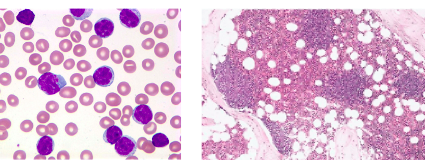
How would you ID chronic lymphocytic leukemia (CLL) from PBS and BMS?
- PBS: Mature-appearing lymphocytes with high nuclear to cytoplasmic ratios, with scant agranular cytoplasm and homogeneously condensed chromatin without nucleoli. Characteristic “soccer ball’ chromatin pattern. Numerous smudge cells
- BMS: tissue is displaced by nodular and interstitial aggregates of clonal B cells.
How would you ID chronic myeloid leukemia (CML) from PBS and BMS?
PBS: > 100K white blood cells with neutrophilia, significant increase in metamyelocytes and myelocytes, also basophilia and eosinophilia
BMS: increased granulocyte precursors, basophils, eosinophils and occasionally monocytes
Normal erythroid compartment, variable pseudo Gaucher cells and sea blue histiocytes, increased reticulin fibres
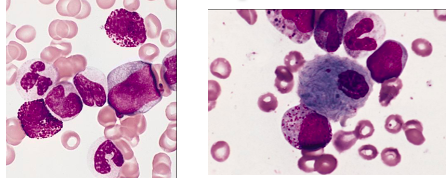
What condition is shown here?
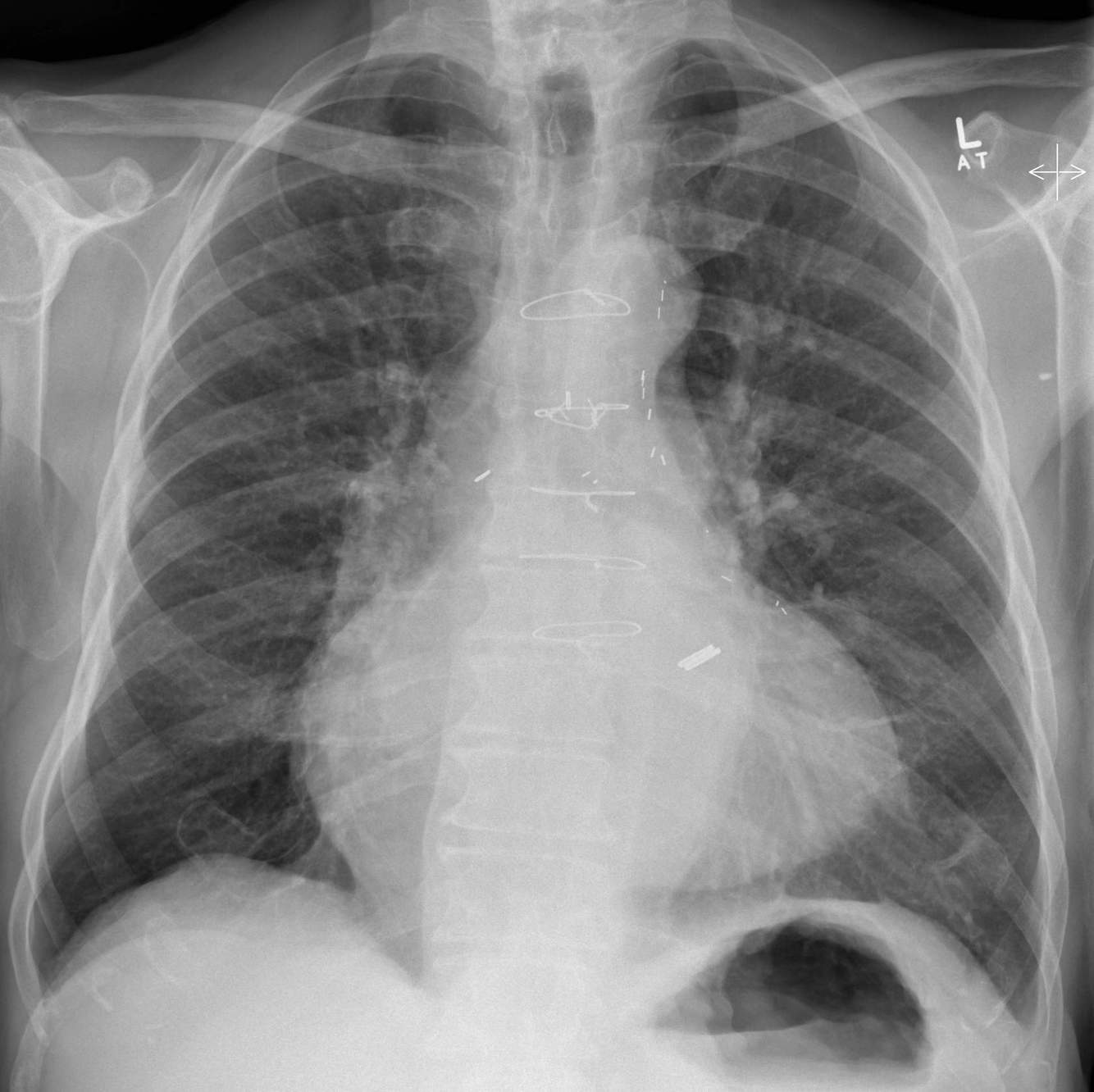
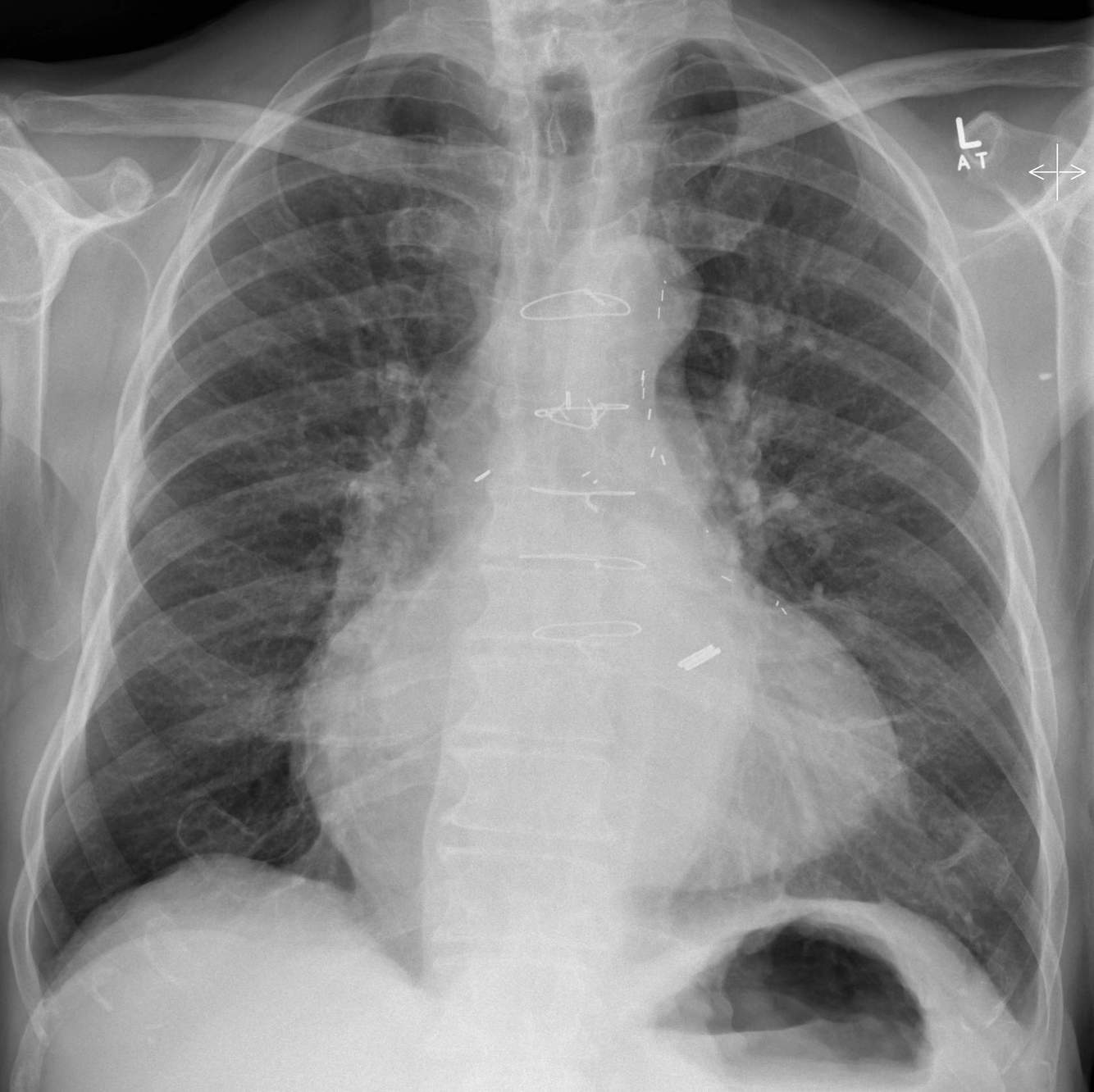
Upper Lobe Blood Diversion
Due to the increased pressures, blood is pushed upwards creating a ‘stag antler’ appearance. Blood is diverted as fluid is more likely to build up lower down due to gravity and cause relative hypoxia and vasoconstriction, thus the blood is diverted to the upper zones.
In the midline of this film, we can also see several sternal sutures.
Explain the mechanism of iron absorbtion and transport in the body for haem iron and non haem iron
Haem iron
- Haem iron – (highly bioavailable) absorbed through DMT1
- Fe removed from Haem. Can then be stored as ferritin OR can exit cell through Ferroportin
Non-haem iron:
- Mostly in the form of Fe3+, but only Fe2+ can be absorbed by the enterocyte. Enzyme reductase: Fe3+ à Fe2+
- Enters via DMT1
- Fe removed from Haem. Can then be stored as ferritin OR can exit cell through Ferroportin
Then transferrin transports Fe3+ around body

What is the first committed cell in erythropeoisis? [1]
What is the pathway from Haematopoietic stem cell (HPSCs) - to erythrocyte? [1]
What is the first committed cell in erythropeoisis? [1]
Proerythroblast
Haematopoietic stem cell (HPSCs) –> common myeloid progenitor cell –> (CMPC)Proerythroblast –> erythroblast –> reticulocyte – > erythocyte
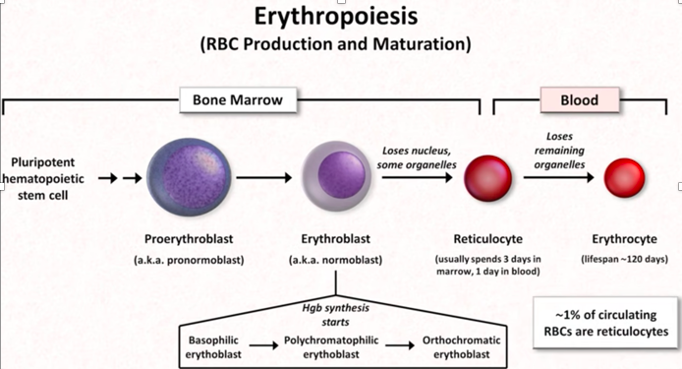
The proerythroblast develops into an (early) erythroblast. The erythroblast then undergoes a sequence of changes where its nucleus progressively shrinks and its cytoplasm becomes filled with haemoglobin (not stained). When full of haemoglobin it is called a normoblast. The normoblast then expels its nucleus and becomes a reticulocyte. Most reticulocytes stay in the marrow and mature into erythrocytes but some may be released into the blood, especially after haemorrhage. Reticulocytes can transport oxygen, just not as efficiently as mature erythrocytes. They can mature into adult RBCs in the circulation



-
CR EOYS159
-
CR EOYS258
-
CR EOYS341
-
MET EOYS149
-
CR EOYS443
-
MET EOYS256
-
MET EOYS358
-
MET EOYS454
-
MET EOYS526
-
HD152
-
HD EOYS256
-
HD EOYS350
-
HD EOYS460
-
HD EOYS537
-
HD EOYS6 (mostly breast histology qs)56
-
HD EOYS729
-
BB EOYS156
-
BBEOYS260
-
BB EOYS367
-
BB EOYS441
-
BBEOYS561
-
BB EOYS652
-
BBEOYS746
-
BBEOYS833
-
Cancer 152
-
Quick Facts273
-
Cancer 250
-
LOCO163
-
LOCO248
-
LOCO319
-
Quick Facts 2102
-
Quick Facts 4147
-
Quick facts 3107
-
Quick Facts 5103
-
Quick Facts 6111
-
Quick Facts 7158
-
Yr 2 Rogo Qs51
-
Quick Facts 8125
-
Last one394
-
Quick facts 9135
-
Quick Facts 1057
-
QF 1180



