Anal fissure
- What is it? acute? chronic
- RF
- Clinical features
- Management
- Tear in the mucosal lining of the anal canal, most commonly due to trauma from defecation of hard stool
Acute – <6 wks
Chronic – >6 wks
- Constipation, Dehydration, IBD, Chronic diarrhoea
- Intense pain post defecation (can last several hrs)
Bleeding (bright red when wiping) or itching
O/e: DRE visible and palpable
posterior midline
EUA (examination under anaesthesia) may be required
Fissures within the canal can be visualised in proctoscopy
4.
- Analgesia
- Inc fibre & fluid
- Stool softening laxatives (movicol and lactulose)
- GTN cream or diltiazem cream - increases the blood supply to the region and relaxes the internal anal sphincter, putting less pressure on the fissure, promoting healing and reducing pain.
- Surgical managment for chronic fissures -> lateral sphincterotomy
Anal fistula
- What is it?
- Aetiology & RF
- Clinical features
- Ix
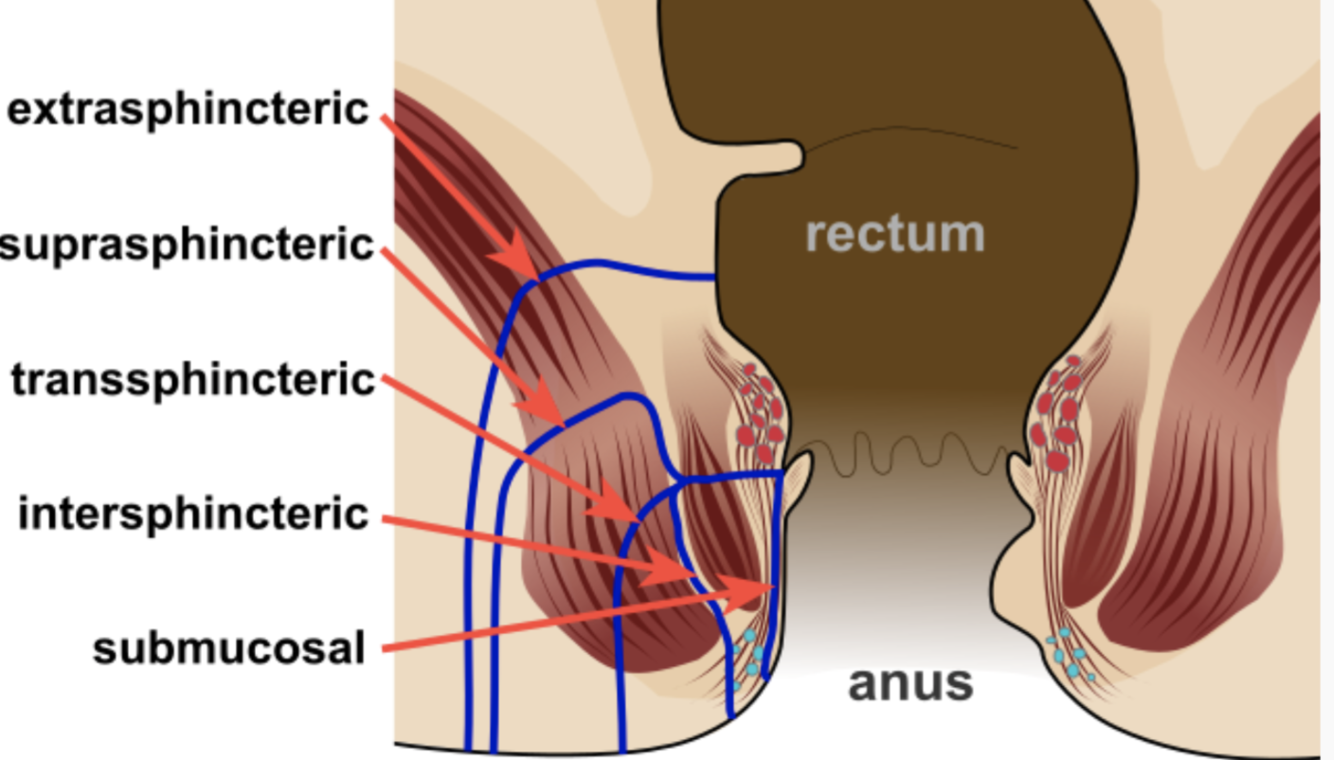
- Park’s classification system divides anal fistulae into four distinct types (Fig. 2):
- Management
- Anal canal & perianal skin
associated with anorectal abscess
M>F
- Consequence of an anal abscess (25-50%)
In rare occasions, anorectal ca can occasionally present with an anal fistula.
Other RF include:
- IBD – Crohn’s disease or ulcerative colitis
- Systemic diseases – Tuberculosis, diabetes, HIV
- Hx of trauma to the anal region
- Previous radiation therapy to the anal region
- Intermittent or continuous discharge onto the perineum, including mucus, blood, pus, or faeces.
May also cause severe pain, swelling, change in bowel habit and systemic features of infection (tracking, fever, lymphadenopathy)
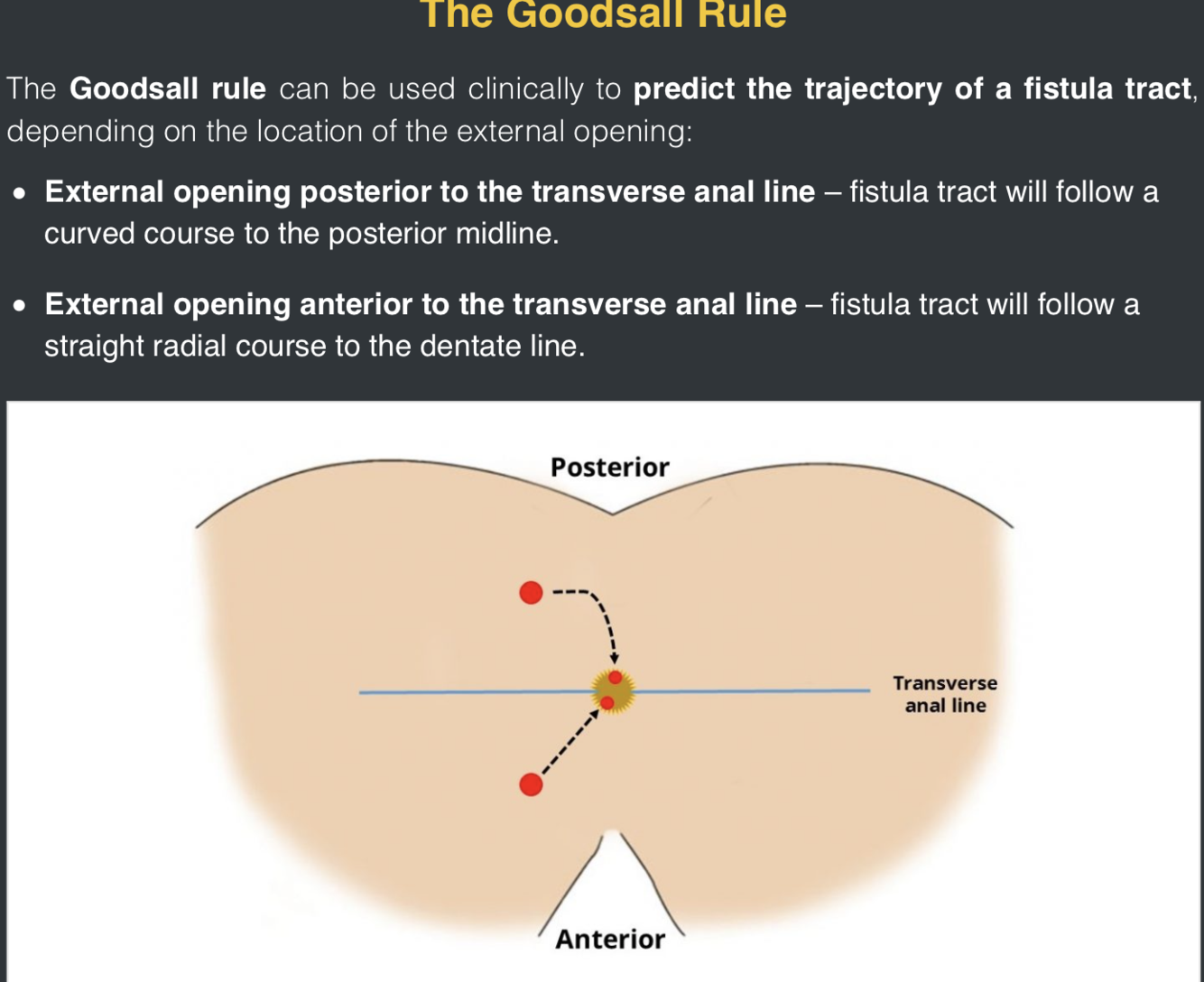
O/e: external opening on the perineum may be seen; these can be fully open or covered in granulation tissue. A fibrous tract may be felt underneath the skin on digital rectal examination.
- Rigid sigmoidoscopy (visualise opening of the tract in the anal canal)
Fistulography, endo-anal US, or MRI imaging
- Inter-sphincteric fistula (most common)
Trans-sphincteric fistula
Supra-sphincteric fistula (least common)
Extra-sphincteric fistula
- Fistulotomy (laying the tract open and allowing it to heal by secondary intention. A probe is passed into the tract and the skin, subcutaneous tissue, and internal sphincter* are divided in turn, thus opening the tract.
Other options include placement of a seton and/or opening the perianal skin adjacent to the external opening which promotes healing before external closure and prevents recurrence of an abscess.
Anorectal abscess (M>W)
- Pathophysiology
- Clinical features and diagnosis
- Management
- Cause: plugging of the anal ducts? which drain the anal glands. They secrete mucus into the anal canal to ease the passage of faecal matter.
Blockage of the anal ducts causes stasis and allows the normal bacterial flora to overgrow, leading to infection. Common causative organisms include E. Coli, Bacteriodes, and Enterococcus.
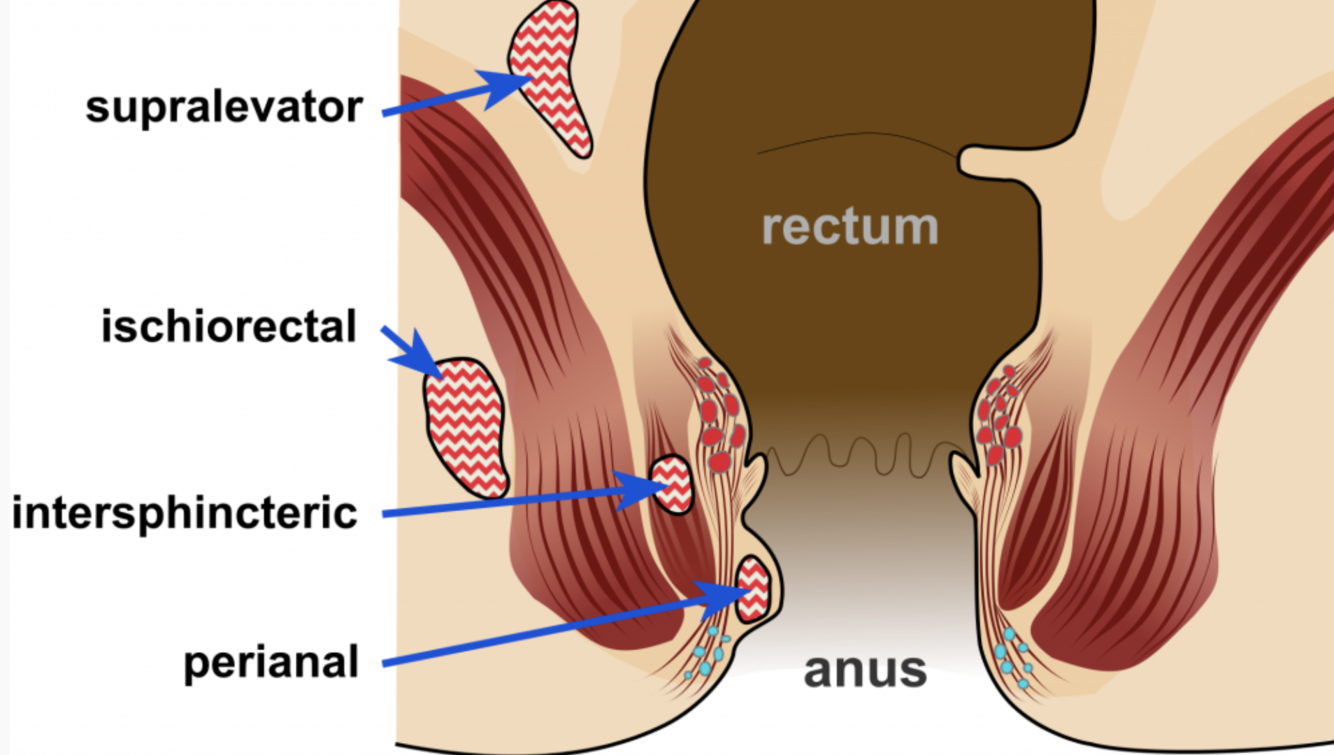
The anal glands are located in the intersphincteric space. Infection can then spread to adjacent areas. Hence anorectal abscesses can be categorised by the area in which they occur:
- Perianal (the most common site of abscess formation)
- Ischiorectal
- Intersphincteric
- Supralevator
2.
- pain in the perianal region (exacerbated when sitting down)
- localised swelling, itching, or discharge.
- Severe fever, rigors, general malaise or sepsis.
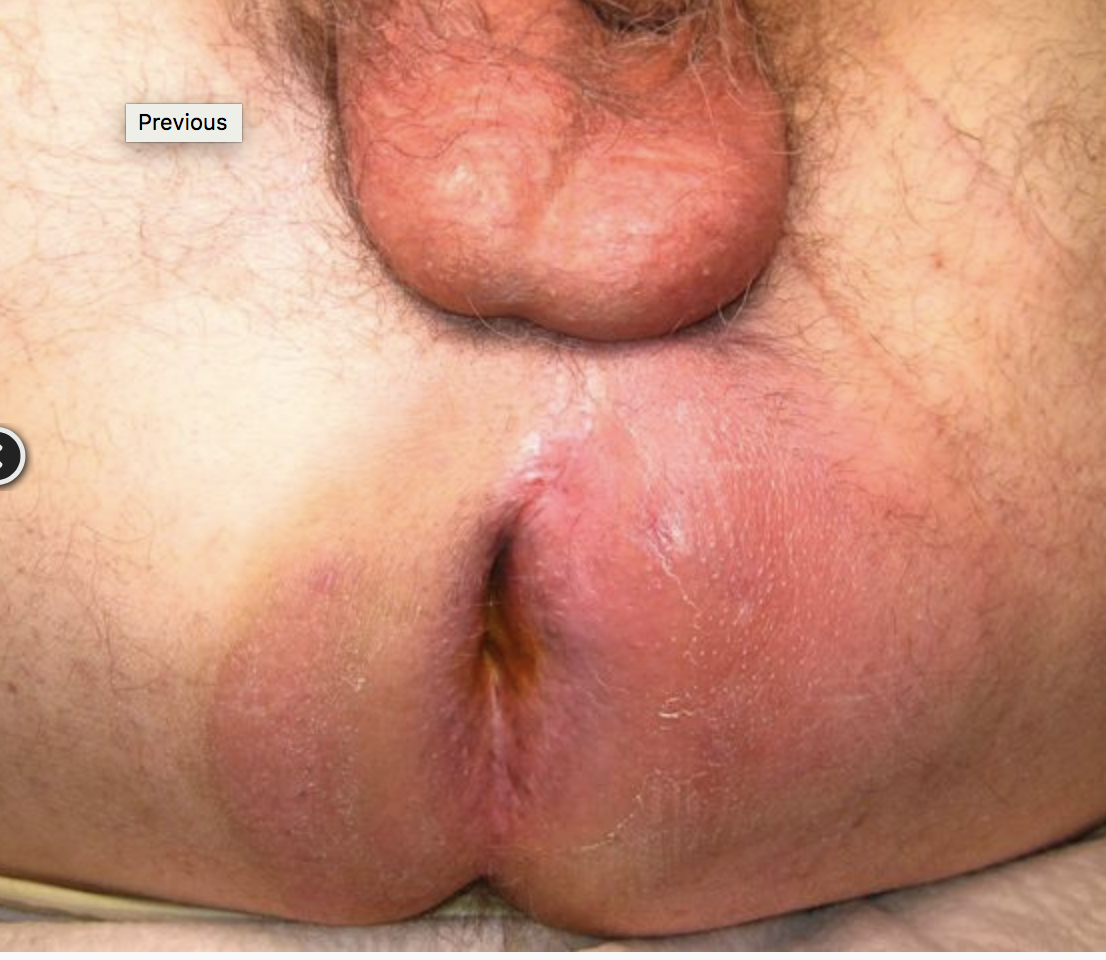
- O/e: abscess will be red and tender, may be discharging purulent or haemorrhagic fluid, some degree of surrounding cellulitis.
- High rates of recurrence and the development of fistulae.
Abx used initially
surgical drainage, typically performed under general anaesthetic.
1.
- The most widely accepted theory for pilonidal sinus disease development is:
- RF
- Clinical features
- Management
- sinus in the cleft of the buttocks
males aged 15-30 years.
2.
- A hair follicle in the intergluteal cleft becomes infected or inflamed.
- This inflammation obstructs the opening of the follicle, which extends inwards, forming a ‘pit’ (a characteristic feature of pilonidal sinus disease).
- A foreign body-type reaction may then lead to formation of a cavity, connected to the surface of the skin by an epithelialised sinus tract.
- Caucasian males with coarse, dark body hair
increased sweating, prolonged sitting, buttock friction, obesity, poor hygiene and local trauma. Typically, pilonidal disease does not occur after 45 years of age.
- intermittent red, painful, and swollen mass in the sacrococcygeal region.
Main distinguishing feature is that a pilonidal sinus opens up onto the skin but does not continue into the anal canal like a fistula
- Non surgical management:
- shaving the affected region
- plucking the sinus free of any hair
- Abx
Surgical
- Acute: drainage and washout of any abscess that is present. It can be difficult to remove the sinus tract in the same operation and most patients will require further surgery
- Chronic: removal of the pilonidal sinus tract.
There are two main methods:
- Excising the tract and laying open the wound, allowing closure by secondary intention. (low rates of recurrence, can take a long time to heal and has an inc risk of infection)
- Excising the tract, followed by primary closure of the wound (higher rates of recurrence, may require reconstructive surgery due to tissue loss from this op)
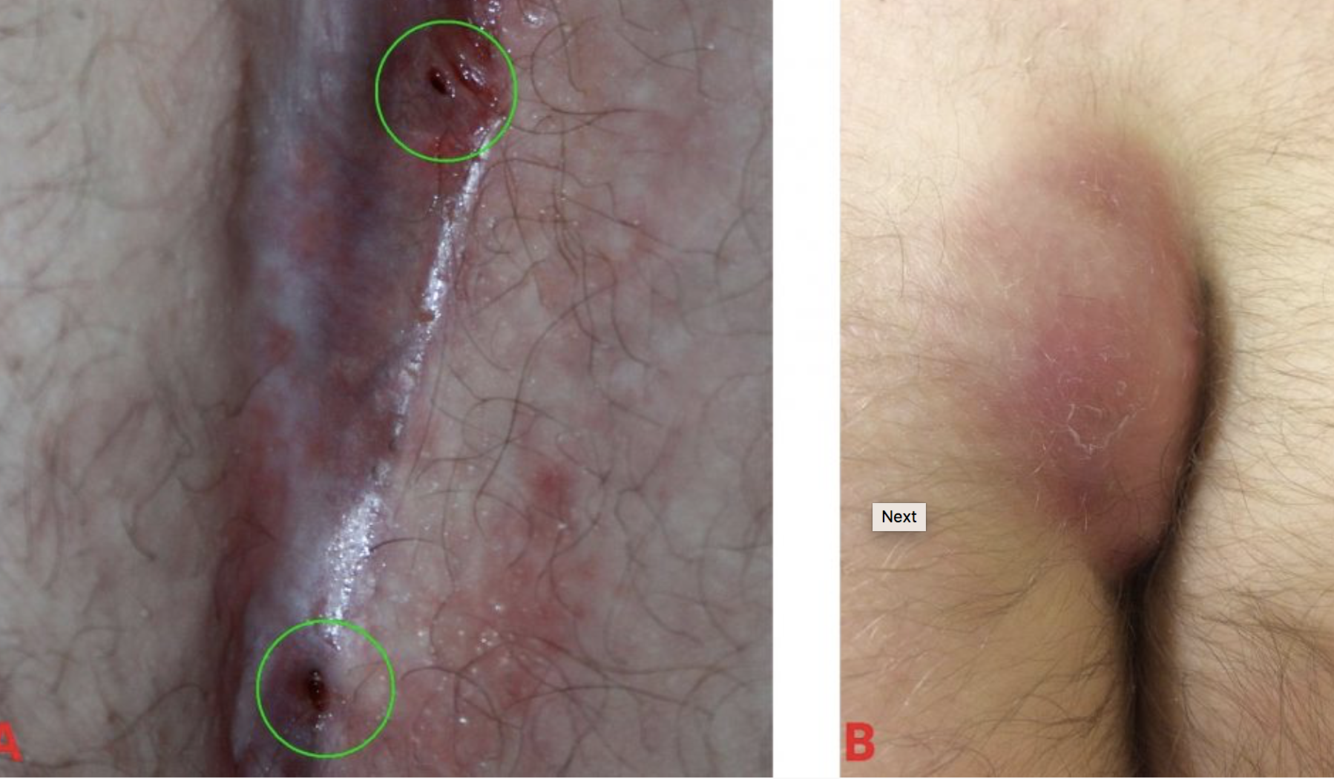
Anal cancer (~4% of colorectal cancers)
- Pathophysiology
- RF:
- Clinical features:
- Ix
- Management
- Complications
1.
- ~80% SCCs, arise from below the dentate line (pectinate line)
- ~10% are adenocarcinomas arising from the upper anal canal epithelium and the crypt glands. Rarer anal tumours include melanomas and anal skin cancers
Anal Intraepithelial Neoplasia may precede the development of invasive squamous anal carcinoma, and can affect either the perianal skin or anal canal. AIN is strongly linked to infection with HPV.
Grading is dependent on the degree of cytological atypia, and the depth of that atypia in the epidermis. High-grade AIN (grade 2 or 3) is premalignant and may progress to invasive cancer.
2.
- HPV infection (80-90% of cases (esp HPV-16 and HPV-18)
- HIV infection
- Increasing age
- Smoking
- Immunosuppressant medication
- Crohn’s disease
3.
- Pain and rectal bleeding (~50% of patients)
- Anal discharge
- Pruritus
- Palpable mass
O/e: the perineum and perianal region -> screened for any ulceration or wart-like lesions
In women, a vaginal examination -> vulval or vaginal lesions.
DRE should be attempted, although may not be feasible due to pain. If a mass is palpable, remember to document the distance from the anal verge where it is felt and the fraction of the anal circumference which it occupies. The inguinal lymph nodes should be examined for lymphadenopathy*.
*Lymph from the area below the dentate line drains to the superficial inguinal nodes, whereas the anal canal and rectum above the dentate line drain into the mesorectal, para-aortic, and paravertebral nodes.
4.
- Proctoscopy
- EUA -> tumour size and invasion of local structures and allows a biopsy to be taken for histological confirmation
- If one suspects immunosuppression on a background of high risk behaviour, an HIV test should be considered.
- Women, a smear test can be performed to exclude any cervical intraepithelial neoplasia (CIN) and any further biopsies if signs of vulval intraepithelial neoplasia (VIN) are present.
Imaging (once a biopsy has been taken and anal cancer has been confirmed, further staging investigations are required:)
- USS-guided Fine Needle Aspiration (FNA) of any palpable inguinal lymph nodes
- CT thorax-abdomen-pelvis for distant metastases
- MRI Pelvis to assess the extent of local invasion (T stage)
- Chemotherapy (mitomycin C and 5-fluorouracil) and Radiotherapy (first choice) external beam radiotherapy to the anal canal and inguinal lymph nodes
Surgical Management (advanced disease, after failure of chemoradiotherapy, or in early T1N0 carcinomas)
~ abdominoperineal resection (APR), yet for some a posterior or total pelvic exenteration is required (specialist centres)
Most recurrences occur in the first 3 years. After remission, pt should be rv every 3–6 months over 2yrs, and 6–12 monthly until 5 yrs. Patients tend to relapse locally and regionally rather than metastasise.
- Chemoradiation-related pelvic toxicity is the most common short term complication, including dermatitis, diarrhoea, proctitis and cystitis, leucopenia, and thrombocytopenia.
Longer term: fertility issues, faecal incontinence, vaginal dryness, erectile dysfunction, and rectovaginal fistula.
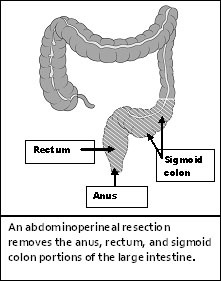
Haemorrhoids
- What is it?
- RFs?
- Clinical features
- DD
- Ix
- Management
- Complications
- abnormal swelling or enlargement of the anal vascular cushions (3-, 7- and 11- o’clock)
- excessive straining (from chronic constipation), increasing age, and raised intra-abdominal pressure (such as pregnancy, chronic cough, or ascites).
Other less common RFs include pelvic or abdominal masses, family history, cardiac failure, or portal hypertension.
3.
- painless bright red bleeding (not mixed)
- pruritus (due to chronic mucus discharge and irritation)
- rectal fullness or an anal lump
- soiling (due to impaired continence or mucus discharge)
- Large prolapsed haemorrhoids can thrombose. These are very painful and these patients frequently present acutely as an emergency patient.
Examination will usually be normal unless the haemorrhoids have prolapsed. So-called “external piles” are usually simple skin tags or “sentinel piles” from a fissure-in-ano. A thrombosed prolapsed haemorrhoid will present as a purple/blue, oedematous, tense, and tender perianal mass.
- malignancy, inflammatory bowel disease, or diverticular disease.
fissure-in-ano, perianal abscess, or rectal polyps.
5.
- Proctoscopy
- FBC
- Flexible sigmoidoscopy or colonoscopy may also be considered to exclude malignancy or polyps if indicated in certain cases
6.
- 95% managed conservatively, esp if asymptomatic:
+ inc fibre + fluid intake
+ laxatives
+ Topical analgesia (e.g. lignocaine gel)
Non-Surgical
- Symptomatic 1st degree and 2nd degree haemorrhoids: rubber-band ligation (RBL)*.
- infrared coagulation / photocoagulation, bipolar diathermy, or direct-current electrotherapy. Often patients are not too troubled by the symptoms and simply want reassurance that the cause of the bleeding is not sinister. Reassurance alone may therefore be sufficient for many people.
*The main complications of this procedure include recurrence, pain (if the band is mistakenly placed below the dentate line), and bleeding
Surgical
5% eventually need haemorrhoidectomy* (Either a stapled or Milligan Morgan)
If symptomatic and not responding to conservative therapies, yet unsuitable for banding / injection (mainly 3rd degree and 4th degree).
*Complications of a haemorrhoidectomy: bleeding, infection, constipation, stricture, anal fissures, or faecal incontinence
- Include thrombosis, ulceration or gangrene (secondary to thrombosis), skin tags, or perianal sepsis
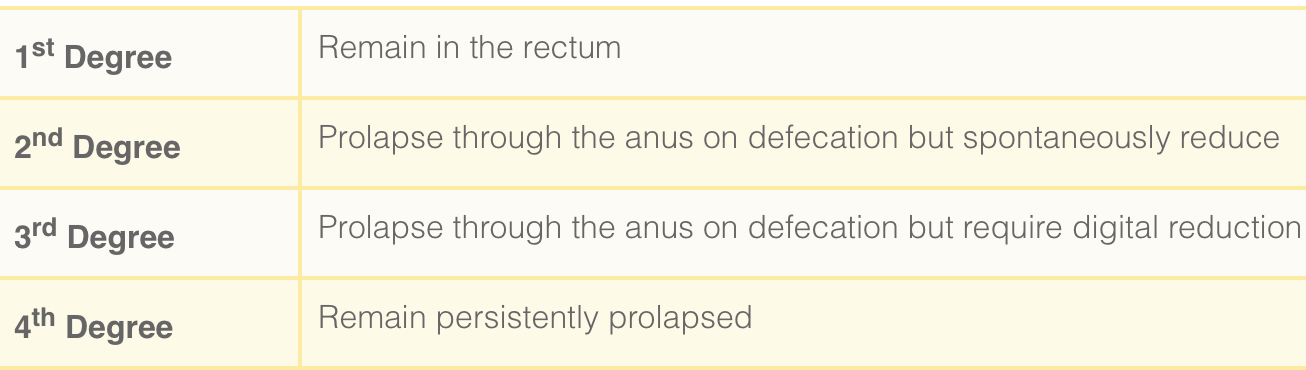
Rectal prolapse
- What is it?
- Pathophysiology
- Clinical features
- Management
- ~ women >30yo
Partial thickness – rectal mucosa protrudes out of the anus
Full thickness – rectal wall protrudes out the anus
- FULL PROLAPSE: Form of sliding hernia, through a defect of the fascia of the pelvic region
CAUSE: chronic straining secondary to constipation, a chronic cough, or from multiple vaginal deliveries.
PARTIAL THICKNESS: loosening and stretching of the CT
3.
- ~ rectal mucus discharge, faecal soiling, bright red blood on wiping, or even with visible ulceration
- Full thickness prolapses begin internally and thus can present with a sensation of rectal fullness, tenesmus, or repeated defecation.
- O/e: the prolapse may not always be evident, but can be identified by asking the patient to strain.
- DRE: weakened anal sphincter is often identified. For a suspected internal prolapse may be identified by defecating proctography and EUA
- Conservative management:
Those unfit for surgery, minimal symptoms, or in children (as most resolve spontaneously).
Initial management:
+ dietary fibre and fluid intake
+ banded in clinic (prone to recurrence)
Surgical Management:
Abdominal procedure or perineal procedure is mainly dictated by the patient’s age and co-morbidities:
Perineal approach:
- Delormes operation involves part of the prolapsed lining of the rectal mucosa being removed and the muscle of the rectum reinforced with placating stitches
- Altmeirs operation* involves the perineal excision of the sigmoid colon and rectum
Abdominal approach
- A rectopexy involves the rectum being mobilised and fixed onto the sacral prominence
*Whilst the Altmeirs operation does carry the risks associated with a resection, it is often a more effective procedure than a Delormes operation
Acute appendicitis
- What is it?
- RF
- Clinical features
- DD
- Ix
- How do you stratify the risk of appendicitis
- Management
- Complications
- Inflammation of the appendix -> obstruction by faecolith or lymphoid hyperplasia (rarely appendiceal or ceacal tumour)
Second or third decade
- FH, seasonal (summer inc), ethnicity (caucasian)
- pain peri-umbilical (dull/generalised), RIF (sharp/localised)
vomiting
anorexia, nausea, diarrhoea, or constipation
O/e: Maybe tachycardic, tachypnoeic, pyrexial
rebound tenderness & percussion pain over Mcburneys point (ASIS - umbilicus 2/3rds laterally)
appendiceal abscess with a RIF mass
There are two “textbook signs” that may be found on examination:
- Rovsing’s sign: RIF fossa pain on palpation of the LIF
- Psoas sign: RIF pain with extension of the right hip (boy who had stitch pain supports newcastle hop on your left foot)
Specifically suggests an inflamed appendix abutting psoas major muscle in a retrocaecal position
4.
- Ectopic pregnancy,
- Ovarian cyst rupture,
- Renal: ureteric stones, urinary tract infection, pyelonephritis
- GI: mesenteric adenitis, diverticulitis, inflammatory bowel disease, or Meckel’s diverticulum*
- Urological: Testicular torsion, epididymo-orchitis
- Gynaecological: pelvic inflammatory disease, torsion, tubo-ovarian abscess
- Laboratory Tests:
- Pregnancy test
- Urinalysis (leucocytes can be present in appendicitis)
- Blood tests (FBC, CRP)
- Serum B-hCG
Imaging (if the clinical features are inconclusive and an alternative diagnosis is sought)
- Trans-abdominal US – Good sensitivity and specificity (86% and 81% respectively) and most useful in children, who have less abdominal fat and should not be exposed to radiation -> Jarvis
- CT scan – More commonly used in older patients, especially to identify any potential malignancy masquerading as or causing an appendicitis
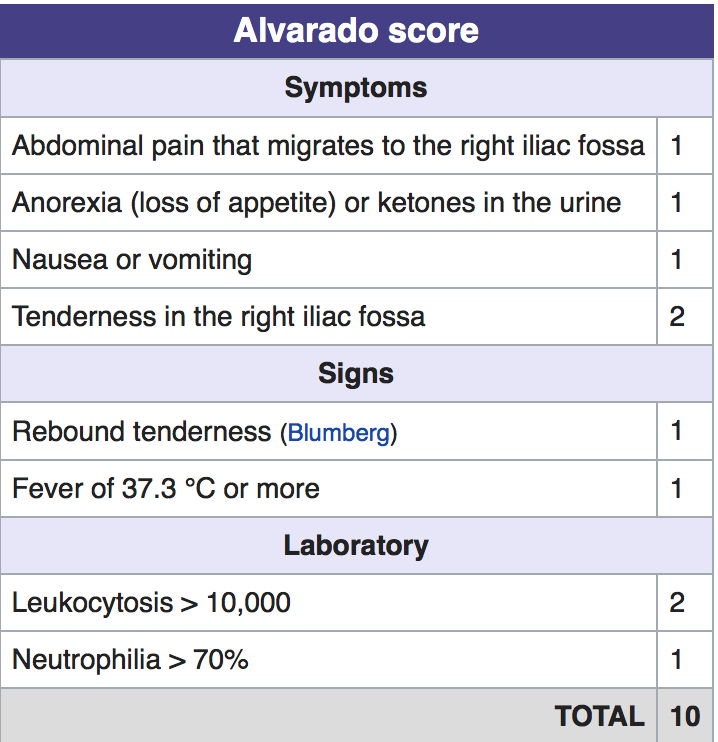
- Alvarado score, Appendicitis inflammatory response score to assist the surgeon in their clinical judgement making
low risk 0-4 - no intervention
medium risk 5-8 - further imaging
high risk 9-12 - surgical exploration
- Laparascopic appendectomy (keyhole) (but open laparotomy) -> low morbidity from the procedure, females better visualisation of the uterus and ovaries.
Histopathology to look for malignancy
8.
- Perforation, if left untreated the appendix can perforate and cause peritoneal contamination
- Surgical site infection (rates vary depending on simple or complicated appendicitis)(ranging 3.3-10.3 %)
- Appendix mass, where omentum and small bowel adhere to the appendix
- Pelvic abscess
Presents as fever with a palpable RIF mass, yet typically requires US scan or CT scan for confirmation
Management is usually with antibiotics and percutaneous drainage of abscess. Any immediate surgery is associated with increased morbidity and ileo-caecal resection
Follow-up with CT scan after conservative treatment is recommended in patients >40yrs, due to around 2% prevalence of concurrent malignancy.
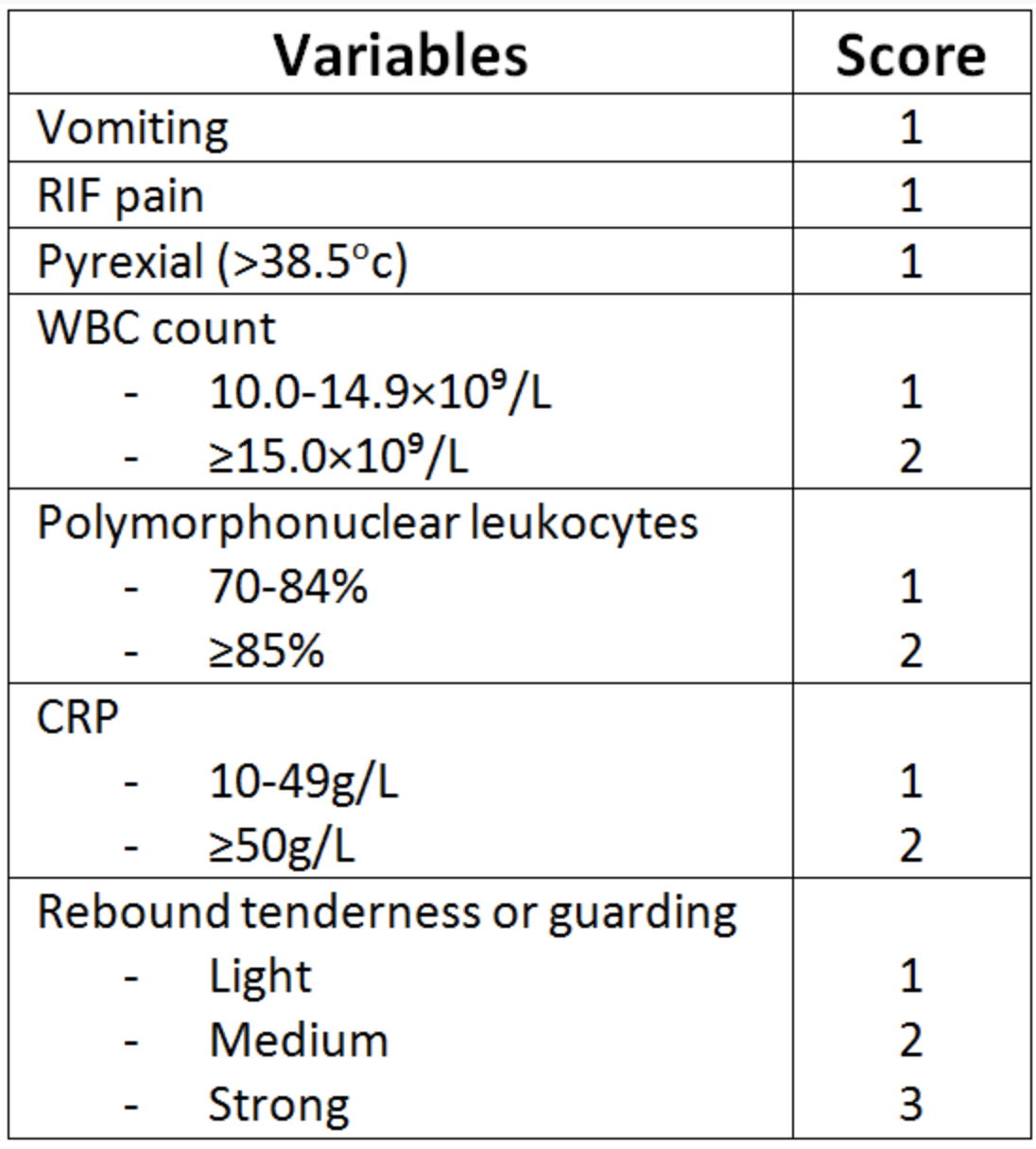
What is the Alvarado score
Chrons disease
- What is it
- RF?
- Clinical features
- Ix
- Management
- Complications
1.
- Autoimmune disease
- Bimodal presentation 15-30, 60-80
- mouth to anus
- distal ileum or proximal colon
- smoking inc risk
- Genetics
- transmural inflammation
- Deep ulcers & fissures (cobblestone appearance)
- skip lesions
- non-caseating granulomatous inflammation
- fistula: affected bowel to adjacent structures, resulting in perianal fistula (54%), entero-enteric fistula (24%), recto-vaginal (9%), entero-cutaneous fistula, or entero-vesicalar fistula.
2.
- FHx
- Smoking
- White European descent (particularly Ashkenzi Jews)
- Appendicectomy (increases the risk of developing CD directly after the surgery)
3.
- Episodic abdominal pain (maybe colicky, vary in site)
- Diarrhoea: blood or mucus
- Malaise, anorexia and low-grade fever. It may also result in malabsorption and malnourishment if severe
- Oral aphthous ulcers
- Perianal disease (as skin tags, perianal abscesses, fistulae, or bowel stenosis)
Extra- intestinal signs
- Musculoskeletal
Enteropathic arthritis (typically affecting sacroiliac and other large joints) or nail clubbing
Metabolic bone disease (secondary to malabsorption)
- Skin
Erythema nodosum – tender red/purple subcutaneous nodules, typically found on the patient’s shins (Fig. 2A)
Pyoderma gangrenosum – erythematous papules/pustules that develop into deep ulcers (Fig. 2B) and can occur anywhere (yet typically affect the shins)
- Eyes – Episcleritis, anterior uvetitis, or iritis
- Hepatobiliary – Primary sclerosing cholangitis (more associated with UC), cholangiocarcinoma (due to association with primary sclerosing cholangitis), and gallstones
- Renal: Renal stones
4.
- Bloods: Hb, albumin, CRP, WCC
- AXR/CT imaging (potential toxic megacolon/ bowel obstruction)
- Faecal calprotectin (new onset)
- Stool sample (infective cause)
Imaging that can be utilised in the diagnosis of CD:
- Colonoscopy + biopsy – the gold standard; a characteristic macroscopic finding is cobblestoning of the bowel (fissures and ulcers separate islands of healthy mucosa), with a non-caseating granulomatous inflammation.
- Barium swallow – less common, shows strictures, ‘rose thorn’ ulcers, and the ‘string sign of Kantor’
- CT scan – may demonstrate bowel obstruction, perforation, collection formation, or fistulae.
For perianal disease, a pelvic MRI is first line as it is both accurate and non-invasive. EUA with proctosigmoidoscopy may also be considered to examine for concomitant rectosigmoid inflammation.
- Reffered to gastroenterologist
Avoid anti-motility drugs e.g. loperamide -> can precipitate toxic megacolon
Inducing remission
- Fluid resus, nutritional support, prophylactic herparin (prothrombotic states of IBD flares)
- Corticosteroid therapy and immunosuppresive agents e.g. mesalazine or azathioprine
- infliximab (biologic) rescue therapy
Maintaining Remission
Azathioprine or mercaptopurine (monotherapy)
Methotrexate can be considered in those who have used it to induce their remission or cannot tolerate other maintenance therapies.
Biological agents e.g. infliximab, adalumimab, or rituximab (failure of treatment with other agents, rescue therapy)
Smoking cessation inc risk of colorectal malignancy, colonoscopic surveillance is offered to people who have had the disease for >10 years with >1 segment of bowel affected (follow-up time frame depends on risk stratification of disease following initial endoscopy).
Referred to IBD-nurse specialists and patient support groups. Enteral nutritional support should be considered in young patients with growth concerns, with close support from nutritional teams. Antibiotics are only offered to those with obvious concurrent infection or perianal disease (typically ciprofloxacin or metronidazole).
Surgical Management (failed medical management, severe complications (e.g. strictures or fistulas), or growth impairment in younger patients)
- Ileocaecal resection (removal of terminal ileum and caecum with primary anastamosis between ileum and ascending colon)
6. Gastrointestinal - Stricture formation
Inflammation of the bowel can result in stricture formation, resulting in bowel obstruction and perforation
- Fistula, including enterovesical, enterocutaneous, or rectovaginal fistula
Fistulas can be removed by fistulotomy (i.e. opening the tract up) or Seton technique (where a cord is tied around the fistula which keeps the fistula open and over time the fistula drains and eventually heals over)
- Perianal complications
Common in patients with Crohn’s Disease, includes the formation of perianal abscesses or fistulae
- GI malignancy
Patient’s with Crohn’s disease have about a 3% risk of developing colorectal cancer over 10 years and small bowel cancer is about 30x more common in those with Crohn’s disease
Extraintestinal
- Malabsorption
- Osteoporosis (secondary to malabsorption or long-term steroid use)
- Increased risk of gallstones (due to reduced reabsorption of bile salts at inflamed terminal ileum)
- Inc risk of renal stones (malabsorption of fats in the small bowel which causes calcium to remain in the lumen; oxalate is then absorbed freely (as normally bound to calcium and excreted in stool), resulting in hyperoxaluria and formation of oxalate stones in the renal tract)
Ulcerative collitis
- What is it
- Pathophysiology
- Clinical features
- DD
- Ix
- Management
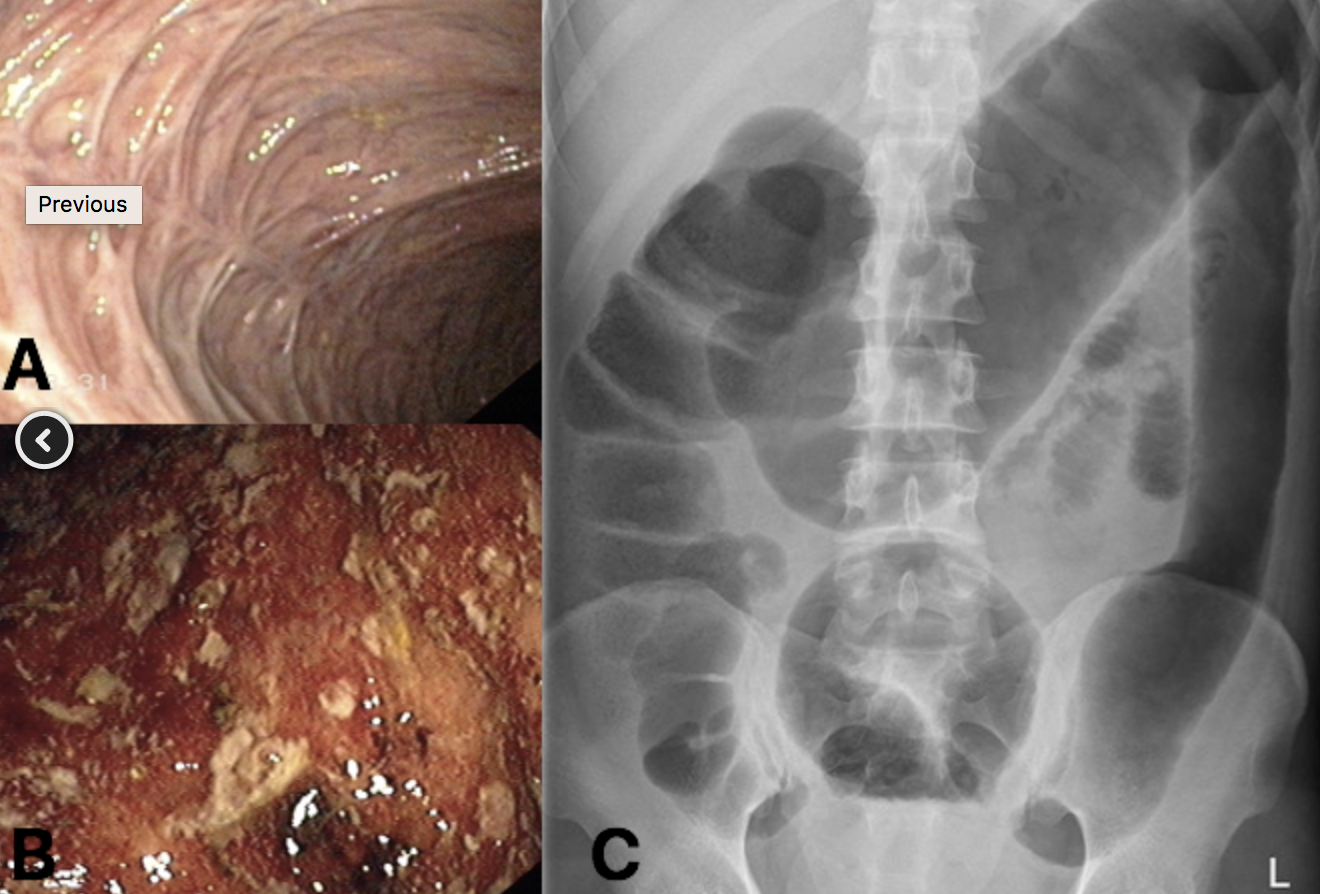
(A) bowel fibrosis, secondary to chronic UC (B) active inflammation in patient with UC (C) AXR changes in active UC, showing toxic megacolon with lead-pipe colon (seen in descending colon)
- Complications
- Caucasian
Bimodal distrubution 15-25yrs, 55-65
- Histological: inflammation of the mucosa and (submucosa?), crypt abscesses, and goblet cell hypoplasia. Repeated cycles of ulceration and healing may lead to raised areas of inflamed tissue termed ‘pseudopolyps’.
3.
- bloody diarrhoea (visible >90%) + mucus
- proctitis (rectum)
- malaise, anorexia, and low-grade pyrexia
- Musculoskeletal – enteropathic arthritis (typically affecting sacroiliac and other large joints) or nail clubbing
- Skin – Erythema nodosum (tender red/purple subcutaneous nodules, typically found on the patient’s shins)
- Eyes – Episcleritis, anterior uveitis, or iritis
- Hepatobiliary – Primary sclerosing cholangitis (chronic inflammation and fibrosis of the bile ducts)
- CD, chronic infections (schistosomiasis, giardiasis and TB), mesenteric ischaemia, or radiation colitis. Other differentials to consider include malignancy, IBS, or coeliac disease.
- Imaging:
- colonoscopy with biopsy
- flexible sigmoidoscopy
- AXR features of acute ulcerative colitis flares also include mural thickening & thumbprinting, Chronic cases of UC a lead-pipe colon
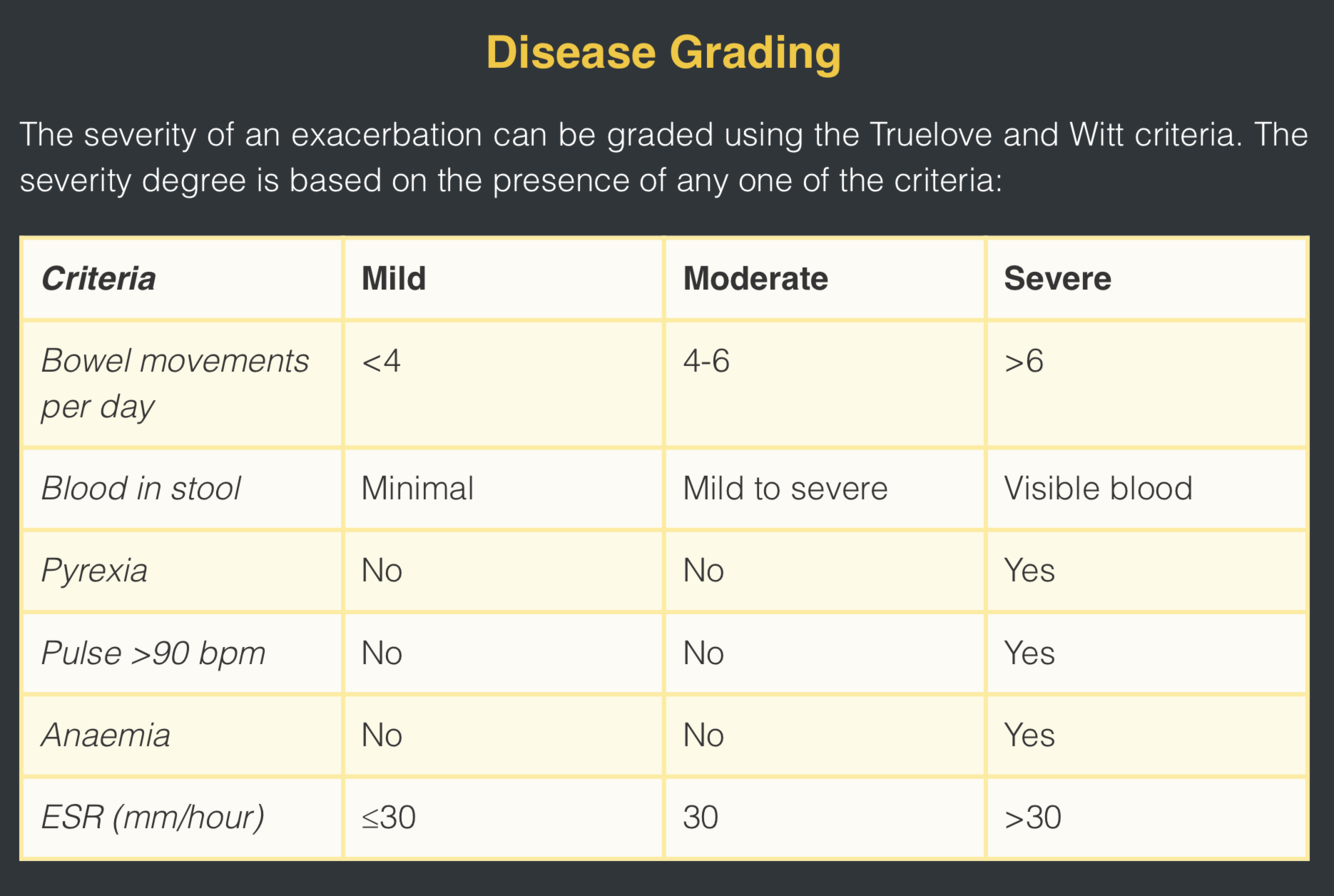
- Truelove and Witts
* fluid resuscitation, nutritional support, and prophylactic heparin (due to the prothrombotic state of IBD flares).
Inducing remission
Mild to Moderate (proctitis): Topical mesalazine or sulfasalazine, Add oral prednisolone + oral tacrolimus if needed
Mild to Moderate (extensive inflammation): High oral dose mesalazine or sulfasalazine, Add oral prednisolone + oral tacrolimus if needed
Severe: Intravenous corticosteroids and assess the need for surgery, Add infliximab if no short-term response if needed
Maintaining remission
- Immunomodulators e.g. mesalazine or sulfasalazine (step 1)
- Infliximab (step 2)
- Inc risk of colorectal malignancy, colonoscopic surveillance is offered to people who have had the disease for >10 years with >1 segment of bowel affected (follow-up time frame depends on risk stratification of disease following initial endoscopy).
- IBD-nurse specialists and patient support groups.
- Enteral nutritional support should be considered in young patients with growth concerns, with close support from a nutritional team.
Surgical Management
Indications for acute surgical treatment:
- disease refractory to medical management
- toxic megacolon
- bowel perforation
- reduce the risk of colonic carcinoma, if dysplastic cells are detected on routine monitoring.
Total proctocolectomy is curative* (with the patient requiring an ileostomy), yet many patients for disease control will often initially undergo a sub-total colectomy with preservation of the rectum (this can excised at a later stage if symptoms persist).
*Some patients may undergo ileal pouch-anal anastomosis operation, involving the formation of a pouch from loops of ileum (act as a reservoir for intestinal contents) that is then anastamosed to the anus, aiming to achieve maintain faecal continence
7.
- Toxic megacolon: severe abdominal pain, abdominal distension, pyrexia, and systemic toxicity -> decompression of the bowel is required as soon as possible, due to high risk of perforation, and failure to respond to medical management is an indication for surgery
- Colorectal carcinoma
- Osteoporosis, requiring regular assessment for fracture risk and treated as necessary
- Pouchitis, inflammation of an ileal pouch, with typical symptoms include abdominal pain, bloody diarrhoea, and nausea -> treated with metronidazole and ciprofloxacin
Colerectal cancer
- Aetiology
- RF:
- Clinical features
- DD and why its not them
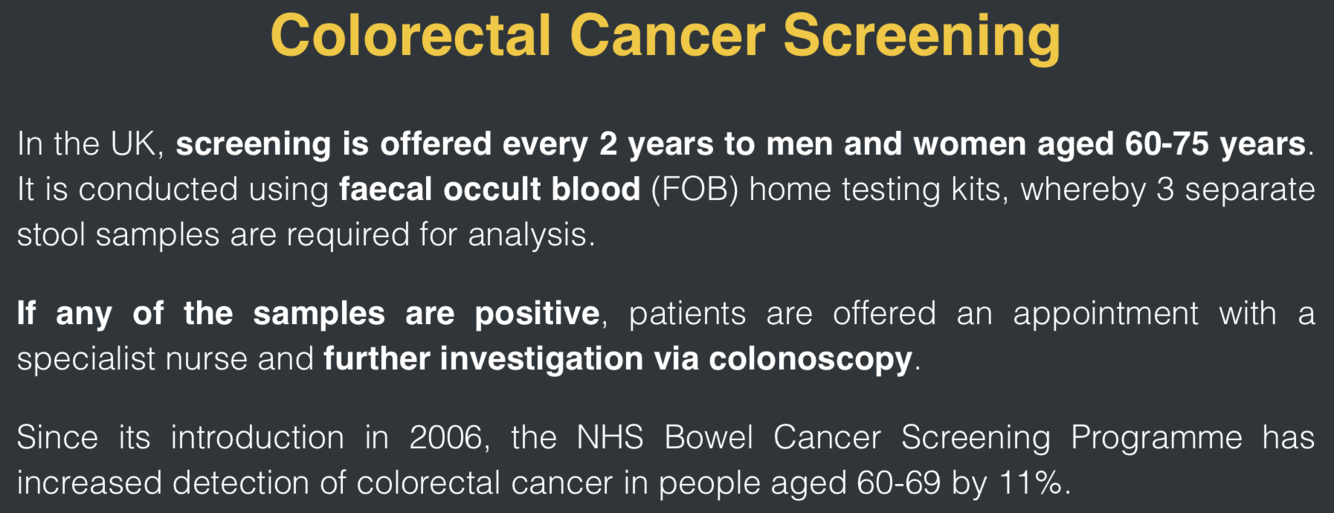
- Explain how bowel screening works
- Ix
- Management
- Adenocarcinoma
Normal mucosa -> colonic adenoma (colorectal ‘polyps’) -> invasive adenocarcinoma (termed the “adenoma-carcinoma sequence”).
Adenomas may be present for 10 years or more before becoming malignant and progression to adenocarcinoma occurs in approximately 10% of adenomas.
Genetic mutations:
- Adenomatous polyposis coli (APC) gene
Early APC gene (a tumour suppressor gene) mutation and inactivation results in growth of adenomatous tissue. Also responsible for the development of Familial Adenomatous Polyposis (FAP).
- Hereditary nonpolyposis colorectal cancer (HNPCC)
Mutation to DNA mismatch repair (MMR) genes leading to defects in DNA repair, commonly accounting for the familial risk associated with colorectal cancer.
- 75% of colorectal cancers are sporadic
25%: age (>60yrs), FHx, IBD, low fibre diet, high processed meat intake, smoking, and high alcohol intake.
3.
- Change in bowel habit, rectal bleeding, weight loss*, abdominal pain, iron-deficiency anaemia.
Classically, symptoms vary slightly depending on the location of the cancer:
- RS colon ca – abdominal pain, occult bleeding, or mass in right iliac fossa.
- LS colon ca – rectal bleeding, change in bowel habit or tenesmus, or mass in LIF /on PR exam
In the UK, NICE guidance recommends that patients should be referred for urgent investigation of suspected bowel cancer if:
≥40yrs with unexplained weight loss and abdominal pain
≥50yrs with unexplained rectal bleeding
≥60yrs with iron‑deficiency anaemia or changes in bowel habit
Positive occult faecal blood test
4.
- IBD: The average age of onset of IBD is younger (20-40yrs) and typically presents with diarrhoea containing blood & mucus.
- Haemorrhoids: Bright red rectal bleeding covering the surface of the stool and rarely presents with abdominal discomfort or pain, altered bowel habits, or weight loss.
- Diverticulitis: Can present with blood in stool and change in bowel habit, yet likely to cause systemic features of inflammation.
- Image
6.
- Bloods: FBC, microcytic anaemia (particularly if on the right side), U&Es, LFTs, and coagulation screens
- Carcinoembryonic Antigen (CEA) should not be used as a diagnostic test, due to poor sensitivity and specificity, however it is used to monitor disease progression and should be conducted both pre- and post-treatment, screening for recurrence.
- colonoscopy with biopsy, flexible sigmoidoscopy, CT colography
Once the diagnosis is made, several other investigations are required (primarily for staging):
- CT scan (Chest/Abdomen/Pelvis) to look for distant metastases and local invasion -> Full colonoscopy or CT colonogram to check for a 2nd (synchronous) tumour, if not used initially
- MRI rectum (rectal ca only) to assess the depth of invasion (and hence need for pre-op chemotherapy).
- Endo-anal ultrasound (early rectal cancers (T1 or T2) only) to assess suitability for trans-anal resection.
7.
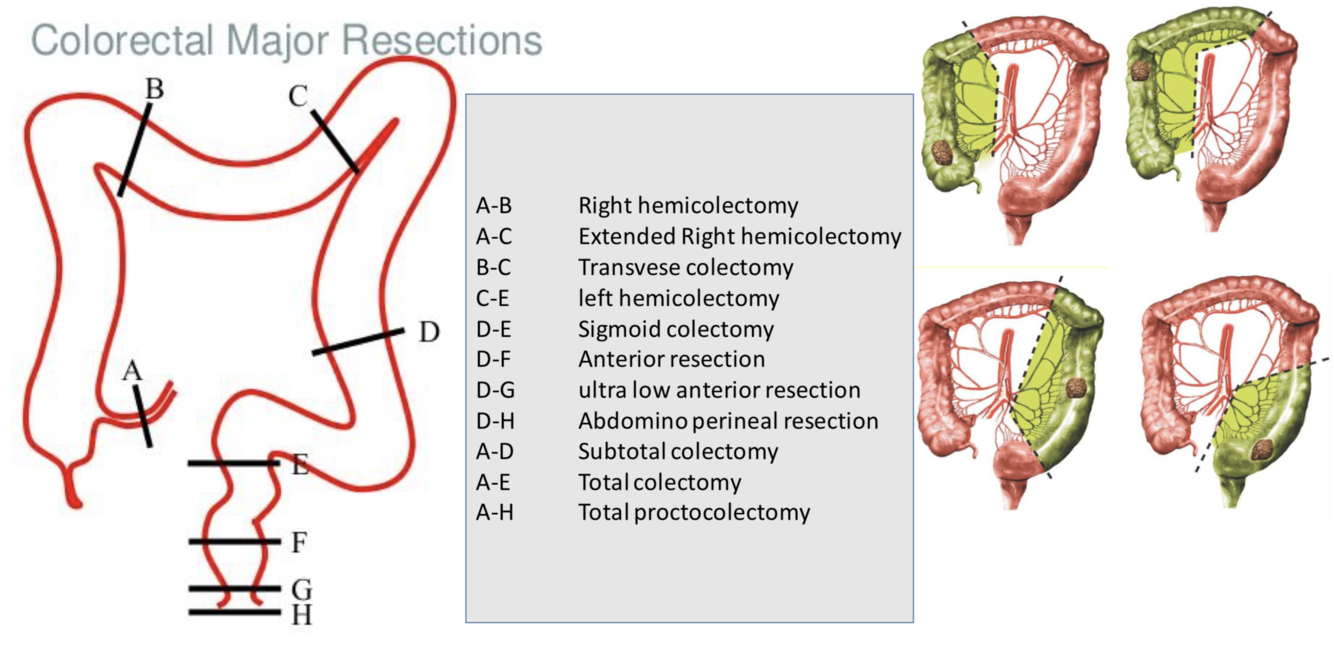
Regional colectomy (removal of the primary tumour with adequate margins and lymphatic drainage, followed either by primary anastomosis or formation of a stoma)
R Hemicolectomy & Extended R Hemicolectomy, for caecal or ascending colon tumours
ileocolic, right colic, and right branch of the middle colic vessels (branches of the SMA)
extended right hemicolectomy is typically performed for any transverse colon cancers.
L Hemicolectomy
descending colon tumours
left branch of the middle colic vessels (branch of SMA/SMV), the inferior mesenteric vein, and the left colic vessels (branches of the IMA/IMV) are divided and removed with their mesenteries.
Sigmoid colectomy, for sigmoid colon tumours, the IMA is fully dissected out with the tumour in order to ensure adequate margins are obtained.
Anterior Resection, for high rectal tumours, typically if >5cm from the anus. Favoured in rectal carcinoma as resection leaves the rectal sphincter intact and functioning if anastamosis performed, unlike AP resections.
- Often a defunctioning loop ileostomy is performed to protect the anastomosis and reduce complications in the event of an anastomotic leak. This is then reversed electively approximately four to six months later.
Abdominoperineal (AP) Resection
- low rectal tumours, <5cm from the anus
- Excision of the distal colon, rectum and anal sphincters
- permanent colostomy
*Bowel resections are often performed laparoscopically as this offers faster recovery times, reduced surgical site infection risk, and reduced post-op pain, with no difference in disease recurrence or overall survival rates when compared to open surgery.
Hartmann’s Procedure, emergency e.g. bowel obstruction or perforation: resection of the recto-sigmoid colon + end-colostomy and the closure of the rectal stump.
- Chemotherapy e.g. Folinic acid, Fluorouracil (5-FU), & Oxaliplatin
- Radiotherapy can be used in rectal cancer (neo-adjuvant). Particular use in patients with rectal cancers which look on MRI to have a “threatened” circumferential resection (i.e. within 1mm). They can undergo pre-operative long-course chemo-radiotherapy to shrink the tumour, thereby increasing the chance of complete resection and cure.
- Palliative:
Endoluminal stenting can be used to relieve acute large bowel obstruction in patients with left-sided tumours, yet they cannot be used in low rectal tumours due to the unpleasant side-effect of intractable tenesmus. The main s/e of stents are perforation, migration, & incontinence
Stoma formation for patients with acute obstruction, usually with either a defunctioning stoma or palliative bypass.
Resection of secondaries, not commonly performed but can done with adjuvant chemotherapy for any liver metastases
Pseudo-obstruction
- What is it?
- Pathophysiology
- Clinical features
- DD
- Investigations
- Management
- dilatation of the colon due to an adynamic bowel, in the absence of mechanical obstruction
~caecum and ascending colon
rare
~ elderly
- Think it could be interuption of ANS to colon -> absence of smooth muscle action
There are a variety of causes of pseudo-obstruction, including:
- Electrolyte imbalance or endocrine disorders. Including hypercalcaemia, hypothyroidism, or hypomagnesaemia
- Medication e.g. opioids, calcium channel blockers, or anti-depressants
- Recent surgery, severe illness, or trauma
- Recent cardiac event
- Parkinson’s disease
- Hirschsprung’s disease
- Abdominal pain, Abdominal distension, Constipation (paradoxical diarrhoea), Vomiting
o/e: bowel sounds are often present,
tympanic due to the distension and you should palpate for focal tenderness*
*Focal tenderness indicates ischaemia and is a key warning sign. Patients with bowel obstruction may be uncomfortable on palpation due to the discomfort from pressing on a distended abdomen, but there should be no focal tenderness, guarding, or rebound tenderness unless ischaemia is developing.
- Mechanical obstruction, Paralytic ileus, Toxic megacolon
- Bloods: FBC, CRP, U&Es, LFTs, Ca2+, Mg2+, and TFTs
AXR: limited use in definitive diagnosis of the condition
Abdominal-pelvis CT scan with IV contrast
- Most cases can be managed conservatively:
- NBM and started on IV fluids
- NG tube should be inserted (if vomiting)
- analgesics and prokinetic anti-emetics (*As pseudo-obstruction affects the distal part of the GI tract, vomiting is a late-stage of the disease progression hence may not always be warranted)
Do not resolve within 24hours:
- Endoscopic decompression (insertion of a flatus tube and allowing the region to decompress)
- IV neostigmine (an anticholinesterase) may also be trialled
- Nutritional support
Surgical Management (suspected ischaemia, perforation, or those not responding to conservative management)
In the absence of perforation, segmental resection +/- anastomosis will often be performed, however unless a unless affected areas are removed this will not be curative.
Alternative procedures can be done to decompress the bowel in the long-term, such as caecostomy or ileostomy.
Diverticular disease
- What is it?
- There are three different manifestations of the condition:
- Diverticulosis is present in around
- Pathophysiology
- Diverticulitis is classified as either simple or complicated.
Complicated:
Simple:
- RF:
- Clinical features
- Complications?
- DD
- Ix
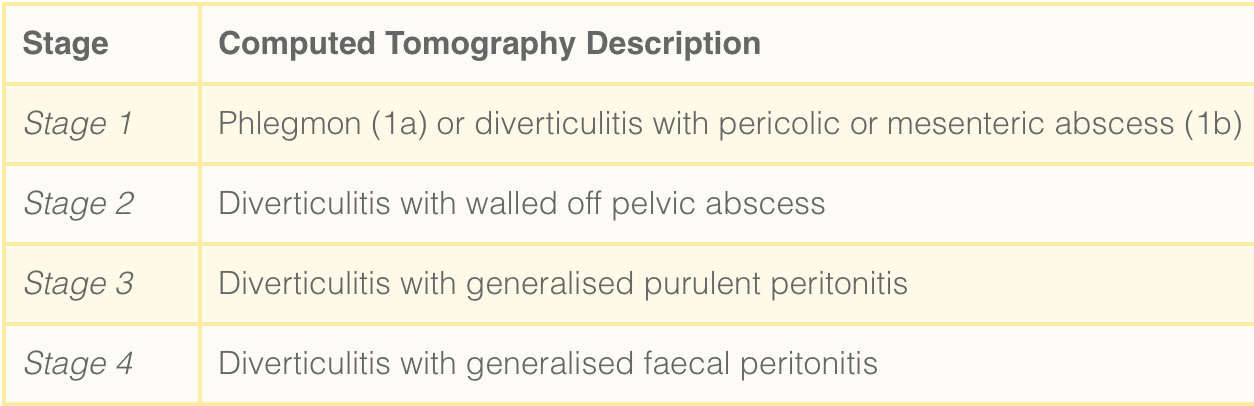
- How do you classify acute diverticulitis
- Management
- outpouching of the bowel wall composed of mucosa (large bowel and less commonly small bowel)
- Diverticulosis – the presence of diverticulum
Diverticular disease – symptomatic diverticulum
Diverticulitis – inflammation of the diverticulum
- 50% of >50yrs
M>F
- Wall is weakened in certain areas, inc in luminal pressure, outpouching of the mucosa,
Bacteria can overgrow within the outpouchings -> diverticulitis -> diverticulum perforates -> peritonitis
However if the infection remains contained within diverticula (covered by mesentery), a phlegmon or abscess can develop, which presents with localised peritoneal signs
In severe or chronic cases, fistulae can form.
- abscess presence, fistula formation, stricture, or free perforation
Inflammation
- low dietary fibre intake, obesity (in younger patients), smoking, FHx, and NSAID use
- many asymptomatic
left lower abdominal pain (typically a colicky pain, relieved by defecation), altered bowel habit, nausea, or flatulence.
Diverticulitis will present with abdominal pain and localised tenderness, classically in the left iliac fossa*, alongside potential pyrexia, nausea +/- vomiting, PR bleeding (usually sudden and painless), or anorexia. PR exam is typically unremarkable.
A perforated diverticulum will present with signs of localised peritonism or generalised peritonitis
*If a patient is taking corticosteroids or immunosuppressants, this can mask the symptoms of diverticulitis, even if perforated; in patients with a redundant sigmoid colon, pain may often be in the right lower quadrant or suprapubic are
- ~Asymptomatic
Left lower abdominal pain (typically a colicky pain, relieved by defecation), altered bowel habit, nausea, or flatulence.
Abdominal pain and localised tenderness, classically in the LIF*, alongside potential pyrexia, nausea +/- vomiting, PR bleeding (usually sudden and painless), or anorexia. PR exam is typically unremarkable.
- Image
- IBD, bowel Ca (other less likely appendicitis, mesenteric ischaemia, gynaecological causes, or renal stones.)
- Blood tests: FBC, CRP, G&S, VBG, urine dipstick,
Imaging: Flexible sigmoidoscopy (uncomplicated)
CT abdo-pelvis scan (thickening of the colonic wall, pericolonic fat stranding, abscesses, localised air bubbles, or free air; a “microperforation” is a radiologic diagnosis that reflects a localised perforation and inflammation)
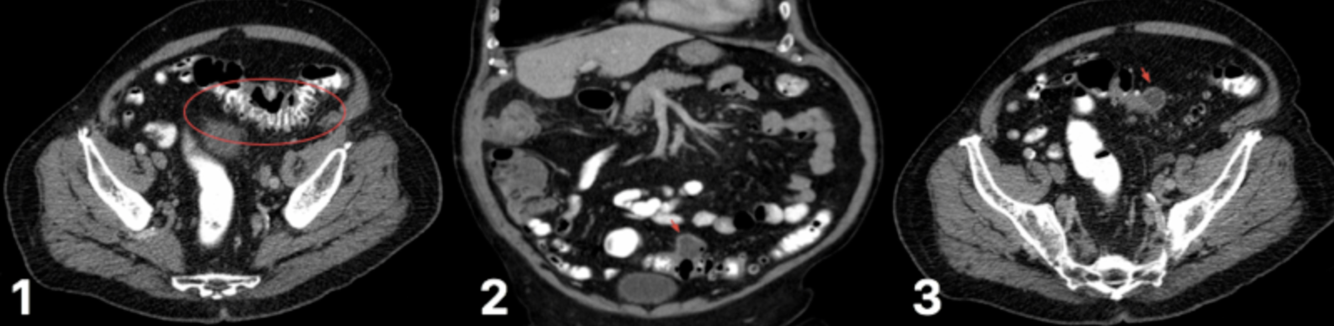
CT scan for varying degrees of diverticular disease (1) diverticulum in the sigmoid colon (2) degree of diverticulitis present (3) abscess formation, secondary to ongoing diverticulitis
- Hinchey Classification: higher stages are associated with higher morbidity and mortality
- ~ manage as outpatient (improve within 2-3 days): analgesia + fluids + Abx + rest
Hospital: uncontrolled pain, concerns of dehydration, significant co-morbidities or immunocompromised, significant PR bleeding, or symptoms persisting for longer than 48 hours despite conservative management
Significant PR haemorrhage will need resuscitation with IV fluids and blood products
*If a second bleeding episode occurs there is a significant chance of further episodes (up to 50%), hence it can be best to discuss early with interventional radiologists for planning further management options
Lack of improvement -> repeat imaging
Emergency surgery -> faecal peritonitis (mortality rate up to 50%)/sepsis/ failing to improve despite medical therapy or percutaneous drainage
Bowel resection, typically via a Hartmann’s procedure, however resection with primary anastomosis and loop ileostomy may also be attempted.
Hartmann’s: resection of the rectosigmoid colon + closure of the anorectal stump + formation of an end colostomy
ileostomy: is where the small bowel (small intestine) is diverted through an opening in the tummy (abdomen). The opening is known as a stoma.
Recurrence of diverticulitis after first episode is around 10-35%. Elective segmental resection may be performed in patients with recurrent disease,
Unless a recent endoscopy has been performed, outpatient colonoscopy following resolution of diverticulitis should be arranged.
Ileostomy
- Common uses
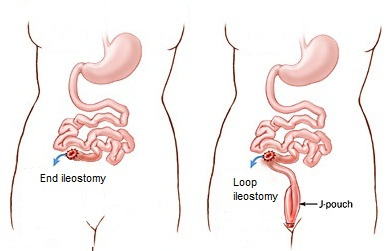
- End ileostomy
- Loop ileostomy
- Ileo-anal pouch
- Complications
- Some people with an ileostomy experience problems related to their stoma:
- What is phantom rectum
- Pouchitis
- Crohn’s disease, UC
- total colectomy
ileum stitched on to the skin to form a stoma.
stitches dissolve and the stoma heals on to the skin
After the operation, waste material comes out of the opening in the abdomen into a bag that goes over the stoma.
~ but not always, permanent.
- also known as a J pouch, formed instead of an ileostomy.
Created from the ileum and joined to the anus, so waste passes out of your body in the normal way.
The pouch stores the waste
The area around the pouch usually needs to heal before it’s used, so a temporary loop ileostomy may be created above the pouch.
- A second, smaller, operation is usually carried out a few months later to close the loop ileostomy.
- Obstruction (a) , dehydration (b), rectal discharge, Vitamin B12 deficiency (but absorbed in the ileum?)
(a) Sometimes the ileostomy does not function for short periods of time after surgery.
This is not usually a problem, but if your stoma is not active for > 6 hrs and you experience cramps or nausea, you may have an obstruction.
(b) risk of kidney stones
6.
- irritation and inflammation of the skin around the stoma
- stoma stricture
- bowel pushing through the opening in the skin (stoma prolapse)
- parastomal hernia
- the stoma sinking below the level of the skin after the initial swelling goes down (stoma retraction)
- the stoma may get longer with time as more of the bowel pushes itself out of the abdomen (prolapse)
- feel like they need to go to the toilet, even though they do not have a working rectum (up to yrs)
- Internal pouch becomes inflamed. Common complication in people with an ileo-anal pouch.
Symptoms:
- diarrhoea, which is often bloody
- abdominal pains
- stomach cramps
- a high temperature (fever)
Volvulus
- What is it?
- RF
- Clinical features
- The most common cause of SBO in developed countries is?
- Ix
- Managment
- complications
- Where is the second most commonest site for a volvulus
- twisting of a loop of intestine* around its mesenteric attachment -> cut of blood supply
~sigmoid (as longer mesentery)
2.
- Neuropsychiatric disorders
- Resident in a nursing home or advanced age
- Chronic constipation or laxative
- Male gender
- Previous abdominal surgeries
- DM
- vomiting (late sign)
colicky pain
abdominal distension (inc bowel sounds and tympanic percussion)
absolute constipation
- intra-abdominal adhesions, accounting for approximately 65% to 75% of cases, followed by hernias, Crohn disease, malignancy, and volvulus
+ severe constipation, pseudo-obstruction, and severe sigmoid diverticular disease
- Bloods: electrolytes, Ca2+, TFTs (pseudoobs)
AXR
(CT scan may be warranted; whirl sign)
- Conservative Management:
* sigmoidoscope + flatus tube -> the patient is placed in the left lateral position and a lubricated sigmoidoscope gently guided into the rectum. It is maneuvered to locate the twisted bowel and once the sigmoidoscope is in the correct position, there will be a rush of air and liquid faeces as the obstruction is relieved. A flatus tube is often left in situ for a period of time (up to 24 hours) after initial decompression to allow for the continued passage of contents and aid recovery of the affected area. Up to 24% of sigmoidoscopic approaches may not be able to adequately locate the lead point for the twisting and so this may result in a colonoscopic approach being required
Surgical Management
The indications for surgical involvement (primary anastomosis or Hartmann’s procedure) are:
- Repeated failed attempts at decompression
- Necrotic bowel noted at endoscopy
- Suspected (or proven) perforation or peritonitis
The decision on which operation to perform will depend on the patient’s nutritional status, adequacy of blood supply, haemodynamic stability, and the presence of any perforation or peritonitis. Patients with recurrent volvulus who are otherwise healthy may choose to have an elective procedure (most commonly sigmoidectomy with primary anastomosis)
- Bowel ischaemia and perforation
Long term complications: reoccurance (90%) & stoma
- Caecum, 10-29yo (intestinal malformation or excessive exercise) 60-79yo (chronic constipation, distal obstruction, or dementia)
endoscopic decompression, (although only with a 30% success rate) or surgical intervention via detorsion and caecostomy
- The apple core sign, also known as a napkin ring sign (bowel), is most frequently associated with constriction of the lumen of the colon by a stenosing annular colorectal carcinoma.
The appearance of the apple-core lesion of the colon also can be caused by other diseases 3:
1.
- lymphoma with colonic involvement - appears more diffuse
- Crohn disease
- chronic ulcerative colitis
- ischaemic colitis
- chlamydia infection
- colonic tuberculosis
- helminthoma
- colonic amoebiasis
- colonic cytomegalovirus
- villous adenoma
- radiosurgery, such as high doses of Cyberknife used for treating unresectable abdominal malignancies
INGUINAL HERNIA
- two main subtypes that can occur:
- Inferior epigastric vessels –
- RF:
- Clinical features
- When examining any groin lump, specific features to note for any suspected inguinal hernia include:
- DD
- Management
- Serious complications of hernias that require urgent intervention:
- Post-op complications of hernia repair include:
1.
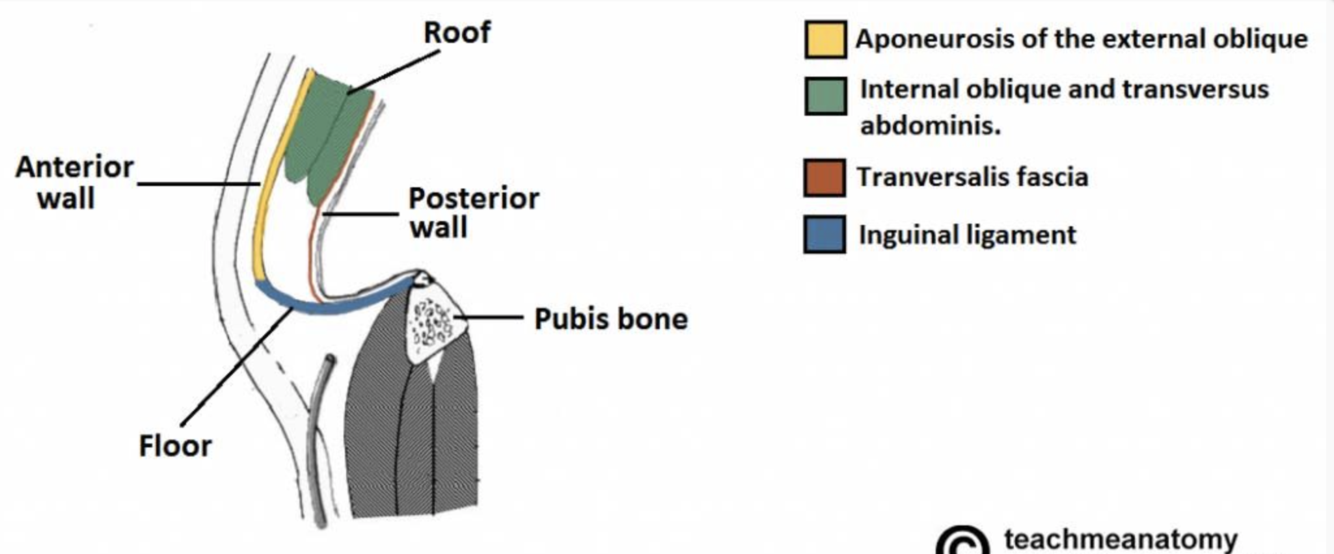
- Direct inguinal hernia (20%) – Hesselbach’s triangle. ~older patients, often secondary to abdominal wall laxity or a significant increase in intra-abdominal pressure
- Indirect inguinal hernia (80%) – deep -> superficial inguinal ring. They arise from incomplete closure of the processus vaginalis, an outpouching of peritoneum allowing for embryonic testicular descent, therefore are usually deemed congenital in origin
- Indirect hernias will be lateral to the vessels whilst direct hernias will be medial to the vessels.
3.
- Male
- Increasing age
- Raised intra-abdominal pressure: chronic cough, heavy lifting, or chronic constipation
- Obesity
- lump in the groin
incarcerated -> painful, tender, and erythematous
painful, tender, and erythematous, even bowel obstruction can occur
5.
- Cough impulse -> Remember that an irreducible hernia may not have a cough impulse
- Location – Inguinal (superomedial to the pubic tubercle) or femoral (inferolateral to the pubic tubercle). This is not always clear on examination
- Reducible – On lying down +/- minimal pressure
If it enters the scrotum, can you get above it / is it separate from the testis
- Femoral hernia, saphena varix, inguinal lymphadenopathy, lipoma, groin abscess, or an internal iliac aneurysm. If the mass extends into the scrotum, consider a hydrocele, varicocele, or a testicular mass.
- Symptomatic inguinal hernia (significant mass or discomfort)
Surgical Intervention:
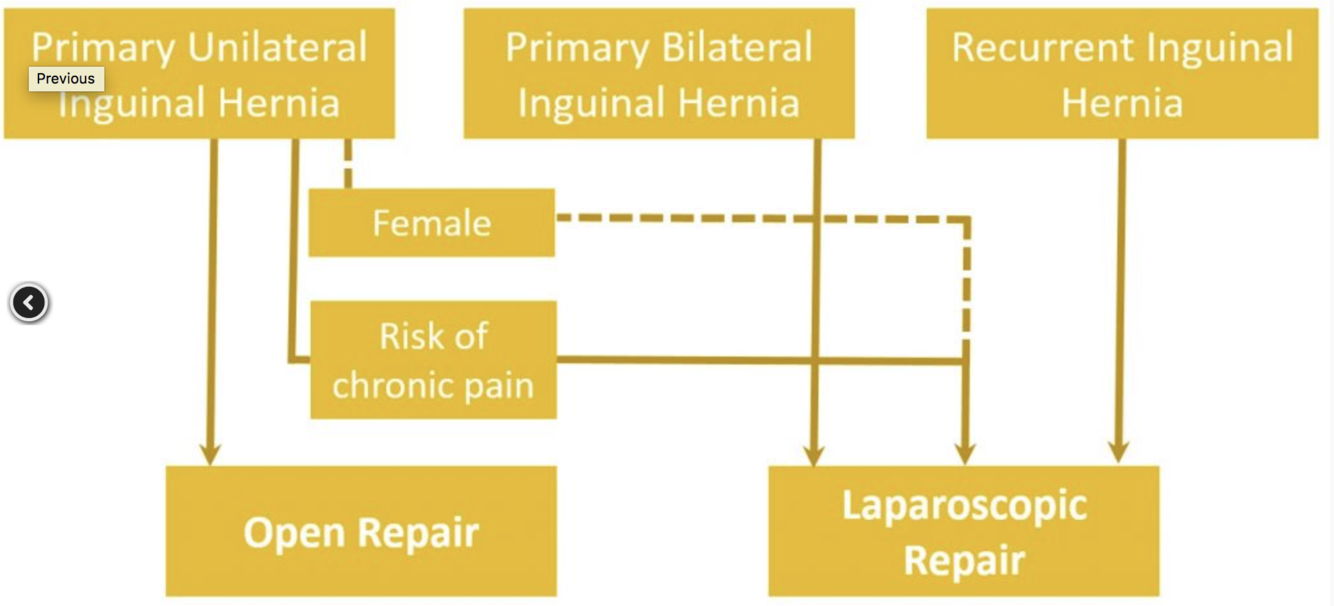
- Open repair (Lichtenstein technique most commonly used) or laparoscopic repair (either total extraperitoneal (TEP) or transabdominal pre-peritoneal (TAPP)).
Open mesh repairs: primary inguinal hernias, most cost-effective technique in this patient group, performed under general, spinal or local anaesthesia, dependent on patient fitness and surgeon preference.
Laparoscopic: bilateral or recurrent inguinal hernias, considered in primary unilateral hernia (pt high risk of chronic pain (young and active, previous chronic pain, or predominant symptom of pain) or in females (due to the increased risk of the presence of a femoral hernia).
*Laparoscopic repairs are associated with longer operating times but quicker post-op recovery, fewer complications, and less post-operative pain.
- irreducible/incarcerated, obstruction, strangulation
9.
- Pain, bruising, haematoma, infection, or urinary retention
- Recurrence, approximately 1.0% within 5 years of surgery
- Chronic pain (persisting 3 months after hernia repair), can occur in up to 30% patients and is disabling in ~2%
- Damage to vas deferens or testicular vessels, leading to ischaemic orchitis (and potentially sub-fertility)
Femoral Hernia
- What is it?
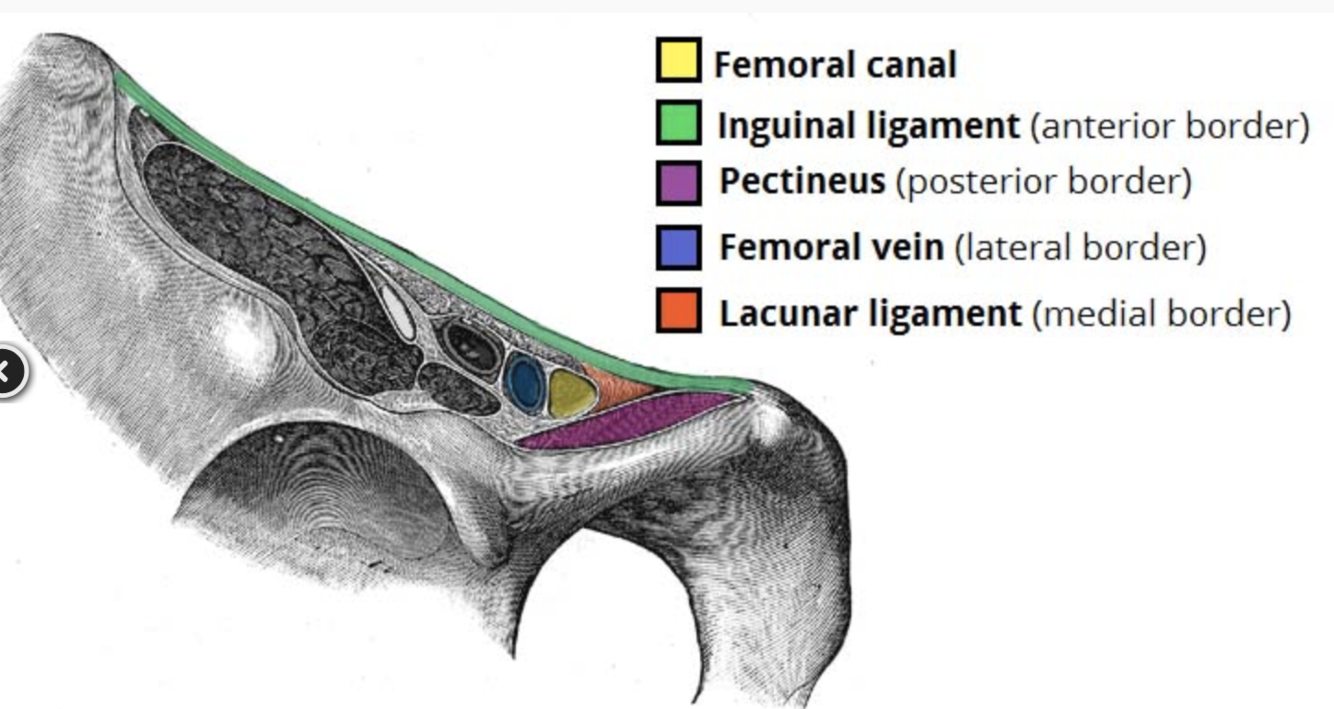
- Femoral canal anatomy
- RF
- Clinical features
- DD
- What is athletic pubalgia
- Ix
- Management
- Two different approaches can be taken with the femoral hernia surgical reduction:
- abdominal viscera or omentum passes through the femoral ring and into the potential space of the femoral canal
W>M
- image
3.
- Female
- Increasing age
- Pregnancy -> The incidence is higher in multiparous than nulliparous women
- Increased intra-abdominal pressure (e.g. heavy lifting, chronic constipation)
4.
- Femoral hernia – found infero-lateral to the pubic tubercle (and medial to the femoral pulse)
- Inguinal hernia – found superomedial to the pubic tubercle
5.
- Low presentation of inguinal hernia
- Femoral canal lipoma
- Femoral lymph node
- Saphena varix -> Disappears when lying flat, palpable thrill when coughing, presence of varicose veins elsewhere
- Femoral artery aneurysm
- Athletic Pubalgia -> Small tear in rectus sheath through which impingement of abdominal wall musculature occurs (common in young athletes)
- Strain or tear of any soft tissue (muscle, tendon, ligament) in the lower abdomen or groin area (ice hockey, soccer, wrestling, and football)
- Whilst the diagnosis is usually clinical, the gold standard* is via ultrasound scan
- Surgical (inc risk of strangulation)
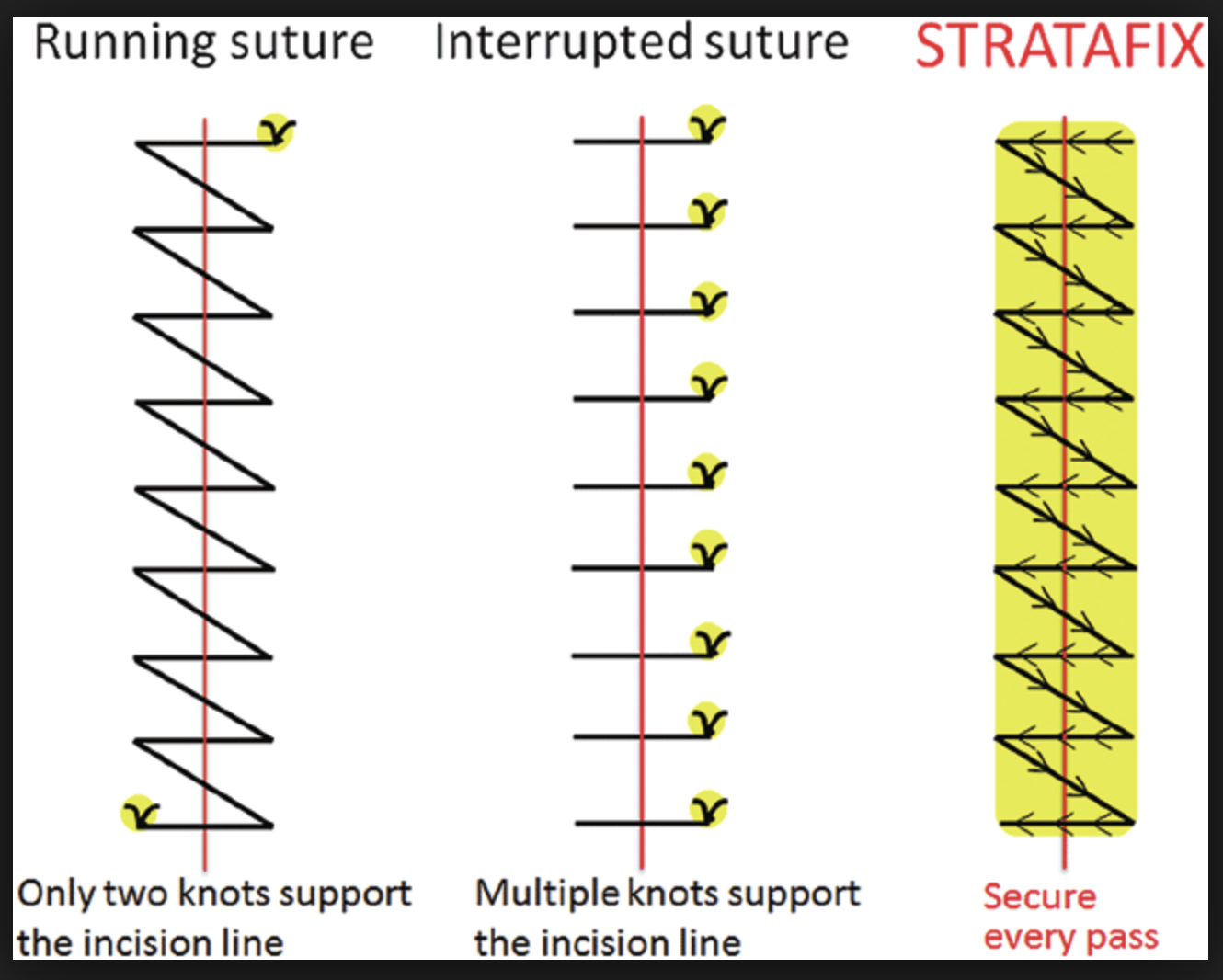
Reduction of the hernia then surgical narrowing of the femoral ring with the use of interrupted sutures (extra care should be taken to avoid narrowing the femoral vein in the process).
9.
- Low approach – the incision is made below the inguinal ligament, which has the advantage of not interfering with the inguinal structures but does result in limited space for the removal of any compromised small bowel.
- High approach – the incision is made above the inguinal ligament, via the posterior wall of the inguinal canal, and is the preferred technique in an emergency intervention due to the easy access to compromised small bowel. Its main limitation is the need to repair the inguinal canal on closure, thus providing an obvious new area of weakness and potential secondary herniation.
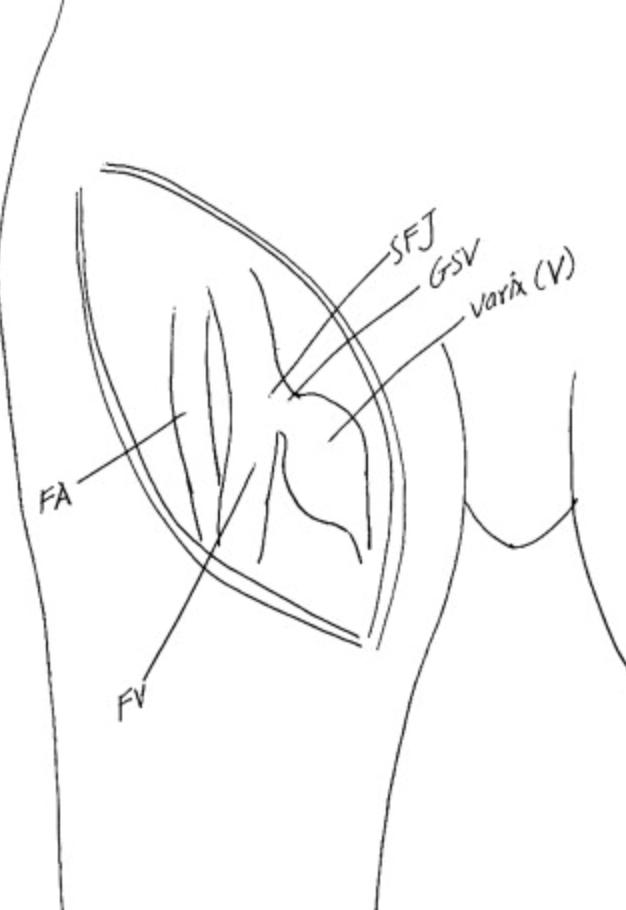
Saphena varix:
dilation of the saphenous vein at its junction with the femoral vein in the groin.
Abdominal hernia
- Epigastric Hernia:
Location
Cause
Prevalence
Symptoms
DD
O/e
- Upper midline through the fibres of the linea alba
Typically secondary to raised chronic intra-abdominal pressure, such as with obesity, pregnancy, or ascites. (weakened abdominal wall muscles)
Up to 10%, mostly affecting middle-aged men
Whilst typically asymptomatic, they may present as a midline mass that disappears when lying on the back.
Divarication of the recti, a cosmetic condition caused by the weakening and widening of the linea alba, however no hernia is present
Bowel sounds
Paraumbilical hernia
- What is it?
- *Umbilical hernias can also occur, commonly in children (congenital in aetiology), either:
Spigelian hernia
- What is it?
Obturator hernia
- What is it?
- Clinical features
Littre’s hernia
- What is it?
Lumbar Hernia
- What is it
- The lumbar posterior wall has two common areas of physiological weakness where lumbar hernia most often occur:
- Richter’s Hernia
What is it?
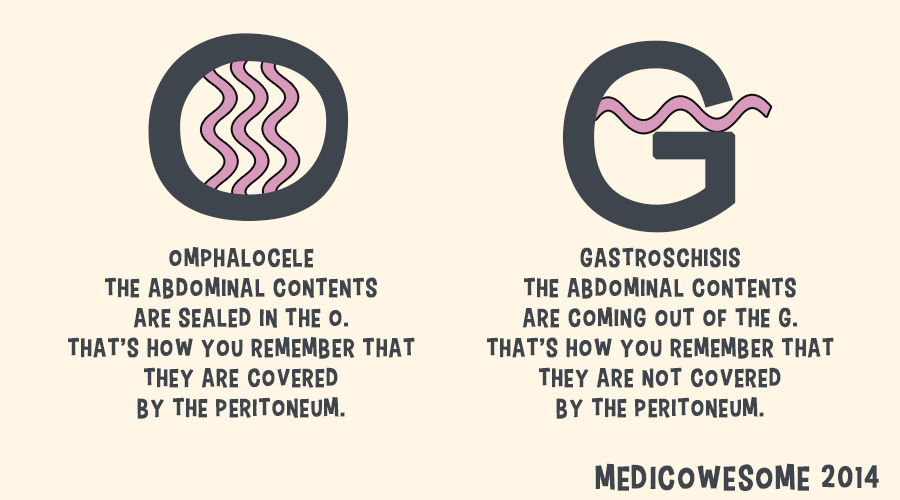
- herniation occurring through the linea alba around the umbilical region* (not through the umbilicus itself).
2ndary chronic intra-abdominal pressure
- omphalocele or gastroschisis
- Hernia at the semilunar line
small tender mass
lower lateral edge
*One study has shown cryptorchidism is also present in 75% of cases of Spigelian hernia in male infants, likely associated with a failure in gubernaculum development.
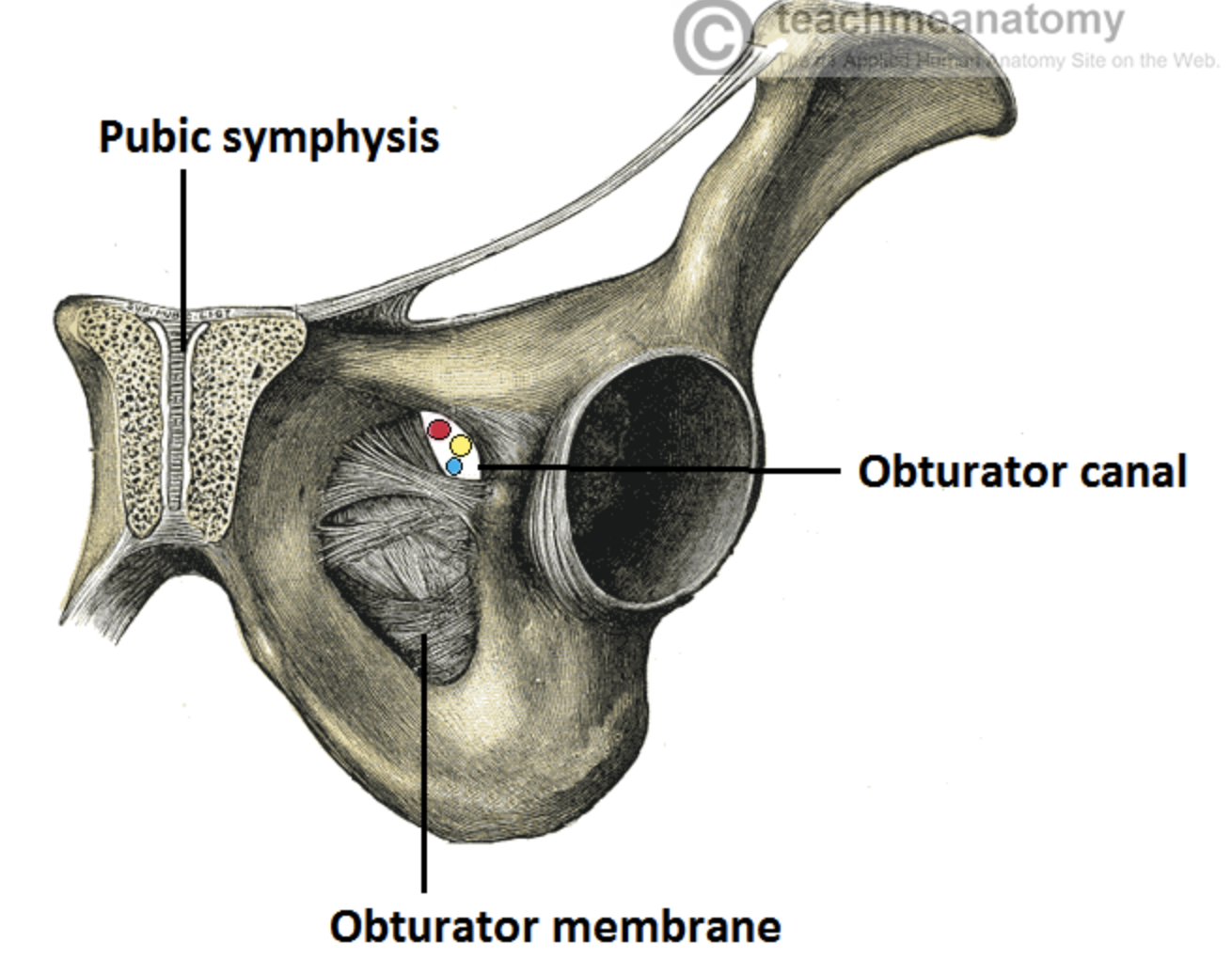
- Hernia through the obturator foramen, into the obturator canal.
W>M (due to a wider pelvis), typically in elderly patients*.
- Mass in the upper medial thigh
Often patients will have features of SBO
In around half of cases, compression of the obturator nerve passing through the obturator canal will result in a positive Howship-Romberg sign (hip and knee pain exacerbated by thigh extension, medial rotation, and abduction)
- Herniation of a Meckel’s diverticulum. This most commonly occurs in the inguinal canal and many will become strangulated.
- Rare posterior hernia
spontaneously* or iatrogenically following surgery (classically following open renal surgery)
8.
- Superior lumbar triangle – termed Grynfeltt’s quadrangle
- Inferior lumbar triangle – termed Petit’s triangle
- Partial herniation of bowel, whereby the anti-mesenteric border becomes strangulated, therefore only part of the lumen of the bowel is within the hernial sac.
Patients will present with a tender irreducible mass at the herniating orifice and will have varying levels of obstruction (purely dependent on how much bowel circumference is involved). Due to obstruction, these are often surgical emergencies that need urgent surgical intervention.
Care must be taken during hernia repair to identify a Richter’s Hernia so as to not damage the bowel during the surgery.
Hiatus hernia
- What is it?
- Hiatus herniae can be classified into two subtypes (Fig. 2)*:
- RF
- CF
- DD
- Ix
- Management
- There are two aspects of hiatus hernia surgery:
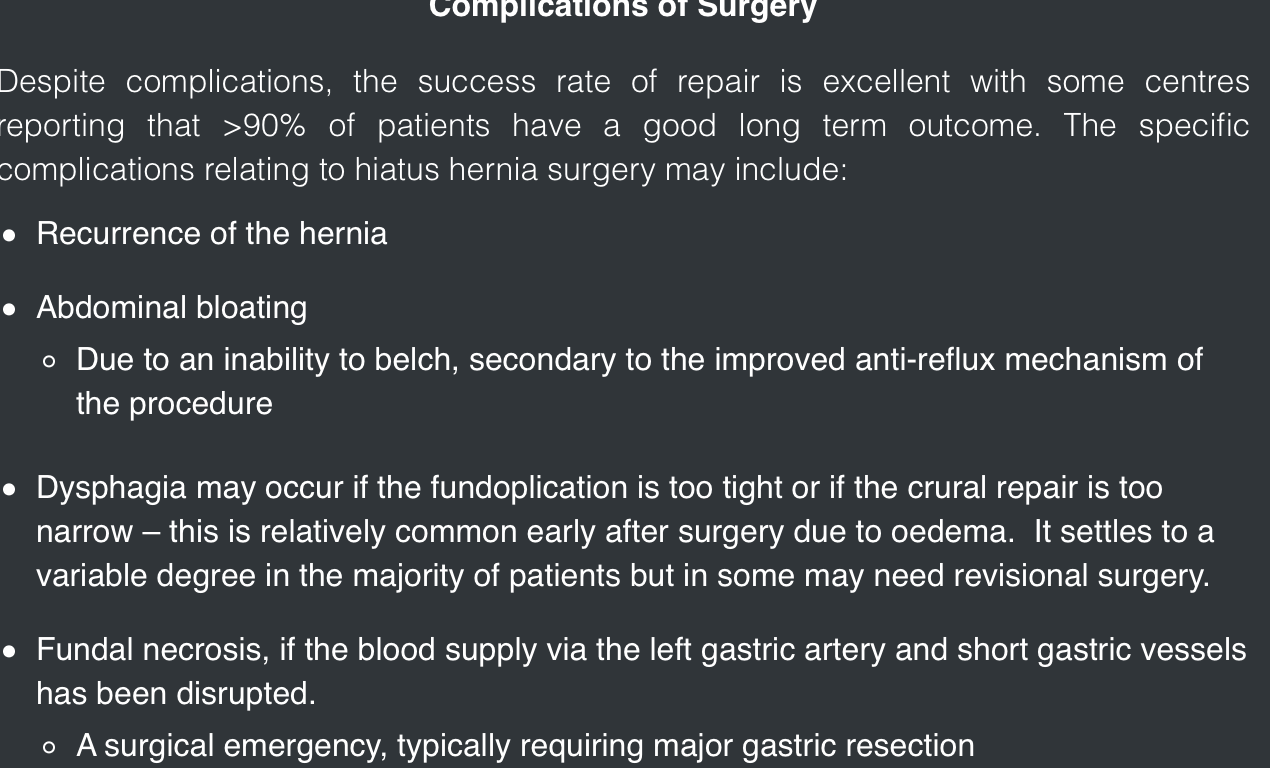
- Complications of surgery
- Complications
- organ to the thorax
~stomach
common
asymptomatic
1/3of individuals >50 have a hiatus hernia.
2.
- Sliding hiatus hernia (80%)– the gastro-oesophageal junction (GOJ), the abdominal part of the oesophagus, and frequently the cardia of the stomach move or ‘slides’ upwards through the diaphragmatic hiatus into the thorax.
- Rolling or Para-Oesophageal hernia (20%) – an upward movement of the gastric fundus occurs to lie alongside a normally positioned3. GOJ, which creates a ‘bubble’ of stomach in the thorax. This is a true hernia with a peritoneal sac.
The proportion of the stomach that herniates is variable and may increase with time, eventually may evolve to have almost the entire stomach sitting in the thorax.
*A mixed type hiatus hernia can also occur, which has both a rolling and sliding component.
- age (in coughing, inc size of diaphragmatic hiatus), Pregnancy, obesity, and ascites
- asymptomatic, gastro oesophogeal symptoms,
- vomiting & weight loss (a rare but serious presentation*),
- bleeding and / or anaemia (secondary to oesophageal ulceration),
- hiccups or palpitations (if the hiatus hernia is of sufficient size, it may cause irritation to either the diaphragm or the pericardial sac)
- swallowing difficulties (either oesophageal stricture formation or rarely incarceration of the hernia)
- *Occasionally, gastric outflow can become blocked (sometimes intermittently), resulting in early satiety, vomiting and nutritional failure. In this instance, the patient needs to be transferred to the nearest oesophago-gastric unit
5.
- Cardiac chest pain
- Gastric or pancreatic cancer* (particularly if there is evidence of gastric outlet obstruction, early satiety, or weight loss)
- Gastro-oesophageal reflux disease
6.
Oesophagogastroduodenoscopy (OGD) is the gold standard investigation, showing upward displacement of the GOJ, also termed the ‘Z-line’.
They can also be diagnosed incidentally, either on a CT or MRI scan*. A contrast swallow may also be used to diagnose a hiatus hernia, although are less commonly used
*If there are symptoms of gastric outflow obstruction or weight loss, whereby an upper GI malignancy may be suspected, an urgent CT thorax and abdomen is mandatory.
- Conservative:
- PPIs e.g. omeprazole (morning before food, otherwise the drugs’ binding site becomes internalised and are ineffective)
- Weight loss, alteration of diet (low fat, earlier meals, smaller portions)
- Inc no of pillows
- Smoking cessation and reduction in alcohol intake (inhibit lower oesophageal sphincter function)
Surgical
- Remaining symptomatic, despite maximal medical therapy
- Inc risk of strangulation/volvulus* (rolling type or mixed type hernia, or containing other abdominal viscera)
- Nutritional failure (due to gastric outlet obstruction)
8.
Cruroplasty – The hernia is reduced from the thorax into the abdomen and the hiatus reapproximated to the appropriate size. Any large defects usually require mesh to strengthen the repair.
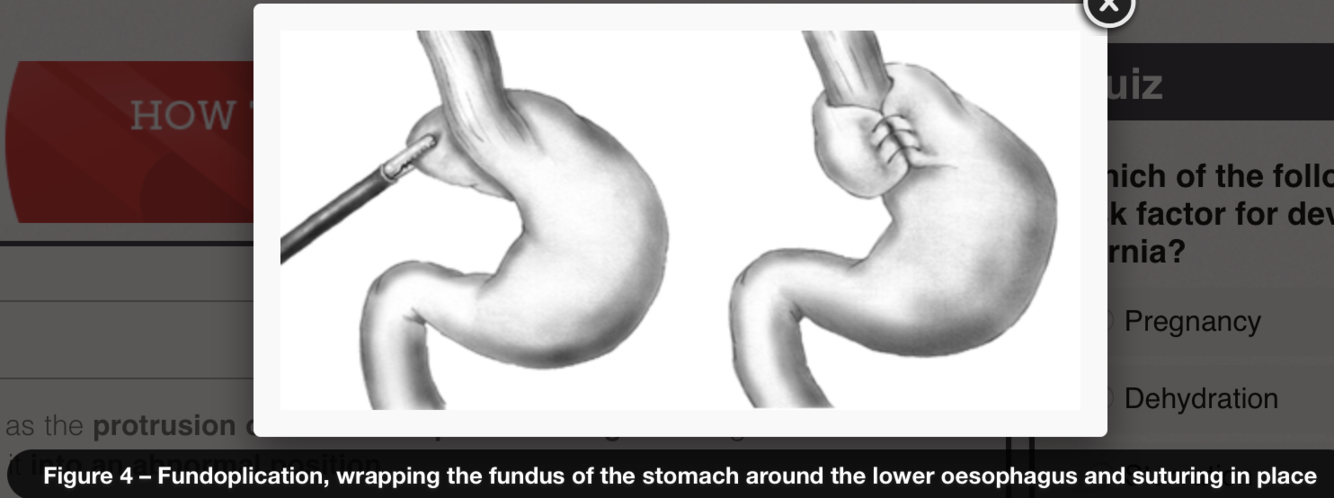
Fundoplication – The gastric fundus is wrapped around the lower oesophagus and stitched in place (Fig. 4)
Aims to strengthen the LOS thus helping to prevent reflux and keep the GOJ in place below the diaphragm – the wrap may be full or partial (usually dependent on surgeon preference)
- image
- incarceration and strangulation
gastric volvulus
Borchardt’s triad:
- Severe epigastric pain
- Retching without vomiting
- Inability to pass an NG tube
PEPTIC ULCER DISEASE
- What is it?
- Aetiology
- H.pylori facts
- CF
- The ALARMS mnemonic:
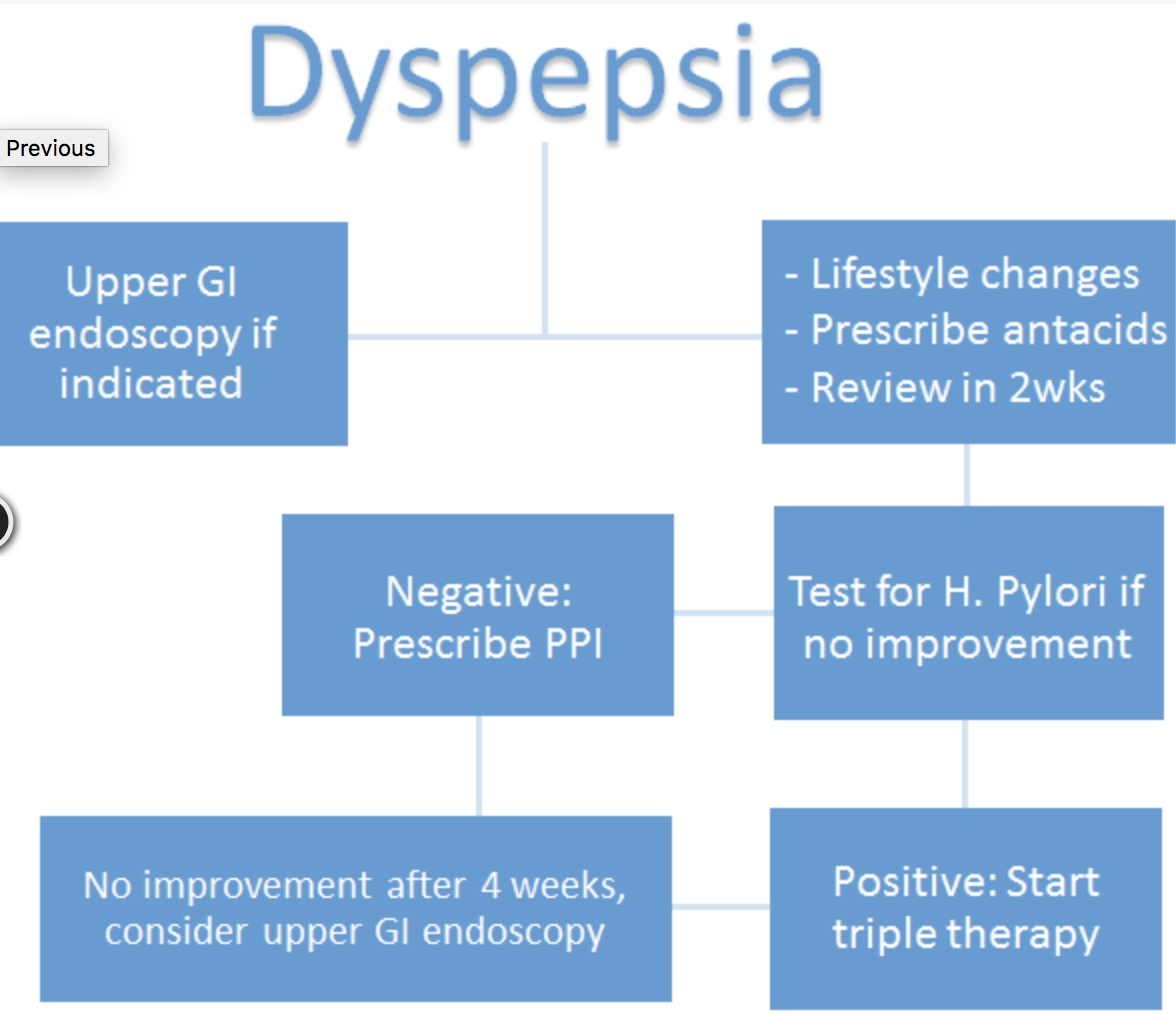
However NICE guidelines now suggest that a referral for urgent OGD should be done for patients presenting with either:
- Ix
- For those patients who do not need an OGD but are not responding to initial conservative management (as discussed below), non-invasive H. pylori testing* is required, which will be either as:
- Management
- How to manage dysphagia
- complications of PUD
- break in the lining of the gastointestinal tract, extending through to the muscular layer (muscularis mucosae)
lesser curvature of the proximal stomach or the first part of the duodenum
duodenal ulcers typically presenting earlier than gastric ulcers by around 20 years
- mucous secretion, HCO3- ion release, high turnover of epithelial cells
- H. pylori
- NSAID
- High alcohol intake, steroid use, foreign body ingestion e.g batteries, or Zollinger-Ellison syndrome (rare)
- Gram negative spiral shaped bacillus
survives as forms alkaline micro environment
- invoking an cytokine and interluekin inflammatory response
- inc a gastric acid secretion in both acute and chronic phases of infection, by inducing the release of histamine which acts on parietal cells
- asymptomatic,
Gastric Ulcer
- Epigastric pain, typically exacerbated by eating
- Nausea and anorexia
- Weight loss, secondary to the anorexia
Duodenal Ulcer
- Epigastric pain (worse around 2-5 hours after consuming after a meal, often can be alleviated by eating)
- Gastric malignancy, pancreatitis, acute coronary syndrome, gastro-oesphageal reflux, and gallstone disease.
Zollinger-Ellison syndrome: PUD, gastrin acidre hypersecretion & gastrinoma >1000pg/ml
1/3 part of Multiple Endocrine Neoplasia Type 1 syndrome
- (Anaemia / Lost weight / Anorexia / Recent rapid onset / Melaena / Swallowing difficulties) has historically been used as a basis for referral for urgent endoscopy to assess for any malignancy.
- New-onset dysphagia
- Aged >55 years with weight loss and either upper abdominal pain, reflux, or dyspepsia
- New onset dyspepsia not responding to PPI treatment
- Red-flag symptoms -> upper GI endoscopy (OGD) -> biopsy -> histology and rapid urease “CLO” test
FBC (check if anaemia is present)
- Stop any current medical therapy for 2 weeks prior to investigation to reduce the risk of false negatives;
- Carbon-13 urea breath test
- Serum antibodies to H. pylori
- Stool antigen test
- Conservative:
- smoking cessation, weight loss, and reduction in alcohol consumption
- PPI for 8 wk if neg for h.pylori
- PPI with oral amoxicllin and clarithromycin or metronidazole for 7 days PAC
- NICE: gastric ulcers to be biopsied at presentation due to malignant potential and a repeat endoscopy performed towards the end of PPI therapy to check for resolution. Persistence of symptoms post-PPI therapy should lead the clinician to suspect failure of H. pylori eradication, malignancy, or rare causes such as Zollinger-Ellison Syndrome.
- image
- perforation, haemorrhage, and pyloric stenosis (rare)



-
Orthopaedics - Clinical conditions49
-
Drugs57
-
Pain management1
-
DVT assessment & management15
-
Care of the diabetic surgical patient and the surgical patient on steroids.38
-
peri operative42
-
peri op (general)18
-
Period Cardioresp8
-
General surgery43
-
GP day cases55
-
Medicine day case23
-
Hepato pancreatic biliary surgery7
-
contraception10
-
Rheumatology56
-
Paediatrics35
-
geri27
-
Urology10
-
Vascular surgery17
-
ID19
-
Renal workbook21
-
surgery workbook16



