Death Certification:
- Steps
- Pupils are fixed and dilated
no response to pain
no breath or heart sounds after 1 minute of auscultation
transferred to the mortuary + doc (14days) completes death certificated
1a – Cause of death
1b – Condition leading to cause of death
1c – Additional condition leading to 1b
2 – Any contributing factors or conditions
For example
1a – Type 2 respiratory failure
1b – Congestive Cardiac Failure
1c – Myocardial Infarction
2 – Ischaemic heart disease, Hypertension, Diabetes Mellitus
Cremation paperwork is complete by 2 independent doctors, one of whom has cared for the patient. Part 1 is completed by the doctor who knows the patient and part 2 by an independent doctor, two years post registration, seeking confirmation of the cause of death from a variety of sources. To cremate a body pacemakers and radioactive implants must be removed.
Be aware that different religions have different beliefs regarding post death care and some require burial within 24 hours.
- A death should be reported to the coroner when a doctor knows or has reasonable cause to suspect that the death:
- The coroner should also be informed where:
- Occurred as a result of poisoning, the use of a controlled drug, medicinal product, or toxic chemical
- Occurred as a result of trauma, violence or physical injury, whether inflicted intentionally or otherwise;
- Is related to any treatment or procedure of a medical or similar nature;
- occurred as a result of self-harm, (including a failure by the deceased person to preserve their own life) whether intentional or otherwise;
- occurred as a result of an injury or disease received during, or attributable to, the course of the person’s work;
- occurred as a result of a notifiable accident, poisoning, or disease;
- occurred as a result of neglect or failure of care by another person;
- Was otherwise unnatural.
- The death occurred in custody or otherwise in state detention – of whatever cause. This includes Deprivation of Liberty Safeguarding authorisations (DoLS)
No attending practitioner attended the deceased at any time in the 14 days prior to death or no attending practitioner is available within a reasonable period to prepare an MCCD;
The identity of the deceased is unknown.
Palliative Care
- End of life or the dying phase can be recognised when people are reaching the following stages in their disease trajectory:
- Symptoms facing people at the end of their life include:
Personal care should continue to be given to ensure comfort. Observations if no longer appropriate should be stopped. Regular mouth care should be prescribed and given
Good communication is key at this stage of life.
Macmillan nurses and the palliative care team can support at this stage. Hospices and community hospital beds are available for patients who have symptoms requiring ongoing treatment or support. The majority of patients prefer to be cared for at home.
1.
- Bed bound
- Semi comatose
- Only able to take sips of fluid
- Unable to take medicine orally
2.
Nausea and Vomiting
Dyspnoea
Agitation
Confusion
Constipation
Anorexia
Terminal
Secretions
Stroke
- Definition
- How can we identify which vascular teritory is involved?

- sudden onset of a focal neurological deficit lasting >24hrs
OR
With imaging evidence of brain damage due to either infarction (emboli, in situ thrombosis or low blood flow) or haemorrhage.
- Bamford classification
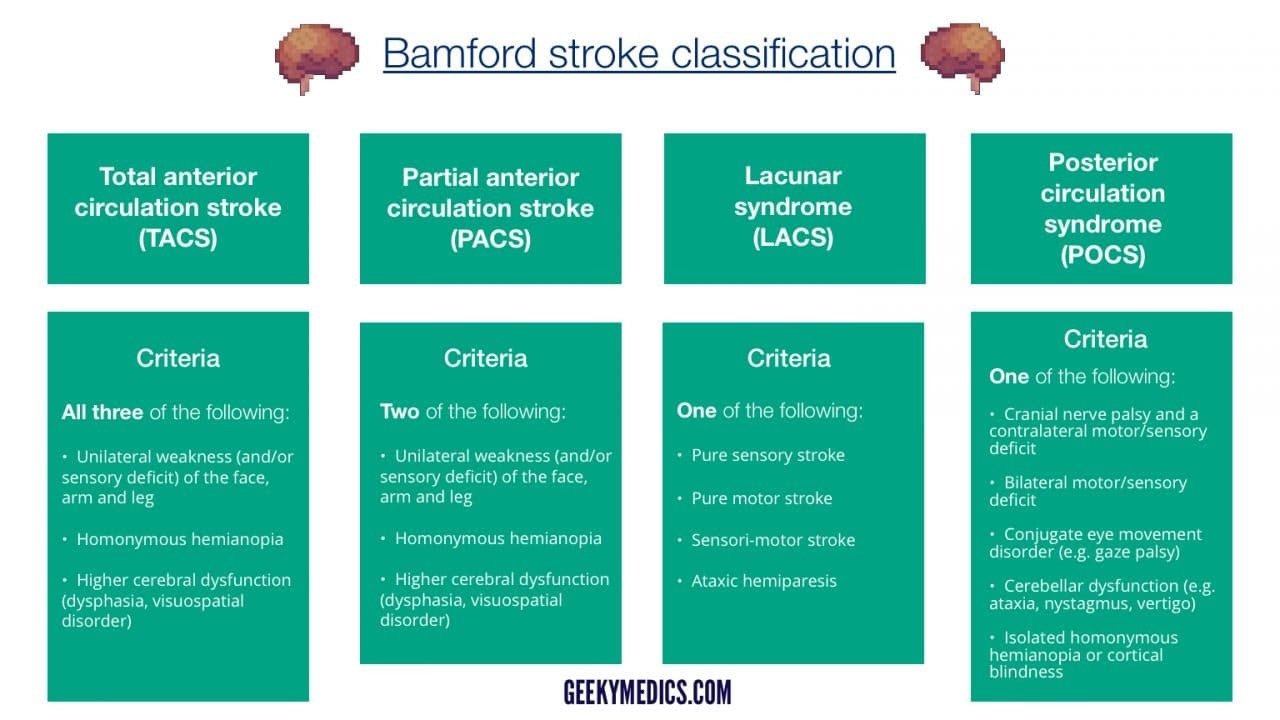
stroke
- What classification could we use to consider the underlying aetiology of infarcts
- How can we classify bleeds in stroke
1.
- primary: hypertension, cerebral amyloid angiopathy;
secondary: trauma, anticoagulation-associated, underlying structural abnormality).
Treating ischaemic strokes:
- Thrombolysis e.g. alteplase (dissolves blood clots and restores blood flow to the brain)
not generally recommended if >4.5hrs have passed, as it’s not clear how beneficial it is when used after this time.
Brain scan must be carried out to confirm an ischaemic stroke.
- Thrombectomy (small proportion)
Only effective with blood clots in a large artery
Catheter into an artery, often in the groin. A small device is passed through the catheter into the artery in the brain.
The blood clot can then be removed using the device, or through suction. The procedure can be carried out under local or general anaesthetic.
- Antiplatelets
Most people will be offered a regular dose of aspirin (painkiller + antiplatelet), reduces the chances of another clot forming.
others clopidogrel and dipyridamole
- Anticoagulants
Help reduce their risk of developing further blood clots in the future.
Anticoagulants prevent blood clots by changing the chemical composition of the blood in a way that prevents clots occurring.
Warfarin, apixaban, dabigatran, edoxaban and rivaroxaban are examples of anticoagulants for long-term use.
There are also a number of anticoagulants called heparins, which can only be given by injection and are used short term.
Anticoagulants may be offered if you:
have a type of irregular heartbeat e.g. atrial fibrillation, which can cause blood clots, have a history of blood clots
develop a blood clot in your leg veins (deep vein thrombosis, or DVT) because a stroke has left you unable to move one of your legs
- Antihypertensives
Medicines that are commonly used include:
thiazide diuretics
angiotensin-converting enzyme (ACE) inhibitors
calcium channel blockers
beta-blockers
alpha-blockers
Find out more about treating high blood pressure
- Statins
If the level of cholesterol in your blood is too high, you’ll be advised to take a medicine known as a statin.
Statins reduce the level of cholesterol in your blood by blocking a chemical (enzyme) in the liver that produces cholesterol.
You may be offered a statin even if your cholesterol level is not particularly high, as it may help reduce your risk of stroke whatever your cholesterol level is.
Carotid endarterectomy
Some ischaemic strokes are caused by narrowing of an artery in the neck called the carotid artery, which carries blood to the brain.
The narrowing, known as carotid stenosis, is caused by a build-up of fatty plaques.
If the carotid stenosis is particularly severe, surgery may be offered to unblock the artery.
This is done using a surgical technique called a carotid endarterectomy.
It involves the surgeon making a cut (incision) in your neck to open up the carotid artery and remove the fatty deposits.
Treating haemorrhagic strokes
Anti-hypertensives
Surgery
e.g. craniotomy
repair any damaged blood vessels
After the bleeding has been stopped, the piece of bone removed from the skull is replaced, often by an artificial metal plate.
Surgery for hydrocephalus
Surgery can also be carried out to treat a complication of haemorrhagic strokes called hydrocephalus.
Headaches, sickness, drowsiness, vomiting and loss of balance.
shunt into the brain to allow the fluid to drain properly
Find out more about treating hydrocephalus
Supportive treatments
- a feeding tube inserted into your stomach through your nose (nasogastric tube) to provide nutrition if you have difficulty swallowing (dysphagia)
- nutritional supplements if you’re malnourished
- fluids given directly into a vein (intravenously) if you’re at risk of dehydration
- oxygen through a nasal tube or face mask if you have low levels of oxygen in your blood
- compression stockings to prevent blood clots in the leg (deep vein thrombosis, or DVT)
What must you consider in stroke recovery
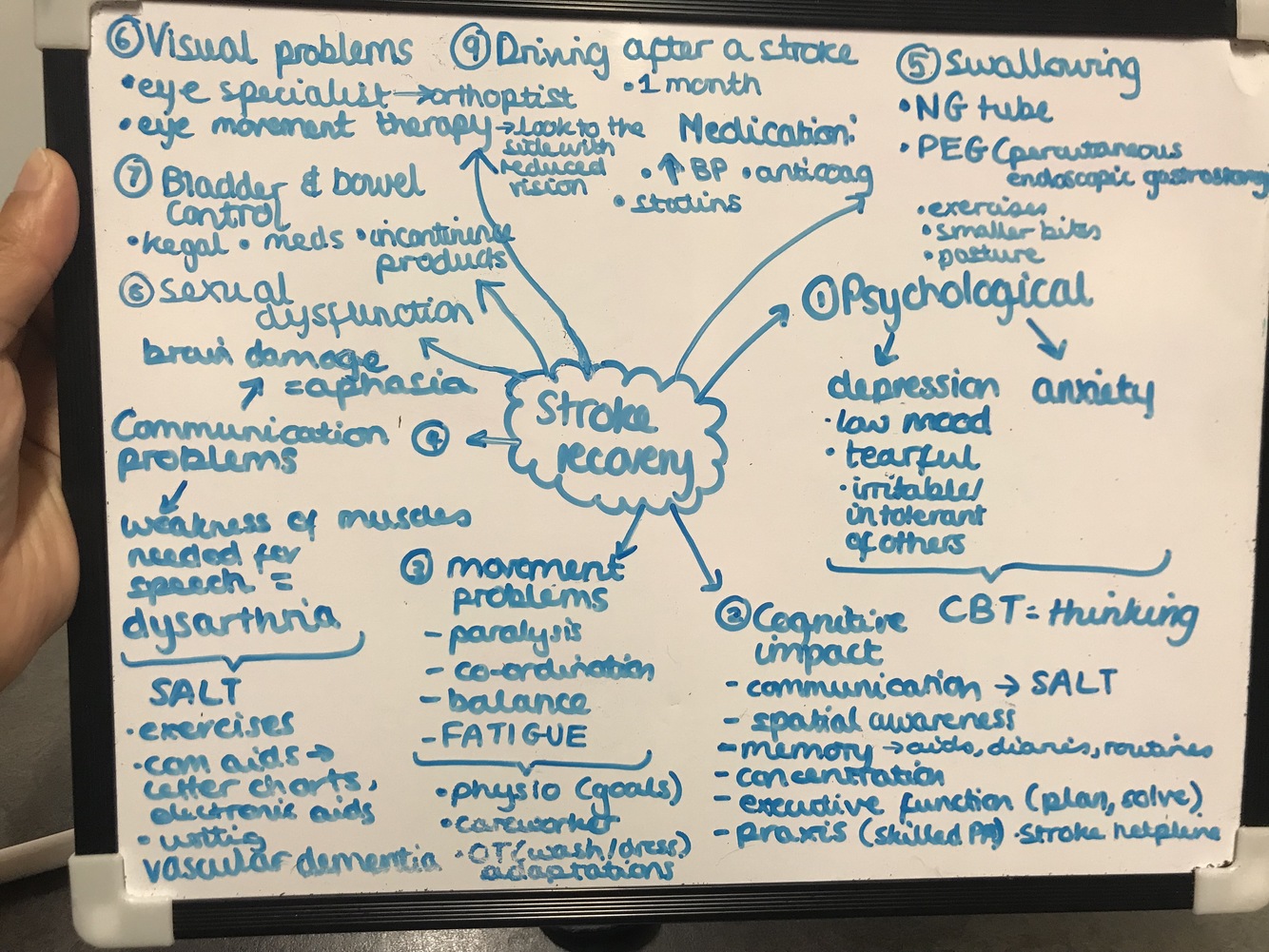
Few assessment tools are used for the rapid assessment of a patient presenting with a suspected stroke. These include:
o FAST: Face (facial drooping) Arm (arm weakness), Speech( speech slurred) and Time ( time to call 999). This was developed to raise public awareness to recognise signs of a stroke and call for help early.
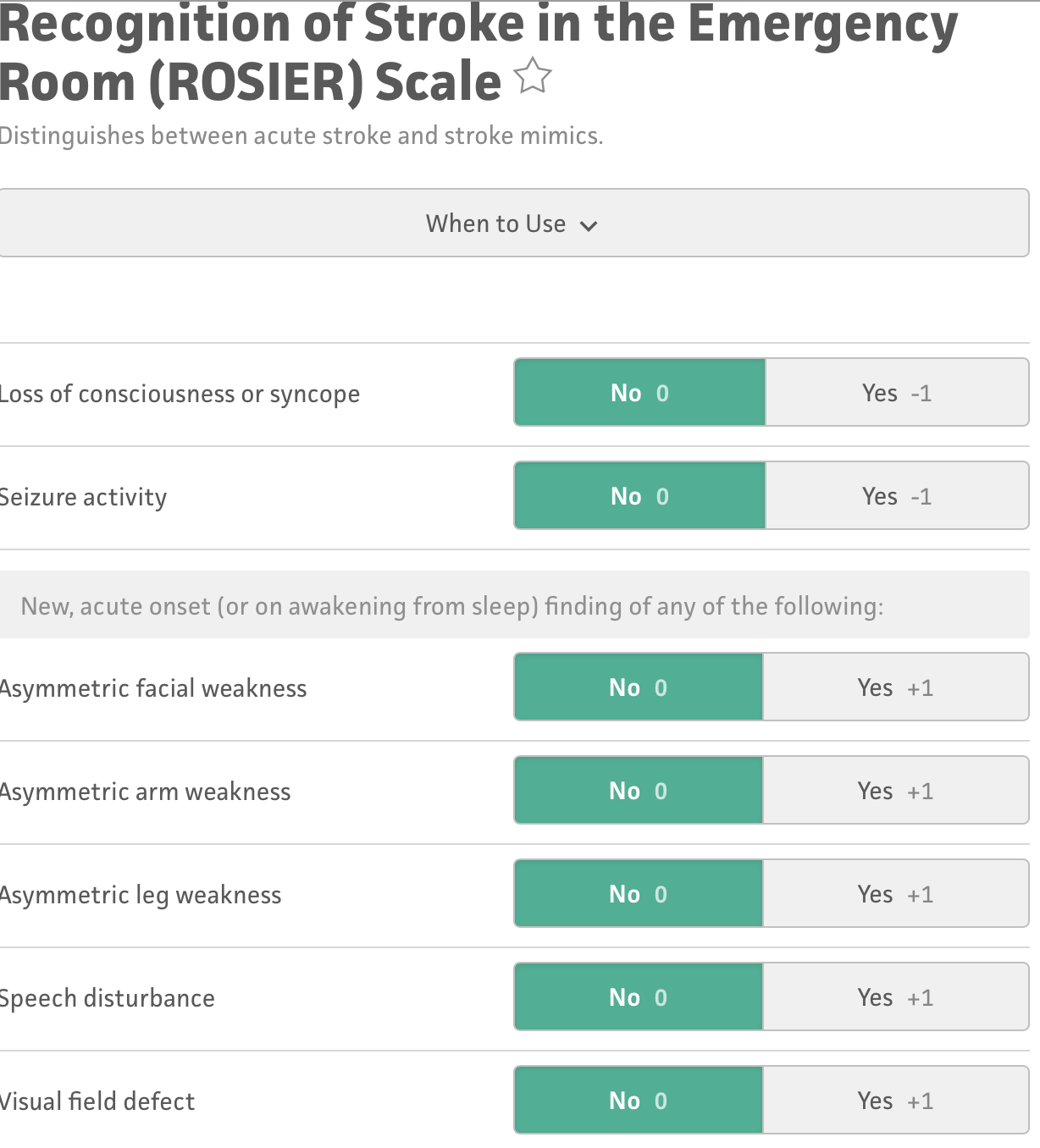
o ROSIER: the rosier scale has been developed to help medical staff distinguish between a stroke and a stroke mimic. This is commonly used in the accident and emergency department. A copy of this can be found in your appendix.
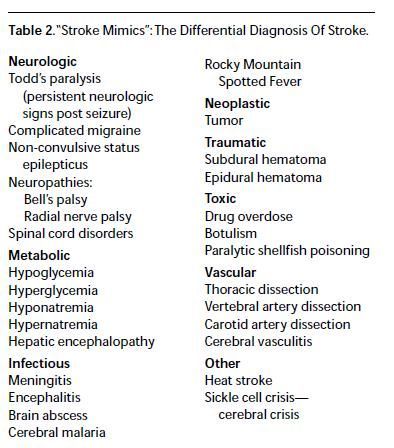
Stroke mimics
What scale can be used to documeent neurological status in acute stroke patients?
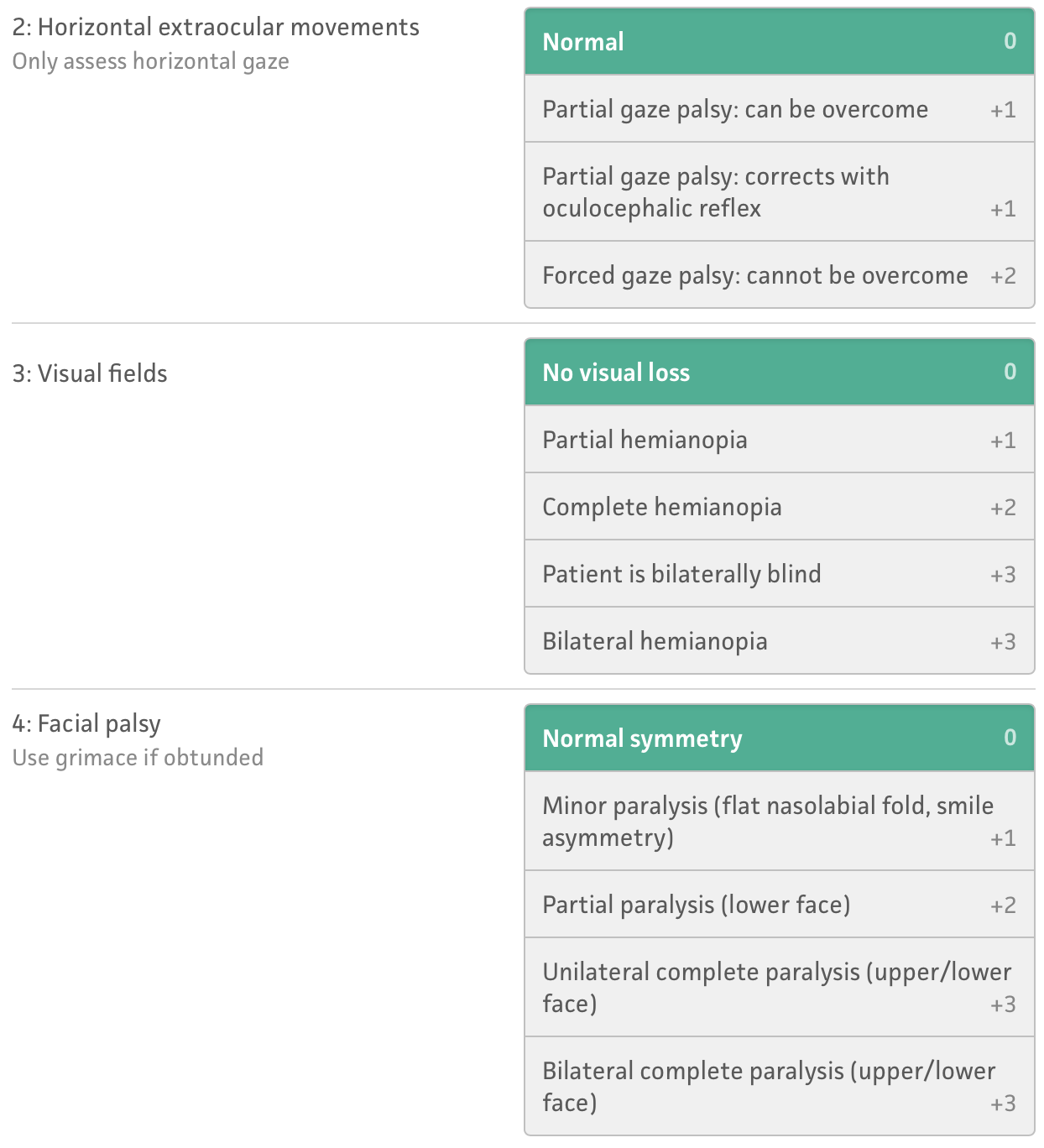
NIH Stroke Scale/Score (NIHSS) REVISE
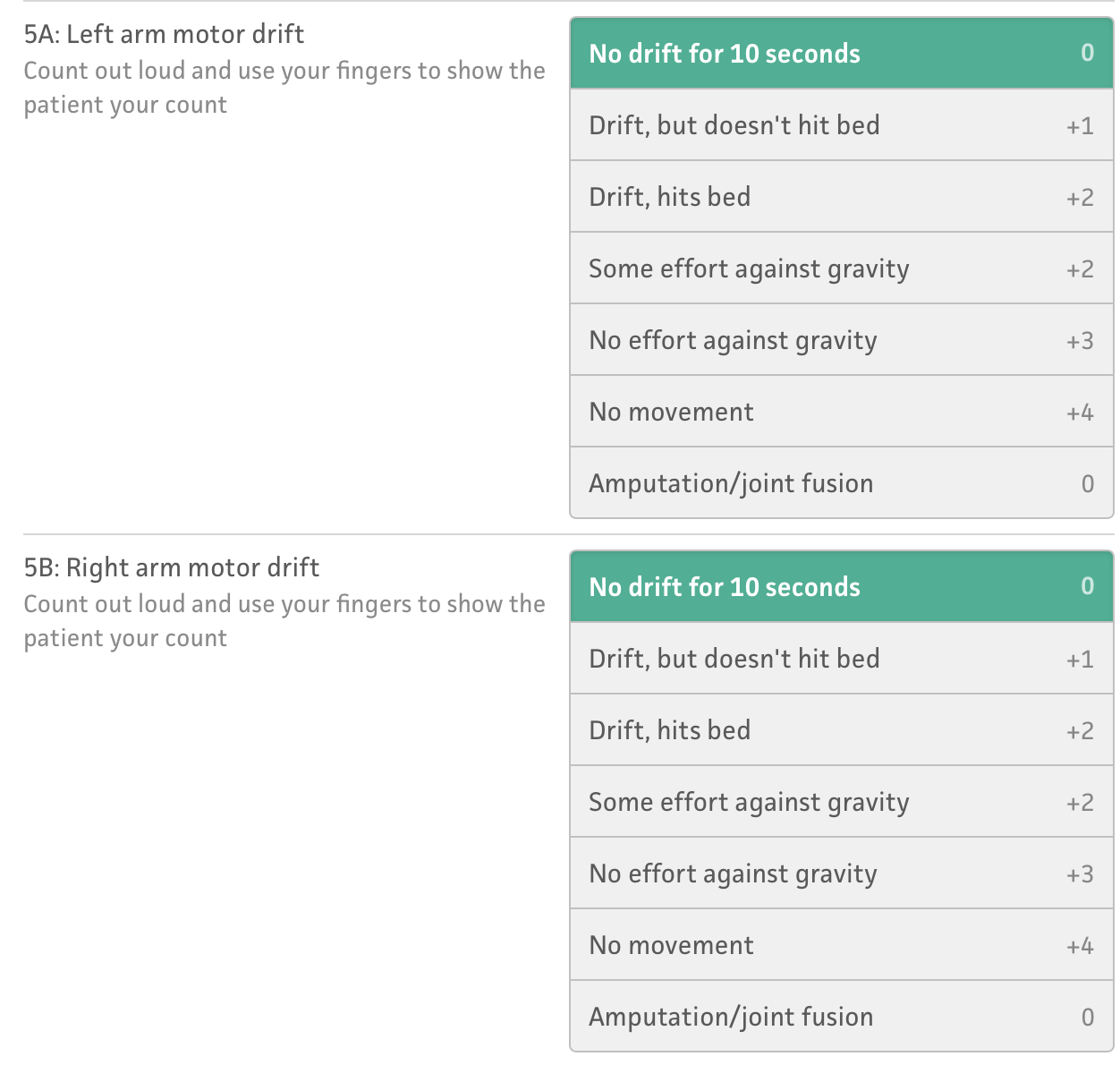
The stroke scale can serve as a measure of stroke severity.
15 items:
- Consciousness: 1a. alert, arouses to minor stimulation 1b. ask month and age 1c. blink eyes squeeze hands
- Language:
- Neglect:
- Visual-field loss: bilateral hemi-anopia
- extra ocular movement:
- motor strength: 1a. left arm motor drift. 1b. right arm motor drift 1c.
- ataxia:
- dysarthria:
- sensory loss:
- All people presenting with acute stroke who have had a diagnosis of primary intracerebral haemorrhage excluded by brain imaging should be given:
- How long can you not drive for?
- Patients with stable neurological symptoms from their stroke or TIA who have carotid stenosis of 50–99% according to the NASCET (North American Symptomatic Carotid Endarterectomy Trial) criteria, or 70–99% according to the ECST (European Carotid Surgery Trialists’ Collaborative Group) criteria on the side relating to the stroke should:
o aspirin 300 mg orally if they are not dysphagic or
o aspirin 300 mg rectally or by enteral tube if they are dysphagic
Aspirin 300 mg should be continued until 2 weeks after the onset of stroke symptoms, at which time definitive long-term antithrombotic treatment should be initiated.
Prevention of stroke is important. If someone has risk factors for stroke then these need to be managed. Some risk factors are fixed, some are modifiable by lifestyle changes and others are medically modifiable
- Following a stroke or TIA you are not permitted to drive for one month. After this time you may do so as long as there are no permanent neurologicalsequale. If you have recurrent TIA’s you cannot drive for 3 months and youmust be assessed by a doctor prior to resumption of driving.
3.
- Be assessed and referred for carotid endarterectomy within 1 week of onset of stroke or TIA symptoms
- Undergo surgery within a maximum of 2 weeks of onset of stroke or TIA symptoms
- In both cases fitness for surgery should be assessed and there may be a small risk of stroke during surgery.
People with severe middle cerebral artery infarction can be at risk of malignant MCA syndrome and should be considered for decompressive hemicraniectomy if any deterioration in their clinical condition occurs presenting in a decrease in conscious level. They should be referred within 24 hours of onset of symptoms and treated within a maximum of 48 hours. They must be under the age of 60, with a CT infarct of at least 50% MCA territory and an NIHSS score of above 15
Be aware that there are many stroke mimics including ? in those with pre-existing neurological weakness. History and examination is important to differentiate between these
CHADS-VASC 2 score is important in determining if someone is suitable for anticoagulation if they are in atrial fibrillation and are at risk of stroke. This is useful when considered with a HASBLED score. Anticoagulation now is divided into warfarin vs ?
seizures, space occupying lesions, hemiplegic migraine, multiple sclerosis and sepsis
DOAC (Direct Oral Anti Coagulant) e.g. Apixaban, Dabigatran, Rivoraxaban, Edoxaban
Transient Ischaemic Attacks (TIA’s)
Transient ischaemic attacks are focal neurological deficits due to blockage of blood supply to a part of the brain (focal brain dysfunction) lasting less than 24 hours (but in practice most TIAs last much less than that).
- What scoring system is used for TIAs
- If they are high risk they are prioritised to be seen in the TIA clinic or by a stroke physician as soon as possible. People who have had a suspected TIA should have aspirin (300 mg daily) started immediately
The potential investigations for a patient with a TIA may include…
The treatment would include lifestyle modifications, treatment of hypercholesterolemia and hypertension, surgical intervention for carotid artery disease if appropriate and antiplatelets.
People with crescendo TIA (two or more TIAs in a week) should be treated as being at high risk of stroke
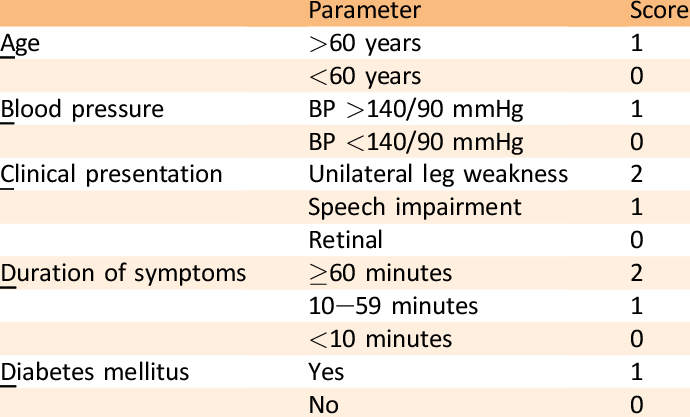
The ABCD2 score is a risk assessment tool designed to improve the prediction of short-term risk of a stroke after a transient ischemic attack (TIA). It is not a diagnostic tool.
- The ABCD2 score is calculated by summing up the points for five different factors including age, blood pressure, clinical features, duration of symptoms and the presence of diabetes. ABCD2>=4 indicates a higher risk.
- blood tests, carotid Doppler and a brain scan (CT or MRI)
Faecal Incontinence
- As the body ages the rectum can become more vacuous and the anal sphincter can gape due to a number of factors including?
Older people cannot exert the same amount of intra-abdominal pressure and muscle tension to force out constipated stool.
It is abnormal for there to be faeces in the rectum at any time unless passing stool.
- If anal tone and sensation is diminished then this suggests ?
- The most common cause of faecal incontinence
A PR is absolutely mandatory in the assessment of faecal incontinence and the rectum, the prostate, anal tone and sensation should all be assessed as well as a visual inspection around the anus.
Stool type should be assessed if in the rectum.
- haemorrhoids and chronic constipation
- spinal cord pathology and should be managed urgently
- faecal impaction with overflow diarrhoea. This accounts for 50% of faecal incontinence. The second most common cause is neurogenic dysfunction
Faecal loading and constipation:
o It is not only hard stool that can cause faecal impaction; soft stool can fill the rectum.
o Do not assume that a patient who is opening their bowels is not impacted; smearing, small amount of type 1 stool or copious type 6/7 stool with no sensation of defaecation should raise the suspicion of impaction with overflow.
o Impaction can be higher up than the rectum in some cases and a high degree of suspicion should be had if the clinical picture fits but the rectum is empty.
o Behind every full rectum is often a full bladder and if a patient is found to have urinary retention then they MUST have a PR to assess for an impacted rectum and/or a large prostate if male.
o Faeces can sometimes be palpated on abdominal examination if significantly loaded. Beware that faecal impaction and constipation can kill, there is a risk of stercoral perforation and ischaemic bowel in those chronically constipated.
o Management should be utilising enemas for rectal loading and stool softeners and stimulants. If stool is hard then stimulants will not help as the stool requires softening. Some enemas will not work if the rectum is loaded with hard stool and will merely fall out.
o Manual evacuation is done in difficult cases and the risk of perforation is outweighed by the positive impact on patient symptoms and wellbeing.
Chronic diarrhoea:
o All underlying causes must be excluded by bowel imaging and stool culture and all potentially causative medications removed then care can focus on firming the stool. Faecal impaction must be excluded
o Regular toileting in the first instance and dietary review
o Low dose of loperamide (including paediatric doses) can be trialled and then constipating and enema regiemes can be used.
Causes of constipation?
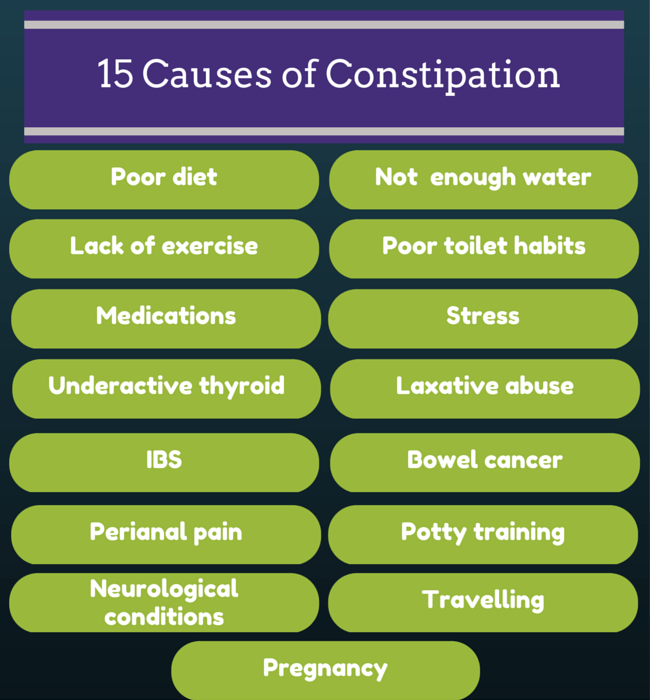
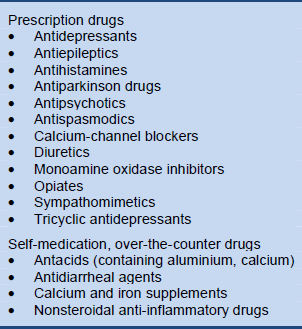
Medications that can cause constipation
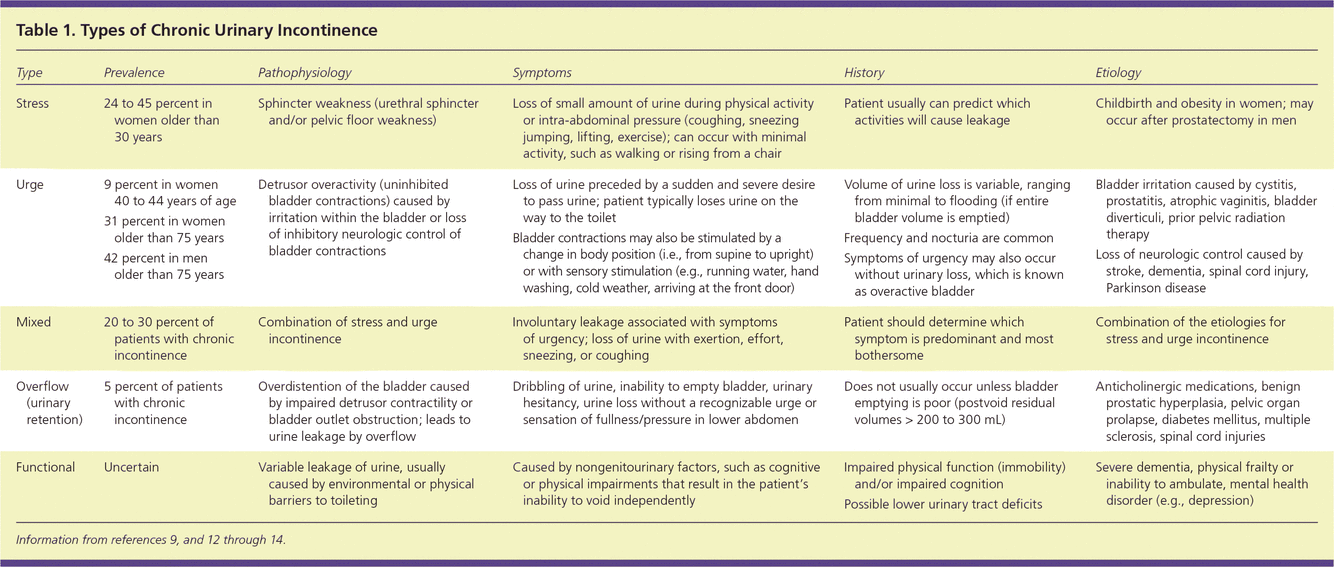
types of incontinence?
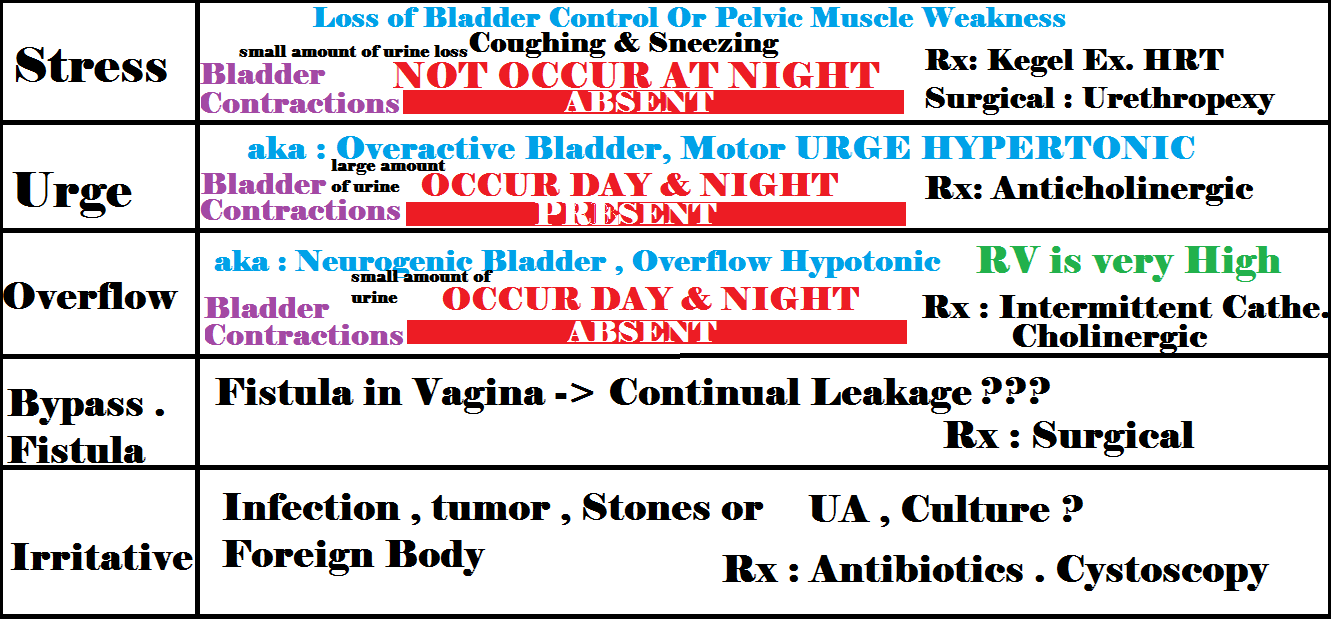
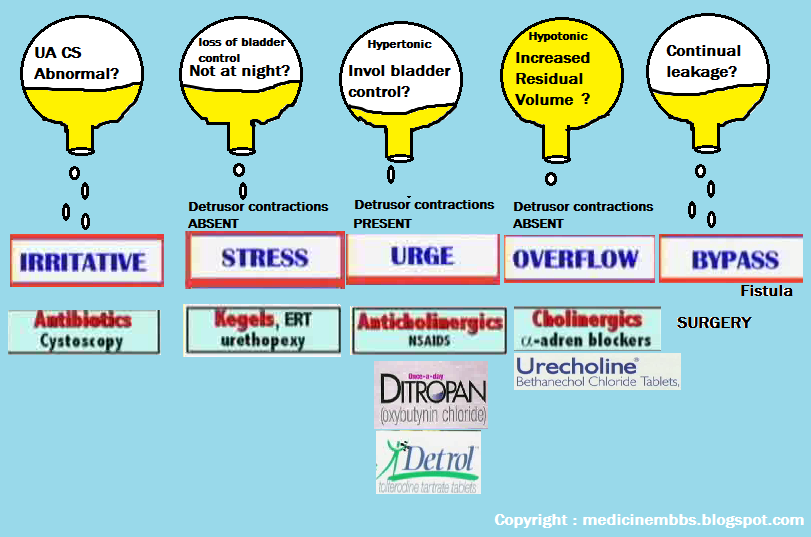
- What are the causes of incontinence
- A careful continence history often helps with diagnosis and should look at:
- For a complete continence examination the following are mandatory:
- image
- how people void, frequency, symptoms, oral intake and types of drinks consumed, bowel habit-including stool type and frequency, a full drug history and a collateral if required.
3.
o Review of bladder and bowel diary
o Abdominal examination
o Urine dipstick and MSU
o PR examination including prostate assessment in a male
o External genitalia review particularly looking for atrophic vaginitis in females
o A post micturition bladder scan
Neither drug therapy nor pads are first line management for patients with urinary incontinence. Most intervention is simple to begin with including switching to decaffeinated drinks, good bowel habit, improving oral intake, regular toileting and pelvic floor exercises and bladder retraining
When non pharmacological measures have been exhausted then pharmacological measures can be trialled. Remember that anticholinergics are not good in older people and oxybutynin whilst good for younger patients is not good for older people. Many of the drugs used for bladder stabilisation can also cause postural hypotension leading to increased falls.
Dementia
- Dementia is a progressive decline in cognitive functioning usually occurring over several months. It affects many different areas of function including:
- There are several different types of dementia all with slightly different presentations and courses. These include:
- Rx
- Retention of new information, managing complex tasks, language and word finding difficulty, behaviour, orientation, recognition, ability to self care, and reasoning.
2.
o Alzheimer’s Dementia – most common cause. Insidious onset with slow progression. Behavioural problems are common. Diagnosed on clinical history but brain imaging may show disproportionate hippocampal atrophy.
o Vascular Dementia –Second most common. Suggested by vascular risk factors. Imaging is suggestive of vascular disease. Often has a step wise progression.
o Dementia with Lewy Body- Gradually progressive. Prominent auditory or visual hallucinations. Delusions are well formed and persistent. Parkinsonism commonly present but not severe.
o Parkinson’s disease with dementia – Typical features of parkinson’sdisease are present and precede confusion by over a year
o Frontotemporal dementia – Onset often early and have complex behavioural problems, language dysfunction may occur.
o Mixed dementia – Alzheimers and Vascular type.
- Cholinesterase inhibitors are available for the treatment of Alzheimer’s to
slow its progression, for vascular dementia there is only the ability to modify risk factors.
- s/e of cholinesterase inhibitors
- List of examples of brand and generic names of cholinesterase inhibitors
List and examples (brand and generic names) of some FDA-approved cholinesterase inhibitors.
1.
Nausea.
Vomiting.
Diarrhea.
Muscle cramps.
Weight loss.
Headache.
Insomnia.
Abnormal dreams.
- donepezil (Aricept, Aricept ODT)
tacrine (Cognex) (This medication is discontinued in the US)
rivastigmine (Exelon, Exelon Patch)
galantamine (Razadyne or formerly Reminyl)
memantine/donepezil (Namzaric)
ambenonium (Mytelase)
neostigmine (Bloxiverz) for non-depolarizing neuromuscular blocking agents


-
Orthopaedics - Clinical conditions49
-
Drugs57
-
Pain management1
-
DVT assessment & management15
-
Care of the diabetic surgical patient and the surgical patient on steroids.38
-
peri operative42
-
peri op (general)18
-
Period Cardioresp8
-
General surgery43
-
GP day cases55
-
Medicine day case23
-
Hepato pancreatic biliary surgery7
-
contraception10
-
Rheumatology56
-
Paediatrics35
-
geri27
-
Urology10
-
Vascular surgery17
-
ID19
-
Renal workbook21
-
surgery workbook16



