Pre-op assessment
- When do patients have their pre-op assessment
- What must you find out when taking a pre-op history
- Pre-Operative Examination
- 2-4 wks before their date surgery
- PC:
PC and procedure
PMH:
Cardiovascular disease: HTN & exercise tolerance -> risk of a cardiac event increased during anaesthesia
Respiratory disease, adequate planned oxygenations reducing risk of ischaemic evens peri-op
Renal disease:effect/causes e.g. anaemia, coagulopathy, biochemical disturbances
Blood loss of IV contrast given during some procedures can cause significant renal dysfunction, so care may be taken
Endocrine disease, specifically diabetes mellitusandthyroid disease
often require specific changes
Female of reproductive age – could they be pregnant?
African or Afro-Caribbean descent – could they have undiagnosed sickle cell disease?
Past SHx
Past Anaesthetic Hx:
Any issues? Were they well post-operatively? Has the patient experienced to any previous post-op N+V?
DHx/Allergies
FHx
Malignant hyperpyrexia
*An autosomal dominant condition -> muscle rigidity (despite neuromuscular blockade) followed by a rise in temperature (requires senior input and support if present)
Social Hx
Smoking history and alcohol intake and their exercise tolerance
- General examination (cardio, resp, abdo)
Anaesthetic exam & Airway examination (to predict the difficulty of intubation)
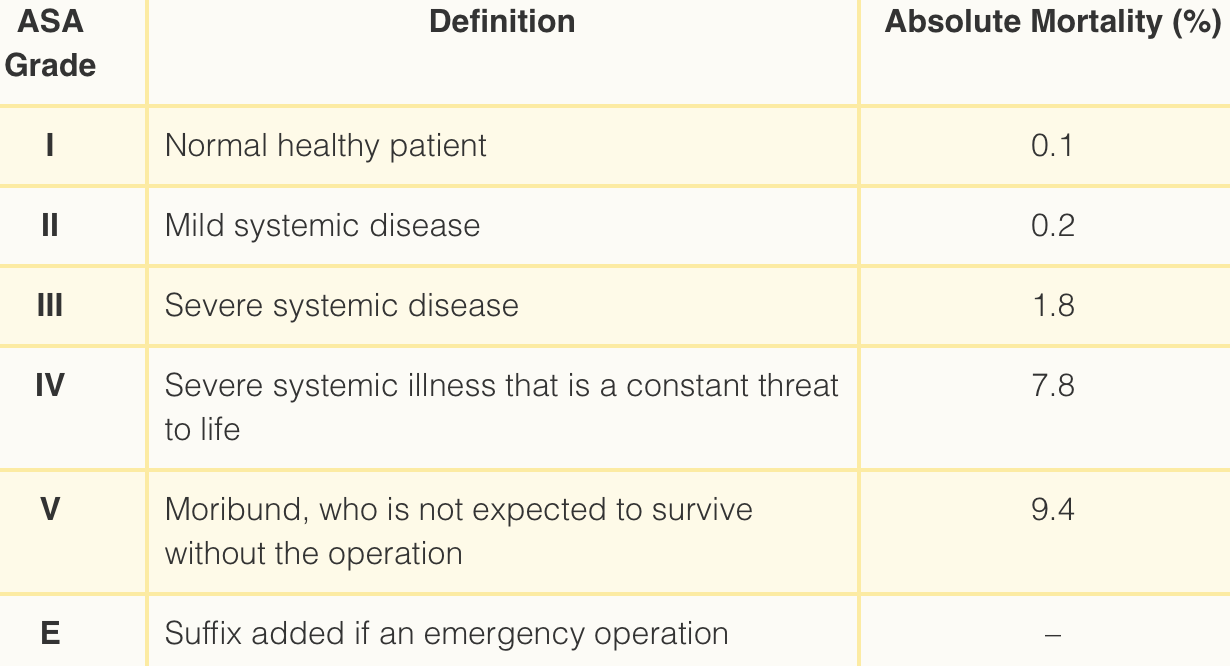
- What grade directly correlates with post op complication risk? What does each grade mean?
- Pre-op Ix? What decides which pre- op tests should be performed
American Society of Anaesthesiologists Grade
Depends on Co-morbidities, age, seriousness of the procedure
https://www.nice.org.uk/guidance/ng45/resources/colour-poster-2423836189
Which blood tests would the team perform pre op and why?
FBC
Check for undiagnosed anaemia or thrombocytopenia
U&Es
Assess the baseline renal function, which will indicate potential co-morbid status and help inform any potential IV fluid management intra-operatively
LFTs
Assessing liver metabolism and synthesising function, may help direct medication choice and dosing
Clotting Screen
Any indication of deranged coagulation, such as iatrogenic causes (e.g. warfarin), inherited coagulopathies (e.g. haemophilia A/B), or liver or renal impairment, will need identifying and correcting before surgery
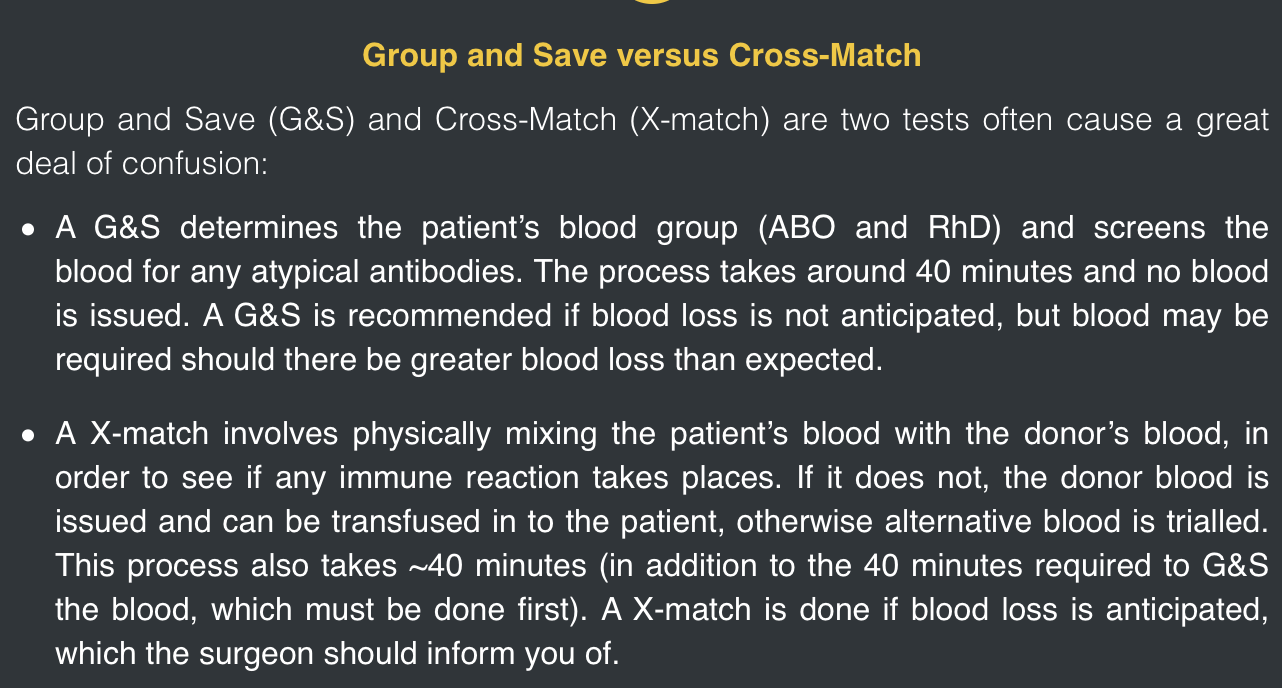
G&S or Cross-Match (X-match)
What is group&save and crossmatch
What imaging would the team perform pre op and why?
Electrocardiogram (ECG): Hx of CVD, major surgery, can provide a baseline if there are post-operative signs of cardiac ischaemia
N.B An echocardiogram (ECHO) can be considered if the person has (1) a heart murmur (2) cardiac symptom(s) (3) signs or symptoms of heart failure.
Chest X-ray: should not be performed routinely
Indications include:
Respiratory illness who have not had a CXR within 12 months
New cardiorespiratory symptoms
Recent travel from areas with endemic TB
Significant smoking Hx
If a patient has a chronic lung condition, spirometry may be of use in assessing current baseline and predicting post-operative pulmonary complications in these patients.
Are there any other important pre op tests besides bloods, ECG and imaging?
- Pregnancy testing: women of reproductive age; carry out a pregnancy test with the woman’s consent if there is any doubt about whether she could be pregnant.
- Sickle Cell Test: any member of their family with sickle cell disease, or is African or Afro-Caribbean descent, strongly consider performing a sickle cell test.
- MRSA Swabs: taken from the nostril ± perineum ± other sites for MRSA colonisation. If this is isolated, antiseptic hair and body wash,
- Urinalysis: suspicion of ongoing glycosuria or UTI
tetracyclinealone (doxyclycline) alone
or a combination of rifampicin and fusidic acid can be used for skin and soft-tissue infections caused by MRSA;
clindamycin alone is an alternative.
A glycopeptide (e.g. vancomycin) can be used for severe
above CI linezolid. As linezolid is not active against Gram-negative organisms, it can be used for mixed skin and soft-tissue infections only when other treatments are not available; linezolid must be given with other antibacterials if the infection also involves Gram-negative organisms. A combination of a glycopeptide and fusidic acid or a glycopeptide and rifampicin can be considered for skin and soft-tissue infections that have failed to respond to a single antibacterial.
Tigecycline and daptomycin are licensed for the treatment of complicated skin and soft-tissue infections involving MRSA.
Explain the airway examination
Check for:
- Facial abnormalities & receding mandible (retrognathia)
Ask the patient to open their mouth and assess:
- Their degree of mouth opening (favourable if inter-incisor distance is > 3cm).
- Their teeth, mainly do they have teeth? If so, what is their dentition like? Are any teeth loose?
- Their oropharynx, maximally protrude their tongue. A Mallampati classification, which correlates with difficulty of intubation, can be assessed.
Neck:
- Ask the patient to flex, extend and laterally flex the neck to see their ROM.
- Maximally extend their neck and measure the distance between the thyroid cartilage and chin (the thyromental distance); if this is <6.5cm (~3 finger breadths), it indicates that intubation may be difficult.
Suggested Ix for Day Case patients include:
- ECG – All patients >70yrs or a history of chest pain, HTN, or a heart murmur
- LFT’s – Any alcohol intake over the expected amount
- U&E’s – All patients >60yrs, currently taking antihypertensives, history of DM or renal problems, or a urine sample >1+ protein
- Sickle cell test – If Afro Caribbean (and not previously tested)
- CXR – Any recent pneumonia, to discuss with anaesthetist
- TFTs – Patients on thyroxine or having thyroid surgery
- FBC – All patients >60yrs, or history of anaemia, any bleeding disorder, or sickle cell trait
For DM patients, perform a routine HbA1c; if >69mmol then discuss with anaesthetist regarding the need to defer the surgery
- A useful tool for structuring your management plan is RAPRIOP
- Why do patients fast?
1. Reassurance
Advice:
- Stop eating – 6hrs before
- Stop dairy products (including tea and coffee) – 6hrs before
- Stop clear fluids – 2hrs before
Prescription
Referral
Investigations
Observations
Patient understanding and follow-up
- *Fasting ensures that the stomach is empty of contents. This reduces the risk of pulmonary aspiration, which can occur during the perioperative period, which can lead to both aspiration pneumonitis (inflammation caused by very acidic gastric contents, leading to desquamation) and aspiration pneumonia (due to secondary infection following pneumonitis or direct aspiration of infected material).
Drugs To Stop ‘CHOW’
Clopidogrel – stopped 7 days prior to surgery -> bleeding risk Aspirin and other anti-platelets can often be continued
Hypoglycaemics – DM
OCP or HRT – 4 wks -> DVT risk. Advise the patient to use alternative means of contraception.
Warfarin – ~ stopped 5 days prior to surgery due to bleeding risk and commenced on therapeutic dose LMWH
Surgery will often only go ahead if the INR <1.5, so you may have to reverse the warfarinisation with PO Vitamin K if the INR remains high on the evening before
Drugs to alter
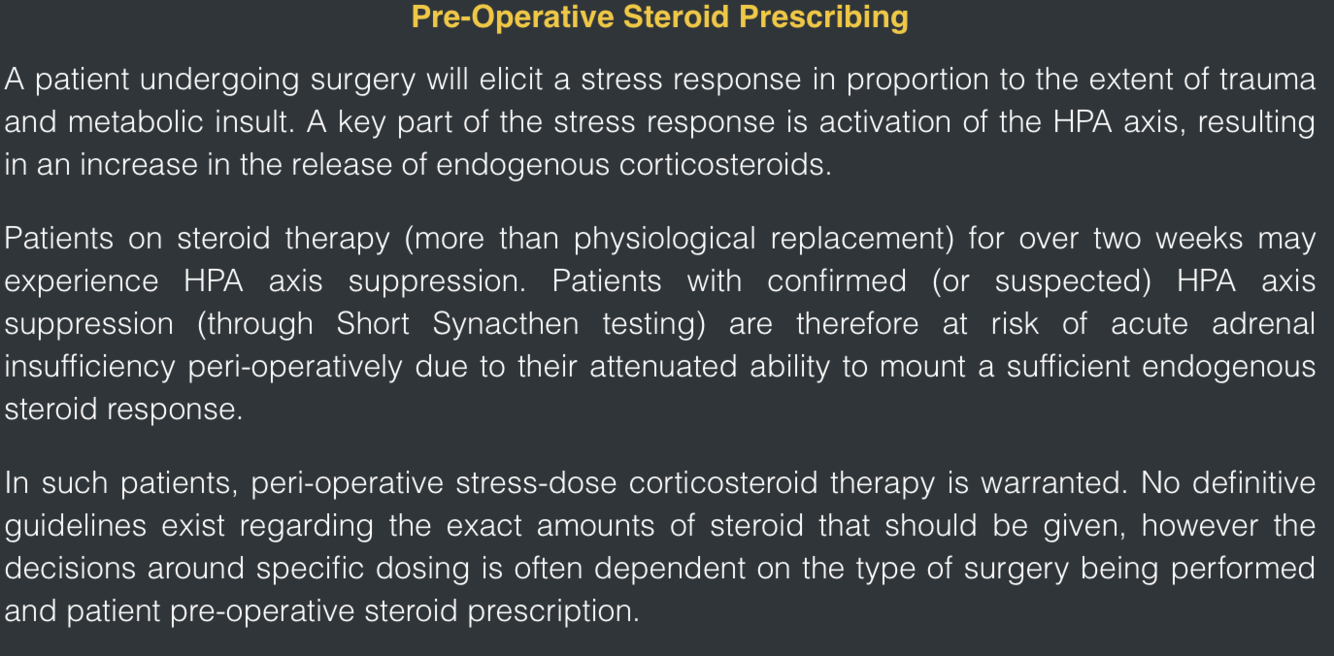
If the patient is on 10mg of pred PO how much do they need during the op?
Subcutaneous insulin – may be switched to IV variable rate insulin infusion.
Long-term steroids – must be continued, due to the risk of Addisonion crisis if stopped
If the patient cannot take these orally, switch to IV (a simple conversion rate is 5mg PO prednisolone = 20mg IV hydrocortisone)
What drugs should we start
When might these drugs be contra indicated
LMWH – the admitting doctor should complete a VTE Risk Assessment and prescribe appropriately
- Most patients will receive this, with the exception of those with either contraindications or who are having neck or endocrine surgery
- Patients undergoing major GI surgery for Ca (including oesophageal, gastric, pancreatic, liver and colonic resections) and lower limb joint replacement should be discharged with TEDs and 28 days of prophylactic dose LMWH
TED stockings – all patients (except vascular surgery patients), need to be prescribed but check for contraindications (especially in the elderly). Contraindications include severe peripheral vascular disease, peripheral neuropathy, recent skin graft, severe eczema.
Abx prophylaxis – orthopaedic, vascular, or GI surgery
Diabetes Mellitus
- T1DM
- T2DM
1.
- First on the morning list and they may need admitting on the night before the operation (depending on how major the procedure is)
- On the night before surgery, reduce their SC basal insulin dose by 1/3rd.
- Omit their morning insulin and
- commence an IV VRII pump, which is a syringe driver that usually contains 49.5mL of normal saline with 50 units of Actrapid.
- Whilst the patient is NBM, you will also need to prescribe an infusion of 5% dextrose, ~ given at a rate of 125mL/hr
- Check BM every 2hrs and to alter the infusion rate
- Continue until the patient is able to eat and drink. Once they are doing so, you must overlap their IV variable rate insulin infusion stopping and their normal SC insulin regimens starting. To do this, give their SC rapid acting insulin ~20 minutes before a meal and stop their IV infusion ~30-60 minutes after they’ve eaten.
2.
- If diet controlled, no action is required peri-operatively.
- If controlled by oral hypoglycaemics, metformin stopped on the morning of surgery, whilst all others should be stopped ~24 hrs before the operation. Then be put on IV VRII & 5% dextrose as described above and managed peri-operatively the same as a Type I diabetic.
What is bowel preparation?
who may need it?
why is it less commonly used?
laxatives or enemas to clear their colon pre-operatively.
The exact protocol will vary between hospitals but a general guide is:
- Upper GI, HPB, or small bowel surgery: none required
- Right hemi-colectomy or extended right hemi-colectomy: none required
- Left hemi-colectomy, sigmoid colectomy, or abdo-peroneal resection: Phosphate enema on the morning of surgery
- Anterior resection: 2 sachets of picolax the day before or phosphate enema on the morning of surgery
fluid shifts can be harmful to patients who are elderly or have cardiac or renal disease,
can prolong patient recovery and length of stay.
Fluid management
- The reasons for fluid prescription are:
important questions to ask
- Describe the fluid compartments
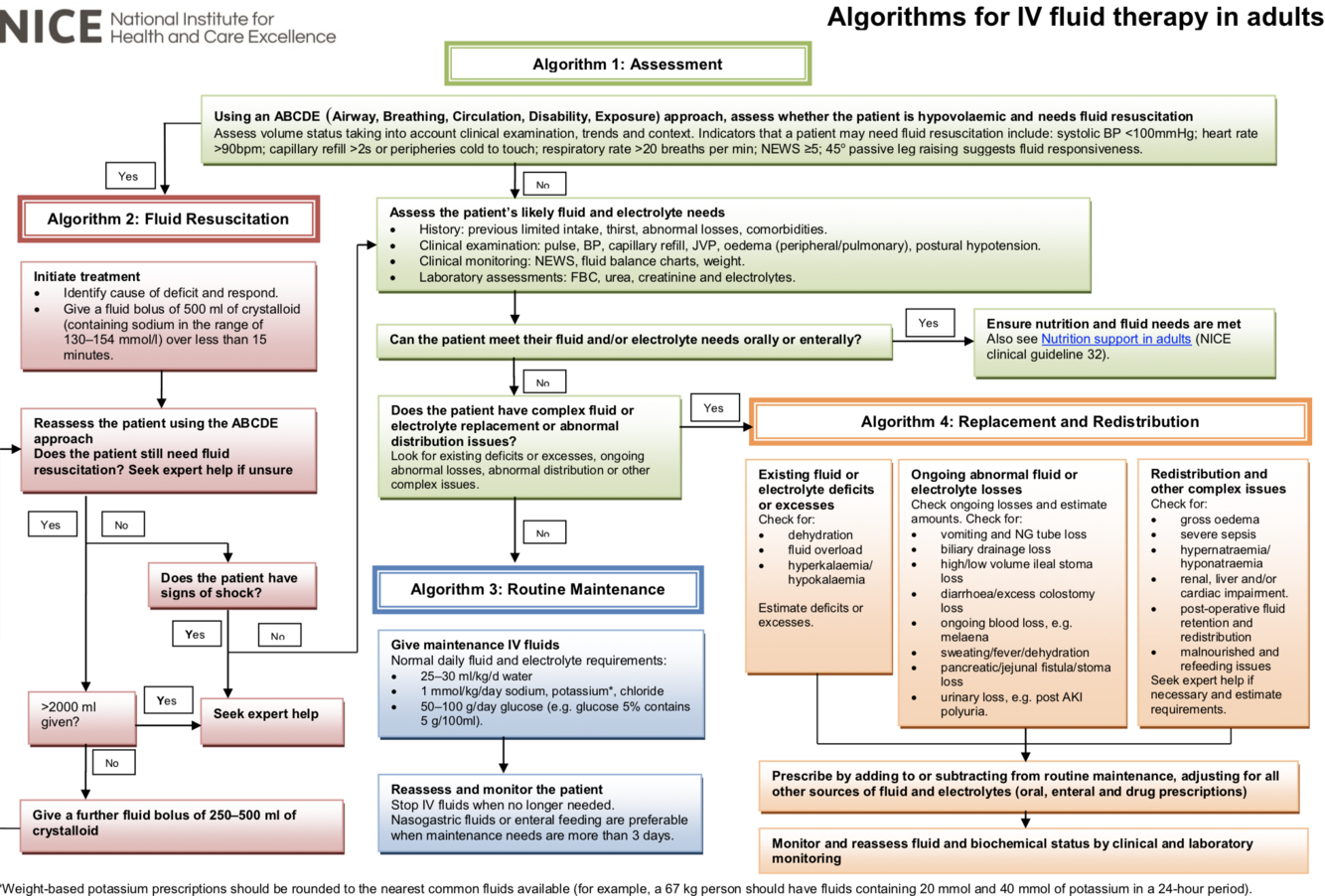
- How to fluid resus patients
- 5 Rs:
- Resuscitation
- Routine maintenance
- Replacement
- Redistribution
- Reassessment
Aim: resuscitation, maintenance, or replacement?
Weight and size of the patient?
Co-morbidities present that are important to consider, such as HF or CKD?
What is their underlying reason for admission*?
What were their most recent electrolytes?
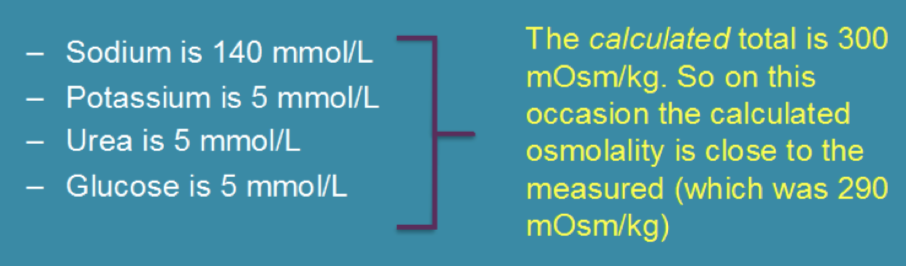
- Plasma osmolality is 290mOsmol/kg
* Total body water = 60% of weight (e.g. 70kg human) = 42L
* 2/3 intracellular (including RBCs) = 28L
* 1/3 extracellular = 14L
o 75% interstitial = 10.5L
o 25% plasma / intravascular = 3.5L
BASE FLUID RESUS WHEN >90 HR
Serum
- A 1% solution contains?
- So how many grams would a 5% solution contain in 1 litre?
- The molecular weight (molar mass) of glucose is 180g/mol. How many moles in 1 litre of a 5% solution? How many millimoles in 1 litre of a 5% solution? What is the calculated osmolality therefore of a 5% dextrose solution?
- How to calculate osmolality?
1. 1 gram of solute per 100ml of solvent
- 5g in 100ml
50g in 1L
3.
* Molecular weight of glucose is 180g/mol.
o How many moles in 1L of 5% solution?
* 5% = 50g in 1000mL
* No. of moles in 1000mL = 50g ÷ 180g/mol = 0.278mol
o How many millimoles in 1L of 5% solution?
* 0.278mol × 1000 = 278mmol
o What is the calculated osmolality of 5% dextrose solution?
* Calculated osmolality = 2 Na + Glucose + Urea (mmol/L)
* In 5% dextrose (aka glucose), calculated osmolality = 278mOsm/L
- Calculated osmolality = 2 Na + Glucose + Urea (mmol/L)
* Some people, add another 2 K+ to the calculation, but this shouldn’t change it too much (2*4 = 8)
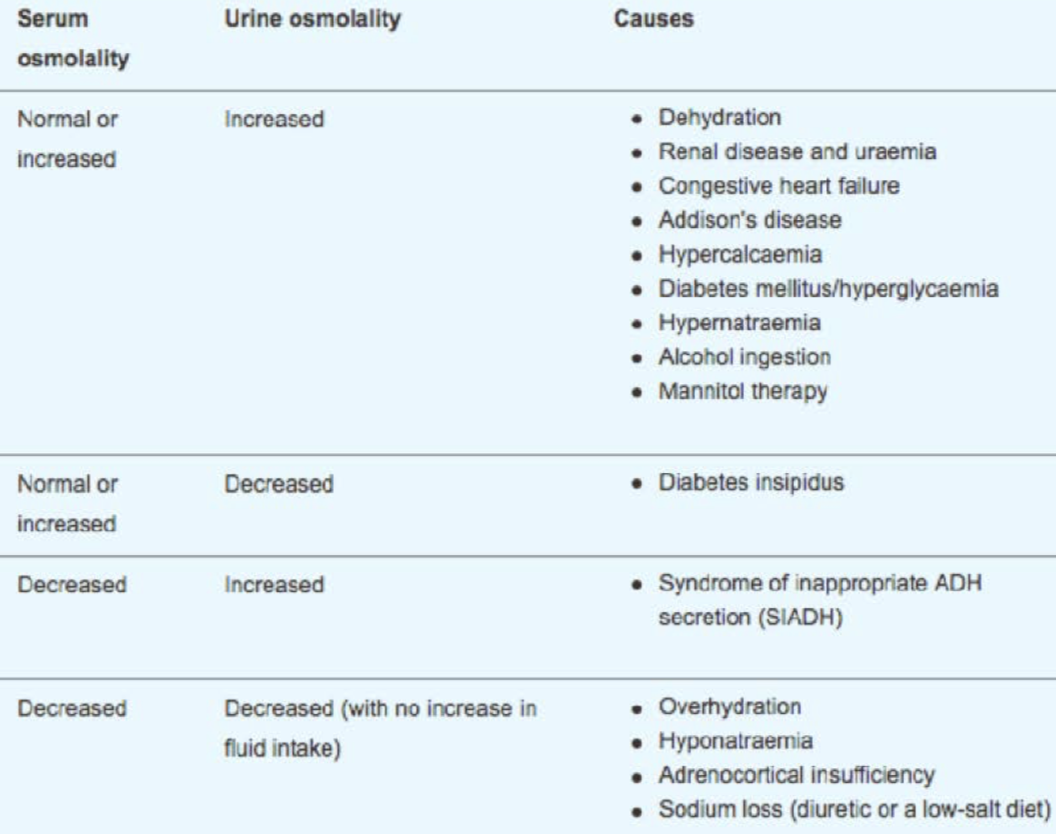
What would the osmolality be if you are salt losing, what would it be if you are water losing?
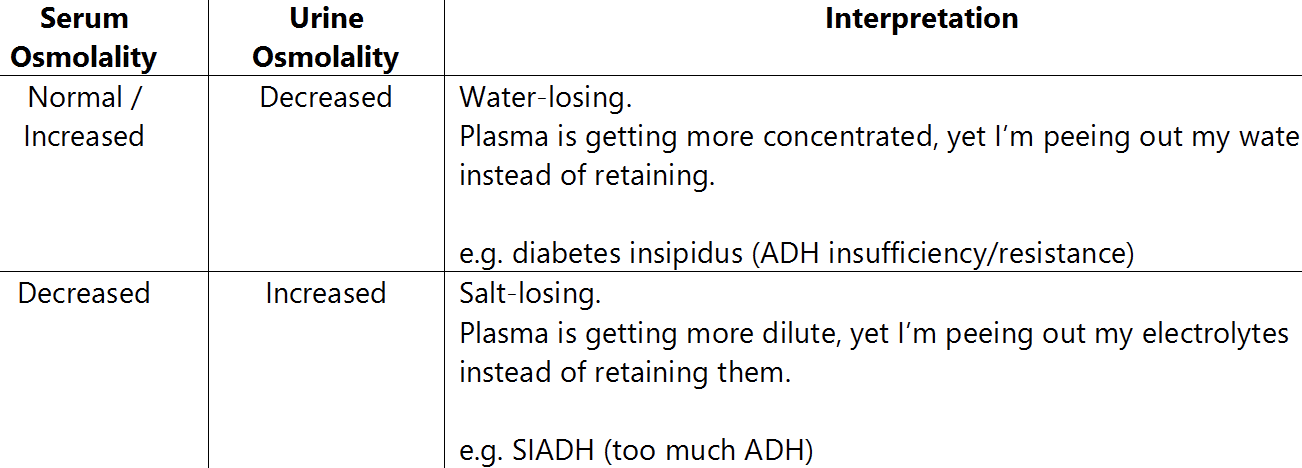
Q1: If 1 gram of dextrose produces 14 kJ energy. How much energy is provided by 1 litre of a 5% dextrose solution? How many kJ does an average adult need? What happens to the dextrose given intravenously in a 5% dextrose solution?
- Do you think that the water in Normal Saline is distributed amongst total body water or just extracellular water?
- Saline is distributed extracellularly as Na and Cl cannot freely pass through plasma membrane.
1000mL will stay mostly in the extracellular compartments:
* 75% interstitial = 750 mL
* 25% plasma / intravascular = 250 mL
What factors may increase an individual’s water losses
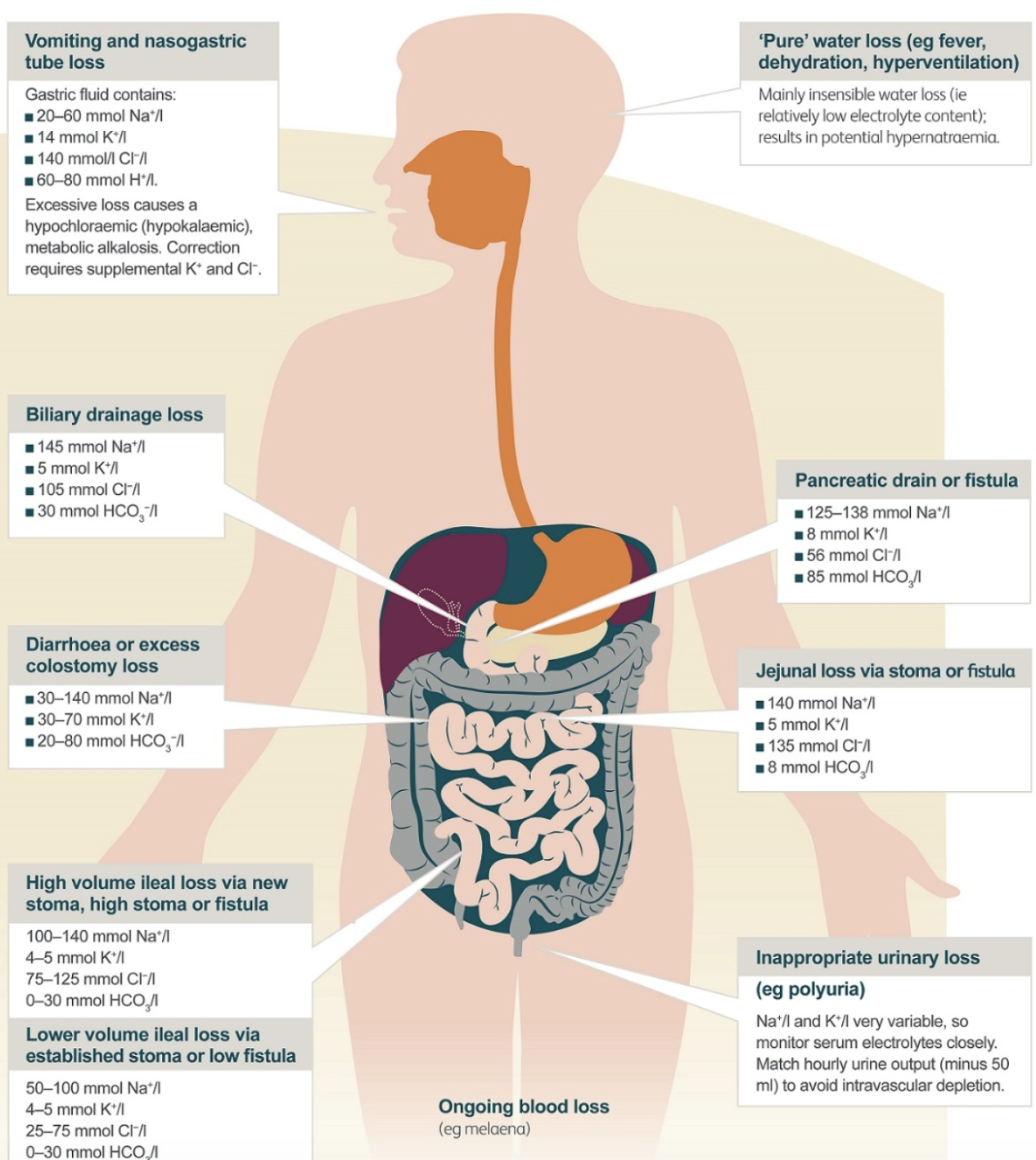
Explain how you would decide what to give for routine maintenance
What would you do for obese patients?
When would you consider prescribing less fluid (20–25 ml/kg/day fluid)?
25–30 ml/kg/day of water and
1 mmol/kg/day of potassium, sodium and chloride and
50–100 g/day of glucose to limit starvation ketosis
Obese: adjust the IV fluid prescription to their ideal body weight. Use lower range volumes per kg (patients rarely need more than a total of 3 litres of fluid per day) and seek expert help if their BMI is more than 40 kg/m2.
- are older or frail
- have renal impairment or cardiac failure
- are malnourished and at risk of refeeding syndrome
Consequences of fluid mismanagment
- Hypovolaemia (reduced UO <0.5ml/kg/hr, inc in urea/creatinine
- pulmonary oedema (breathlessness, Coarse crackles: Discontinuous, brief, popping lung sounds. Compared to fine crackles they are louder, lower in pitch and last longer. They have also been described as a bubbling sound. Typically inspiratory and particularly wet sounding)
- hyponatraemia < 130 mmol/l
- hypernatraemia > 155 mmol/l
- peripheral oedema
- hyperkalaemia >5.5 mmol/l
- hypokalaemia <3.0 mmol/l
Describe the two fluid regimens
Calculate the daily totals of water, sodium, chloride, and potassium for regimens 1 and 2.
Regimen 1
- 1L Normal saline over 8 hours
- 1L 5% dextrose + 20 mmol KCl over 8 hours
- 1L 5% dextrose + 20 mmol KCl over 8 hours
Regimen 2
- 1L Dextrose-saline + 20 mmol KCl over 8 hours
- 1L of Dextrose-saline + 20 mmol KCl over 8 hours
- 1L of Dextrose-saline + 20 mmol KCl over 8 hours
Na+ (mmol) 150 90
K+ (mmol) 40 60
Cl- (mmol) 190 150
Dextrose (g) 100 120
NICE CG174 1.4.1 state that for maintenance:
* Water = 25-30mL/kg/day
* Na+, K+, Cl- = 1mmol/kg/day (or as I like to remember, “worth your weight in salt(s)”)
* Glucose = 50-100g/day minimum, just to limit starvation ketosis
Why do we match rhesus group?
A RhD- patient will make RhD antibody if they are given RhD+ blood. Clearly, this will not matter for the patient; a RhD- patient, who is given RhD+ blood, and therefore makes anti-D, cannot then go on to attack their own red blood cells as they do not have RhD present on their RBC membrane.
However, this does cause potential problems during pregnancy as anti-D antibodies can cross the placenta, such as may occur in the following example:
- A woman is born with RhD- blood. Her partner is RhD+ and she becomes pregnant with a fetus that is also RhD+. During childbirth, she comes into contact with the foetal (Rh+ve) blood and develops antibodies to it.
- She later becomes pregnant with a second child that is also Rh +ve.
- The woman’s anti-D antibodies cross the placenta during this pregnancy and enter the foetal circulation, which contains RhD+ blood, and bind to the foetus’ RhD antigens on its RBC surface membranes.
- This causes the foetal immune system to attack and destroy its own RBCs, leading to foetal anaemia. This is termed haemolytic disease of the newborn (HDN).



-
Orthopaedics - Clinical conditions49
-
Drugs57
-
Pain management1
-
DVT assessment & management15
-
Care of the diabetic surgical patient and the surgical patient on steroids.38
-
peri operative42
-
peri op (general)18
-
Period Cardioresp8
-
General surgery43
-
GP day cases55
-
Medicine day case23
-
Hepato pancreatic biliary surgery7
-
contraception10
-
Rheumatology56
-
Paediatrics35
-
geri27
-
Urology10
-
Vascular surgery17
-
ID19
-
Renal workbook21
-
surgery workbook16



