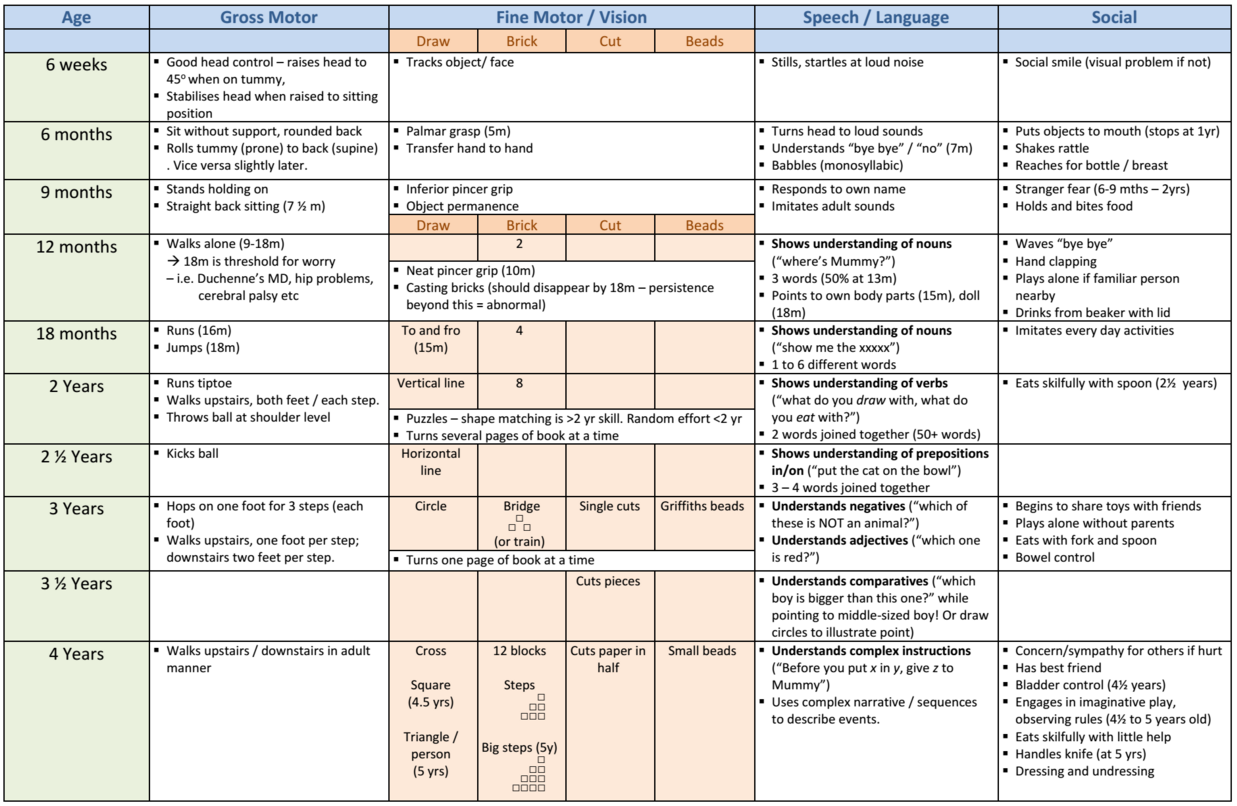
State the paediatric milestones
6wks
6months
9 months
12months
18months
2yrs
2.5yrs
3yrs
3.5yrs
4yrs
Gross motor: 6m sit withought support
Fine Motor: 6m hand to hand, palmar grasp
speech: 6m turns head to loud sounds, babbles
Social: 6ick smile, 6 mouth, 9 strangers, 12 bye stranger, 18imitates, 2spoon, 3 fork, 4 best friend, 4.5 bladder control, 5 handles knife
The NHS NIPE Screening Programme aims to reduce morbidity and mortality by:
Newborn and infant physical examination screening programme
identifying and referring all children born with congenital abnormalities of the eyes, heart, hips, and testes, where these are detectable, within 72 hours of birth
identifying those abnormalities that may become detectable by 6 to 8 weeks of age, at the second physical examination
Examination of the eyes:
- Main concern?
- RF
- Bilateral examination covers:
- Screen negative – newborn and 6-8 week infant examination:
- Screen positive
- Congenital cataracts
- FHx of congenital or hereditary cataracts (first degree relative)
Prematurity
Children with trisomy 21
Maternal exposure to viruses during pregnancy, including rubella and cytomegalovirus
(aniridia, colobomata and retinoblastoma)
- eye opening – presence of eyes
position and symmetry
size and colour
presence of red reflex (a reflection from the back of the eye that is similar to the red eye effect sometimes seen in flash photography)
- transfer care to the Healthy Child Programme
- The absence of red reflex - congenital cataract.
A white reflex (leukocoria) - a tumour of the eye (retinoblastoma)
Screen positive following newborn examination -> attend an assessment appointment by 2 weeks of age
Screen positive following 6 to 8 week infant examination - seen by 11 weeks of age
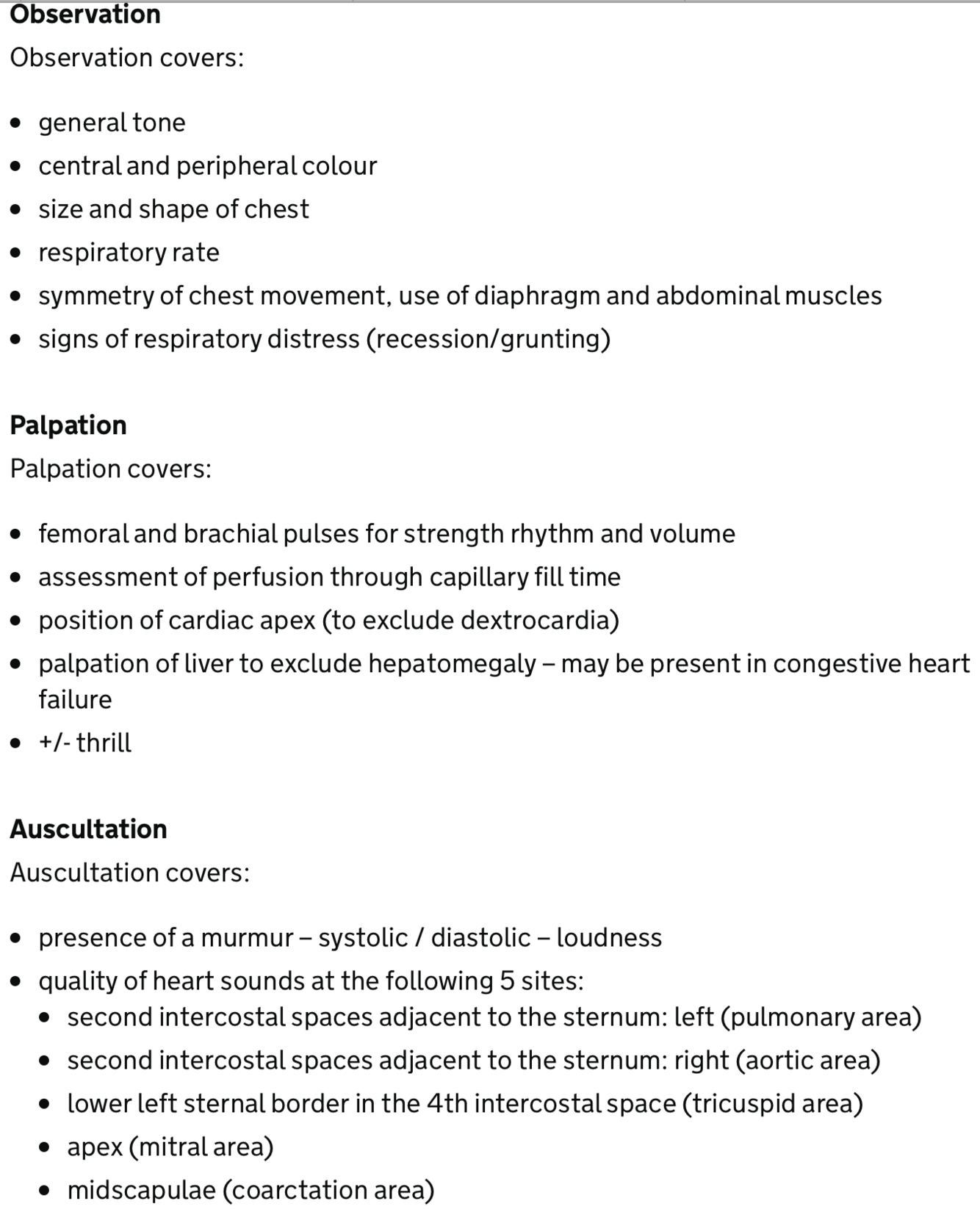
Examination of the heart
- Main concern
- RF
- Undertaking the examination
- Congenital heart abnormalities can be categorised as:
critical CHD: includes all potentially life threatening duct-dependent conditions and those conditions that require procedures within the first 28 days of life
major serious CHD: those defects not classified as critical but requiring invasive intervention in the first year of life
lesions may be detected during pregnancy as part of the fetal anomaly screening programme (FASP)
2.
- FHx of CHD (first degree relative)
- fetal trisomy 21
- cardiac abnormality suspected from the antenatal scan
- maternal exposure to viruses, for example, rubella during the first trimester of pregnancy,
- maternal conditions, such as diabetes (type 1), epilepsy, systemic lupus erythematosis (SLE)
- drug-related teratogens during pregnancy, for example, antiepileptic and psychotrophic5 drugs
- Parents should be asked if:
- the baby ever gets breathless or changes colour at rest or with feeding
- the baby’s feeding behaviours and energy levels are normal
- the baby is ever too tired to feed, quiet, lethargic, or has poor muscle tone
Examination of the hips
- Main concern
- RF
- Examination
- screen positive
- developmental dysplasia of the hips (DDH)
undetected/delayed treatment may lead to:
- impaired mobility and pain
- OA of the hip and back
- First degree family history of hip problems in early life.
Breech presentation
- Observation covers:
symmetry of leg length
level of knees when hips and knees are both flexed
symmetry of skin folds in the groin when baby is in ventral suspension6
if legs can be fully abducted
Manipulation
Undertake both the Ortolani and Barlow manoeuvres on each hip separately to assess hip stability.
Ortolani manoeuvre is used to screen for a dislocated hip.
Barlow manoeuvre is used to screen for dislocatable hip.
4.
Screen positive
Screen positive results are:
difficulty in abducting the hip to 90 degrees
difference in leg length
knees at different levels when hips and knees are bilaterally flexed
asymmetry of groin skin folds
palpable ‘clunk’ when undertaking either the Ortolani or Barlow manoeuvres
These babies should be referred and undergo hip ultrasound within 2 weeks of birth.
Examination of the testes
- Main concern?
- Associated risk factors
- Examination
- Cryptorchidism
associated with:
- a significant increase in the risk of testicular ca (primarily seminoma)
- reduced fertility when compared with normally descended testes
- other urogenital problems such as hypospadias and testicular torsion
- a first degree family history of cryptorchidism (baby’s father or sibling)
low birth weight
small for gestational age or preterm birth
- Observe scrotum for symmetry, size and colour
Palpation of scrotal sac to determine location of testes bilaterally
If testes are not located in the scrotal sac, palpation of the inguinal canal should be undertaken.
Chickenpox
- Cause:
- O/e:
- Management:
Fever initially
Itchy, rash starting on head/trunk before spreading.
Initially macular then papular then vesicular
Systemic upset is usually mild
- VZV
- vesicular itchy rash, aches, fever, loss of appetite
250-500 itchy blisters over the entire body OR
Sometimes 50 or fewer red bumps that rarely evolve to blisters
last for 5-7 days and heal with scabs
- avoid nursery or work for 5 days, fluid, paracetamol, socks of hands, cut child’s nails, cooling creams, bathe in cool water & pat skin dry, ?antihistamine, loose clothes
Takes 1-3 weeks from time you have been infected for spots to start appearing
DO NOT use ibuprofen
DO NOT give aspirin <16 = possible links to a rare disease that attacks the brain and liver
Croup
Signs and symptoms:
viral infection in the upper airways
barking cough, stridor, hoarse voice, difficulty breathing
Croup usually gets better within 48h
Management:
- paracetamol or ibuprofen -> sore throat and temperature
- Sit your child upright and comfort them if they are distressed. Crying can make the symptoms worse.
- fluids - enough so they are weeing
- DO NOT put any objects in your child’s mouth. This can trigger a spasm in the airway.
Measles
- Cause/ spread
- How long does it take to recover
- Symptoms
- Measles by:
- Prevented
- treatment?
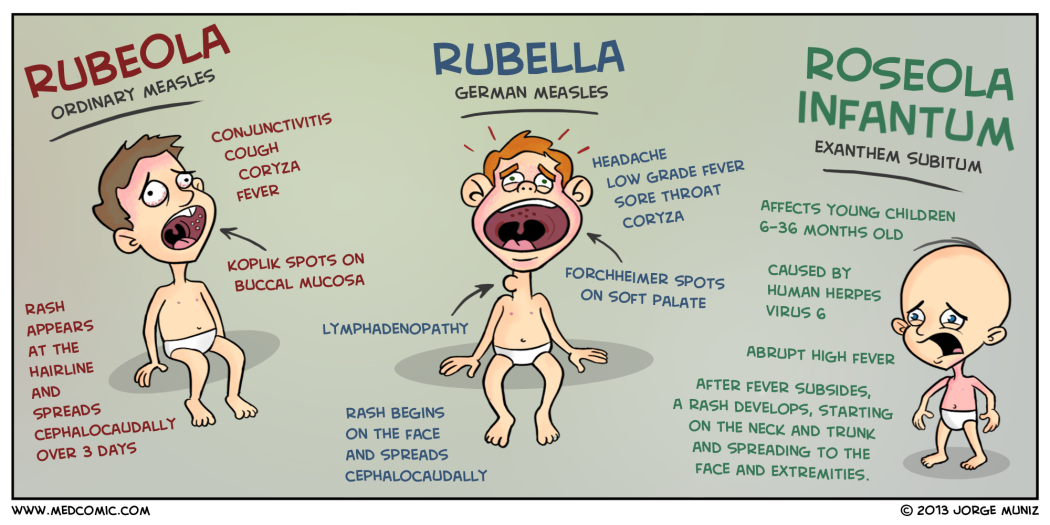
- prodrome? Koplik spots: Rash:
- viral/ coughs or sneezes as well as through contact with a surface or object that has been contaminated
- 7 - 10 days
3.
- cold-like symptoms: runny nose, sneezing and a cough
- sore, red eyes that may be sensitive to light
- a high temperature (fever), which may reach around 40C (104F)
- small greyish-white spots on the inside of the cheeks
- lungs (pneumonia) and brain (encephalitis)
5.
- breathing in these droplets
- touching a surface the droplets have settled on and then placing your hands near your nose or mouth (the virus can survive on surfaces for a few hours)
- measles, mumps and rubella (MMR) vaccine
7.
- taking paracetamol or ibuprofen to relieve fever, aches and pains (aspirin should not be given to children <16yo)
- drinking plenty of water to avoid dehydration
- closing the curtains to help reduce light sensitivity
- using damp cotton wool to clean the eyes
- staying off school or work for at least 4 days from when the rash first appears
- Prodrome: irritable, conjunctivitis, fever
Koplik spots: white spots (‘grain of salt’) on buccal mucosa
Rash: starts behind ears then to whole body, discrete maculopapular rash becoming blotchy & confluent
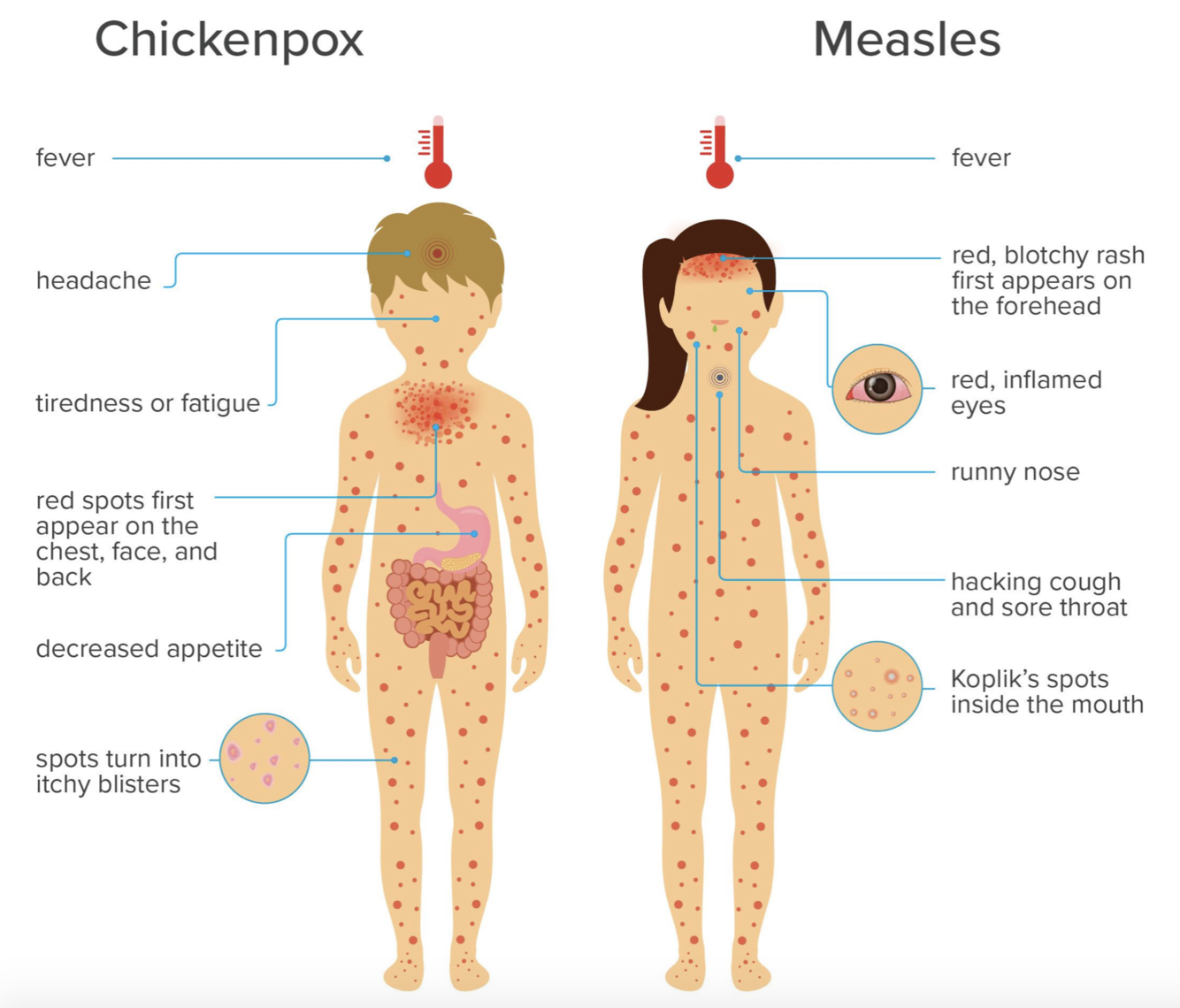
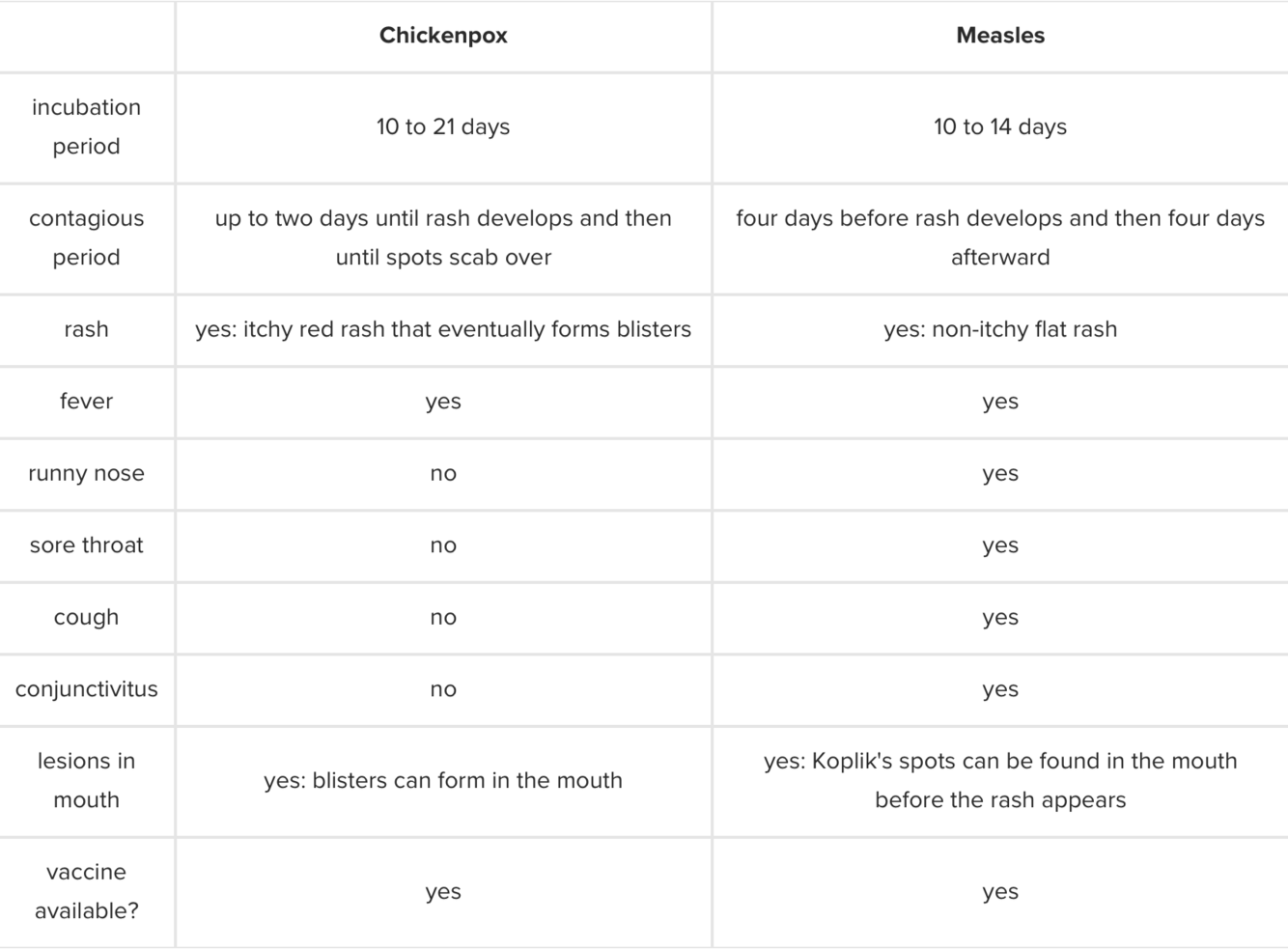
Chicken pox vs measles
Mumps
- Appearance?
- Symptoms
- spread?
- prevent
- Rx
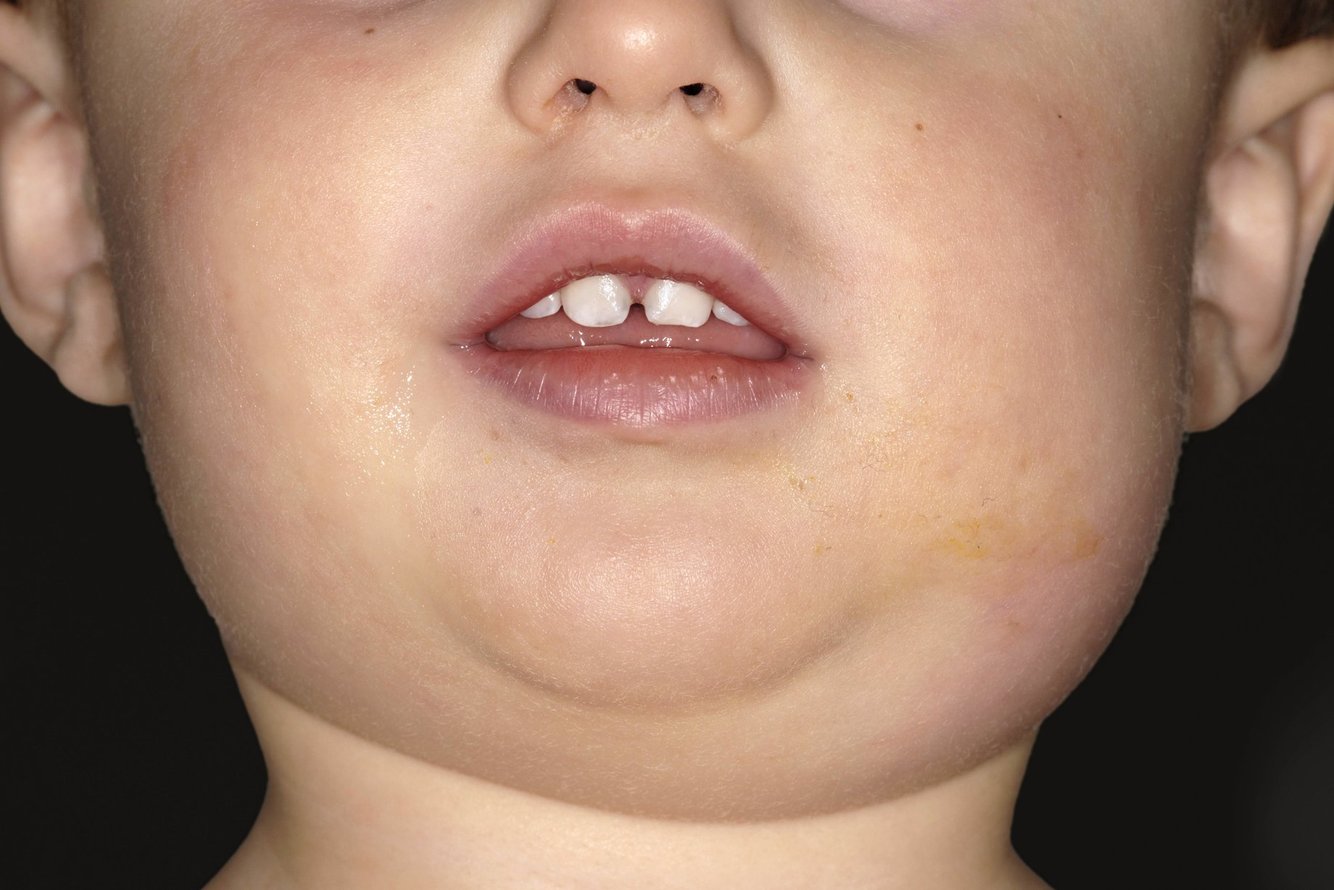
- swellings at the side of the face under the ears (the parotid glands), giving a person with mumps a distinctive “hamster face” appearance
- headaches, joint pain and a high temperature, which may develop a few days before the swelling of the parotid glands.
- droplets
- MMR vaccine
1 dose when they are around 12-13 months
Second booster dose at 3 years and 4 months
5.
- getting plenty of bed rest and fluids
- using painkillers, such as ibuprofen and paracetamol – aspirin shouldn’t be given to children under 16
- applying a warm or cool compress to the swollen glands to help relieve pain
Fever, malaise, muscular pain
Parotitis (‘earache’, ‘pain on eating’):
unilateral initially then becomes bilateral in 70%
How does Parvovirus B19 present?
slapped-cheek syndrome = erythema infectiosum
coryza
fever
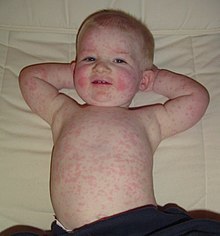
red rash = body = lace like rash
Rubella
- Rash:
- Rubella can also cause:
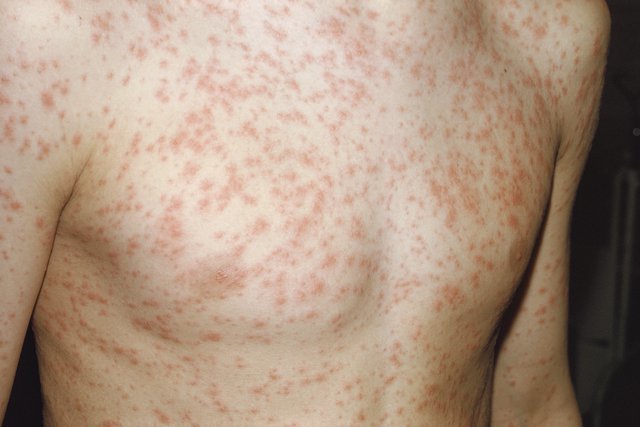
- pink maculopapular,
initially on face before spreading to whole body,
goes within a week
- Lymphadenopathy: suboccipital and postauricular
aching fingers, wrists or knees
a high temperature of 38C or above
coughs
sneezing and a runny nose
headaches
a sore throat
sore, red eyes
Erythema infectiosum
- Also known as ?
- Caused by?
- other features
- fifth disease or ‘slapped-cheek syndrome’
- parvovirus B19
- Lethargy, fever, headache
‘Slapped-cheek’ rash spreading to proximal arms and extensor surfaces
Scarlet fever
- Cause?
- Features:
- Rx
- Reaction to erythrogenic toxins produced by Group A haemolytic streptococci
- Fever, malaise, tonsillitis
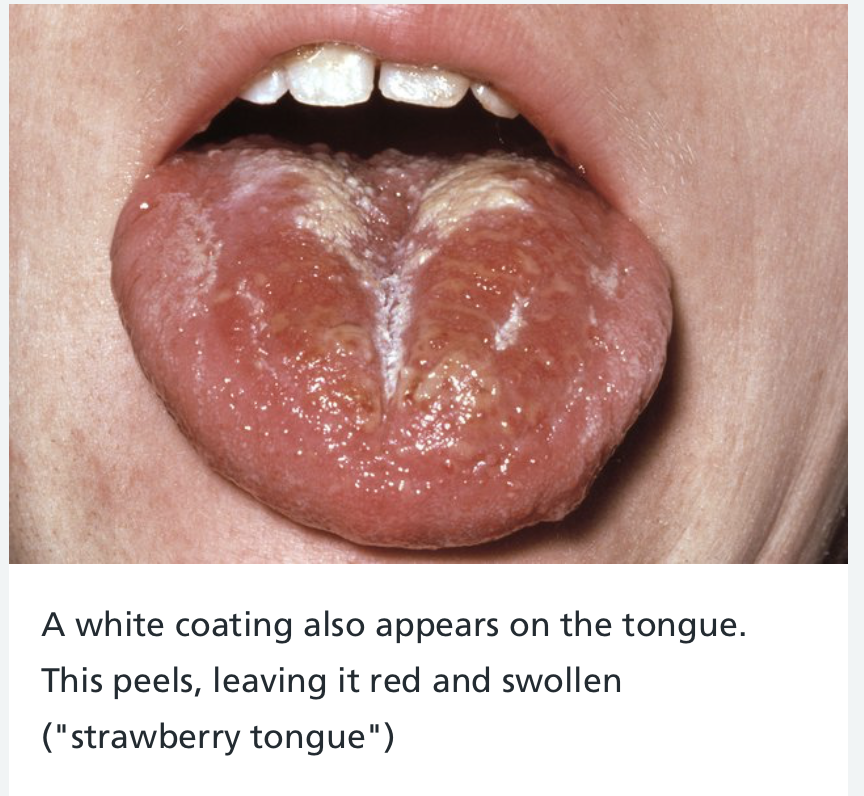
‘Strawberry’ tongue
Rash - fine punctate erythema sparing the area around the mouth (circumoral pallor)
3.
Antibiotics
You can relieve symptoms of scarlet fever by:
drinking cool fluids
eating soft foods if you have a sore throat
taking painkillers like paracetamol to bring down a temperature (do not give aspirin to children under 16)
using calamine lotion or antihistamine tablets to stop itching
Hand, foot and mouth disease
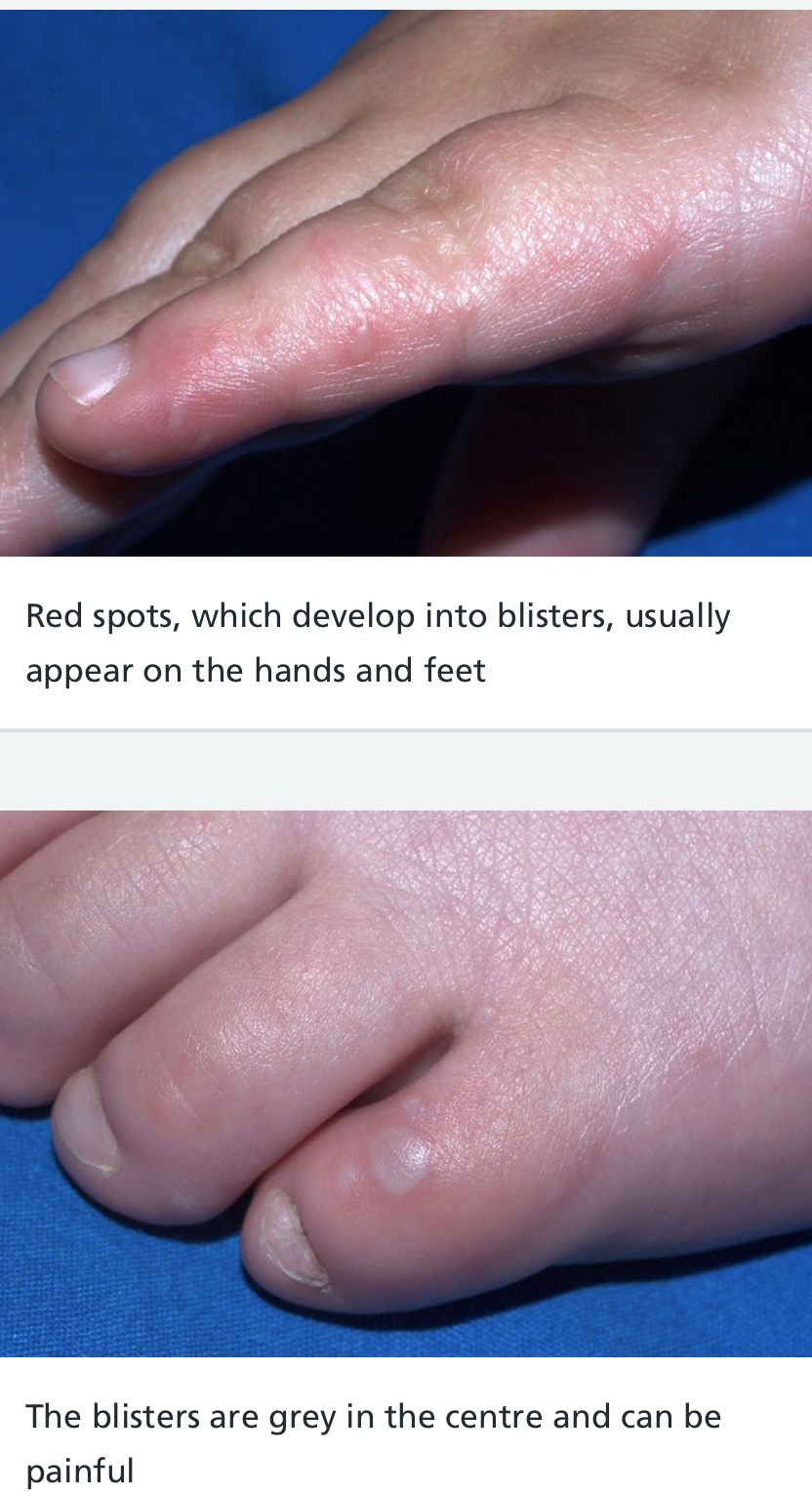
- The first signs of hand, foot and mouth disease can be:
- How long does it take to resolve?
- Cause?
- a sore throat
a high temperature, above 38C
not wanting to eat
After a few days mouth ulcers and a rash will appear
- better in 7 to 10 days
- Coxsackie A16 virus
Rash with itching DD?
- small red spots known as prickly heat or heat rash
itchy, red, dry and cracked may be eczema. It’s common behind the knees, elbows and neck
Raised, itchy red rash (hives) can appear as an allergic reaction to things like stings, medicines or food. It usually clears up within a day or 2.
besides the heart, hip, genitalia and eyes what else can you check?
fontanelles
spine
feeding
abdomen
What is this image showing?
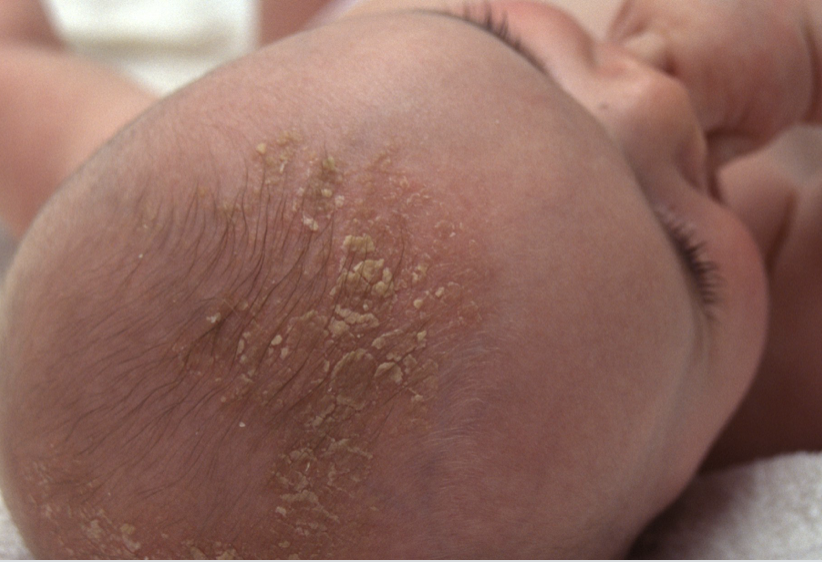
Cradle cap is when a baby gets yellowish, greasy scaly patches on their scalp.
It usually gets better without treatment in a few weeks or months.
Gently washing your baby’s hair and scalp with baby shampoo may help prevent more patches.
What is this image showing
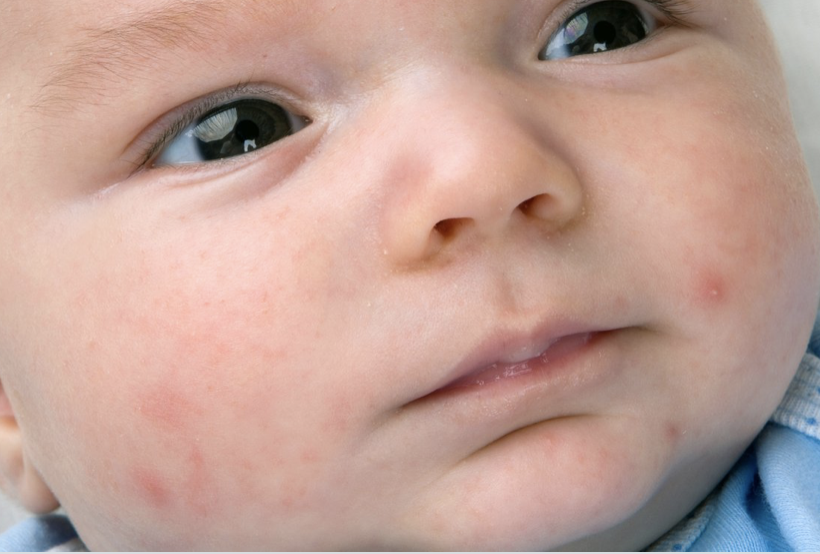
Baby acne can appear within a month after birth but usually clears up after a few weeks or months.
Washing your baby’s face with water and a mild moisturiser can help.
Do not use acne medicines intended for older children and adults.
what does this show?
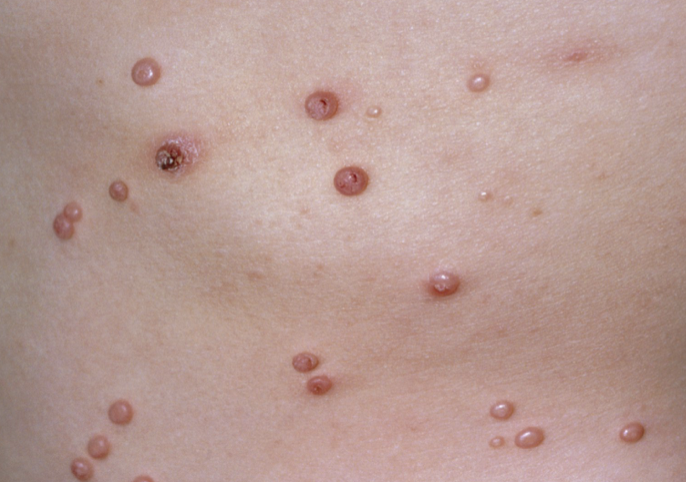
Small, firm, raised spots that can appear anywhere on the body are common in children and known as molluscum contagiosum.
Rx: isn’t recommended because the spots clear up on their own, although it can take more than a year.
What does this image show?
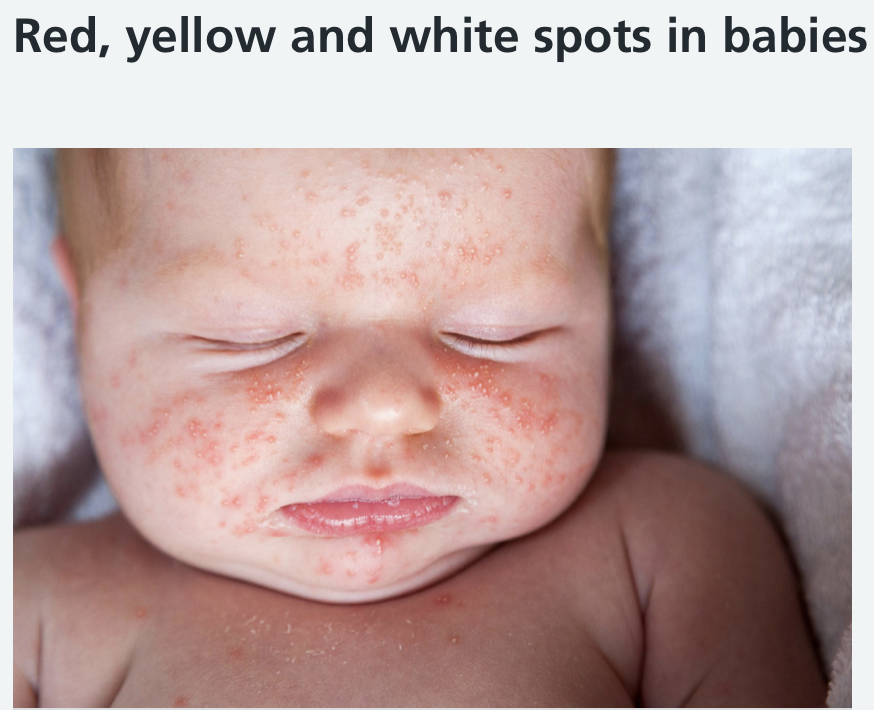
Raised red, yellow and white spots (erythema toxicum) can appear on babies when they’re born. They usually appear on the face, body, upper arms and thighs.
The rash can disappear and reappear.
It should clear up in a few weeks without treatment.
what is this image showing?
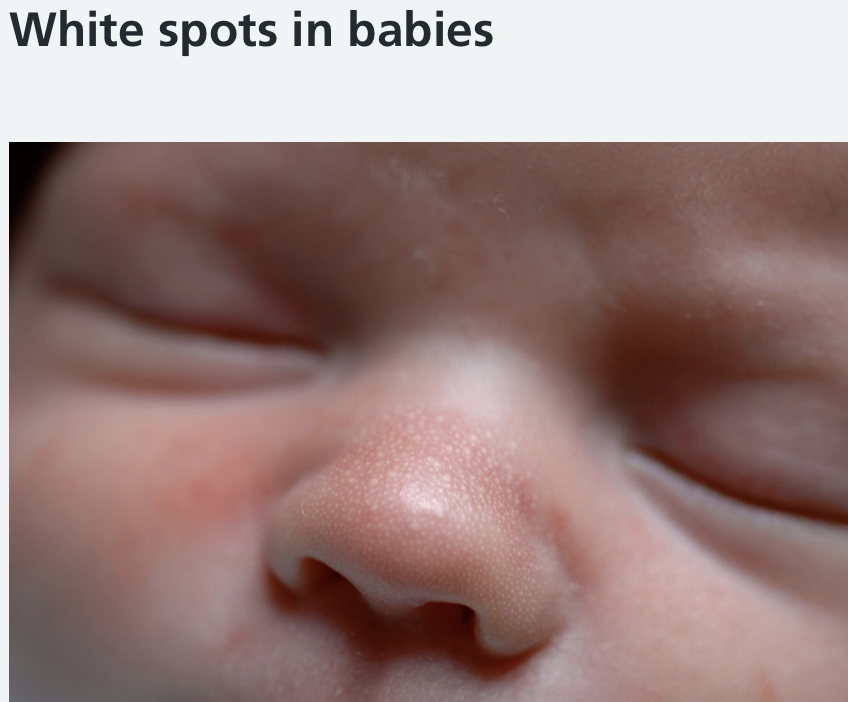
Small white spots (milia) often appear on a baby’s face when they’re a few days old.
They usually clear up within a few weeks and don’t need treatment.
- Scabies symtoms?
- Rash?
- For children over the age of two months, and adults with non-crusted scabies, prescribe:
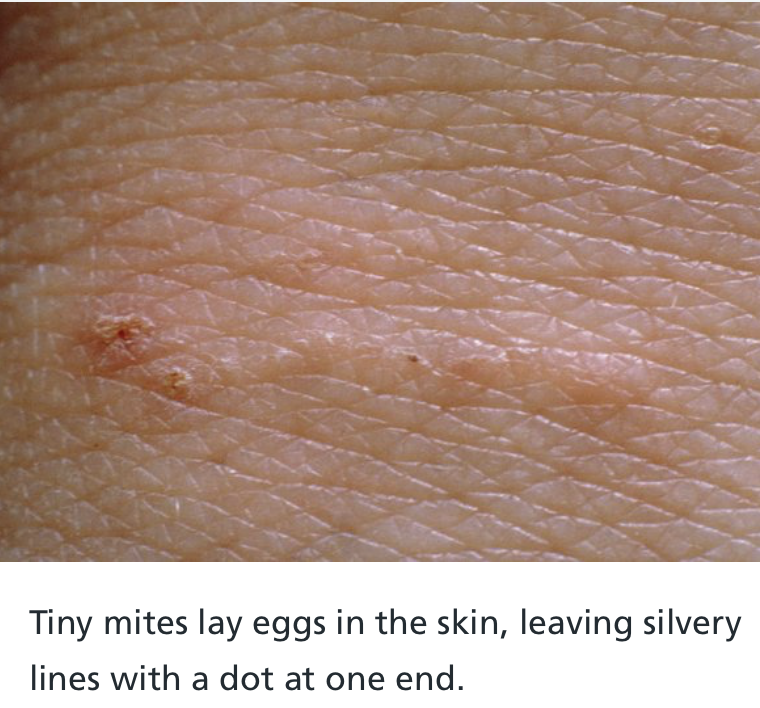
- intense itching, especially at night
- silvery lines -> between fingers -> spreads tiny red papules
<2 GP
- topical insecticide:
1st: Permethrin 5% cream 8-12hrs then wash
second application is required one week after the first
Treat post-scabietic itch with crotamiton 10% cream
wash clothes above 60 degrees



-
Orthopaedics - Clinical conditions49
-
Drugs57
-
Pain management1
-
DVT assessment & management15
-
Care of the diabetic surgical patient and the surgical patient on steroids.38
-
peri operative42
-
peri op (general)18
-
Period Cardioresp8
-
General surgery43
-
GP day cases55
-
Medicine day case23
-
Hepato pancreatic biliary surgery7
-
contraception10
-
Rheumatology56
-
Paediatrics35
-
geri27
-
Urology10
-
Vascular surgery17
-
ID19
-
Renal workbook21
-
surgery workbook16



