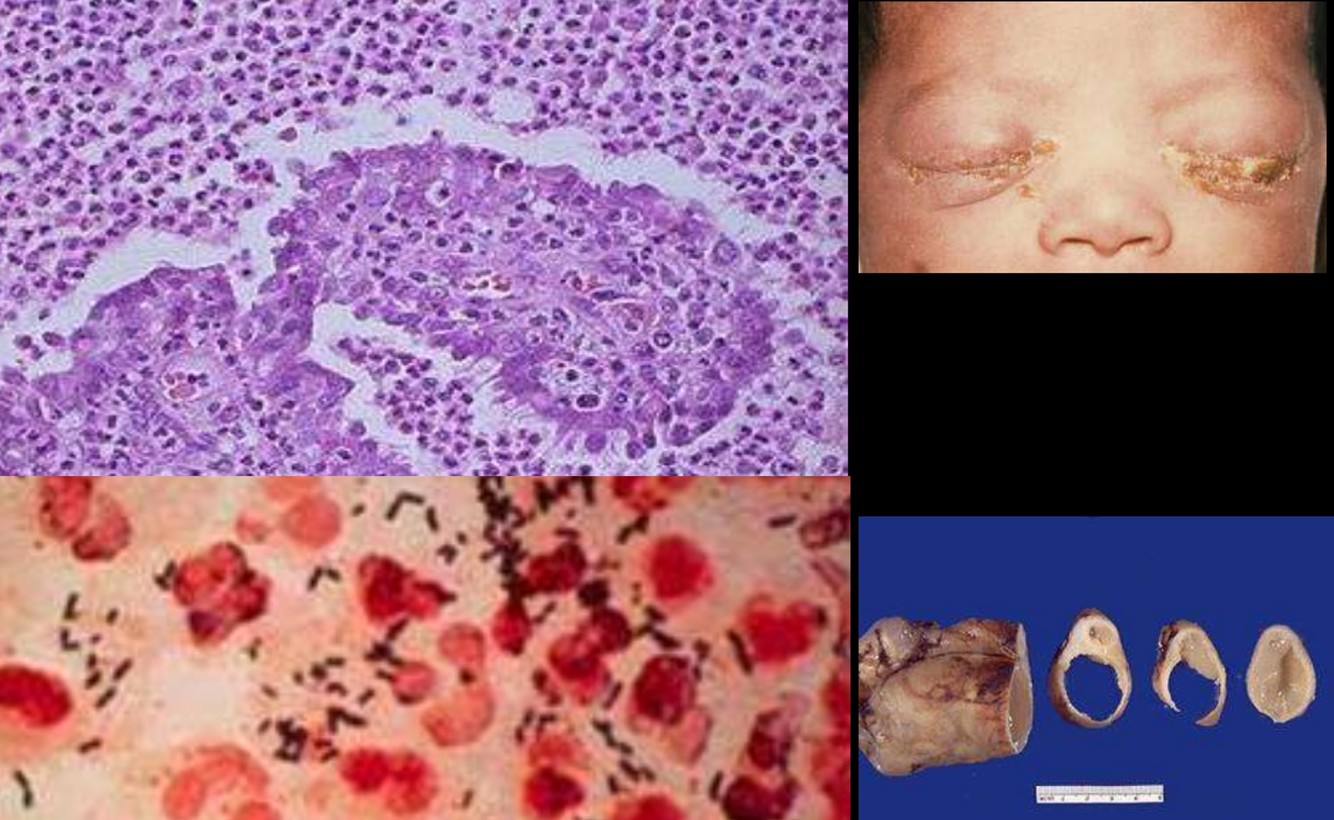
GONORRHEA - Neisseria gonorrheae
- Culture, Gram stain
- PID
- Infertility
- Premature birth
- Opthalmia neonatorum
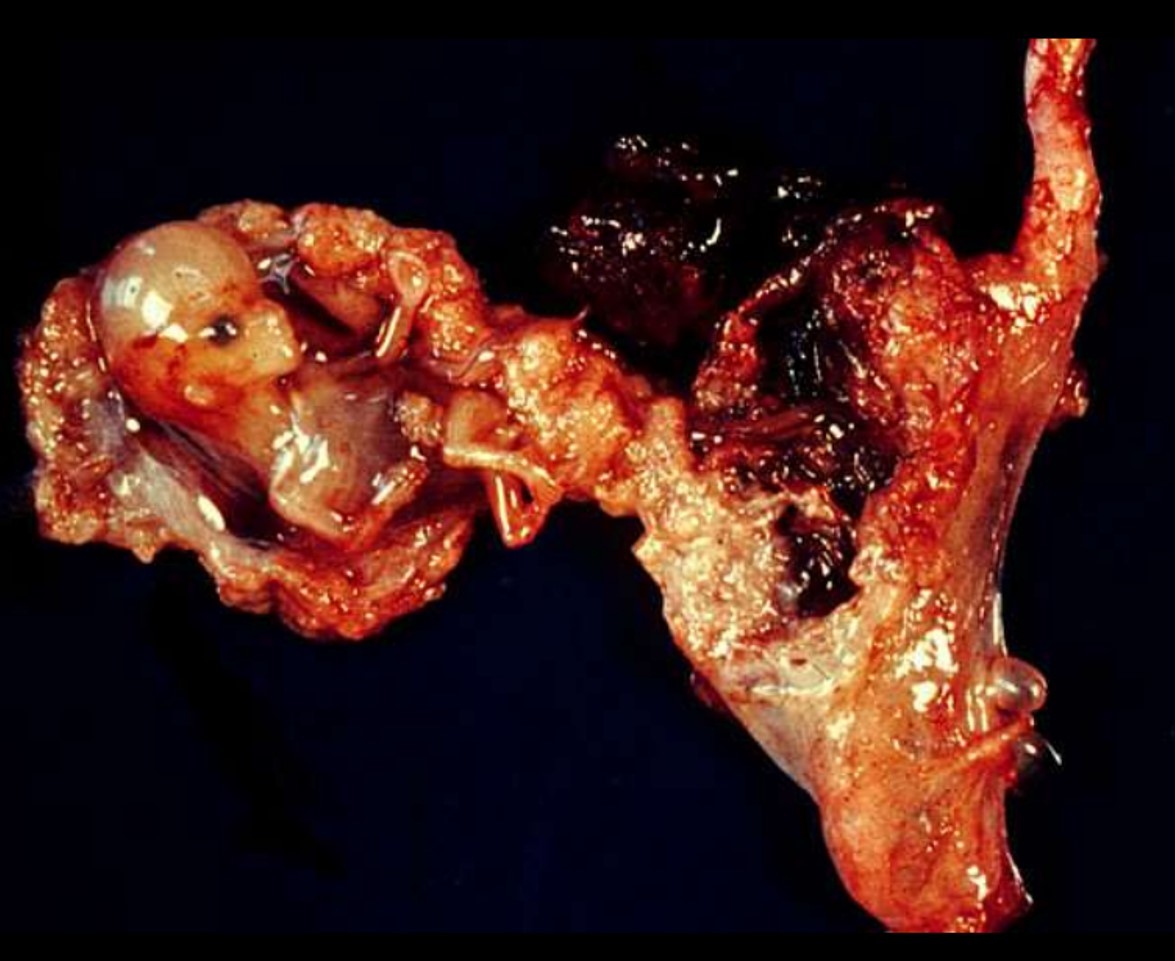
Tubal ectopic gestation
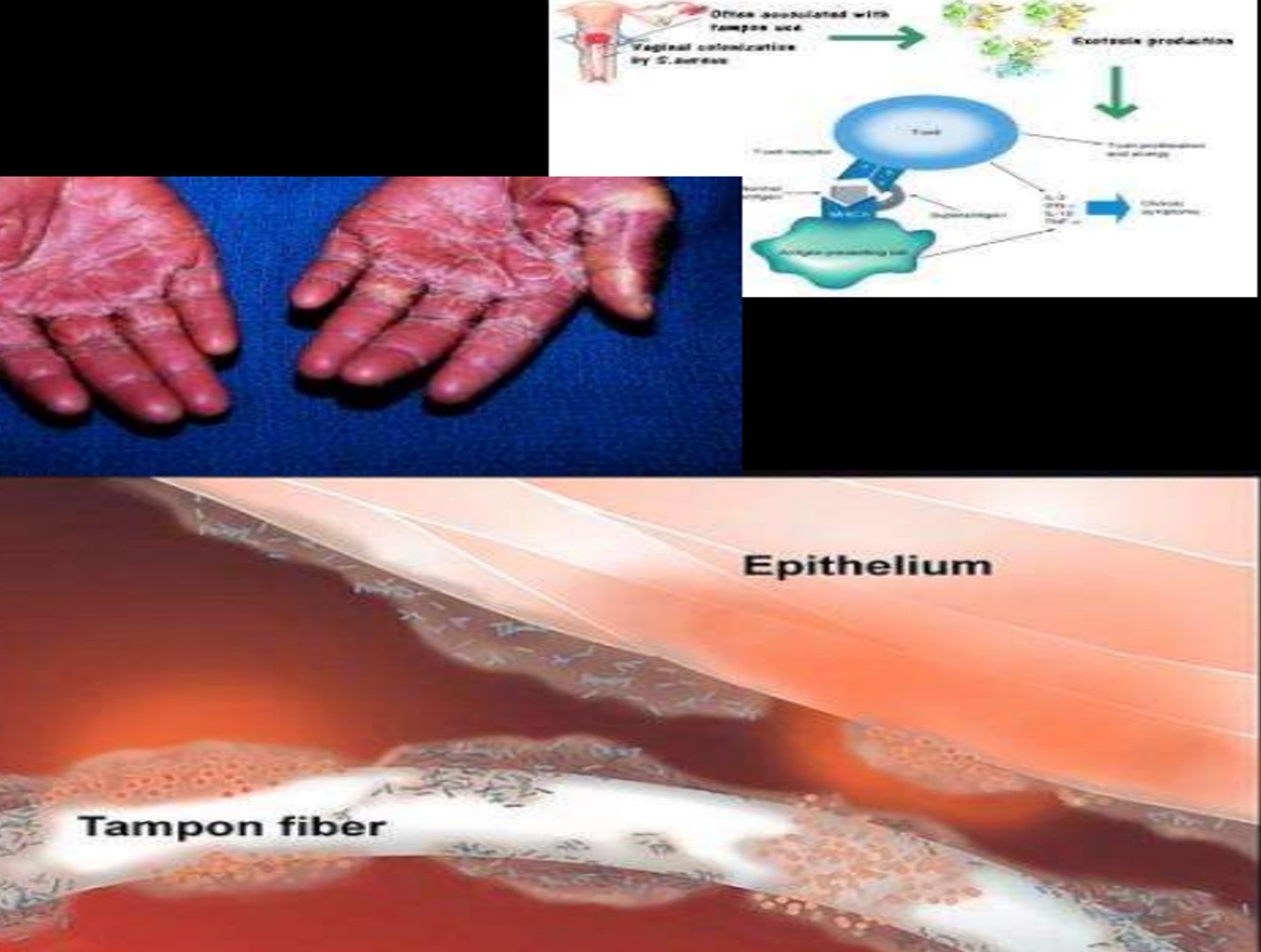
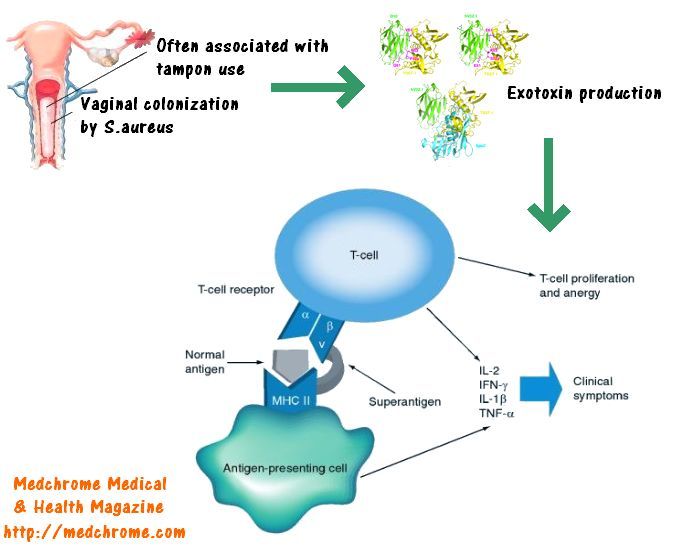
TOXIC SHOCK SYNDROME
- Staphylococcus aureus
- Tampon use
- Medical emergency
- Fever
- Perivasculitis, shock
- Multiorgan failure
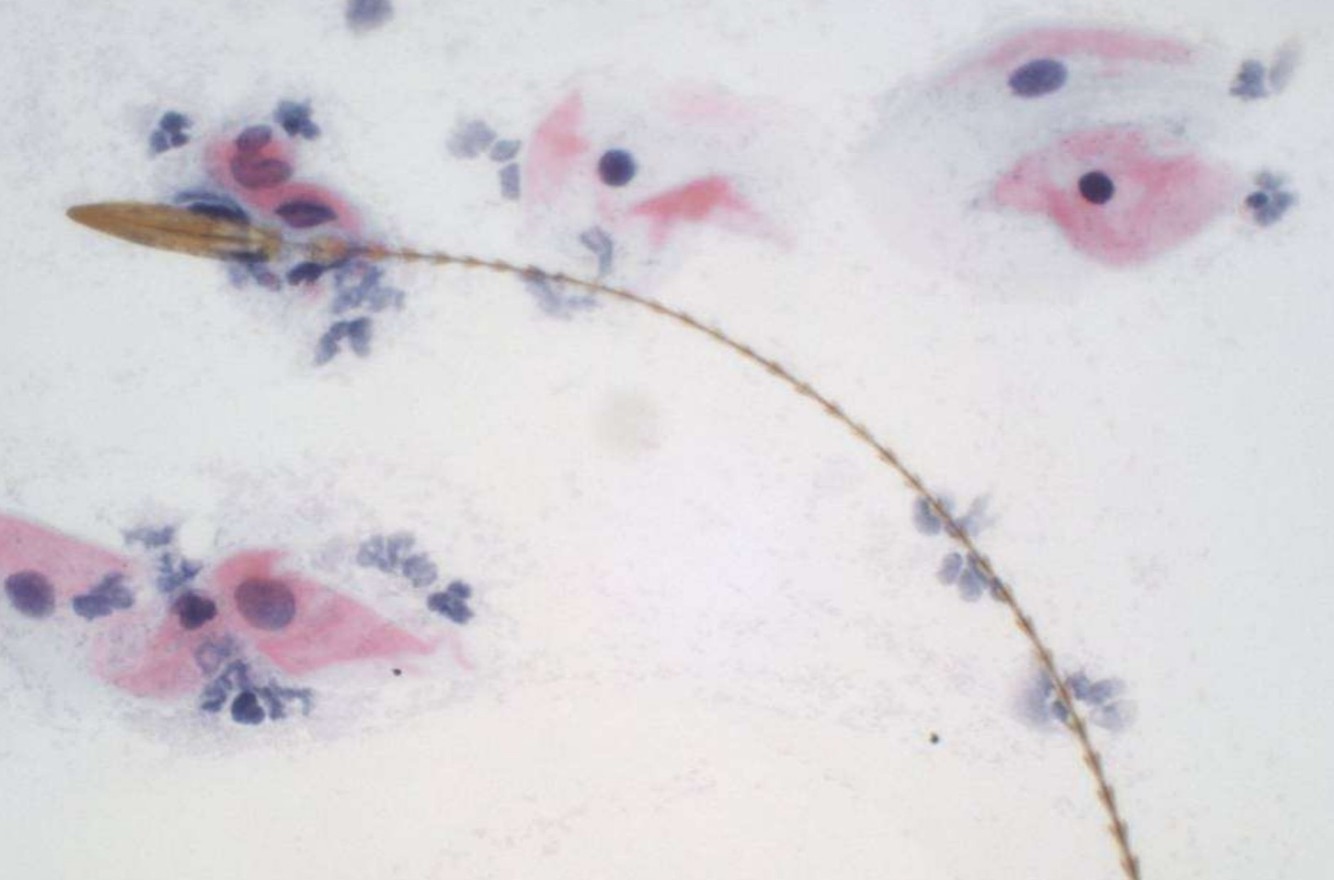
Carpet beatle parts
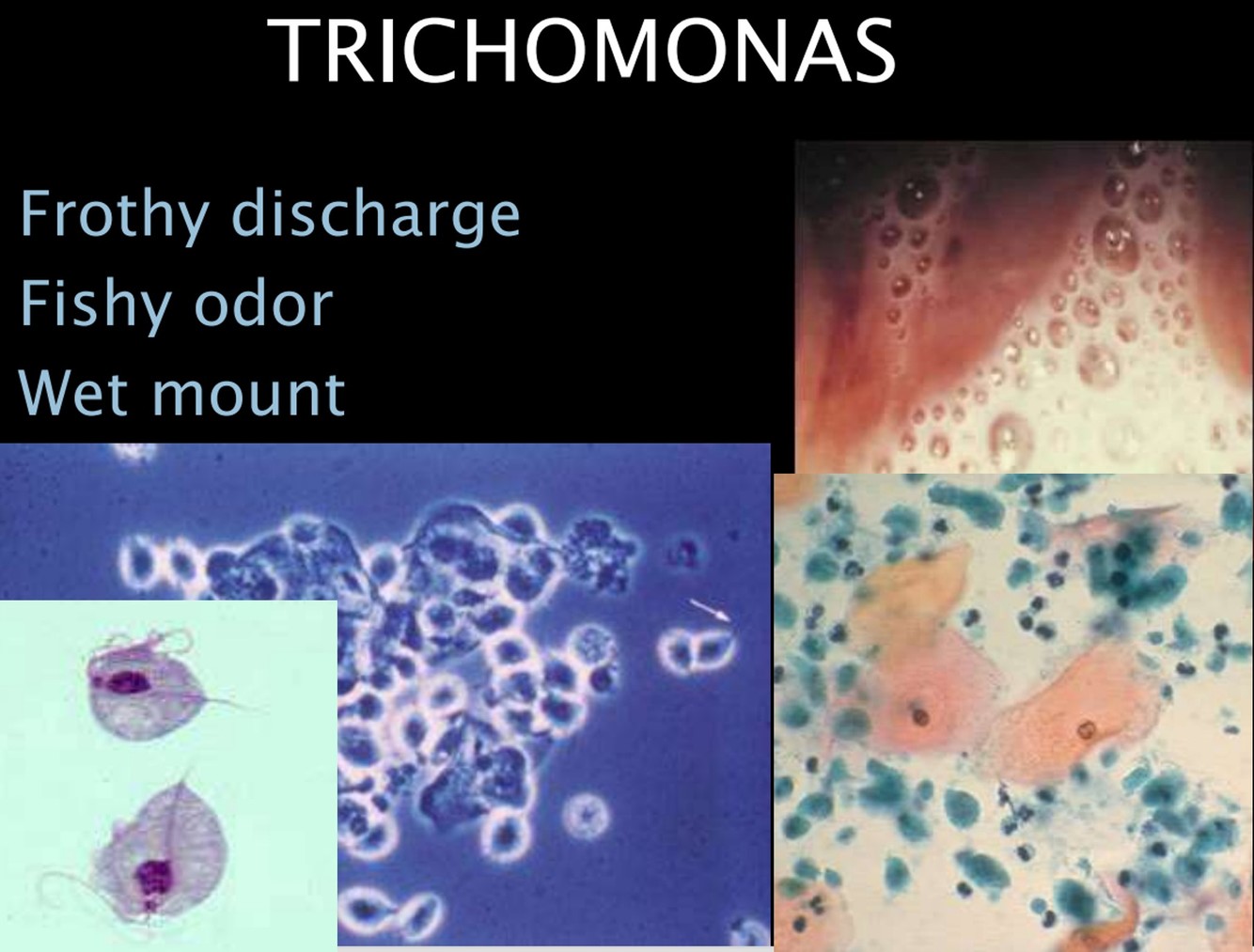
Frothy discharge • Fishy odor • Wet mount?
VULVAR PATHOLOGY
VULVAR PATHOLOGY
- Lichen sclerosus et atrophicus
- Lichen simplex chronicus
- Squamous hyperplasia
- Vulvar intraepithelial neoplasia
- Carcinoma
- Paget’s disease
- Aggressive angiomyxoma
- Angiomyofibroblastoma
- Vaginal adenosis
- Clear cell adenocarcinoma
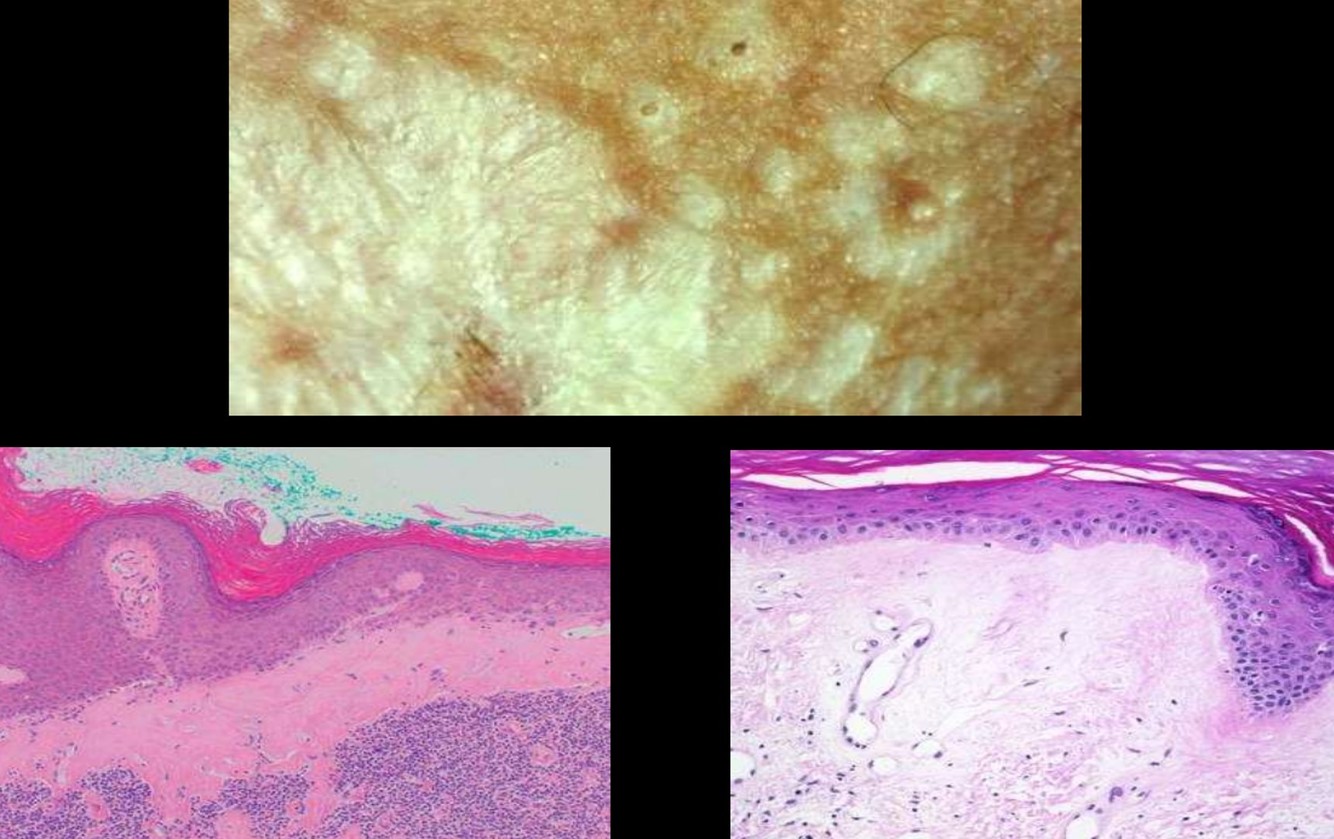
LICHEN SCLEROSUS
- Aka Lichen sclerosus et atrophicus
- 30% of vulvar non-neoplastic lesions
- 90% multiple
- Etiology unknown (autoimmune, hormonal)
- Pruritic irregular white patches
- Subepithelial homogenized zone
- Band of lymphocytes
- Not premalignant – predisposing factor
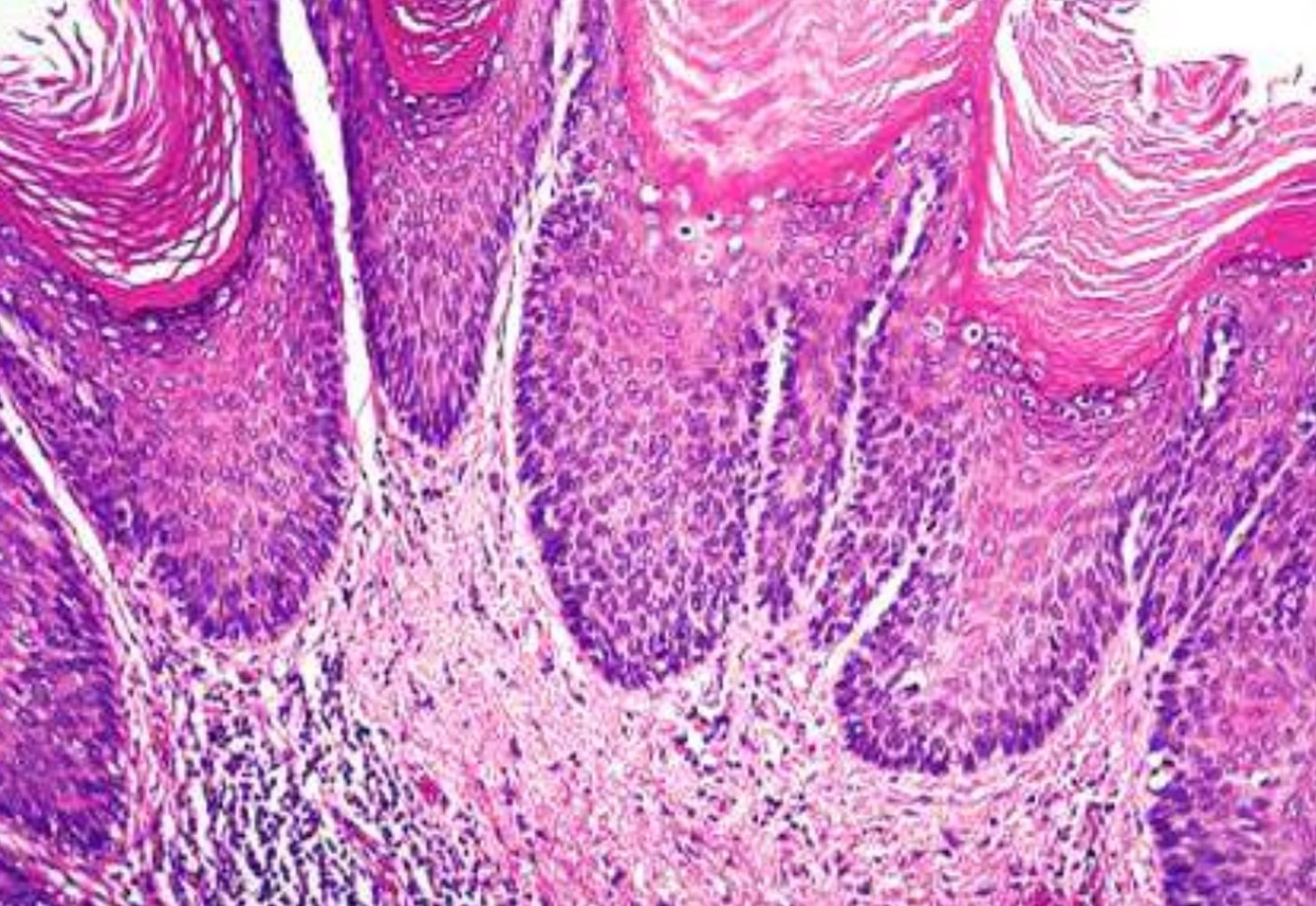
SQUAMOUS HYPERPLASIA
- aka Hyperplastic dystrophy without atypia
- Search for other dermatoses
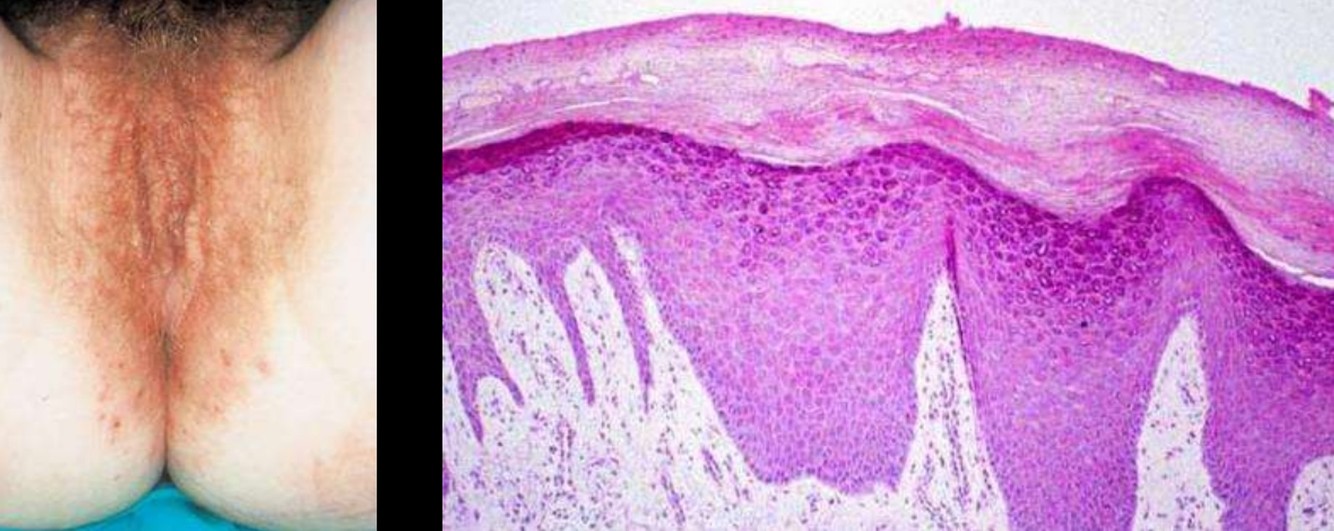
LICHEN SIMPLEX CHRONICUS
- Squamous hyperplasia associated with inflammation
- End stage of many inflammatory skin diseases
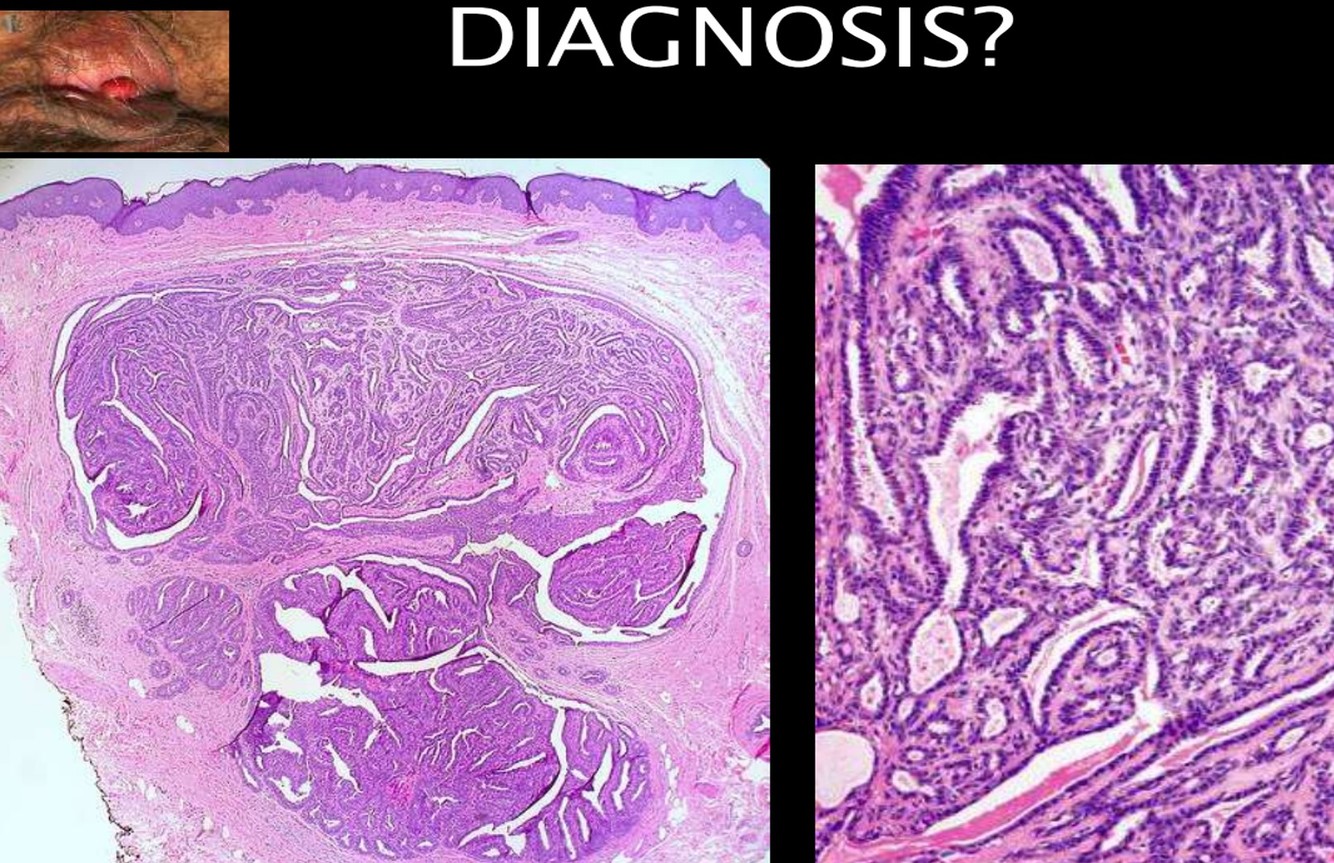
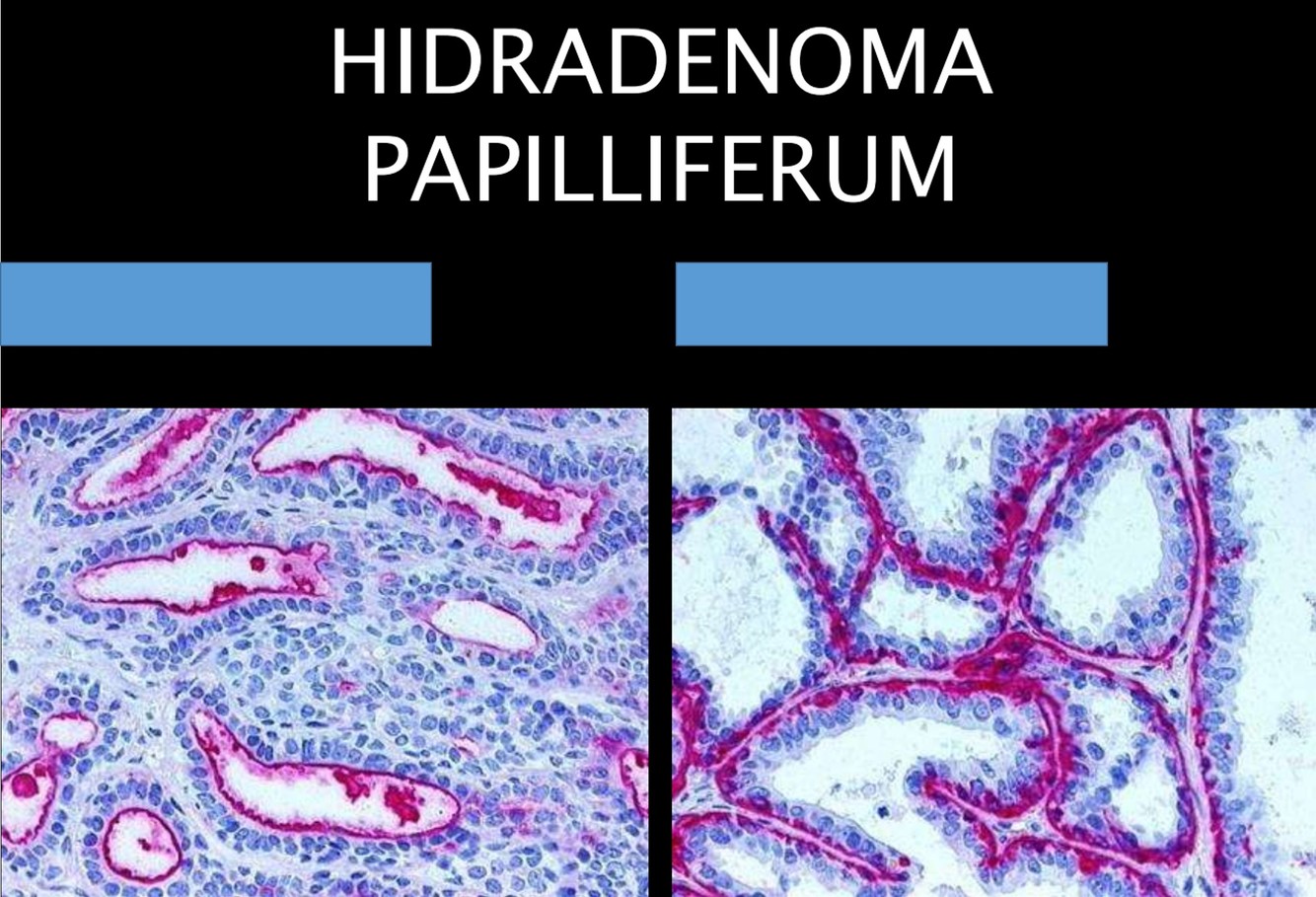
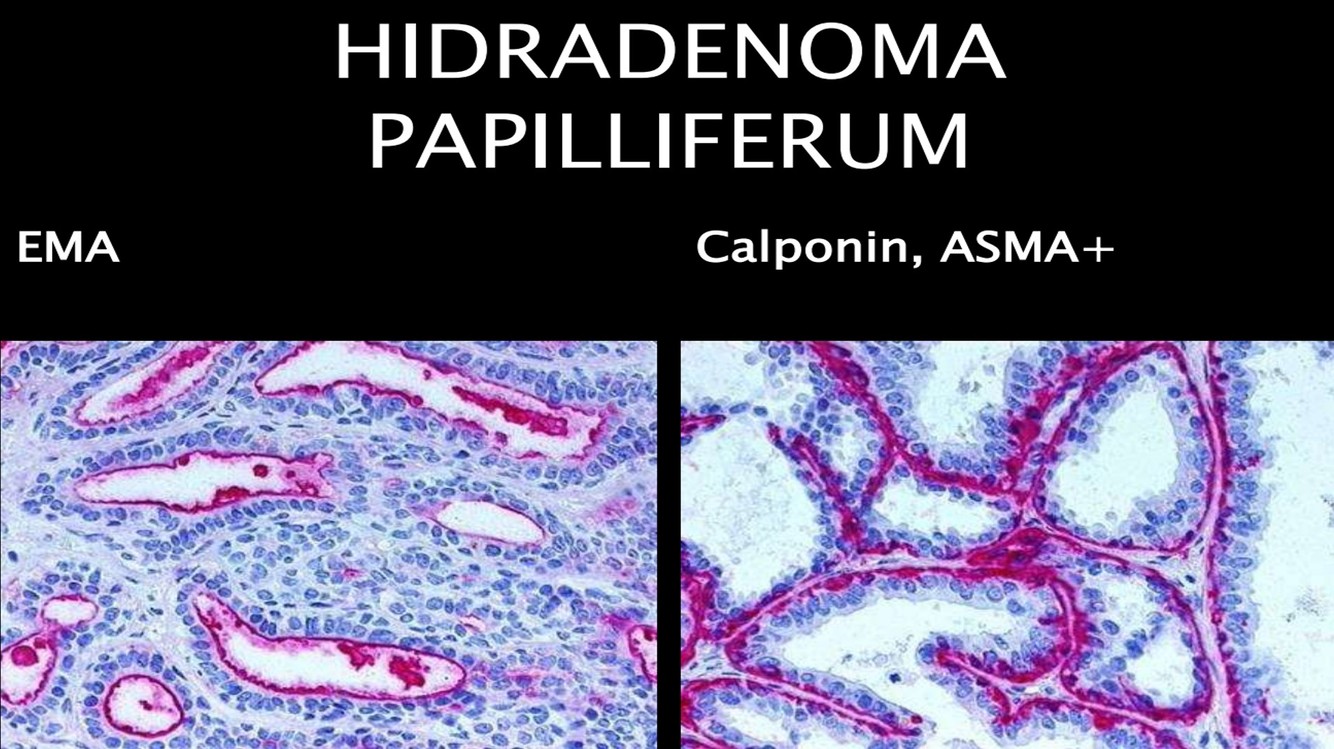
Hidradenoma papilliferum
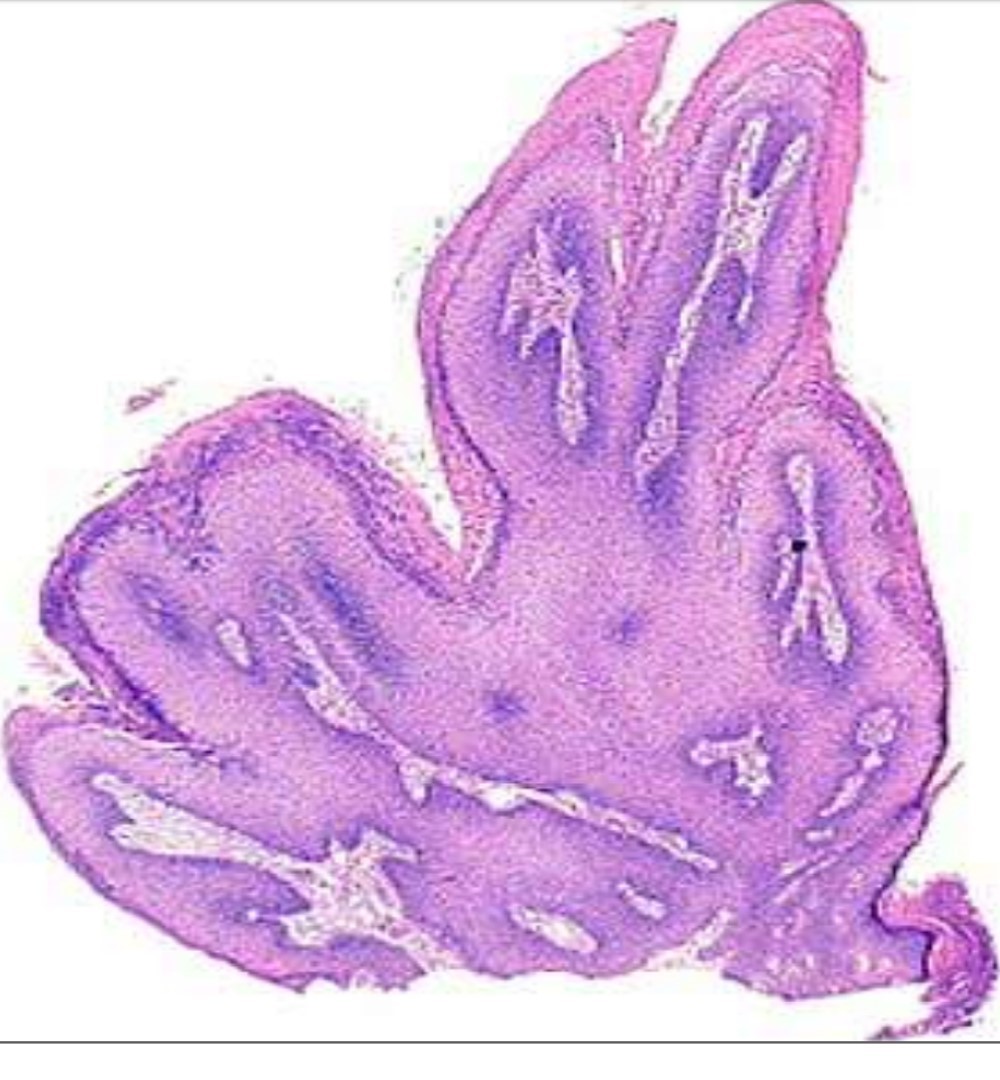
VULVAR INTRAEPITHELIAL NEOPLASIA
- HPV associated type
- Younger age
- Multifocal
- CIN
- Smoking
VULVAR INTRAEPITHELIAL NEOPLASIA
HPV negative type
a/w? age? presentation?
VULVAR INTRAEPITHELIAL NEOPLASIA
- HPV negative type
- Associated with vulvar inflammatory disease (LS)
- Older age
- Unifocal
- Associated with p53 mutations
- Well differentiated simplex VIN
VULVAR CANCER
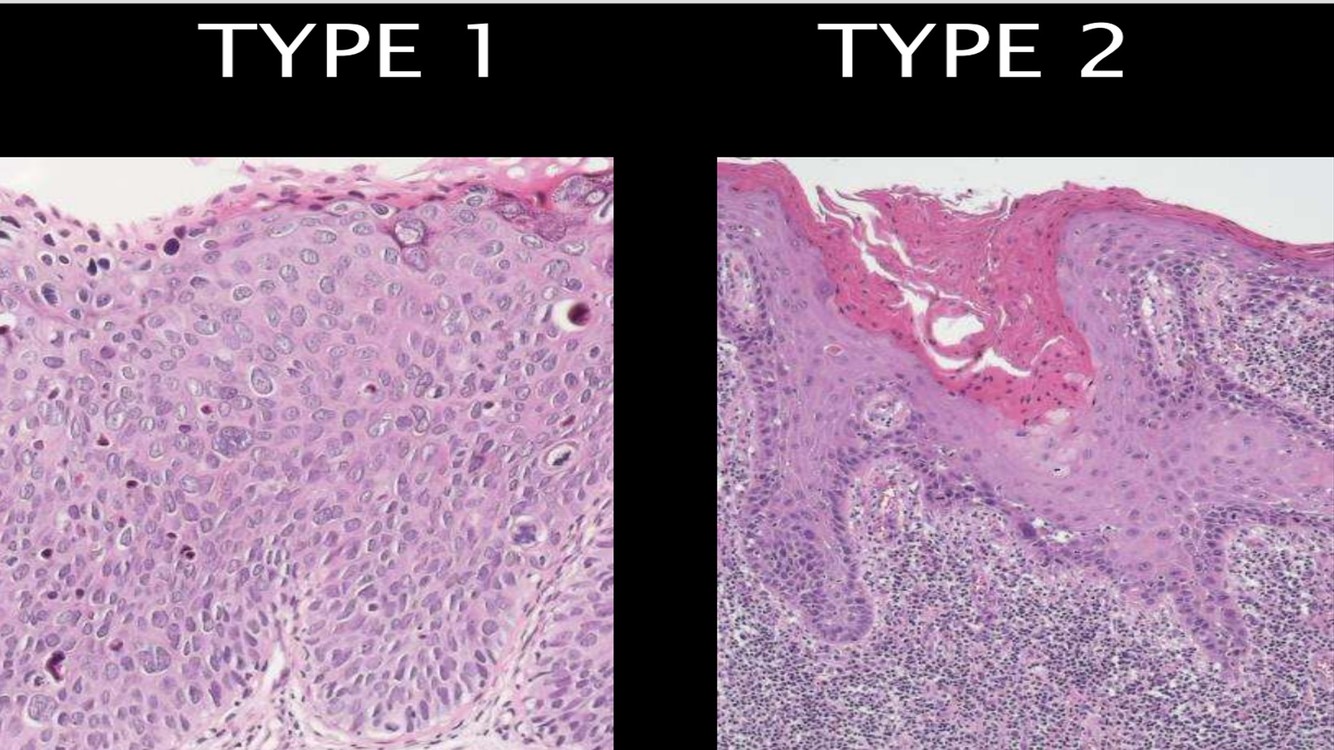
TYPE 1
TYPE 2
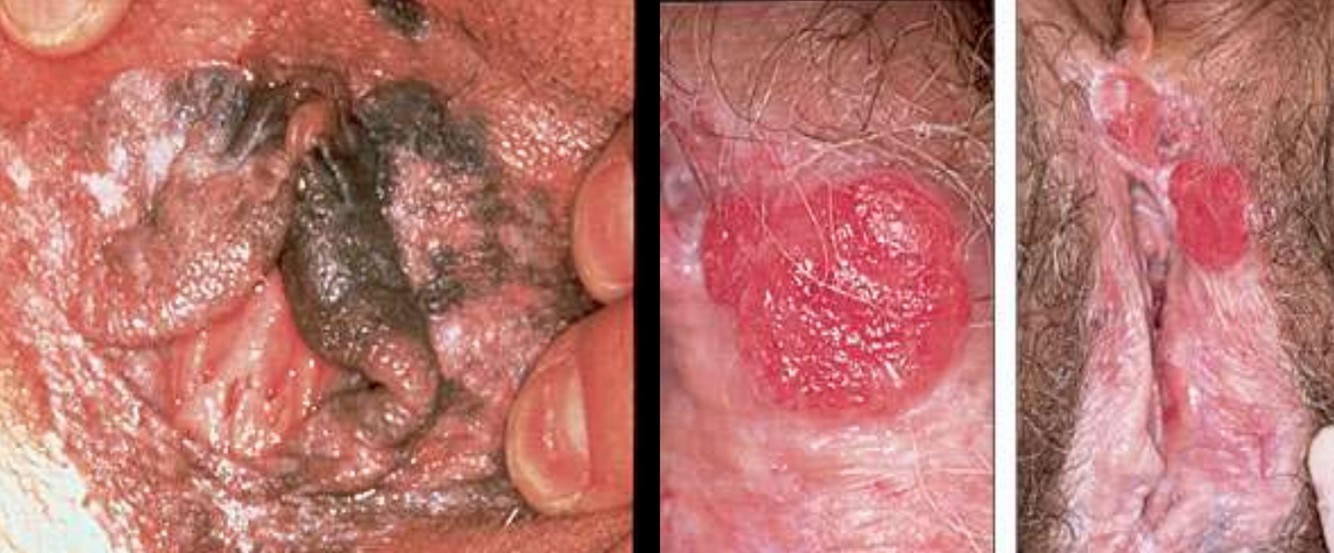
VULVAR CANCER
TYPE 1
- Young
- CIN often
- Cigarette smoking
- STD
- Condyloma
- HPV DNA Mutated host genes
- Immune status
- Basaloid, poorly diff
TYPE 2
- Older (>55y)
- CIN Less likely
- Inflammation, lichen sclerosus, sq hyperplasia
- P53
- Well diff, ker SCC
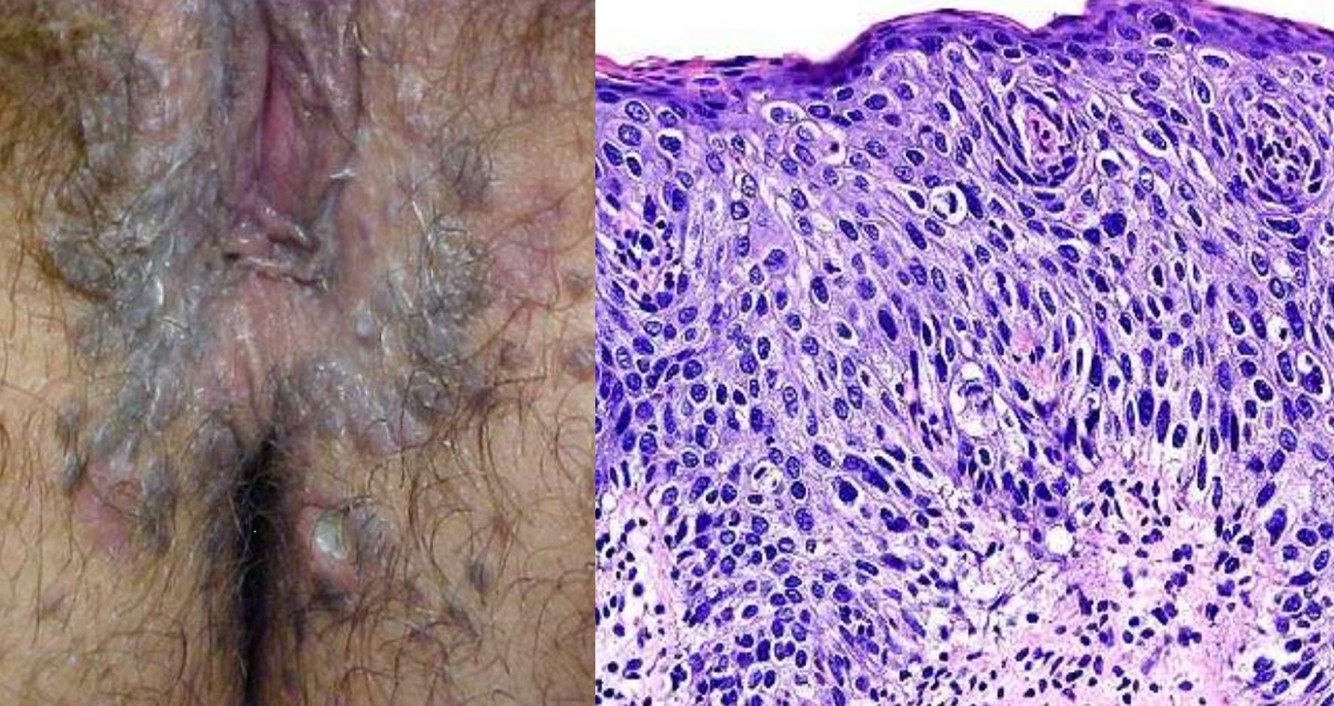
BOWENOID PAPULOSIS
- Multiple small erythematous/white macules/papules
- Both sexes, young
- F: VIN III
- HPV 16
- High rate of spontaneous regression
- <3% behave aggressively
- Local treatment
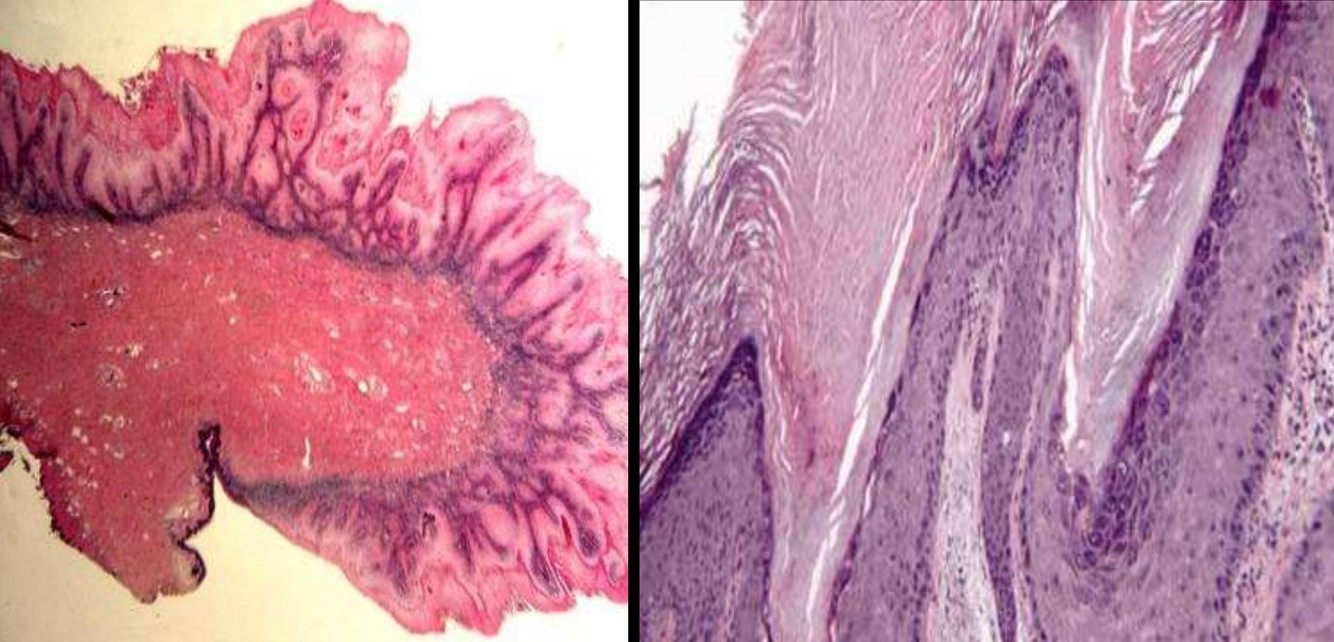
Verrucous carcinoma
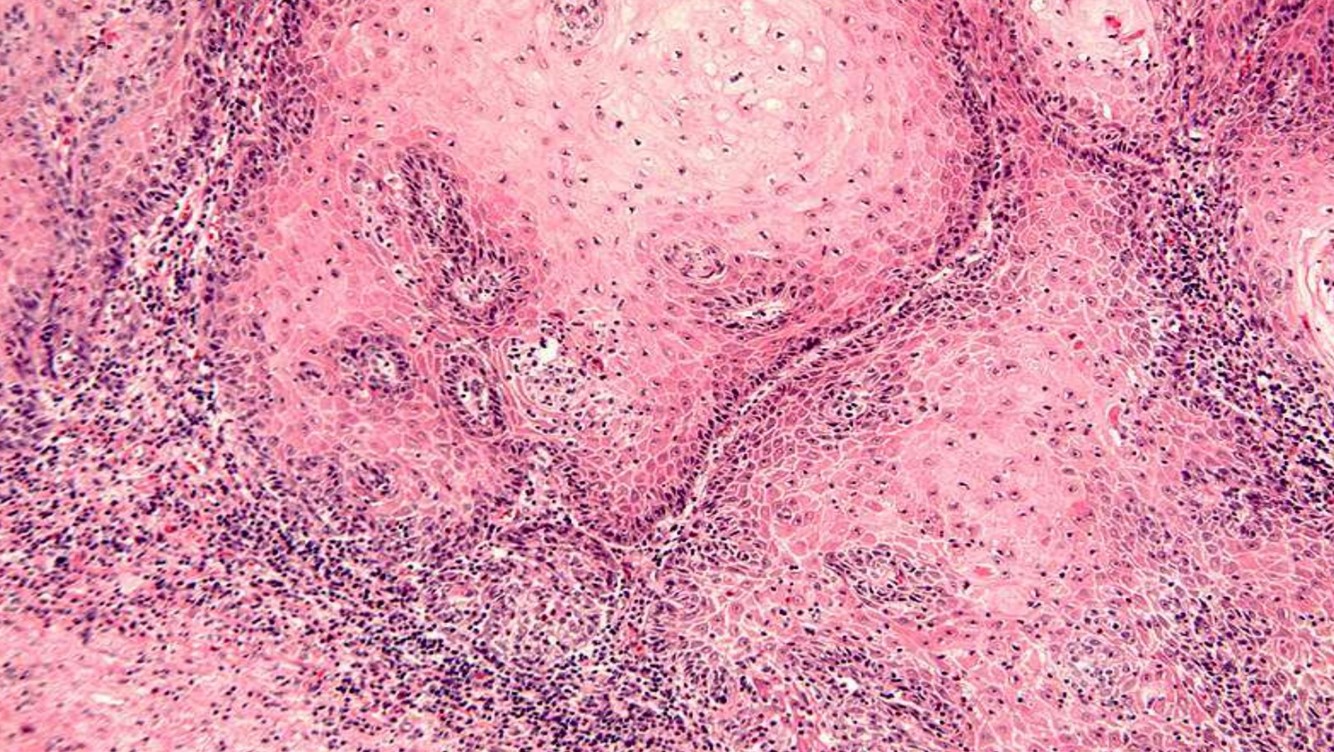
SCC
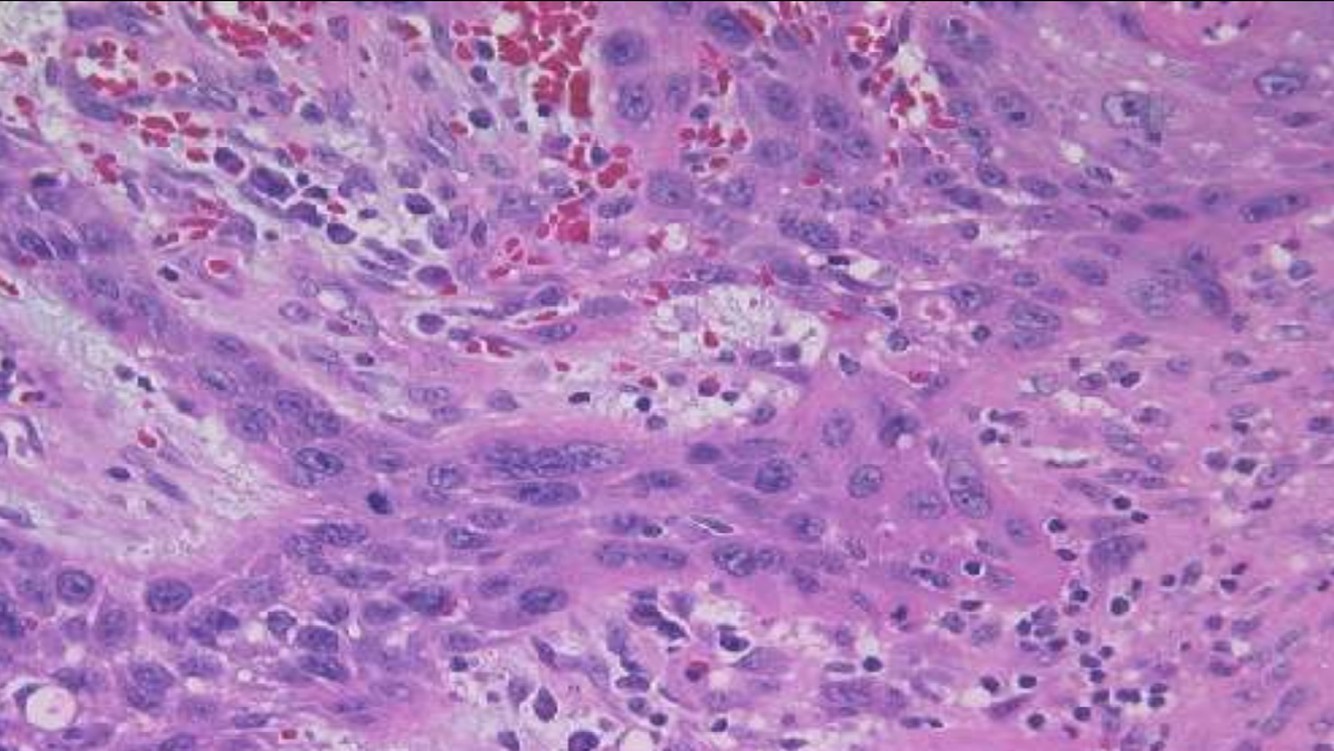
SCC
DDx?
Stains?
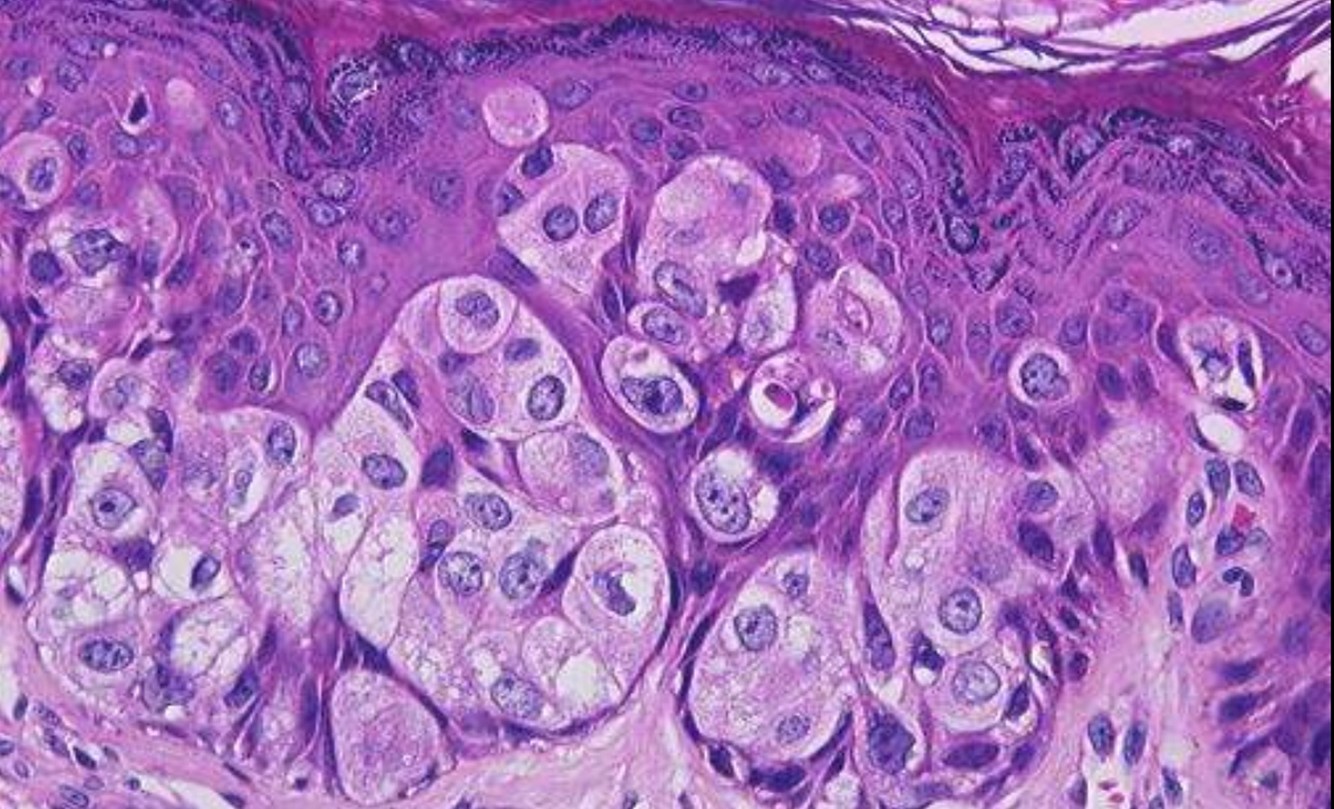
EXTRAMAMMARY PAGET’S DISEASE
- Red elevated lesions
- Invasive carcinoma in only 30%
- Large intraepithelial tumor cells
- Foamy, clear cytoplasm
- Mucin, PAS +
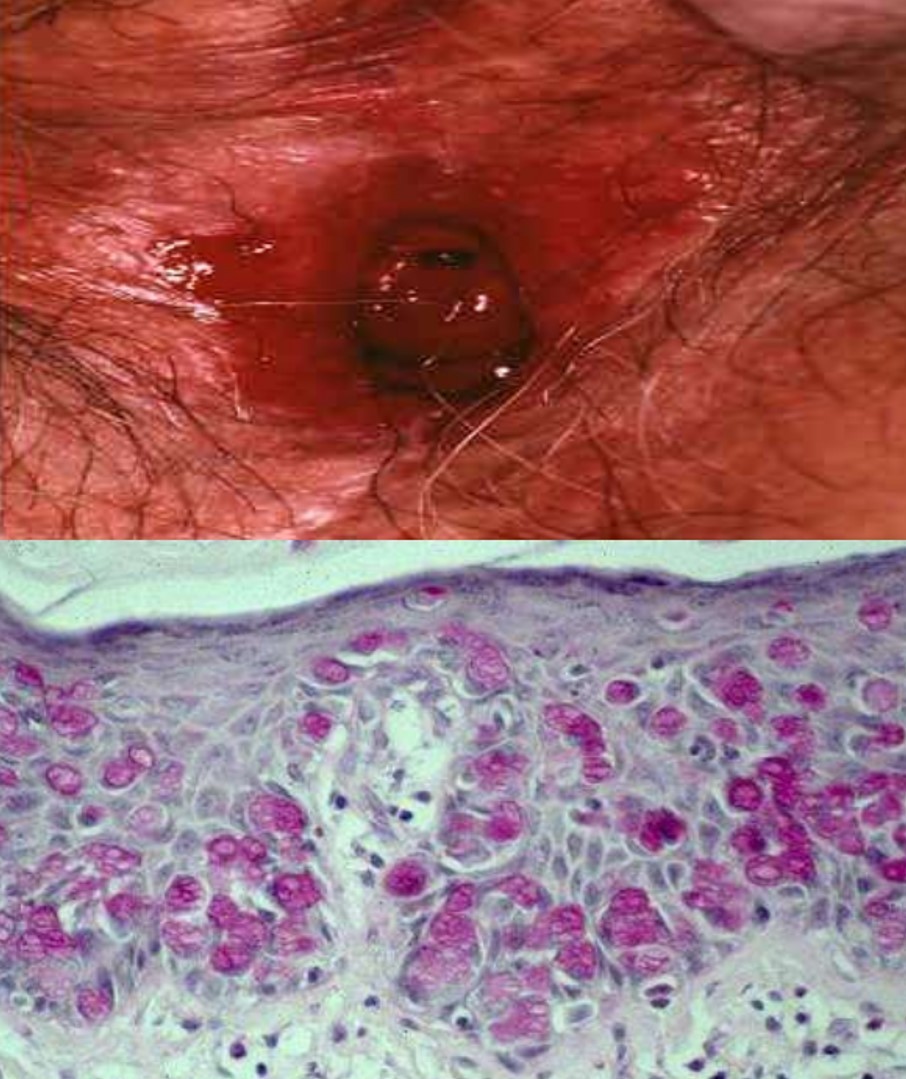
2nd most common malignant neoplasm of vulva?
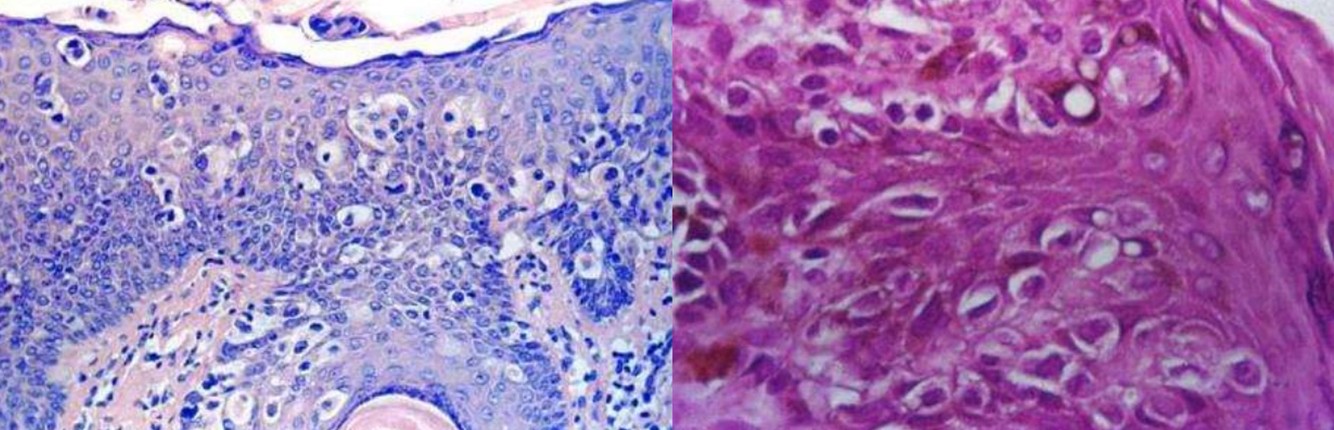
MELANOMA
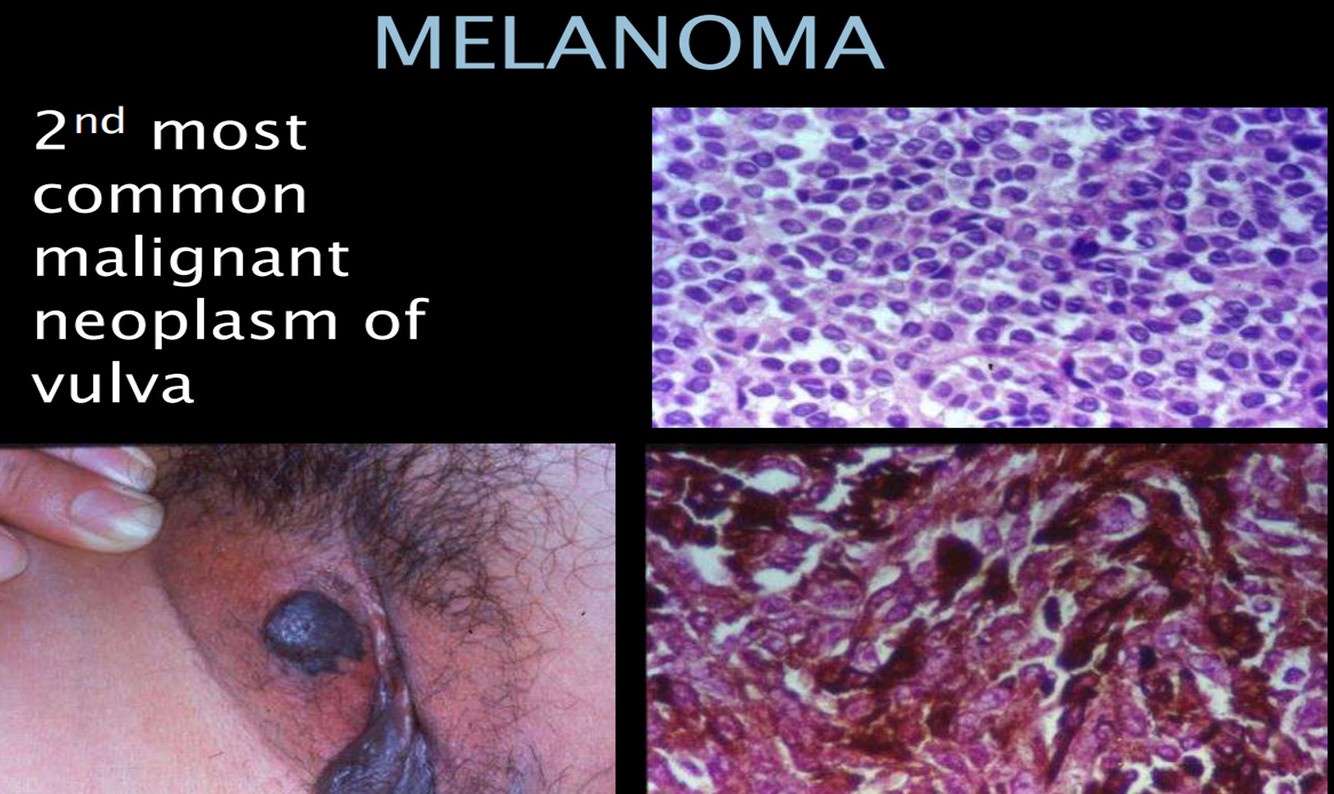
Dx?
Age?
Stains?
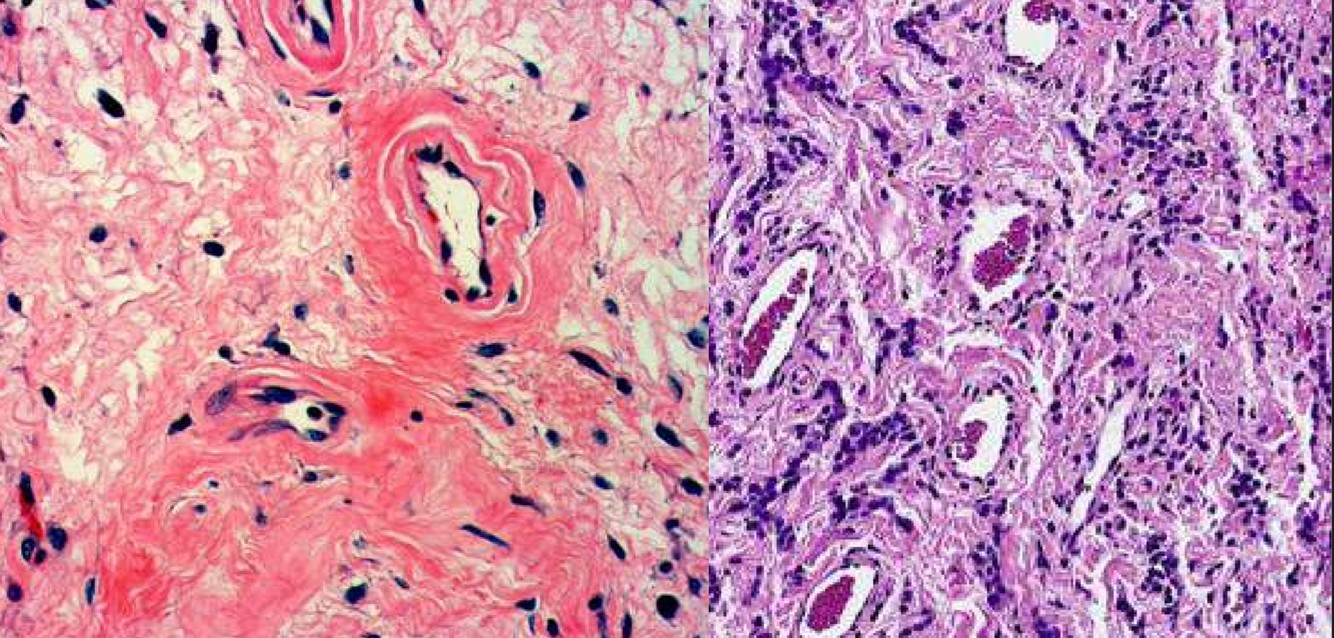
Angiomyofibroblastoma
- Reproductive age
- Benign, non recurring
- Well circumscribed
- Alternating hyper and hypocellular zones
- Thin-walled vessels
- Stromal cells, wavy collagen strands
- Rare mitoses
- Mast cells
- Vimentin, desmin, CD34, ER, PR+
- EM: myofibroblasts
Dx?
Age?
Histology?
Stains?
Prognosis?
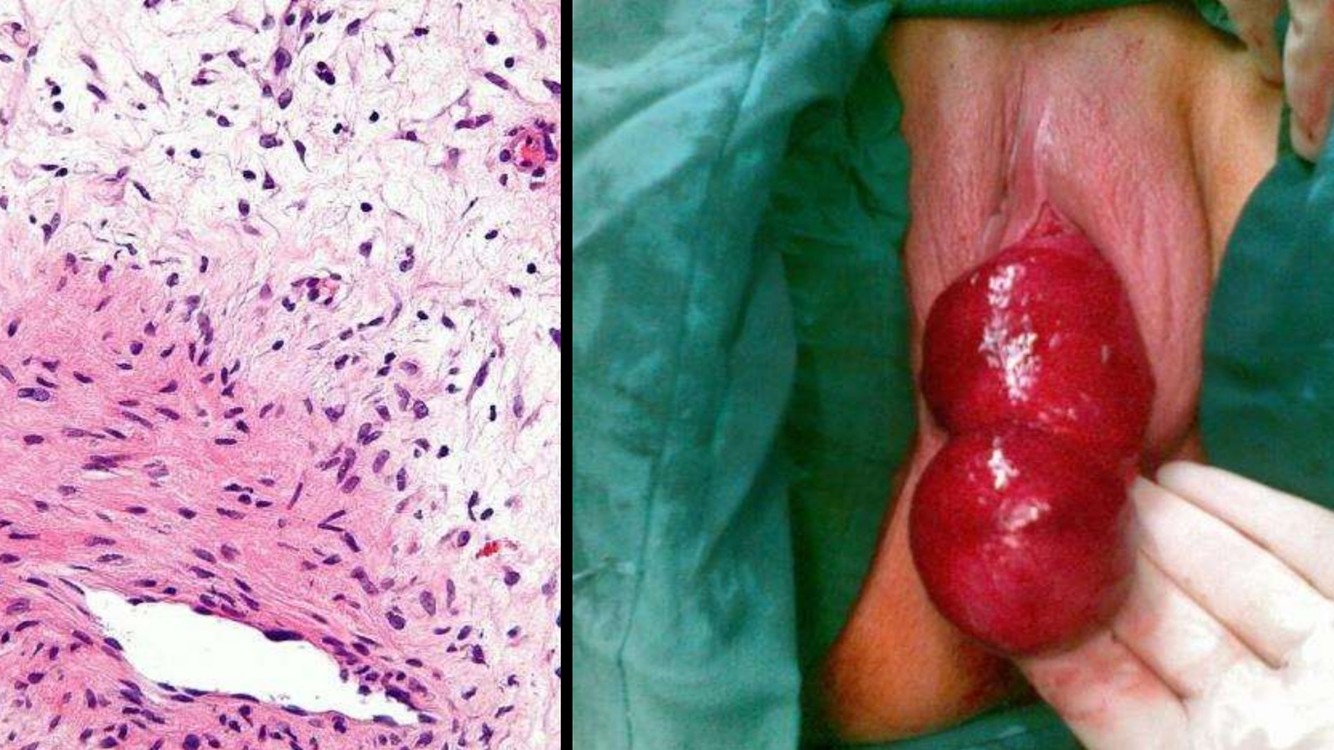
AGGRESSIVE ANGIOMYXOMA
- Reproductive age
- Large, > 10 cm
- Locally infiltrative
- Bulky, gelatinous
- Hypocellular, loose stroma
- Numerous thin and thick-walled blood vessels
- Hyaline thickening of adventitia
- RBC extravasation
- Rare mitoses
- Mast cells
- Stromal cells: SMA, HHF 35, ER / PR +
- Indolent, tendency to recur
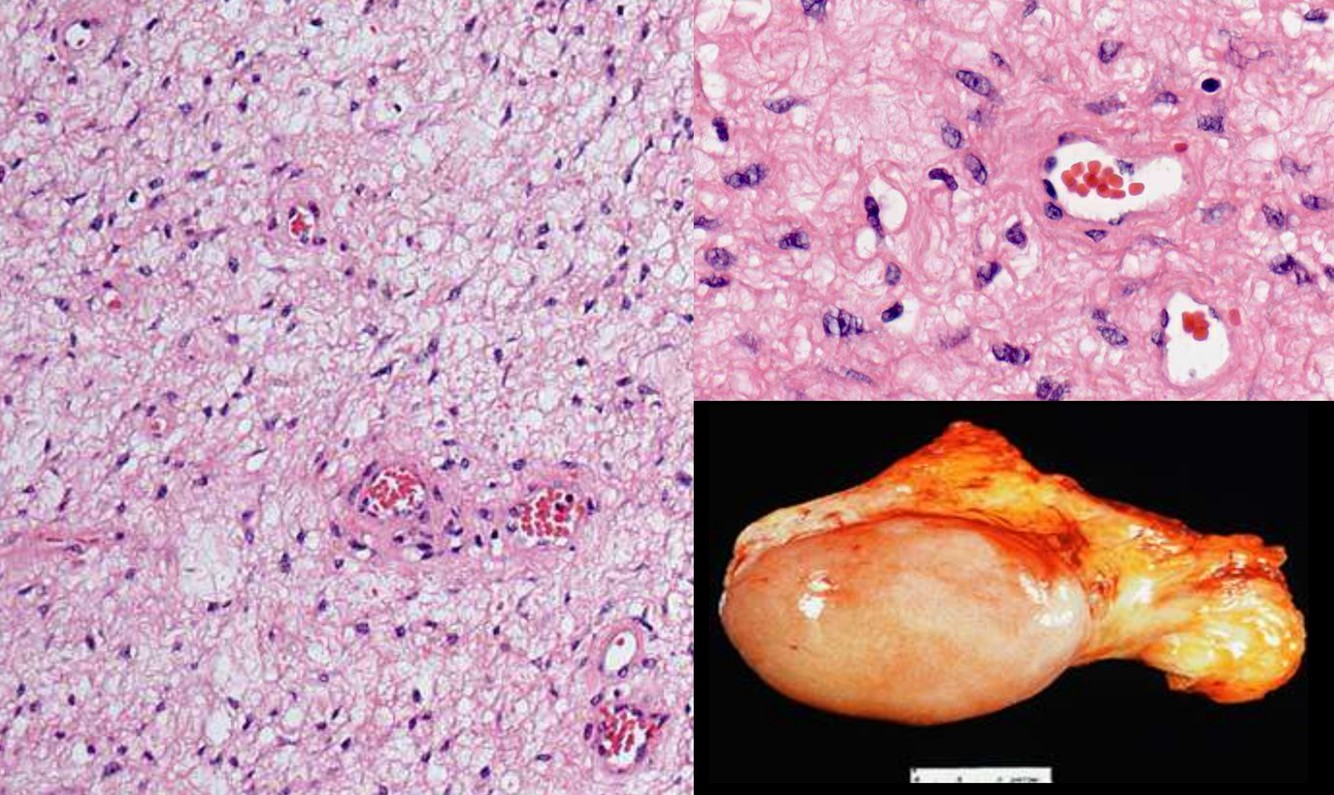
Angiomyofibromyxoma vs. Aggressive Angiomyxoma
Angiomyofibromyxoma vs. Aggressive Angiomyxoma
Angiomyofibromyxoma
- circumscribed border
- higher cellularity
- frequent presence of plump stromal cells
- lesser degree of stromal myxoid change
- lack of RBC extravasation
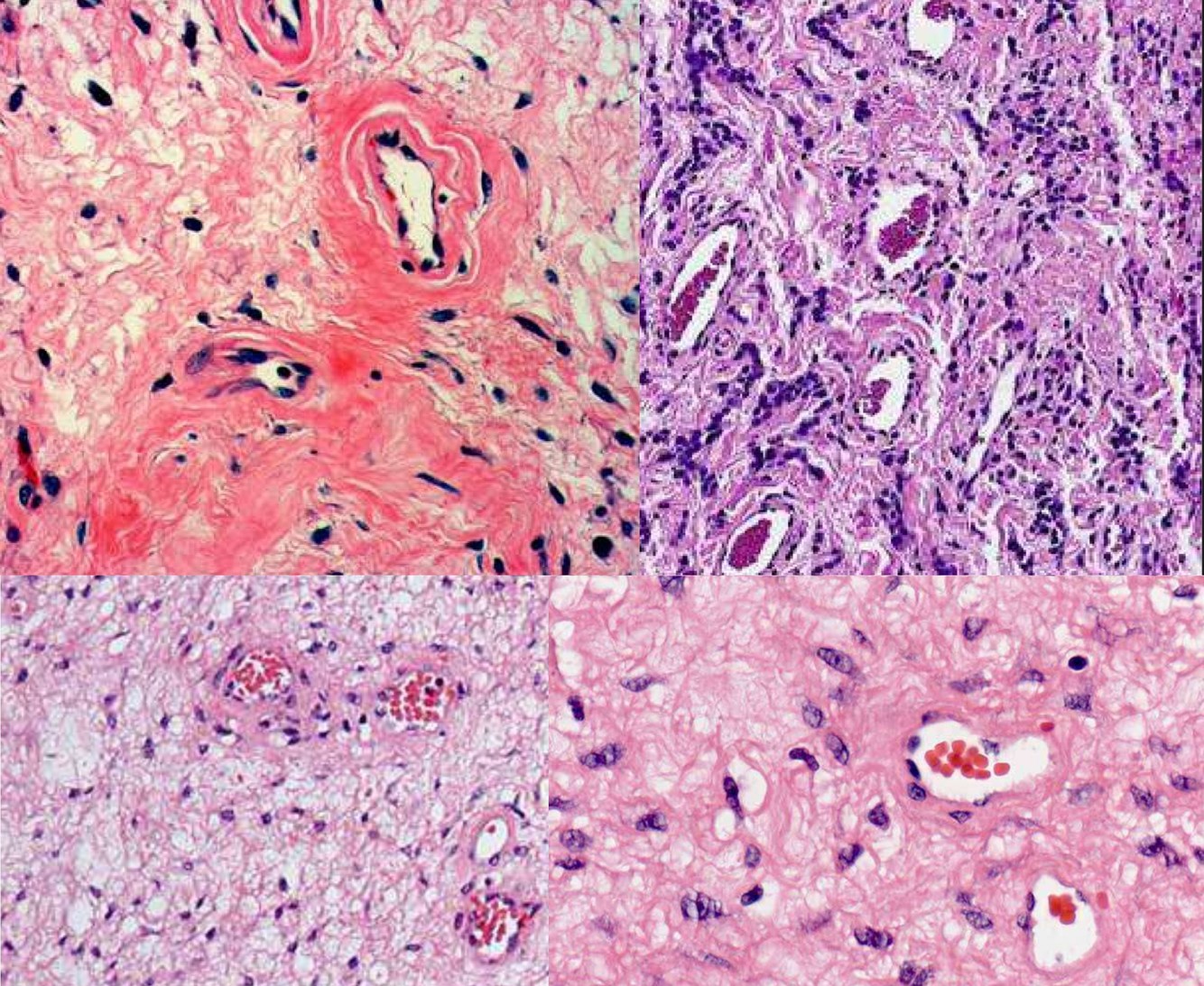
Risk?



-
Microbiology121
-
Mycology55
-
GU107
-
Lefkowitch163
-
Genetics and Syndromes49
-
Mycobacteria51
-
Parasite4
-
Pulmonary4
-
Autopsy14
-
Gyn37
-
Blood Bank17
-
Breast38
-
Cytopath61
-
Derm137
-
Bone and Soft tissue107
-
Koneman103
-
Neuro52
-
Staging36
-
Head and Neck82
-
Ro3
-
Stains58
-
GI36
-
EM9
-
Stats and Lab Management7
-
Chemistry86
-
Heme/Coag44
-
Bone and Soft tissue COPY107
-
Bone and Soft tissue COPY COPY107
-
Hepatobilliary29



