Reading TSTs
Reading TSTs
5 mm is classified as positive in patients with: – HIV-positive – Recent contacts – fibrotic changes on chest radiograph consistent with old healed TB – organ transplants and other immunosuppression 10 mm is classified as positive in – Recent arrivals from high-prevalence countries – Injection drug users – Residents and employees of high-risk congregate settings – Mycobacteriology laboratory personnel – Persons with clinical conditions that place them at high risk – Children <4 years of age, or children and adolescents exposed to adults in high-risk categories 15 mm is classified as positive in – Persons with no known risk factors for TB Targeted skin testing programs should only be conducted among high-risk groups
Characteristics of Mycobacteria
aerobic/anaerobic?
spore-forming?
related to?
hydrophilic/hydrophobic cell wall?
M. _____ and M. _____ are obligate human pathogens, others are environmental and zoonotic opportunist
Characteristics of Mycobacteria
acid-fast, aerobic
non-spore-forming bacilli
- related to Nocardia , Corynebacterium , Rhodococcus
slow-growing – require specialized media
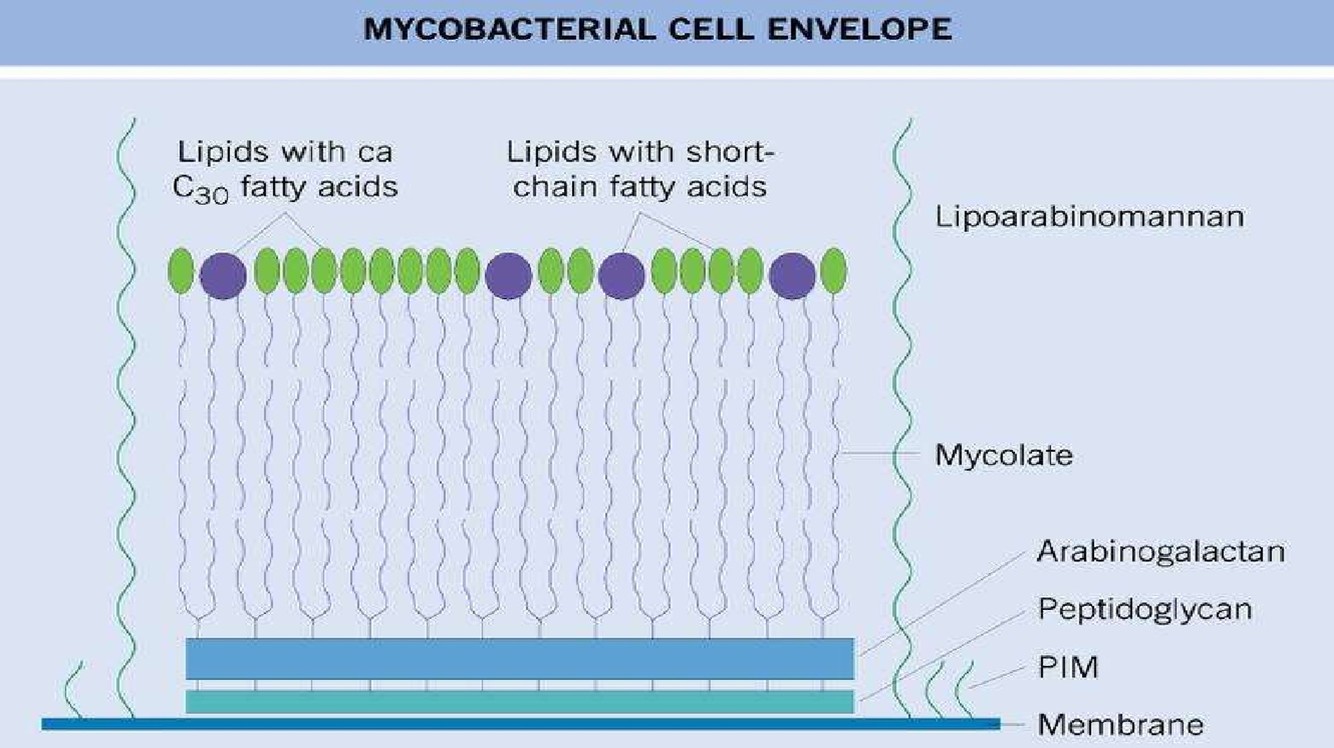
hydrophobic cell wall
cell-mediated immunity – serology unreliable
M. tuberculosis and M. leprae are obligate human pathogens, others are environmental and zoonotic opportunist
IGRAs
IGRAs
Interferon-gamma release assays – Incubate patient lymphocytes with TB antigens and detect release of IFN- as a way of measuring exposure. Measured by ELISA (Quantiferon) or by in-situ staining and counting cells (T SPOT-TB)
Mycobacterial Specimen Processing
Objectives and Procedure?
Specimen Processing
Objectives – Sputum (and stool)
- eliminate contaminating flora
- digest solid material and release mycobacteria
- concentrate mycobacteria
Procedure
- NaOH ± N-acetyl-cysteine
- centrifuge
- Neutralize, add albumin to stabilize, continue with staining and culture
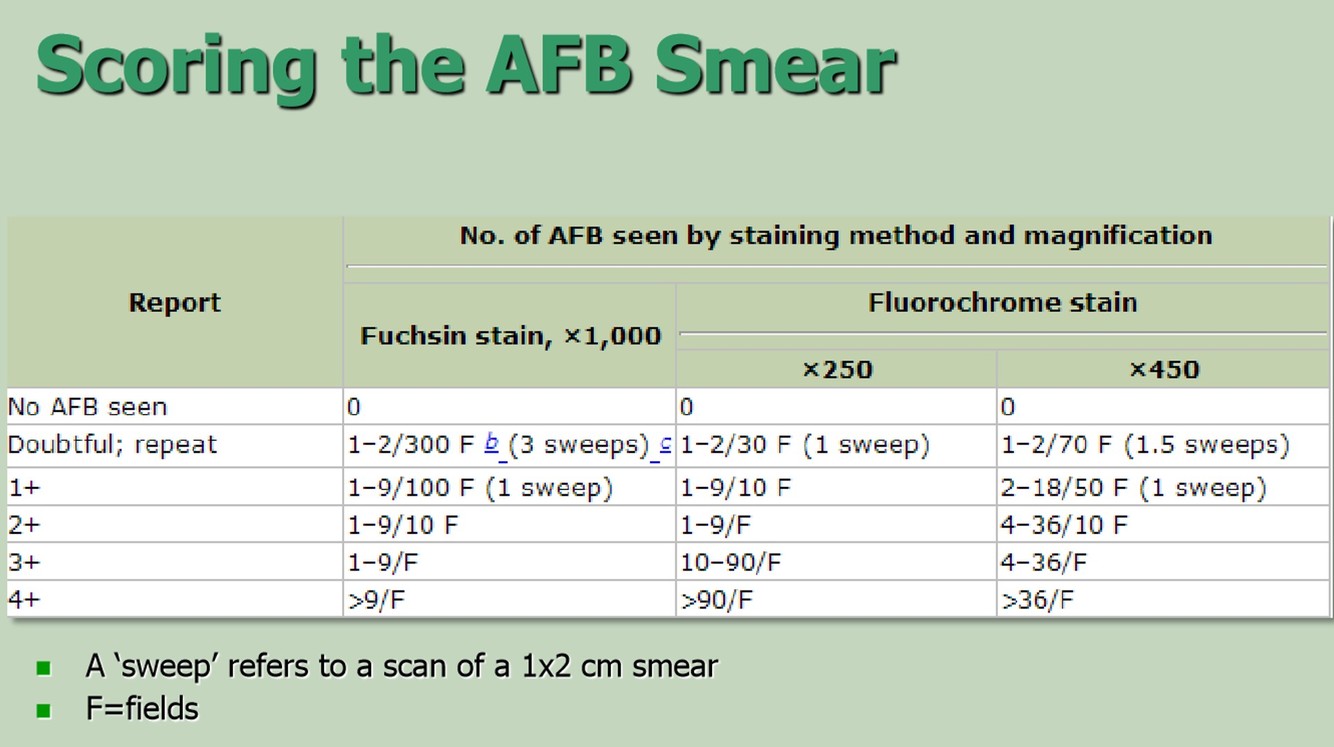
Scoring the AFB Smear
Scoring the AFB Smear
Mycobacteria Media?
Media types
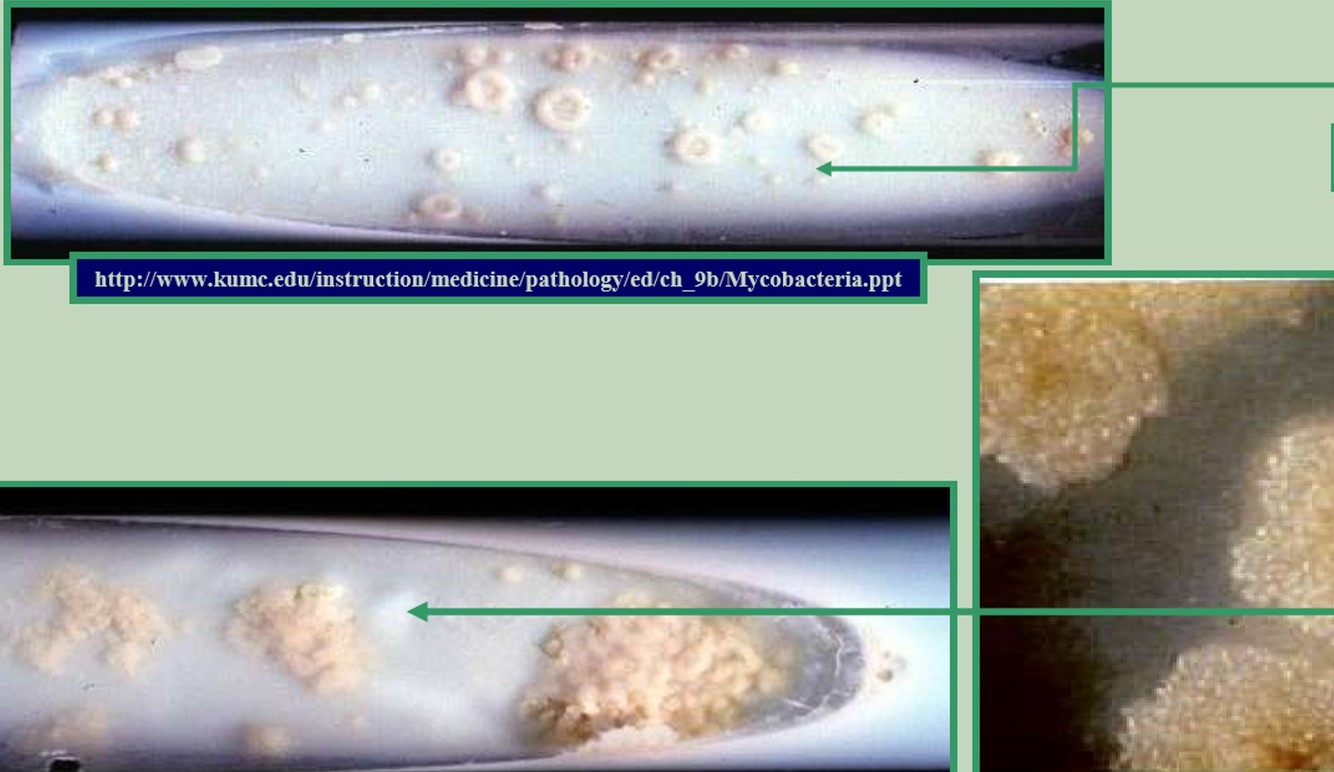
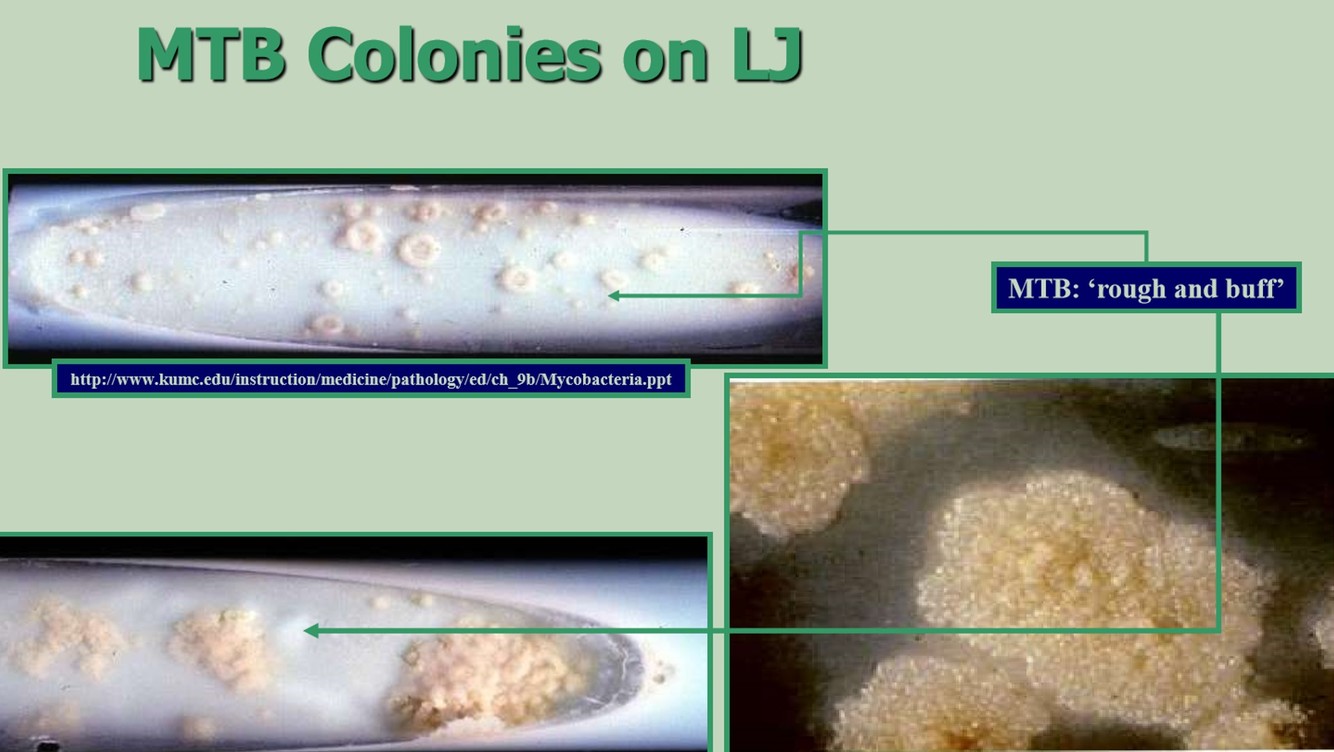
- Egg-based: Lowenstein-Jensen (L-J) & derivatives
- Synthetic: Middlebrook 7H10-11 plates (and analogous broths)
- Clinical Properties – Detect 66% of M. tb in 4 weeks, 90% in 6 weeks
The Runyon groups
The Runyon groups ( M. tb NOT counted)
I. Photochromogenic:
- M. kansasii
II. Scotochromogens (always pigmented):
- M. gordonae
III. Nonchromogens:
- M. avium complex
IV. Rapid growers:
- M. chelonae & fortuitum complexes
Molecular Amplification
Detection of mycobacterial DNA or RNA
Molecular Amplification
Detection of mycobacterial DNA or RNA
- PCR & TMA
Clinical properties:
- TAT: daily or a few times/week
- analytically: 10-100X more sensitive than smear
- clinically: ~80-90% sensitivity (per specimen)
- Provides species identification of M. tb only
- false + from contamination or therapy
MTB Cultures: Rapid Broth Methods
Cultures: Rapid Broth Methods
Systems
- MGIT fluorometric system, detects O2 consumption
- Organon-Teknika & Bactec nonradiometric systems
- Both detect CO2 production
Clinical Properties
- Typically detect 66% of M. tb in 2 weeks, 90% in 4 weeks
Current practice is to use both rapid broth and solid media for all cultures
MTB Cultures: Incubation and Reading
Cultures: Incubation and Reading
5-10% CO2 stimulates primary growth
Solid media
- place in gas-permeable bags
- read 2x/week to 4 weeks, then weekly to 8
- 37oC except for skin cultures at 30-32
- hemin, blood, or SBA for suspected M. hemophilum
Continuous-monitoring systems
- MGIT and BacT/Alert
Niacin/nitrate Tests
Niacin/nitrate Tests
- Used to confirm identification of M. tuberculosis made by other methods
- M. tb complex also contains M. bovis , BCG, and M. africanum
- M. tuberculosis is niacin/nitrate positive
- M. bovis and M. africanum are negative
- All produce a catalase that’s labile at 68oC; most other mycobacteria produce heatstable catalase
Molecular Identification
PCR target?
Probes available?
TAT?
Molecular Identification
Accuprobe by Genprobe (now Hologic) Accuprobe
16s rRNA probe, chemiluminescent readout
Probes available for:
- M. tuberculosis complex
- M. avium complex
- M. kansasii
- M. gordonae
Same-day results from positive broths or colonies
DNA Sequencing for Mycobacterial Identification
DNA Sequencing for Mycobacterial Identification
Targets
- 16S rRNA gene
- Hsp 65
- rpo B
Microseq system is FDA-approved for 16S.
No single target is sufficient to identify all mycobacteria to the species level.
Expensive, labor-intensive, but likely to expand as methods improve
MALDI-TOF
MALDI-TOF – The Future is Now!
Matrix-Assisted LaserDesorption/Ionization Timeof-Flight Mass Spectroscopy.
Analyzes high-copy proteins in the bacterial cell; mostly ribosomal proteins.
Sample is spotted onto plate, mixed with matrix, then fed into the instrument.
Low reagent cost (pennies), extremely fast ID (minutes).
Unlike for most bacteria, a fairly elaborate off-plate extraction is required for mycobacteria – tough targets!
Choice of MTB Identification Methods
Biochemicals
- Molecular Probes
- Sequencing
- MALDI-TOF
Choice of Identification Methods
Biochemicals
- In the developed world, these are mostly confirmatory and secondline methods – slow
Molecular Probes
- First-line in relatively smallvolume labs, low capital cost, fairly simple methods
- same-day
Sequencing
- Used for final species ID of difficult strains, and in many academic medical centers.
MALDI-TOF
- In development, not yet standardized or FDA-approved, but likely to become dominant
Principles of Susceptibility Testing
resistance in M. tuberculosis
Principles of Susceptibility Testing
resistance in M. tuberculosis
- no transmissible/plasmid-mediated resistance
- spontaneous mutation (1 in 105-107) and selection
- Resistance mutations have been characterized for the primary drugs
slow-growing organism
criteria
- >1% resistance has been set as the threshold
susceptibility testing in MOTT unstandardized except for rapidgrowers.
Proportion Method of MTB Susceptibility Testing
Proportion Method
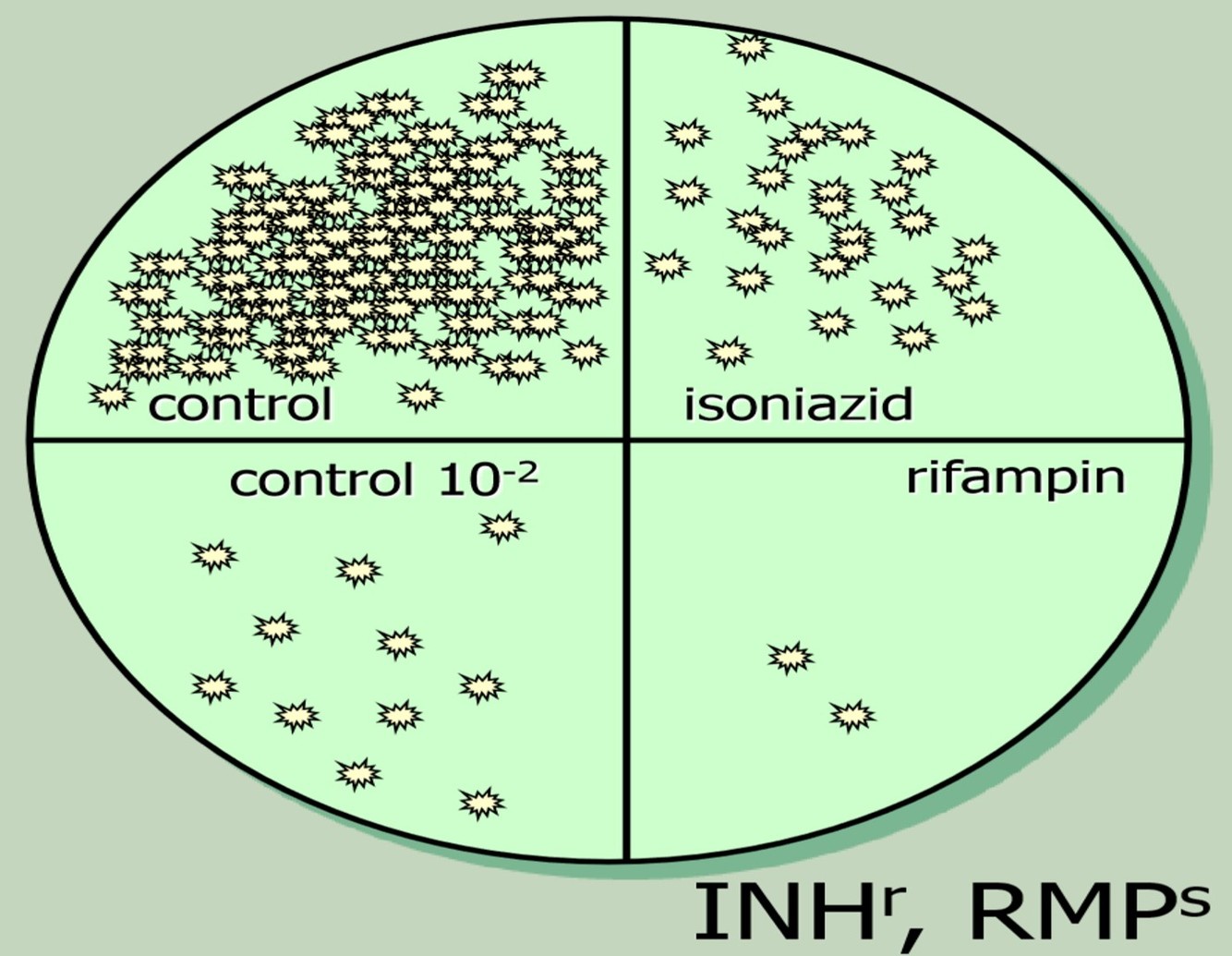
Inoculate media with defined # of M. tb cfu
Control media: undiluted and diluted 1:100
Antibiotic media: undiluted
Compare control 1:100 with antibiotic colony counts
Drugs
- Primary: isoniazid, rifampin, ethambutol, streptomycin, pyrazinamide
- Secondary: quinolones, ethionamide, PAS, cycloserine, others
MTB Bactec Method
Bactec Method
Broth-based analogue of proportion method
Procedure
- Control bottles: undiluted and 1:100 dilution
- Antibiotic bottles: undiluted
- Incubate and compare growth in antibiotic bottles with growth in 1:100 control bottle
- Requires 1 week vs. 4-6 for plate method
- Validated for primary drugs only
Isoniazid Resistance Genes
Isoniazid Resistance Genes
Most common resistance (9.1% of US isolates in 1991)
Two gene loci identified in INH resistance
- katG: a catalase/peroxidase, probably responsible for transforming INH to an active drug
- inhA: involved in mycolic acid synthesis, probably a direct target of INH action
Alterations in these 2 genes responsible for at least 85% of INH resistance
Other Drug Resistance Genes
Rifampin resistance
Pyrazinamide resistance
Streptomycin resistance
Other Drug Resistance Genes
Rifampin resistance
- rpoB, the b subunit of RNA polymerase
- alterations in this locus responsible for >95% of RMP resistance
Pyrazinamide resistance
- pncA, pyrazinamidase, cleaves pyrazinamide to pyrazinoic acid
- PZA inhibits a fatty acid synthetase; resistance mutations in this locus as well
Streptomycin resistance
- rpsL, S12 ribosomal protein
- rrs, 16S ribosomal RNA
The GeneXpert TB: Rapid Detection, Resistance Screening
The Instrument and Test
The GeneXpert TB: Rapid Detection, Resistance Screening
A tool for world TB control
The Instrument and Test
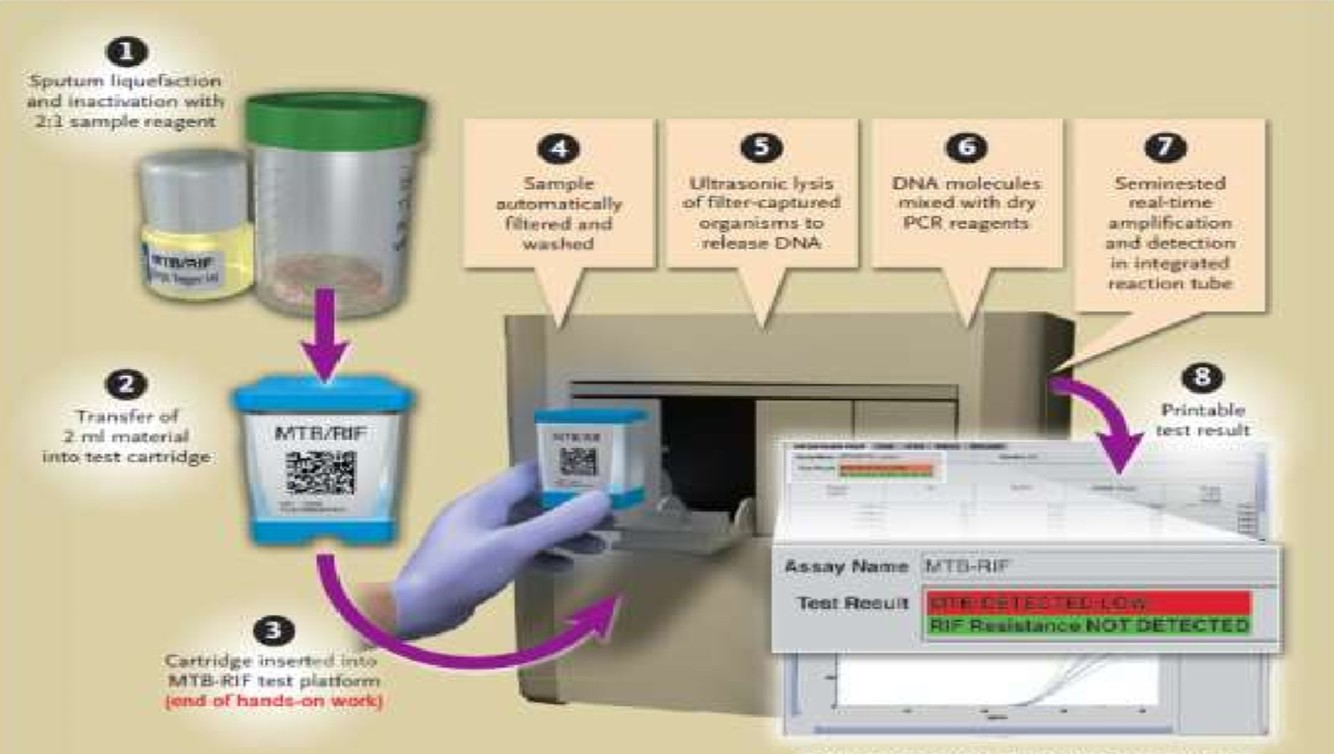
Cartridge-based integrated molecular system. Detects M. tuberculosis as well as rifampin resistanceconferring mutations
- three specific primers
- five unique molecular probes
The GeneXpert TB
Workflow
The GeneXpert TB
Workflow
Simple, rapid.
Deployable to limitedresource settings.
Still requires expensive reagents and maintenance. Under WHO-FIND program, a four module GeneXpert platform and linked computer costs about US$17K
With funding from PEPFAR, USAID, UNITAID, and the Bill & Melinda Gates Foundation, the cost per cartridge set at $9.98 from Aug 6, 2012, for the next 10 years.



-
Microbiology121
-
Mycology55
-
GU107
-
Lefkowitch163
-
Genetics and Syndromes49
-
Mycobacteria51
-
Parasite4
-
Pulmonary4
-
Autopsy14
-
Gyn37
-
Blood Bank17
-
Breast38
-
Cytopath61
-
Derm137
-
Bone and Soft tissue107
-
Koneman103
-
Neuro52
-
Staging36
-
Head and Neck82
-
Ro3
-
Stains58
-
GI36
-
EM9
-
Stats and Lab Management7
-
Chemistry86
-
Heme/Coag44
-
Bone and Soft tissue COPY107
-
Bone and Soft tissue COPY COPY107
-
Hepatobilliary29



