Discuss historical treatment of mastitis?
Weren’t that successful in treating these cows with toxic mastitis and by time they got to that stage 50% were dead so the way forward was to work with prevention rather than cure.
Prevention – Where to start??
Usually caused by Gram – (e,g e.coli)
Week or so after calving cows would become severely ill. In terms of immune function this period is where they are most vulnerable.
Before calving period dry period of few months.
Discuss the dry period and mastitis?
Dry period has often been thought of as a cure state. Where SCC can go down.
However, is it possible in the dry period that these clean cows are picking up new infections.
Mastitis research began to focus on the dry period?
Preliminary studies found that 40% of cows in the 6 herds study had a pathogen in quarter in dry period and non of them got mastitis in this time.
Did these dry period infections found in the research cause mastitis?
Does the same organism in the dry period go on to cause mastitis in the milking period?
In nearly all incidences the isolate found in the dry period was the isolate which caused the mastitis after calving
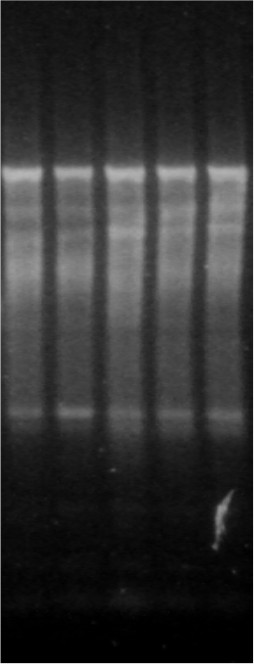
Look at these gel electrophoresis of dry period pathogens DNA and mastitis DNA pathogens in the same cows and explain it?
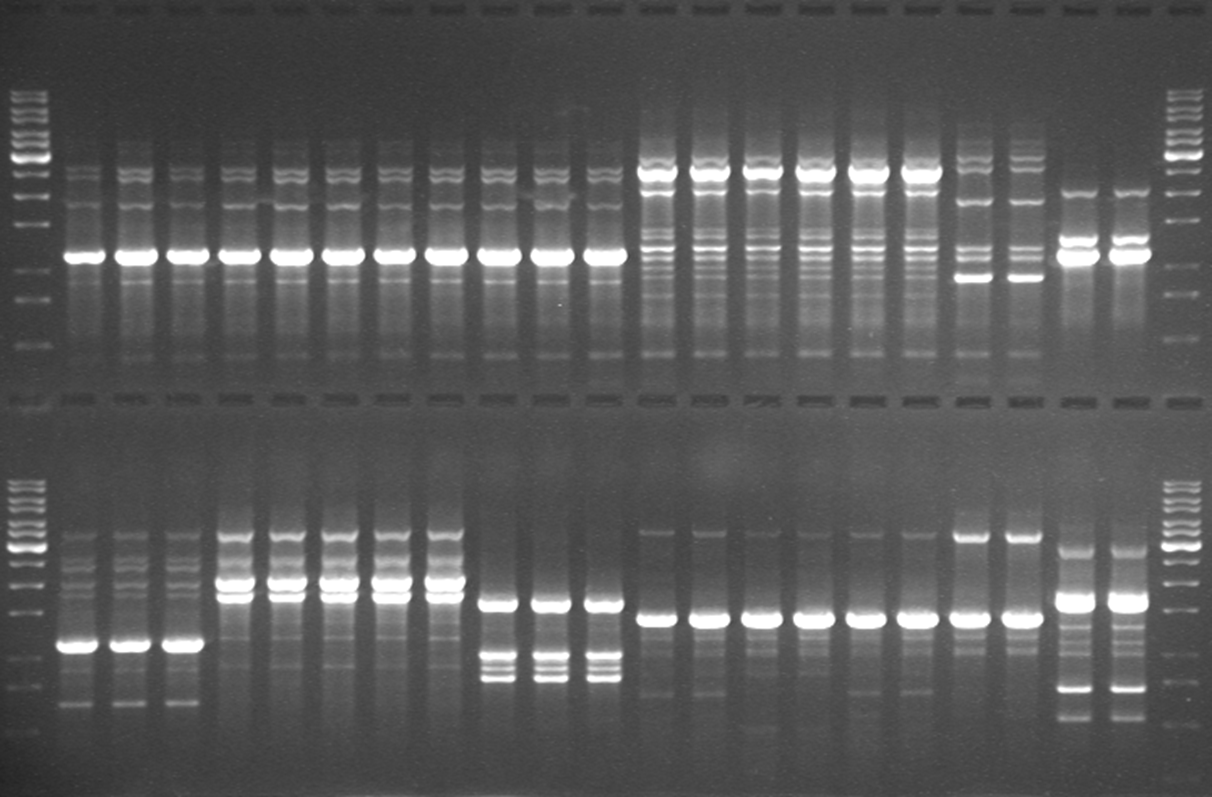
White boxes represent individual cows. Between cows strains were different but each individual has bacteria traced from DP through to lactation.
Therefore conclusions need to look at DP management.
What did the initial dry period research find?
- First study to follow bacteria from dry period to mastitis after calving
- Up to 50% cows became newly infected during Dry Period
- Up to 75% of all mastitis originated in the Dry Period
Which herds have dry period problems?
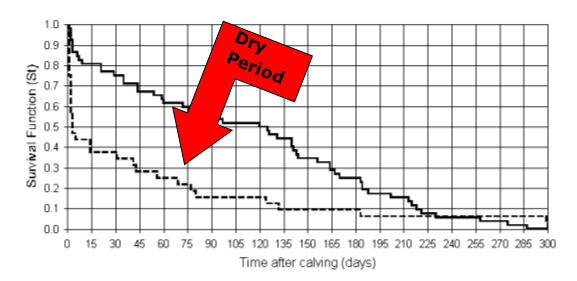
Graph showing from first 6 herds the survival plot.
Time to event analysis (time till mastitis occurs).
Cows with a DP infection can see cases of mastitis happen very soon after calving/first 30 days.
Discuss Origin of Clinical mastitis
Lactation Distribution?
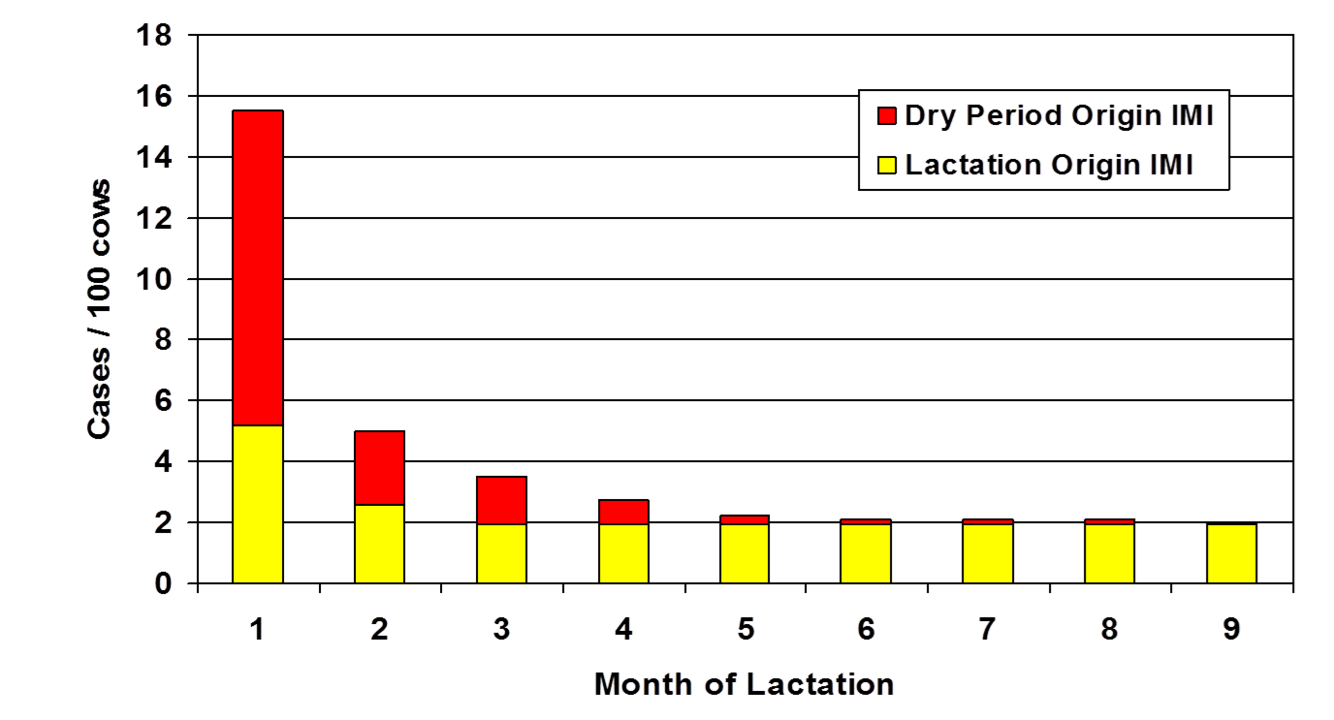
Most cases in the 1st month come from dry period infections. Over time ratio of red to yellow reduces
How can we stop it?
…prevention?
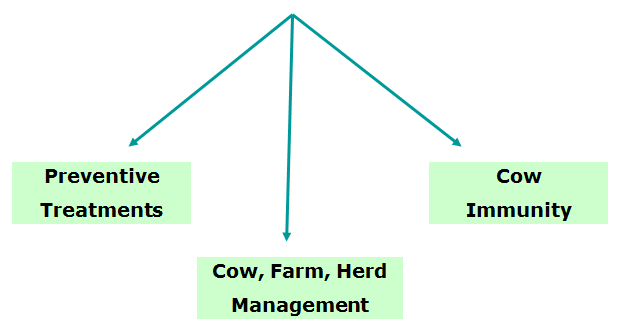
Dry Cow Treatment:
Different Treatments work for Different Cows and Herds!
Discuss treatments tried?
- A Clinical Trial
- Target therapy towards a specific types of bacteria
–Gram negative
- Found a 50% reduction in clinical gram negative clinical mastitis NEXT lactation
- Confirmed that preventing DP infections does reduce mastitis after calving
- Concept of differential DCT
What about novel, non-antibiotic treatments as opposed to antibiotics??
•‘Teat Seal’
–Bismuth Subnitrate in paraffin base
–Designed for use in uninfected cows
–No inherent antimicrobial activity
•Care with infusion
Infused and left in the teat cistern
- Teat sealant was better for gram – than antibiotics
And had protection as well as dry cow antibiotic therapy had
Discuss determinants of mastitis?
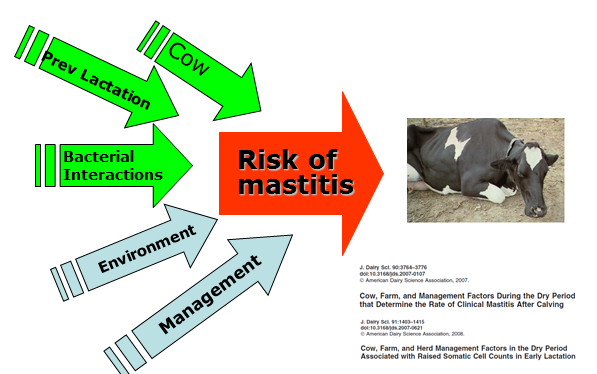
We can make a practical difference to dry period infections with proper
Hygiene and management.?
Hygiene whilst administering dry cow treatments: Surgical spirit swab before administer dry treatments
Environmental hygiene: Good drainage, Clean and bed cubicles daily, Scrape feed and loafing area daily
Yard management Dry cows need more area of space: Transition yard area > 1.25m2 per 1000L annual mean cow milk production
Dry cows at grass: Graze for 2 weeks then rest 4 weeks
Calving Period: Calves don’t have access to suckle other cows, Calving pens cleaned out daily
Other herd factors: Keep bedding materials dry
In summary?
- Dry Period Infections important on many farms
- Herd with Dry Period problems can be spotted by patterns of mastitis
- Can reduce Dry Period Infections by treatment approaches and management changes
What is AHDB Dairy Mastitis Control Plan?
Software allowing farms to see where they need to improve specifically
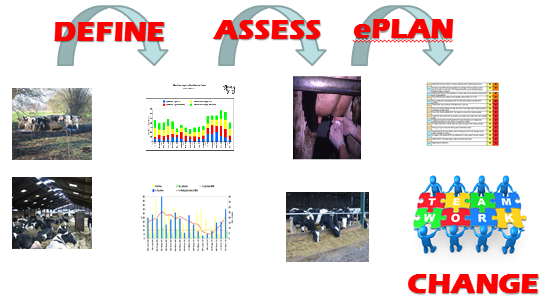
What is the continued research for mastitis control?
- “Best decisions to prevent mastitis”
- None antibiotic approaches
–Immune stimulants…
•Microbiomes, vaccines
Where are we today?
- Selective dry cow therapy is an industry standard driven by retailers (AMR)
- AHDB Mastitis Control Plan has been an industry initiative since 2009 – funded to at least 2021 (estimate 1/3 UK cows involved in plan)
- New research and technologies to speed up herd diagnosis to implement controls
What are the Principles of mastitis control?
Prevent New Infections
Remove Existing Infections
As long as at rate of cure (and culling) exceeds the rate of new infection then progress will be made
Balance between prevention and cure and we focus more on prevention now
In herd 1 The clinical mastitis incidence was 83 cases/100 cows/year last year. How does this compare with the UK national average?
Higher
The average clinical mastitis incidence rate in the UK is likely to be between?
55-65 cases/100 cows/year
Awful. UK has a long way to go on mastitis control. Rate of clinical mastitis is too high in this country.
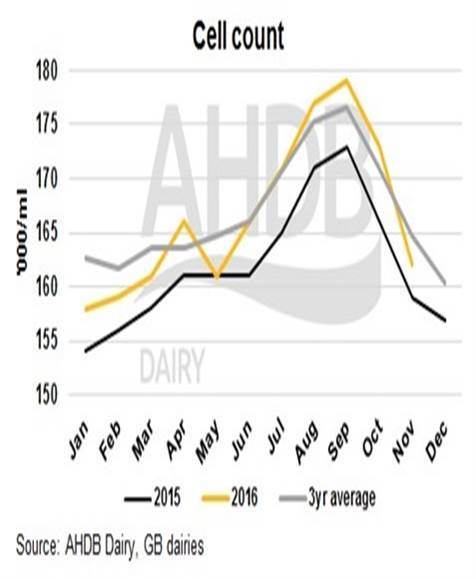
In herd 1 The average BMSCC for the last 12 months was 90,000 cells/ml. How does this compare with the national average?
Lower
The current average BMSCC in the UK is around?
160,000 cells/ml
Which of these statements about Clinical Mastitis of dry period origin is true?
A.Is detected during the dry period (wrong because when cows are dry they don’t give milk so cant detect it then)
B.Results in increased CM in the first 30d of lactation
C.Is detected during lactation
D.Results in increased CM after the first 30d of lactation
E.Isn’t very important and we don’t know why you lot keep banging on about it
B.Results in increased CM in the first 30d of lactation
C.Is detected during lactation



-
Acute Abdomen31
-
Disease and conditions of the avian digestive system44
-
Metabolic Disease With Neuro Signs33
-
Diseases and Conditions of the Avian Respiratory System47
-
Lungworm and Respiratory Disease in Ruminants11
-
Intro To Calf Pneumonia8
-
Sheep Respiratory Disease – Coughing Lambs24
-
Respiratory Disease In Adult Farmed Animals41
-
Sheep Resp Disease - Adults29
-
Large Animal Respiratory Parasites34
-
Respiratory Disease in Calves42
-
Respiratory Disease in Pigs72
-
Large Animal Respiratory Parasites31
-
Pneumonia Diagnosis15
-
Sheep Respiratory Disease - Pathology19
-
Respiratory disease in poultry58
-
AB selection for respiratory disease37
-
Hepatic lipidosis/ketosis/farm16
-
Herd level metabolic disease21
-
Hypocalcaemia practical14
-
Parasitic skin disease of farm animals19
-
Ectoparasites camelids6
-
Bovine teat surgery34
-
Avian dermatology21
-
Dehorning and disbudding21
-
Large Animal Anatomy Refresher17
-
Practical: Pig GI anatomy4
-
Practical: Ruminant GI anatomy27
-
Practical: Chicken GI anatomy16
-
Scouring in Calves32
-
Johne’s Disease33
-
Beef Calf With Scour10
-
Acute Abdomen COPY31
-
Oral Cavity Disease Ruminants29
-
Neonate Calf Diarrhoea8
-
Liver Disease in Farm Animals49
-
Diarrhoea in Adult Cattle34
-
Disease of The Rumen10
-
Ruminant GI Disease55
-
Abomasal Disease42
-
Pig Neonate Diarrhoea11
-
BVD47
-
GI Disease in Pigs56
-
Case Studies3
-
The Sick Cow12
-
Ruminant Parasite Case10
-
Scouring Lambs6
-
Antiparasitic agents and endoparasites44
-
Clostridial Disease in Ruminants29
-
Foot and Mouth Disease27
-
Revision Haemonchus & Ostertagia18
-
Revision Liver Trematodes25
-
Revision SI parasite ruminants19
-
Practical Parasite Control in Farmed Animals78
-
Revision practice of helminth control12
-
Revision Mechanisms of action18
-
Bacterial and Protozoal Intestinal Disease in Commercial Poultry75
-
Mineral workshop37
-
Microbiology Of Enteritis61
-
Bovine Distal limb11
-
Corrective Foot Trimming16
-
Joint Swelling In Neonate Calf5
-
Poultry42
-
Lameness in cattle40
-
CR Bovine Lameness11
-
Pig Lameness47
-
Other Causes of Lameness in Cattle68
-
Sheep and Goat Lameness5
-
Clostridial disease in cows25
-
Farm Assurance11
-
Cattle Lameness 272
-
Farm Assurance COPY51
-
Cattle Lameness 342
-
Pig Lameness COPY67
-
Sheep lameness31
-
Bovine Neurology51
-
Ovine Neurology62
-
Metabolic Disease With Neuro Signs COPY33
-
Porcine Neurology43
-
Non-Notifiable Viral Disease44
-
Notifiable Neuro Viruses26
-
Large Animal Ophthalmology21
-
Eye and Disease30
-
Pharmacological Control Of Pregnancy and Parturition25
-
Principle Causes of Infertility in the FEMALE56
-
Principles of Pregnancy Failure14
-
Pregnancy Loss Case11
-
Principles of Fertility and Breeding Time43
-
Intro to repro pathology137
-
Principles of Monitoring Fertility33
-
The Itinerant Bull SGTR case13
-
Principles of Cycle Manipulation32
-
Principles of managing dystocia45
-
Approach to Examining the Female Tract42
-
Principles of decision making and surgical management of dystocia24
-
Principles of Post Partum Conditions34
-
Principles of antibiotic treatment in reproduction cases and xertes39
-
Principles of Neonate Care and Disorders of the Neonate37
-
Principle causes of infertility in the male23
-
Approach to Examining the Male Reproductive Tract47
-
Principles of Semen Quality25
-
Porcine reproductive disease59
-
Reproductive Exam19
-
Fertility and The Dairy Vet26
-
Infertility in the Individual Cow14
-
Avian reproduction56
-
Milk Quality 1 & 220
-
Uterine Disease24
-
Reproductive Case Management15
-
Unwanted pregnancy TR12
-
Mastitis Diagnosis21
-
Small Ruminant Repro31
-
Camelids Repro9
-
Infectious Repro Disease21
-
Ewe Breeding6
-
Cases of Abortion in the Ewe8
-
Mastitis Teat Conditions22
-
Reproductive medicine use in practice19
-
Parturition & post partum disease in farm animals25
-
Mastitis control38
-
Abortion cases20
-
Milk Quality29
-
Down Cow6
-
Mastitis Treatment46
-
Bovine C-section & Dystocia (Practical)15
-
Infectious reproductive disease in cattle78
-
Heifer Dystocia16
-
Repro formative MCQ23
-
Large Animal Toxicity9
-
Cattle Urinary Disease23
-
Calculi in LA11



