Scouring lambs in May on a Leicestershire farm
(lambs born in March outside and outside now grazing and being fed creep)
What history do you need to ask?
- Worming history.
- Rotated paddocks.
- Other grazing.
- What does It look like?
- How long has it been going on for?
- What % of flock are affected?
- Lambing protocol
- Medication history
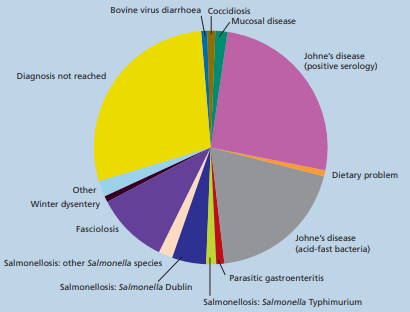
Scouring lambs in May
on a Leicestershire farm
(lambs born in March outside and outside now grazing and being fed creep)
What are your differentials?
- Coccidiosis
- Nematodirosis
- Teladorsagaiosis
- Parasitic gastroenteritis – Should always be investigated in any weaned lamb
Scouring lambs in May
on a Leicestershire farm
(lambs born in March outside and outside now grazing and being fed creep)
How would you get a diagnosis?
- Faecal sample – FEC and worm count
- History and clinical signs
- Post mortem
Upland flock 1200 ewes lambing in March-April on an 800 acre farm in the peak district (no cattle or arable crops on the farm)
What parasites are potentially important in this system:
- Nematadirous Batus
- Haemonchus Contortus
- Coccidia
What testing would you want to do to decide when treatments are required?
- FEC
- Faecal worm test
- Sedimentation – fluke
- Baermann apparatus – lungworm larvae
What can we do to limit pasture contamination but minimise selection for anthelmintic resistance
- Rotation
- Pooled (MOB) faecal egg count – track the rise to predict when treatment required
- Targeted selected tretatment – work out how much per day (any under perofrming may benefit from treatment)
- Narrow spectrum as possible
What non-chemical control measures can you suggest?
•Avoid parasite with rotational grazing
•List your differential diagnoses for diarrhoea in a group of housed yearling cattle?
+ Ostertagia
•What diagnostic tests could you use to rule in/out type 2 Ostertagiosis?
Cattle are exposed to low challenge at pasture in late autumn so are unlikely to require treatment at housing. Cattle exposed to medium/high challenge in late autumn or animals of unknown origin are likely to require treatment at housing using an anthelmintic active against hypobiotic larvae
Type 2 = Previous grazing seasons
- Faecal examination, worm egg count is definitive if there are >1000 e.p.g. (eggs per gram) in type 1 disease and variable or sometimes zero in type 2 disease.
- Response to worming
- Diagnosis is based upon the grazing pattern and history of previous anthelmintic treatments. Faecal egg counts are generally high in type I but can be absent in type II disease. Blood tests can be used to determine whether there is significant parasitic damage to the abomasal lining.
–Grazing pattern
–Previous anthelmintic treatments
–Faecal egg counts
–Blood tests
- A further two heifers die despite your treatment with Ivermectin. As the farmer is grumbling about the loss you remind them that “prevention is better than cure” and agree to help them develop a parasite control plan to reduce the risk of disease occurring again next year.
- What does your plan involve?
–Consider anthelmintic and management changes
More difficult to treat hypobiosis but drugs such as ivermectin will kill the hypobiotic L4
In some cases very frequent drenching may be required around calving (Type II)
Frequent drenching may be required during the first grazing season (Type I), especially or animal raised on pasture on which calves grazed previous seasons
Where vaccination of cattle for lungworm is undertaken planned anthelmintic treatments during late summer (July to September) can work to control PGE but mistakes can happen and failure to treat at the scheduled time may result in disease and costly weight loss in the cattle. No real challenge during their first grazing season at pasture, and failure to develop immunity, renders cattle susceptible to lungworm during their second season at pasture especially if weaned beef calves graze the same fields every year (for example rented ground away from the main farm etc). Nematode control strategies aimed at suppressive management of O. ostertagi, in particular those using persistent acting macrocyclic lactone anthelmintic regimes, prevent exposure of naïve cattle to D. viviparous and disease is often seen in older animals during their second, third or subsequent grazing seasons.
Health planning by the farmer’s veterinary surgeon is very important to prevent PGE and lungworm disease and may include both strategic anthelmintic treatment and lungworm vaccination. A detailed knowledge of the individual farm set-up is essential to tailor the best control programme for PGE and lungworm especially involving beef calves during their second grazing season.

-
Acute Abdomen31
-
Disease and conditions of the avian digestive system44
-
Metabolic Disease With Neuro Signs33
-
Diseases and Conditions of the Avian Respiratory System47
-
Lungworm and Respiratory Disease in Ruminants11
-
Intro To Calf Pneumonia8
-
Sheep Respiratory Disease – Coughing Lambs24
-
Respiratory Disease In Adult Farmed Animals41
-
Sheep Resp Disease - Adults29
-
Large Animal Respiratory Parasites34
-
Respiratory Disease in Calves42
-
Respiratory Disease in Pigs72
-
Large Animal Respiratory Parasites31
-
Pneumonia Diagnosis15
-
Sheep Respiratory Disease - Pathology19
-
Respiratory disease in poultry58
-
AB selection for respiratory disease37
-
Hepatic lipidosis/ketosis/farm16
-
Herd level metabolic disease21
-
Hypocalcaemia practical14
-
Parasitic skin disease of farm animals19
-
Ectoparasites camelids6
-
Bovine teat surgery34
-
Avian dermatology21
-
Dehorning and disbudding21
-
Large Animal Anatomy Refresher17
-
Practical: Pig GI anatomy4
-
Practical: Ruminant GI anatomy27
-
Practical: Chicken GI anatomy16
-
Scouring in Calves32
-
Johne’s Disease33
-
Beef Calf With Scour10
-
Acute Abdomen COPY31
-
Oral Cavity Disease Ruminants29
-
Neonate Calf Diarrhoea8
-
Liver Disease in Farm Animals49
-
Diarrhoea in Adult Cattle34
-
Disease of The Rumen10
-
Ruminant GI Disease55
-
Abomasal Disease42
-
Pig Neonate Diarrhoea11
-
BVD47
-
GI Disease in Pigs56
-
Case Studies3
-
The Sick Cow12
-
Ruminant Parasite Case10
-
Scouring Lambs6
-
Antiparasitic agents and endoparasites44
-
Clostridial Disease in Ruminants29
-
Foot and Mouth Disease27
-
Revision Haemonchus & Ostertagia18
-
Revision Liver Trematodes25
-
Revision SI parasite ruminants19
-
Practical Parasite Control in Farmed Animals78
-
Revision practice of helminth control12
-
Revision Mechanisms of action18
-
Bacterial and Protozoal Intestinal Disease in Commercial Poultry75
-
Mineral workshop37
-
Microbiology Of Enteritis61
-
Bovine Distal limb11
-
Corrective Foot Trimming16
-
Joint Swelling In Neonate Calf5
-
Poultry42
-
Lameness in cattle40
-
CR Bovine Lameness11
-
Pig Lameness47
-
Other Causes of Lameness in Cattle68
-
Sheep and Goat Lameness5
-
Clostridial disease in cows25
-
Farm Assurance11
-
Cattle Lameness 272
-
Farm Assurance COPY51
-
Cattle Lameness 342
-
Pig Lameness COPY67
-
Sheep lameness31
-
Bovine Neurology51
-
Ovine Neurology62
-
Metabolic Disease With Neuro Signs COPY33
-
Porcine Neurology43
-
Non-Notifiable Viral Disease44
-
Notifiable Neuro Viruses26
-
Large Animal Ophthalmology21
-
Eye and Disease30
-
Pharmacological Control Of Pregnancy and Parturition25
-
Principle Causes of Infertility in the FEMALE56
-
Principles of Pregnancy Failure14
-
Pregnancy Loss Case11
-
Principles of Fertility and Breeding Time43
-
Intro to repro pathology137
-
Principles of Monitoring Fertility33
-
The Itinerant Bull SGTR case13
-
Principles of Cycle Manipulation32
-
Principles of managing dystocia45
-
Approach to Examining the Female Tract42
-
Principles of decision making and surgical management of dystocia24
-
Principles of Post Partum Conditions34
-
Principles of antibiotic treatment in reproduction cases and xertes39
-
Principles of Neonate Care and Disorders of the Neonate37
-
Principle causes of infertility in the male23
-
Approach to Examining the Male Reproductive Tract47
-
Principles of Semen Quality25
-
Porcine reproductive disease59
-
Reproductive Exam19
-
Fertility and The Dairy Vet26
-
Infertility in the Individual Cow14
-
Avian reproduction56
-
Milk Quality 1 & 220
-
Uterine Disease24
-
Reproductive Case Management15
-
Unwanted pregnancy TR12
-
Mastitis Diagnosis21
-
Small Ruminant Repro31
-
Camelids Repro9
-
Infectious Repro Disease21
-
Ewe Breeding6
-
Cases of Abortion in the Ewe8
-
Mastitis Teat Conditions22
-
Reproductive medicine use in practice19
-
Parturition & post partum disease in farm animals25
-
Mastitis control38
-
Abortion cases20
-
Milk Quality29
-
Down Cow6
-
Mastitis Treatment46
-
Bovine C-section & Dystocia (Practical)15
-
Infectious reproductive disease in cattle78
-
Heifer Dystocia16
-
Repro formative MCQ23
-
Large Animal Toxicity9
-
Cattle Urinary Disease23
-
Calculi in LA11



