What are the possible outcomes of an acute inflammation response?
- Complete resolution
- Healing via fibrosis
- Progression to acute inflammation
- Excessive tissue damage (pathology)
What is acute inflammation of the skin called?
Dermatitis
What is acute inflammation of the pancreas called?
Pancreatitis
What is acute inflammation of the stomach called?
Gastritis
For the image below:
a. Name the condition
b.
- Name the tissue type
- Name the condition (blood in tissue)
- Name the cell type
- Name the condition
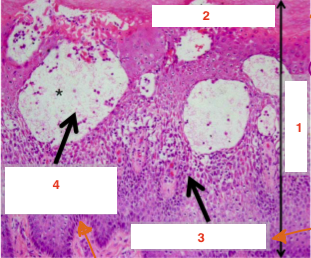
a. Actopic dermatitis (Eczema)
b.
- Epidermis
- Haemorrhage
- Neutrophils
- Odema (spongiosus)
State what the mechanism behind atopic dermatitis is and breifly describe it:
The mechanism is Type 1 Hypersensitivity. Invovles the binding of IgE proteins to the mast cell then responding to the allergen and degranulating.
Below is a diseased stomach.
a. Name the condition
b.
- Describe the haemmorage
- Describe the condition lot’s of blood
- Name the cells that are infilitrating the site
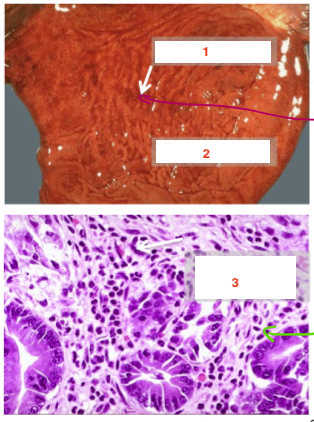
a. Acute gastritis
b.
- Petechia
- Hyperaemia (notice it is a very vibrant red and not a dark one)
- Neutrophils
Below is a normal stomach- name parts:
- Part of small intestine
- Opening
- The part of the stomach
- Layer of wall
- Name
- Gland
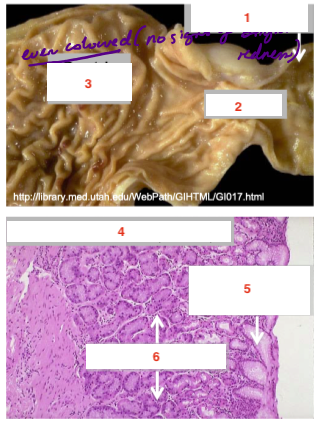
- Duodenum
- Pyloris
- Gastric antrum
- Gastric mucosa
- Mucous lined pits
- Parietal glands
a. Name the condition shown on the right
b.
- Name of the organ
- Where secretions from this organ flow into
- Part of the pancreas
- Structure that produces insulin
- Condition name
- The condition name
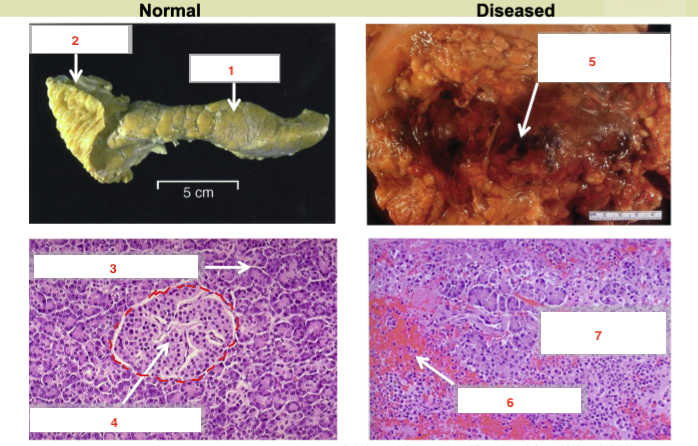
a. Acute pancreatisis
b.
- Pancreas
- Duodenum
- Exocrine Pancreas
- Islets of Langerhans
- Haemorrhagic necrosis
- Haemorrage
Define the term transudate:
Non-inflammatory increase in interstitual fluid (ISF)
Define the term “modified transudate”:
A transudate that is high in protein but low in cells (e.g. congestive heart failure)
What is meant by the term Oedema?
Non-inflammatory increase in interstitiual fluid (ie. transudate)
What is meant by the term exudate?
Inflammatory increase in interstitual fluid
What is meant by the term effusion?
Exudate into the body cavity (e.g. peritonial, pericardial, pleural)
a. ) Name the type of exudate below
b. ) What is it’s function
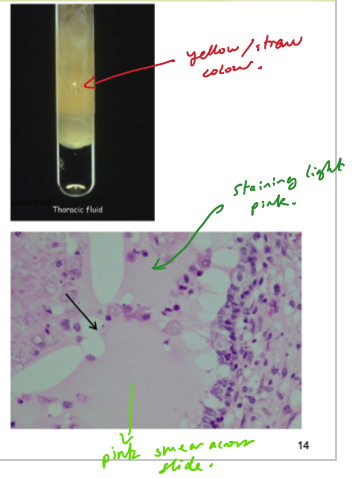
a. ) Serous Exudate/Effusion
b. ) Functions to dilute the pathogen and facilitates cell migration
a. ) Name the type of effusion shown below
b. ) Name the components of the effusion
c. ) What could cause this condition in the lungs
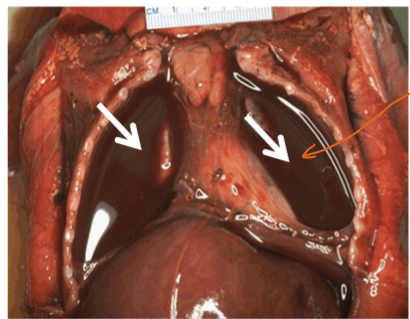
a. Sero-sanguineous exudate/effusion
b. The components = serous fluid + blood
c. In the lungs this is often the result of primary or metastatic pleural tumours
a. Name the type of exudate/effusion shown below
b. What is the cause of this?
c. What types of conditions cause this?
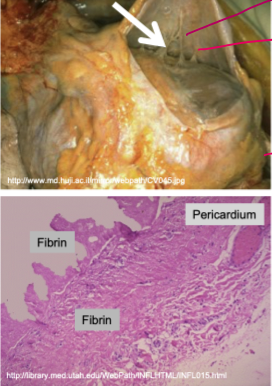
a. Fibrinous exudates/ effusions
b. Much extensive vascular leakage and clotting. There is an increase in extravascular fibrinogen
c. Characteristic of infectious inflamation of body cavities
a. Name the type of exudate/effusion shown below
b. What type of infection will cause this?
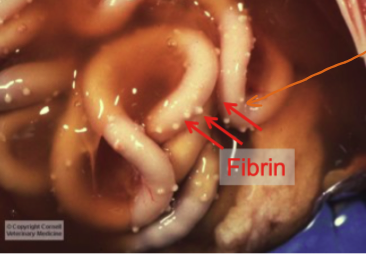
a. Sero-fibrinous exudate/effusion
b. A feline viral infection e.g. Feline Coronavirus
a. Name the type of edudate that is shown below
b. What is the composition of the exudate that is shown below?
c. What was the likely cause of the exudate that is shown below?
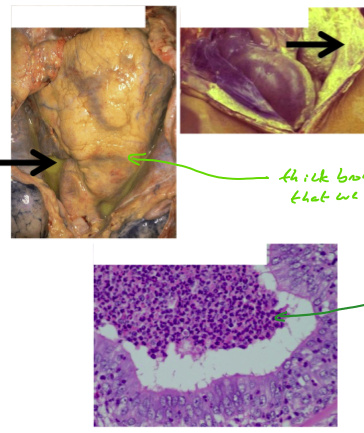
a. Purulent Exudates/Effusions
b. dead and dying neutrophils and necrotic tissue debris
c. bacterial infection
a. What is the name of the effusion/exudate that is shown below?
b. Compare the colour of the effusion to a sero-anginous effusion
c. What would cause the type of effusion that is shown below?
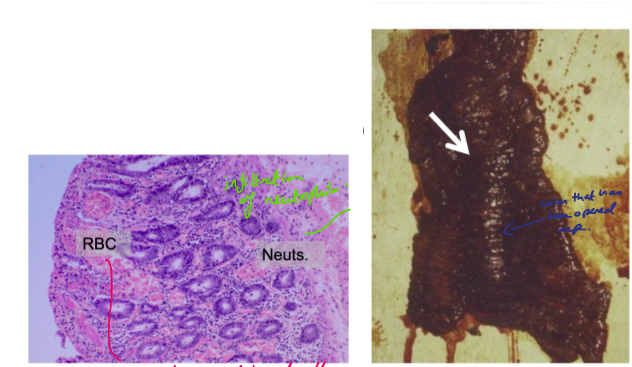
a. Haemorrhagic exudate/effusion is shown below
b. Dark red in comparison to a sero-sanguinous effusion
c. Inflammation associated with extesnive damage to blood vessels
What is an abscess and what is the cause of one?
Localised purulent infection caused by the seeding to pyogenic bacteria into a small space. For example the inhalation of bacteria (bronchopneumonia).
What is ulceration? What is the cause?
Full thickness loss of mucosal surface or epidermis. Caused by the inflammation and shedding of necrotic tissue.

-
Lecture Two7
-
Lecture 314
-
Lecture Four20
-
Lecture 524
-
Lecture 714
-
Lecture 811
-
Lecture 93
-
Lecture 1116
-
Lecture 108
-
Lecture 1223
-
Lecture 11 - simplified18
-
Lecture 10- the basics15
-
Lecture 1424
-
Lecture 1522
-
Lecture 1626
-
Lecture 179
-
Lecture 2324
-
Lecture 247
-
Lecture 2514
-
Lecture 2615
-
Lecture 1918
-
Lecture 2717
-
Lecture 2024
-
Lecture 28 - Neo 213
-
Lecture 30 - Neo 421
-
Lecture 29 - Neo 315
-
Lecture 1317
-
Lecture 31 - Neo 60
-
Lecture 33 - Teratology 111
-
Lecture 34 - Teratology 25



