Limbic System
Structures
Consists of interconnected cortical and subcortical brain structures:
- Limbic lobe:
- uncus
- parahippocampal gyrus
- formation of spatial memory
- cingulate gyrus
- autonomic functions
- pain related emotions
- cognitive and attentional processing
- hippocampus
- consolidation of long term memories
- amygdala
- emotion, aggression, fear
- medial temporal gyrus
- Orbitofrontal cortex
- emotion, memory, decision making
- Anterior insular cortex
- Thalamus
- medio-dorsal nucleus
- anterior nucleus
- Hypothalamus
- regulation of ANS via hormones
- ∆ BP, HR, hunger, thirst, sexual arousal, sleep/wake
- Mammillary bodies
- formation of memory
- Septum
- Nucelus accumbens
- reward, aversion, pleasure, addiction
- Ventral pallidum
Papez Circuit
Areas involved in expression and experience of emotion.
Added hippocampus, anterior nucleus of thalamus, most of hypothalamus, and mammillary bodies in addition to limbic structures.
Hippocampus → bodily expression of emotion.
Limbic system → mediating autonomic functions.
Limbic System
Circuits
Involved in memory, emotion, reward, motivation, goal directed behavior, and various autonomic functions.
3 most important circuits:
- Memory circuit
⟾ involves hippocampus - Emotion circuit
⟾ involves amygdala - Reward circuit
⟾ involves nucleus accumbens and ventral tegmental area (VTA)
Extensive reciprocal connections between circuits.
Dysfunction associated with psychiatric disorders including schizophrenia, OCD, anxiety, depression, PTSD, and mania.
Memory
Definition
Memory = ability to store, retain, and retrieve information.
Divided into short term/working memory & long term memory.
Long term memory subdivided into declarative and procedural memory.
Short-term / Working Memory
- recall of recent events for a short time
- recall of moment-to-moment results of mental processing
- recall of info needed to accomplish a specific task
- prefrontal cortex plays a central role
Declarative Memory
The ability to store and recall info for days, years, or lifetime.
Type of long term memory:
- Explicit / Declarative
- memory of facts and events
- prefrontal cortex → working memory buffer
- hippocampus involved in consolidation
- Also involves MD thalamus, basal forebrain, other limbic structures
- storage spread over associative cortical areas
- storing and recalling is conscious
- episodic memory → specific moment in time and place
- semantic memory → fact knowledge without context
Procedural Memory
The ability to store and recall info for days, years, or lifetime.
Type of long term memory:
- Implicit / Non-declarative / Procedural
- memory for procedures and abilities
- motor skills
- habits
- conditioning
- emotional association
- priming
- storing and recalling is unconscious
- dependent on striatum, cerebellum, amygdala, brainstem, spinal motor outputs, and neocortex
- memory for procedures and abilities
Memory Classification
Summary
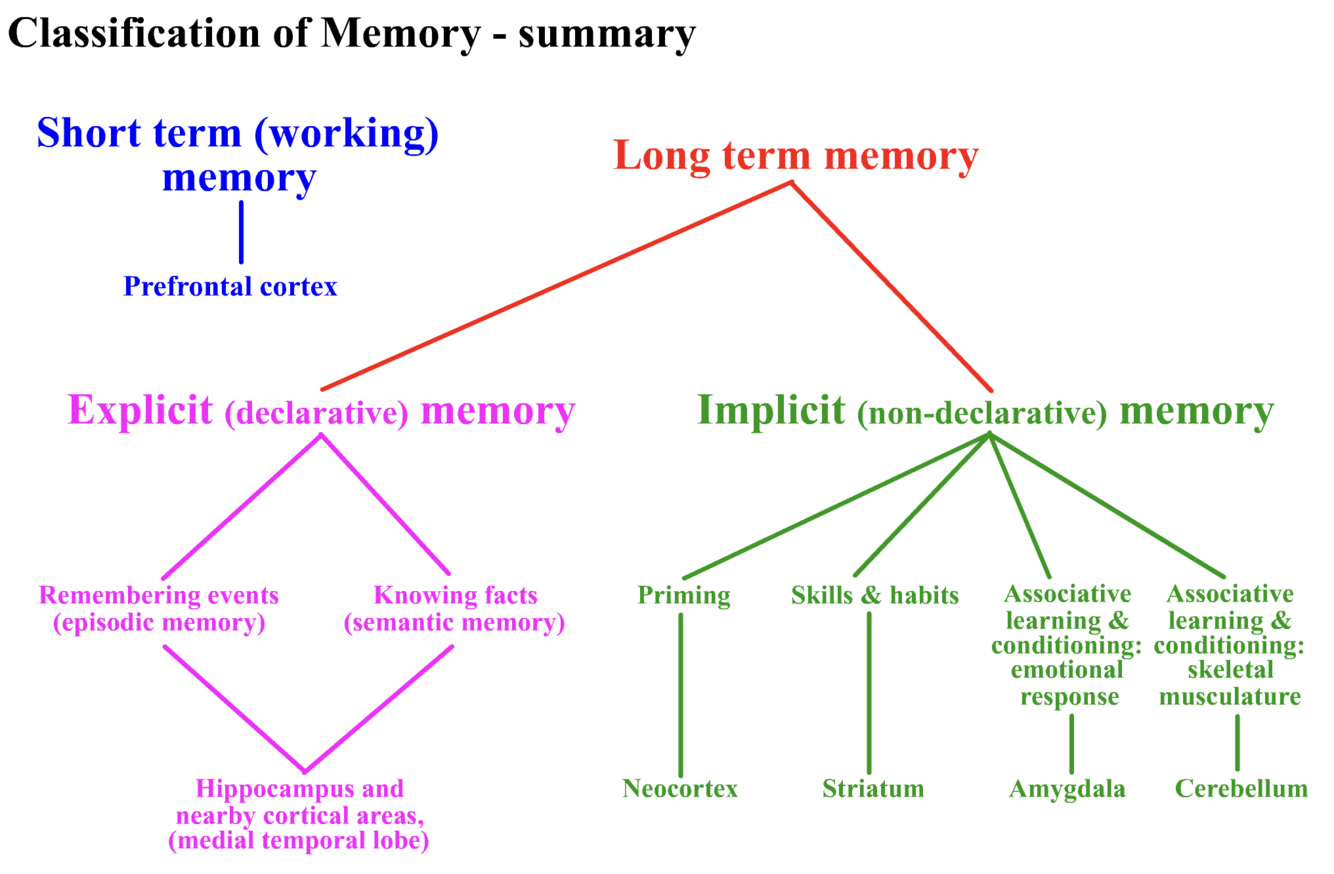
Anmesia
A loss or disruption of memory.
Divided into 2 components:
- Anterograde amnesia:
- impaired memory for info acquired after onset of memory loss
- Retrograde amensia:
- impaired memory for info acquired before onset of memory loss
- less common
Hippocampus
Overview & Blood Supply
- C-shaped in horizontal and coronal sections
- hippocampus proper named Ammon’s horn
- Blood supply
- mainly from posterior cerebral artery
- hippocampal head partly from anterior choroidal artery
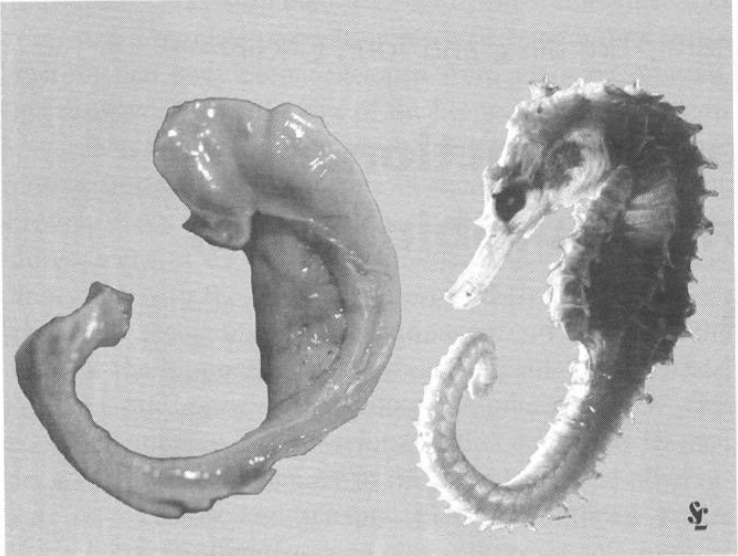
Hippocampus
Location
Found in medial surface of temporal lobe next to inferior horn of lateral ventricle.
Anterior end near amygdala.
Caudal end near splenium of corpus callosum.
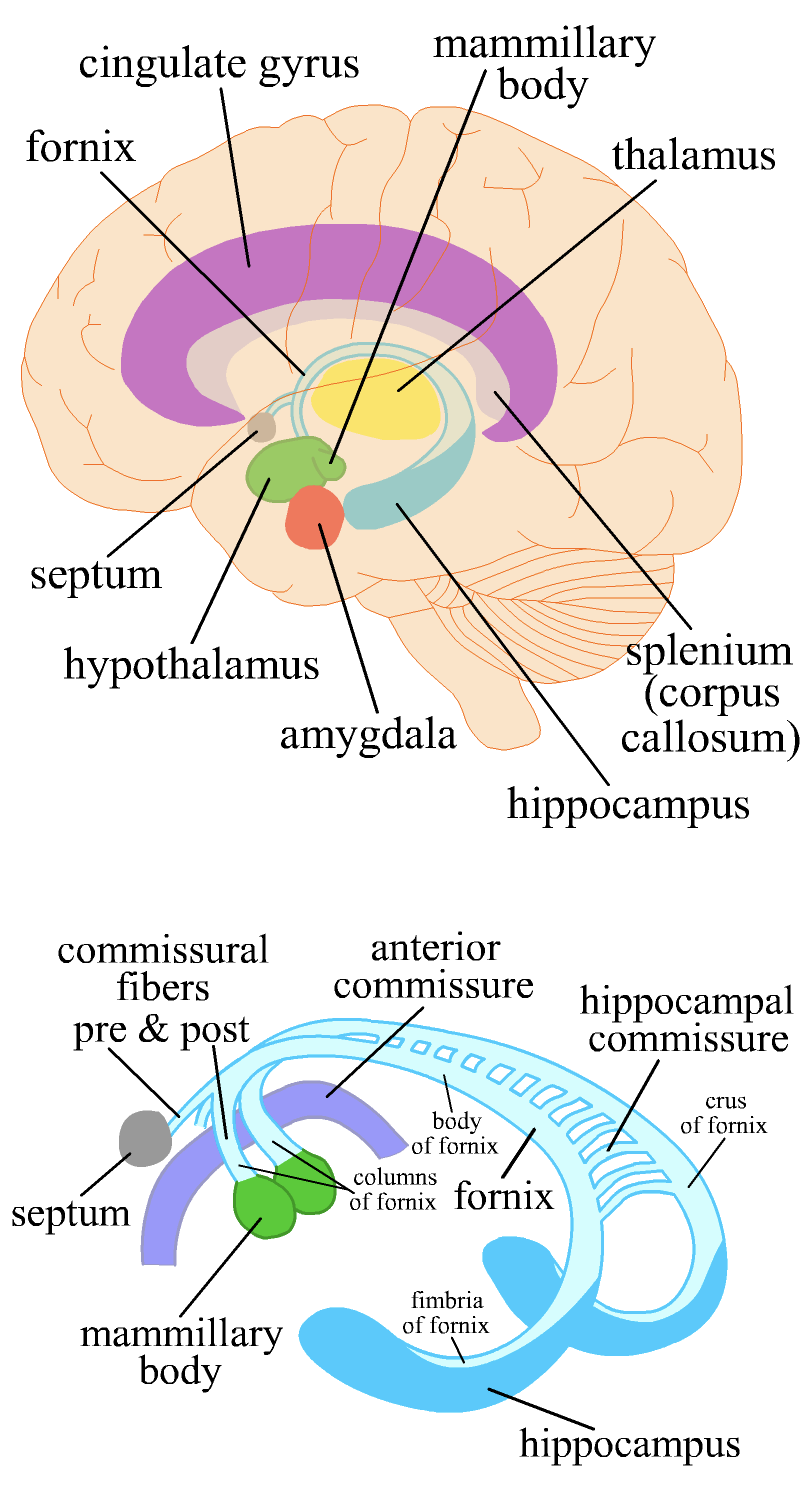
Hippocampus
Efferents
Hippocampal pyramidal neurons:
- Axons exit via fimbria of fornix
- Curve around and continue as crus and body of fornix
- At anterior commissure, fibers split into pre and post commissural fibers
- Precommissural fibers → septum
- Postcommissural fibers → descend ventrally as columns of fornix → mammillary bodies
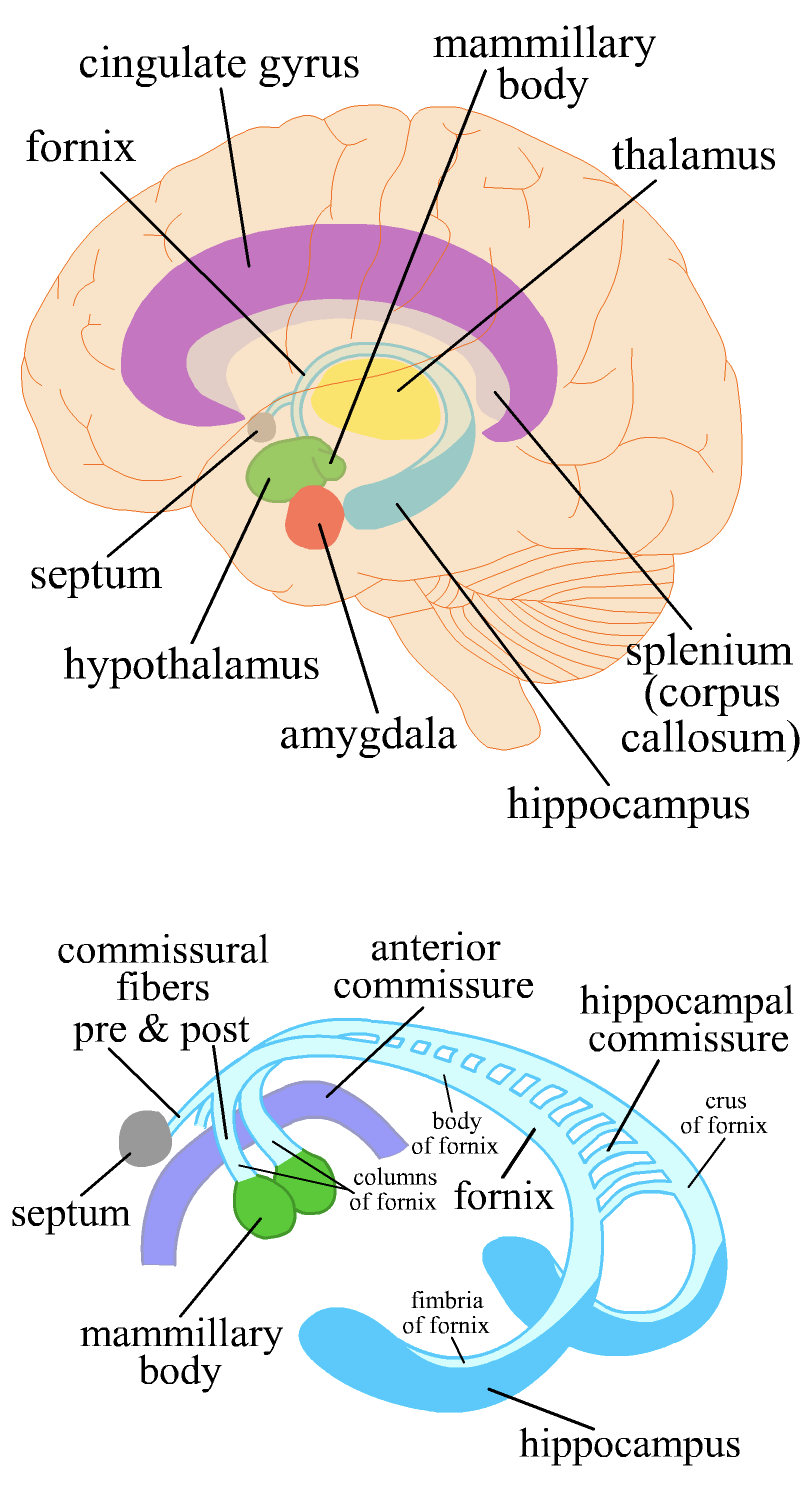
Hippocampus
Structures
Hippocampal formation refers to 3 structures:
- Hippocampus proper (Cornu Ammonis)
- Dentate gyrus
- Subiculum
Hippocampus proper and dentate gyrus arranged as 2 interlocking C-shaped structures in cross section.
Contains rows of glutamatergic pyramidal cells and sparse GABAergic interneurons.
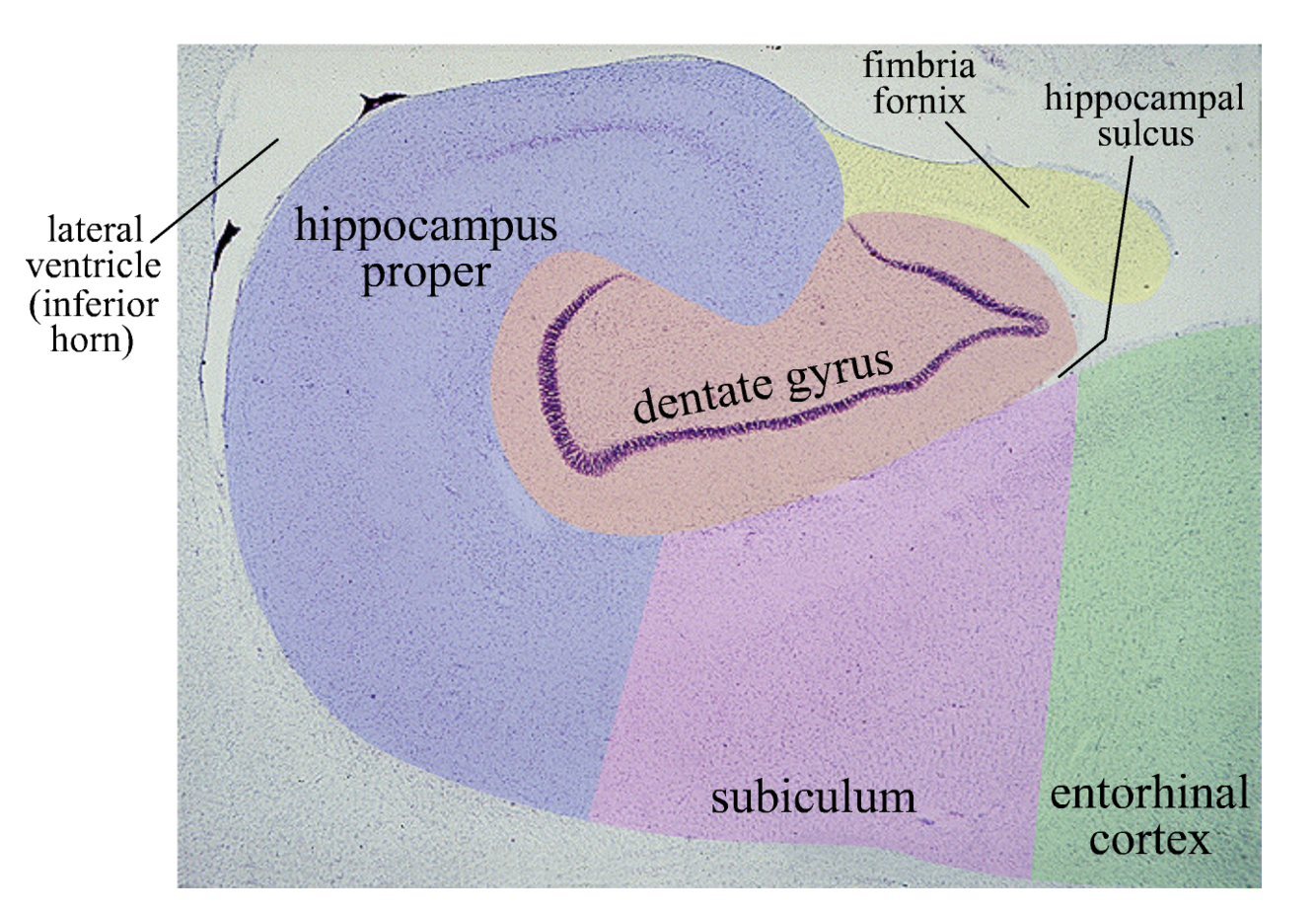
Hippocampus Proper
(Cornu Ammonis)
Divided into 4 Cornu Ammonis areas:
CA1, CA2, CA3, and CA4
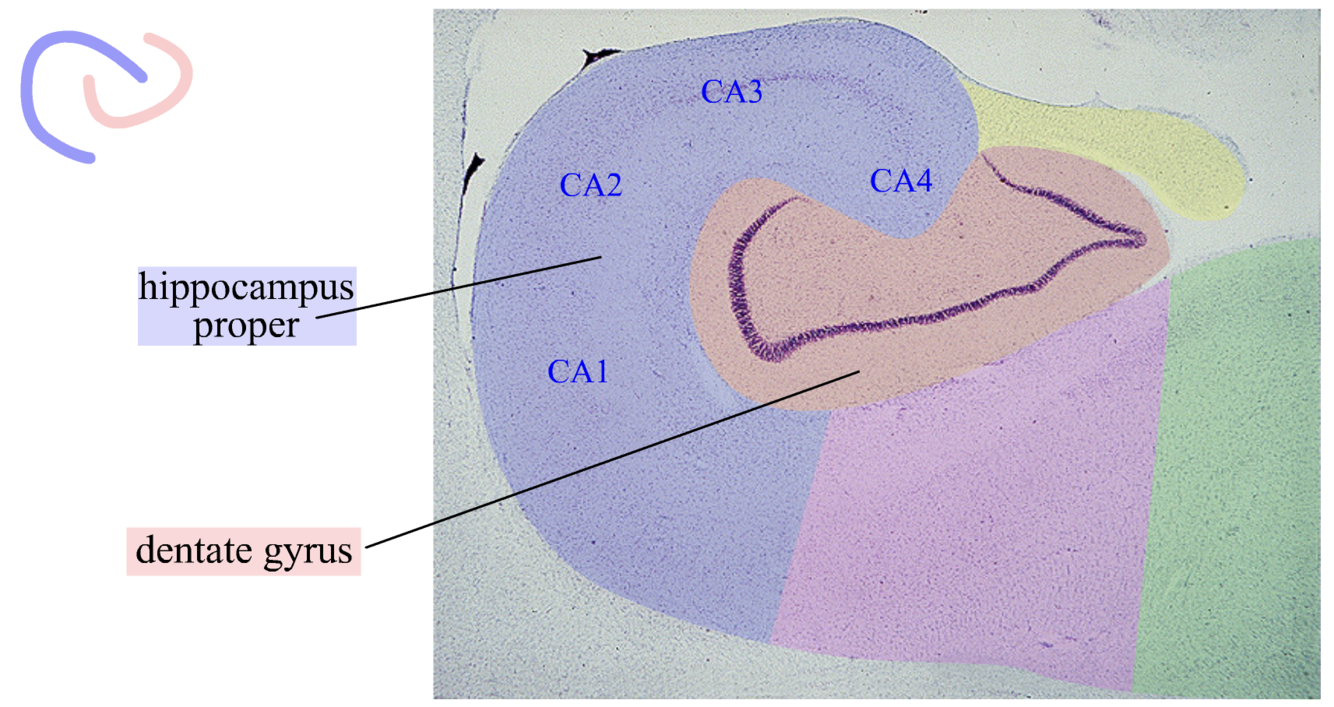
Hippocampus
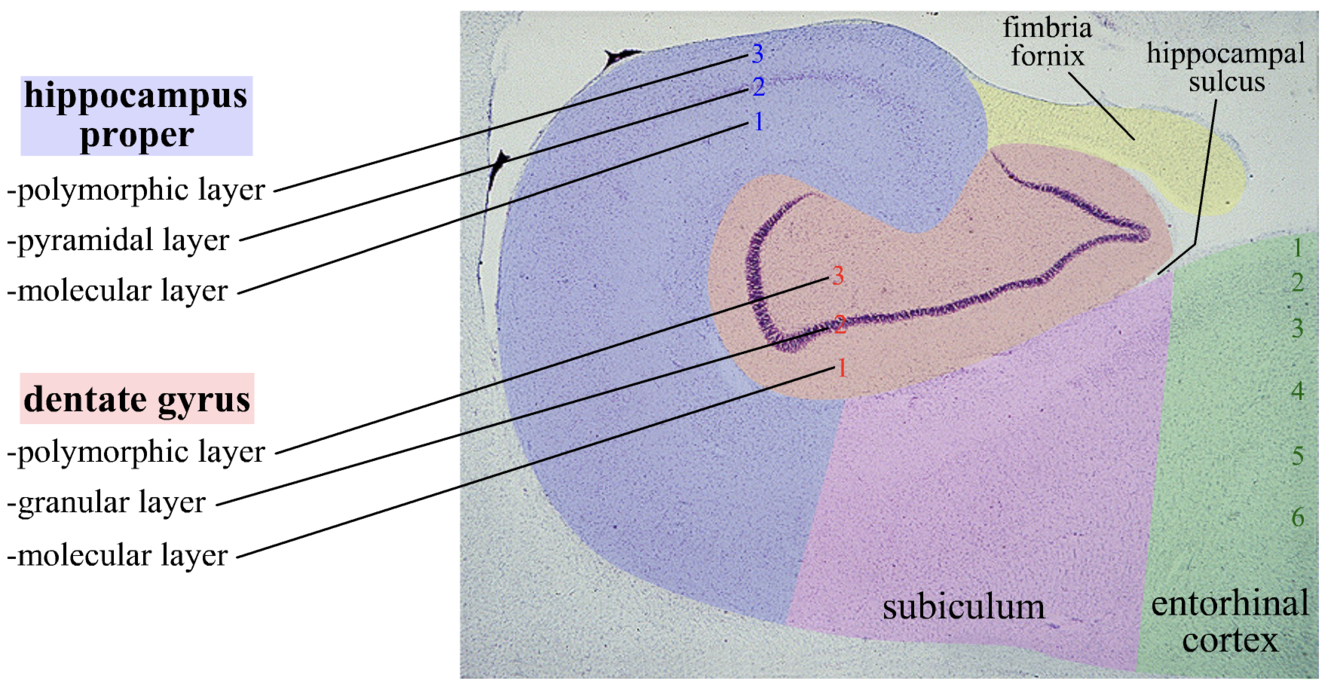
Layers
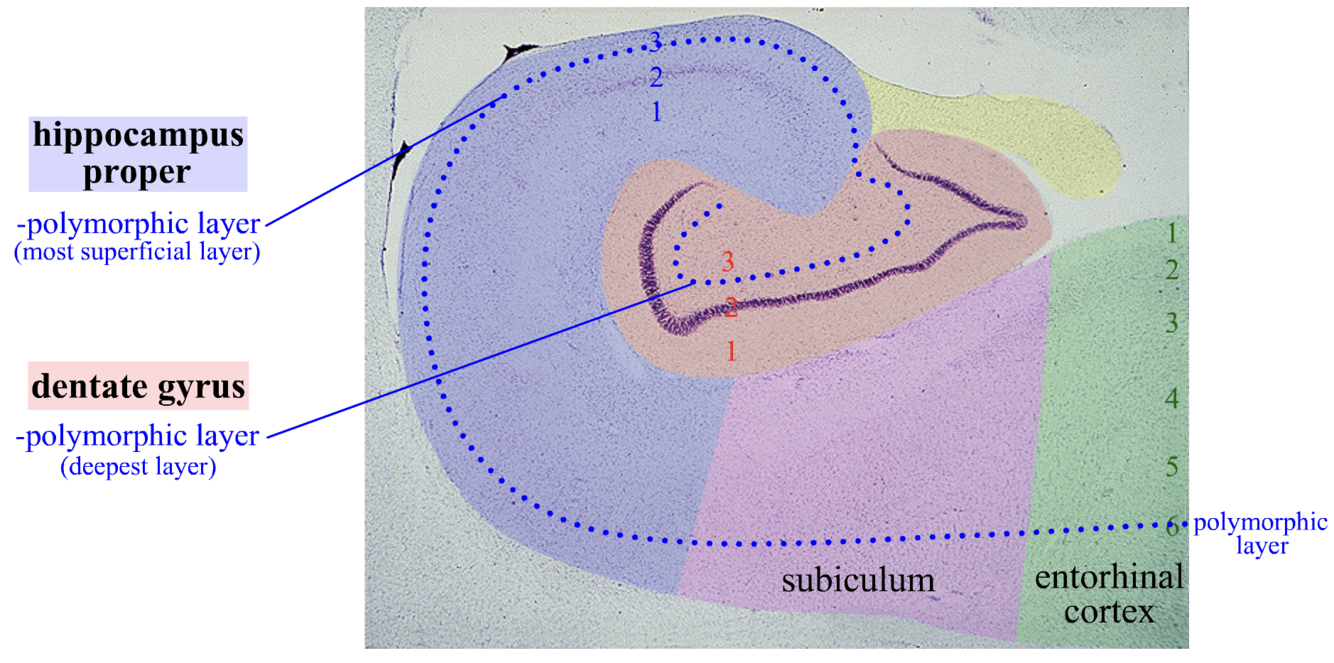
Entorhinal cortex (neocortex) contains 6 layers.
Hippocampus proper and dentate gyrus (archicortex) contains 3 layers.
Transition occurs within subiculum.
- Hippocampus proper:
- polymorphic layer
- pyramidal layer
- molecular layer
- Dentate gyrus:
- polymorphic layer
- granular layer
- molecular layer
Hippocampus
Molecular Layer
Molecular layer is most superficial layer in entorhinal cortex (neocortex).
Becomes deepest layer in hippocampus proper.
Returns to most superficial layer in dentate gyrus.
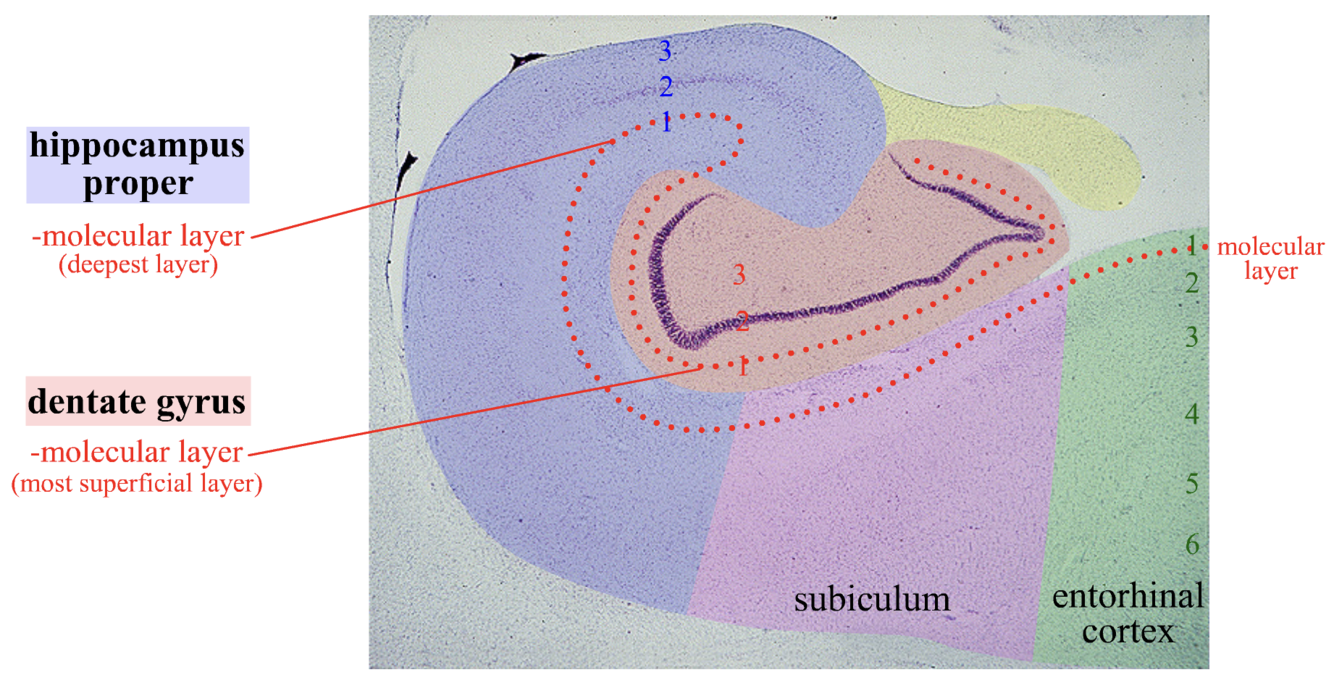
Hippocampus
Polymorphic Layer
Polymorphic layer is deepest layer within neocortex.
Considered an output layer.
Becomes most superficial layer in hippocampus proper.
Returns to deepest layer in dentate gyrus.
Hippocampus
Internal Loop
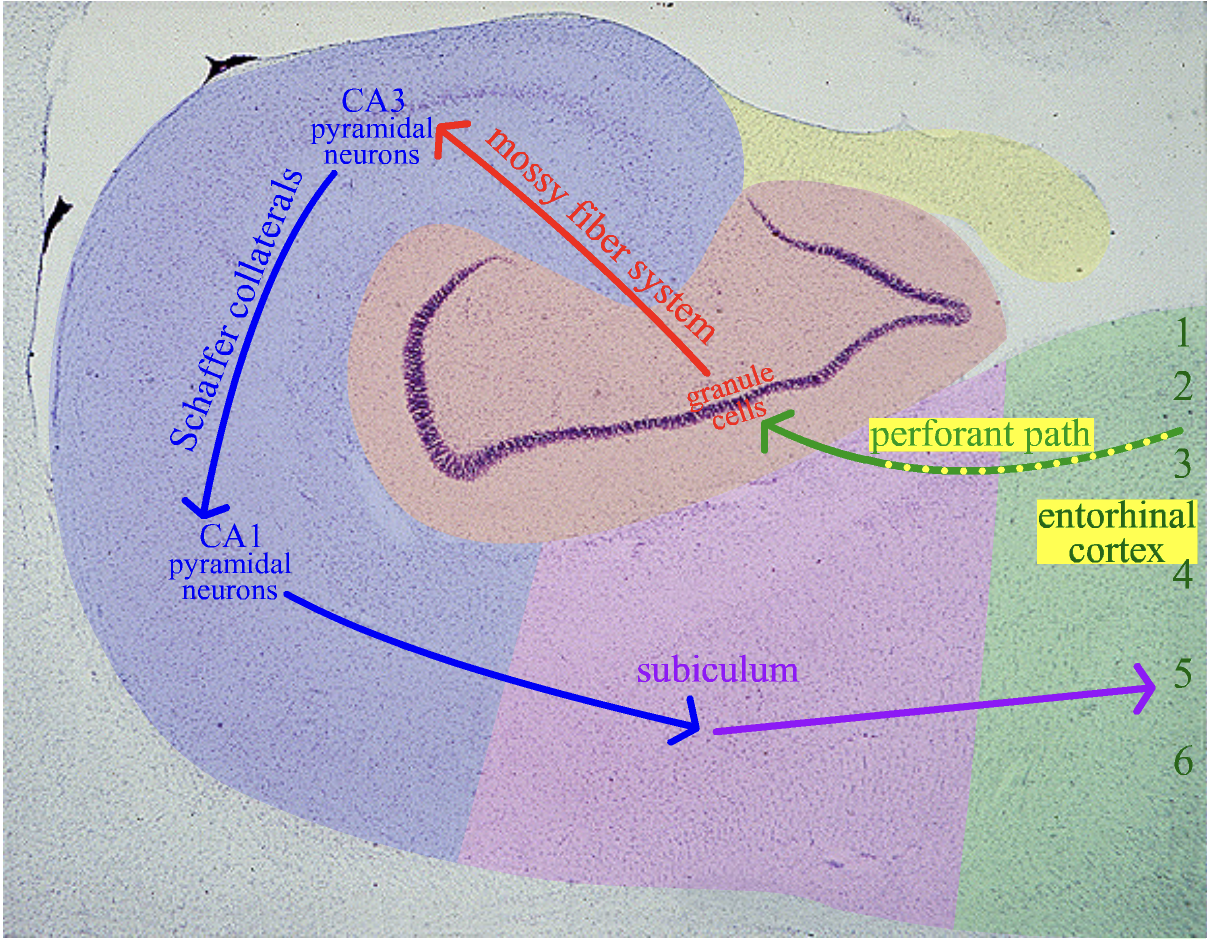
Information to be consolidated into long term memory:
cortical association areas → entorhinal cortex → internal circuit loop
1) Entorhinal cortex via perforant path ⟾ dentate gyrus granule cells
2) Dentate gyrus granule cells via mossy fiber system ⟾ CA3 pyramidal neurons
3) CA3 via Schaffer’s collaterals ⟾ CA1 pyramidal neurons ⟾ subiculum
4) Subiculum ⟾ entorhinal cortex & cortical association areas for storage
Hippocampus
External Loop
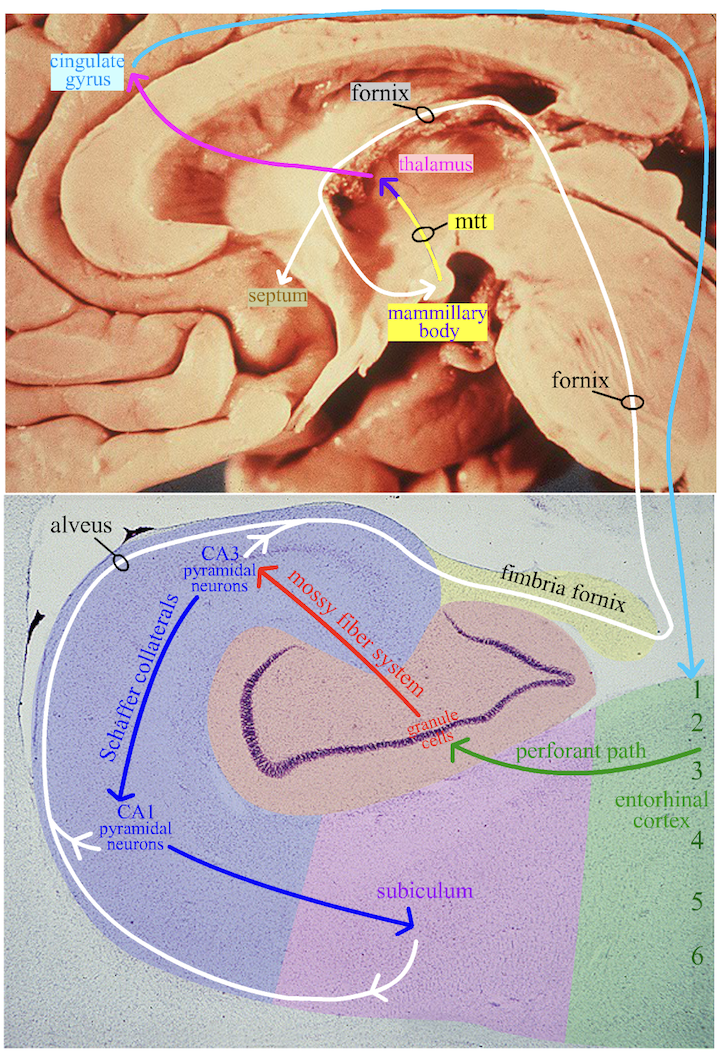
Pyramidal neurons in CA3, CA1, and subiculum receive inputs from entorhinal cortex.
Send axons in alveus which exit to form fornix
Fornix ⟾ septum and mammillary body
Mammillary body via mammillothalamic tract (MTT) ⟾ anterior nucleus of thalamus
⟾ cingulate gyrus
⟾ entorhinal cortex and cortical association areas for storage.
Memory Consolidation
Involves hippocampus, entorhinal cortex, and various medial temporal structures.
Process unclear but classic hypothesis:
- structures temporarily store complete copy of memory
- memory gradually duplicated over time to various neocortical storage sites
- temporal lobe lesion ⟾ anterograde amnesia
- some retrograde amnesia seen
- info still in medial temporal region at time of lesion lost
- some retrograde amnesia seen
Spatial Memory
Hippocampus likely involved in storing and processing spatial memory.
- Rodents:
- Hippocampal neurons called “place cells” have spatial firing fields
- as animal moves along circular track, different cells fire at different locations
- creates a spatial or contextual map
- serves as framework for event memories created in that environment
- Hippocampal neurons called “place cells” have spatial firing fields
- Humans:
- Also have place cells
- hippocampus most activated during learning and recalling of specific routes
Flashbulb Memory
Highly detailed, exceptionally vivid “snapshot” of the moment and circumstances in which a piece of surprising and consequential new was heard.
Hippocampus
Long Term Potentiation
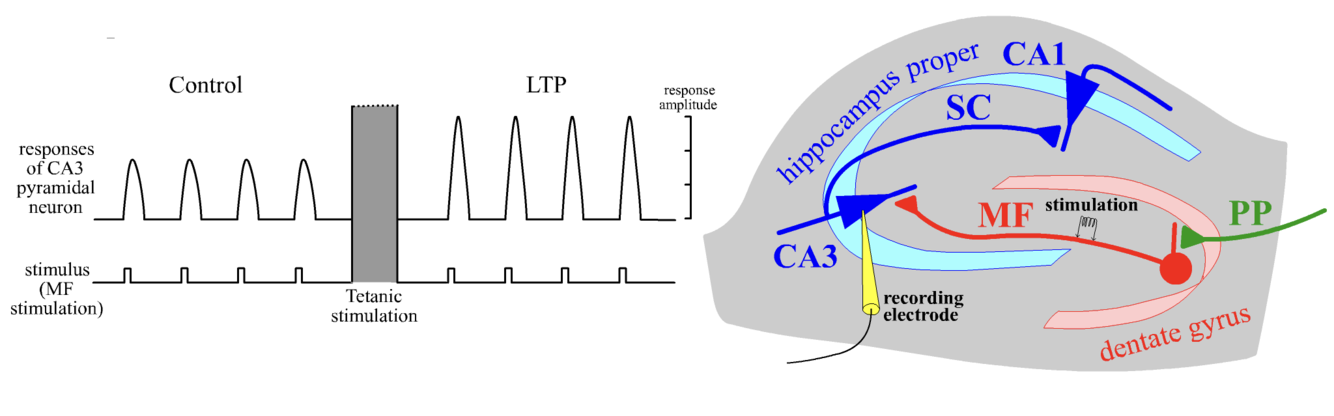
LTP extensively studied in hippocampus.
Model of synaptic plasticity and sustained ∆ in neural transmission.
Likely cellular basis of memory formation.
LTP results from high frequency stimulation of afferent pathways:
- Perforant path (PP) ⟾ granule cells of dentate gyrus
- Mossy fibers (MF) ⟾ pyramidal cells of CA3
- Schaffer collaterals (SC) ⟾ CA1 in hippocampus proper
Causes long-lasting ↑ in synaptic strength.
Hippocampal Lesion
Results in Kluver-Bucy Syndrome
- Anterograde amnesia
⟾ inability to transfer new short-term memory into long term memory- explicit or declarative memory affected
- semantic memory ⟾ conscious memory of facts
- episodic memory ⟾ conscious memory of events
- explicit or declarative memory affected
- Short-term or working memory intact
- can keep info in memory for several seconds
- Implicit or non-declarative memory intact
- can form motor skill, pattern recognition, habits, conditioning, emotional association, priming
- retain learning for as long as normal subjects


-
Craniofacial Complex37
-
Nervous System Development33
-
Blood Brain Barrier21
-
Neurotransmitters27
-
Intro to Nervous System29
-
Action Potentials and Channelopathies18
-
Neuronal Degeneration and Regeneration19
-
Neuronal Interactions24
-
Nerves, Spinal cord, and Pathways124
-
Spinal Cord Lesions16
-
Pain35
-
Hypothalamus63
-
CNS Pathways & ANS35
-
Limbic System70
-
Cerebral Cortex107
-
Cerebellum50
-
Basal Ganglia30
-
Motor Systems18
-
Brainstem13
-
Cranial Nerves15
-
Thalamus23
-
Aging and Alzheimers15
-
CVA, TBI, and Coma17



