Pain Pathway
Perception of pain is a product of the brain’s abstraction and elaboration of sensory inputs.
Varies with individuals, circumstances, and past experience.
Pain can be perceived with or without activation of nociceptors.
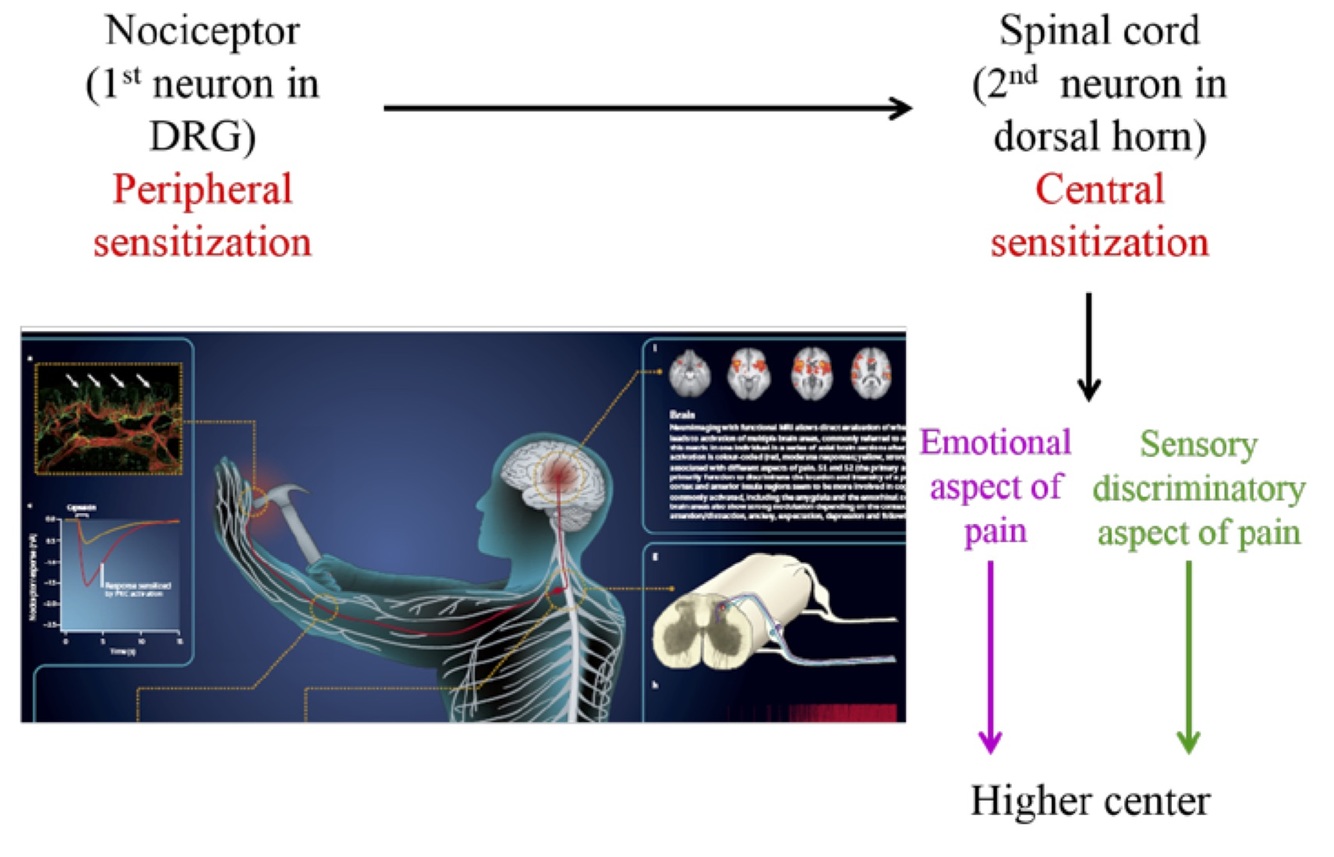
Asymbolia for Pain
Caused by bilateral lesion to the insular cortex.
Patient can describe the painful stimuli but not be emotionally affected by it.
Physiological Pain
(Nociceptive)
Results from direct stimulation of nociceptors.
Serves a protective biological function by warning against on-going tissue damage.
Responds well to opiods and NSAIDS.
Permanant damage can result from inability to feel pain.
Congentital insensitivity to pain
Acquired insensitivity (diabetic neuropathy, neurosyphilis)
Mechanical Nociceptors
- Activated by strong stimuli
- pinch, sharp objects that penetrate, squeeze.
- Associated with A-delta fibers (conduction at 5-30 m/s)
- Provide a sharp or pricking pain sensation
Thermal Nociceptors
- Activated by temperatures > 45°C or < 5°C
- Associated with A-delta fibers (conduction at 5-30 m/s)
Polymodal Nociceptors
- Activated by
- high-intensity mechanical stimuli
- irritant chemicals
- noxious heat
- noxious cold stimuli
- Associated with C-fibers (conducting at 1 m/s)
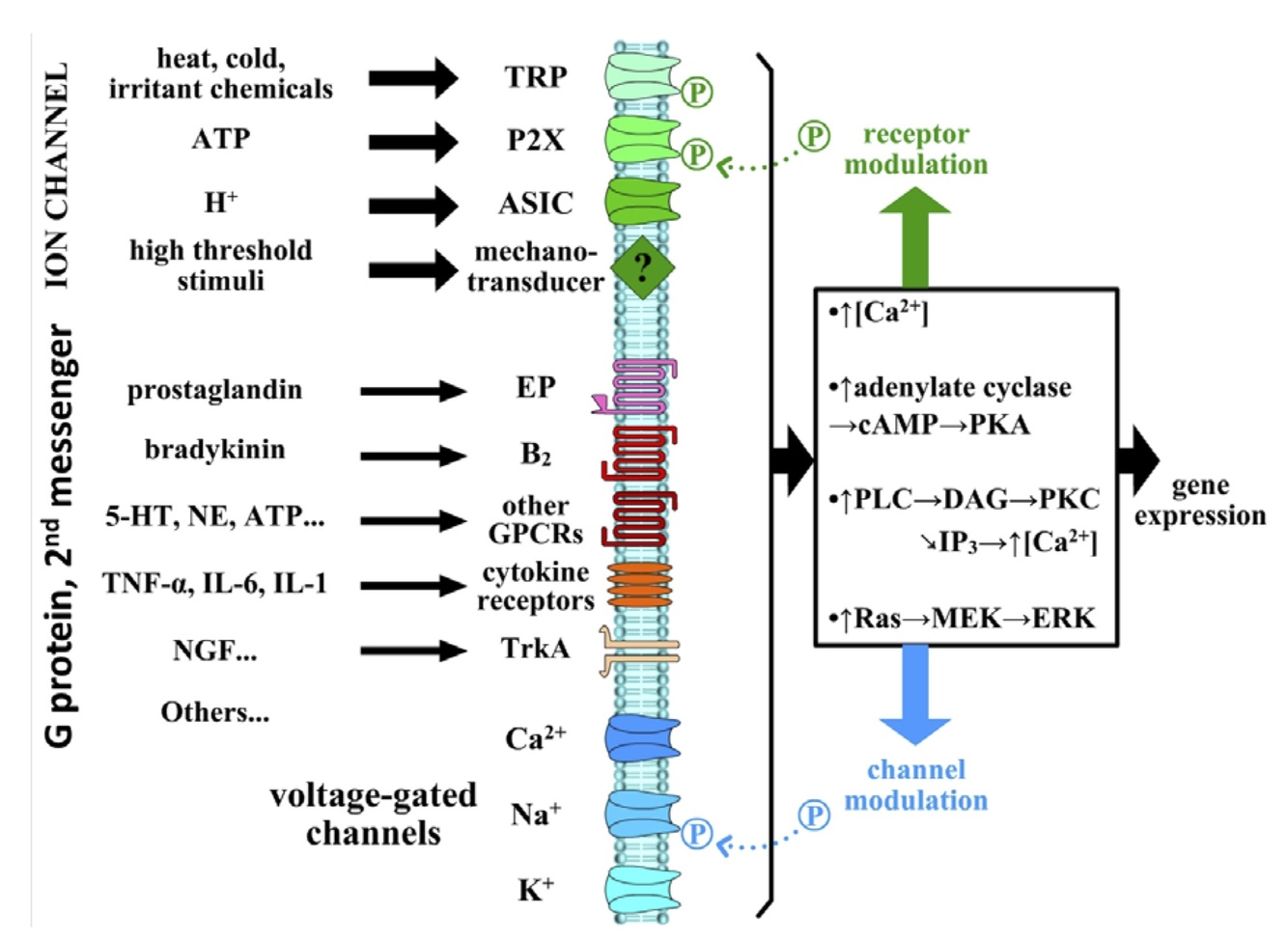
Ion Channel
Nociceptive Transduction Proteins
Receptors associated with a channel ⇒ fast response
- Transient receptor potential (TRP) family
- Vanilloid receptor TRPV1
- stimulated by capsaicin, protons, noxious heat
- creates burning sensation associated with spicy food
- TRPA1 receptor
- stimulated by mustard oil, garlic, cold, and acrolein
- accounts for toxic and inflammatory actions of tear gas, vehicle exhaust, tobacco somke, RA, MS, lupus
- Vanilloid receptor TRPV1
- ATP ⇒ P2X
- pain associated with tissue injury
- Acid sensing ion channel (ASIC)
- stimulated to ↓pH or high threshold mechanical stimuli
- accounts for pain associated with ischemia, inflammation
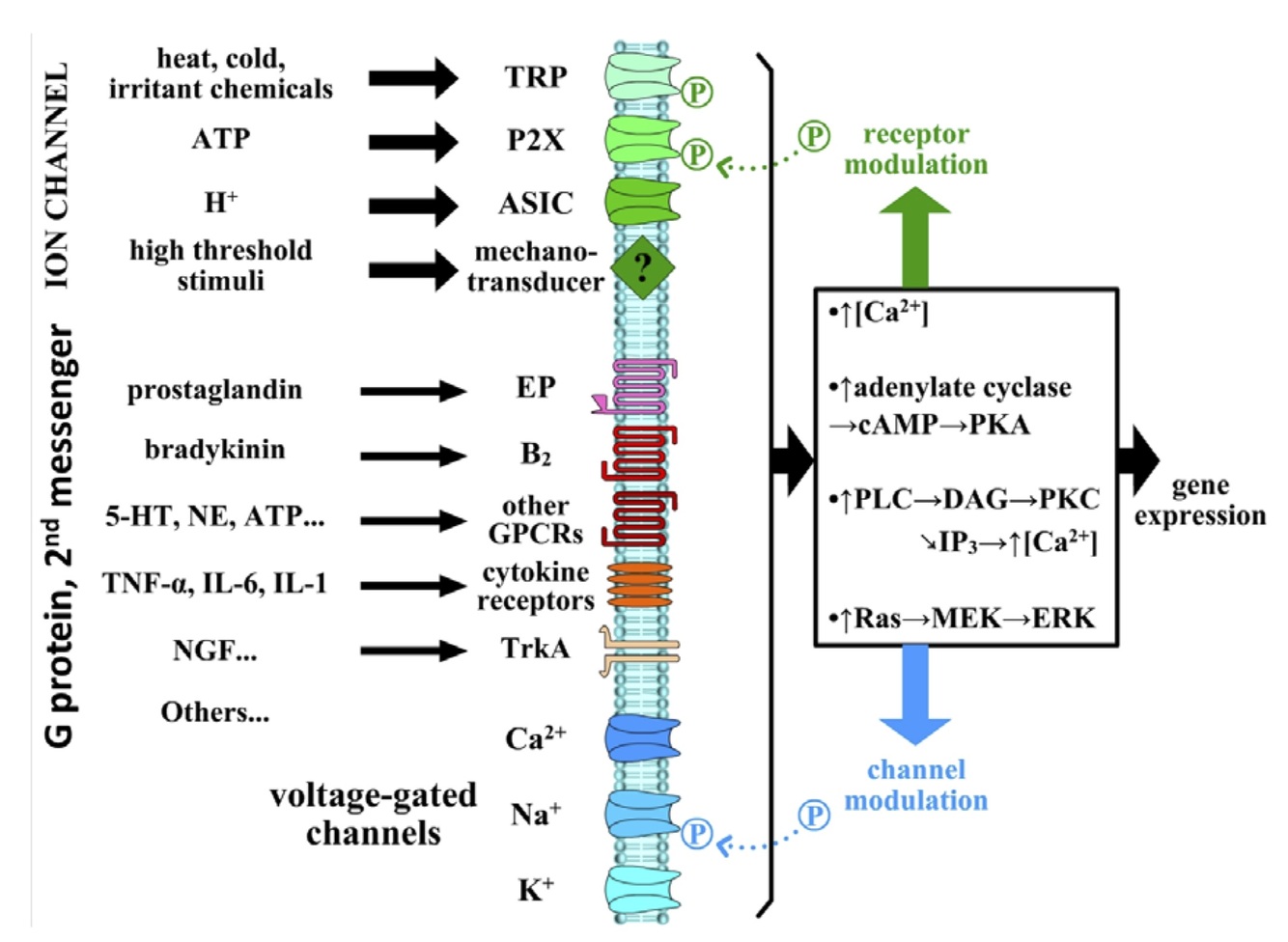
G-Protein or 2nd Messenger
Nociceptive Transduction Proteins
Slower Response
- G protein-coupled receptors
- Involved in nociception
- stimulated by bradykinin and prostaglandin
- activation of receptor activates 2nd messengers
- Ca2+
- PKA
- PKC
- Receptors for neurotrophins and cytokines
- stimulated by
- nerve growth factor family
- glial cell line-derived neurotrophin
- cytokines (IL-1, IL-6, TNF-𝛼)
- stimulated by
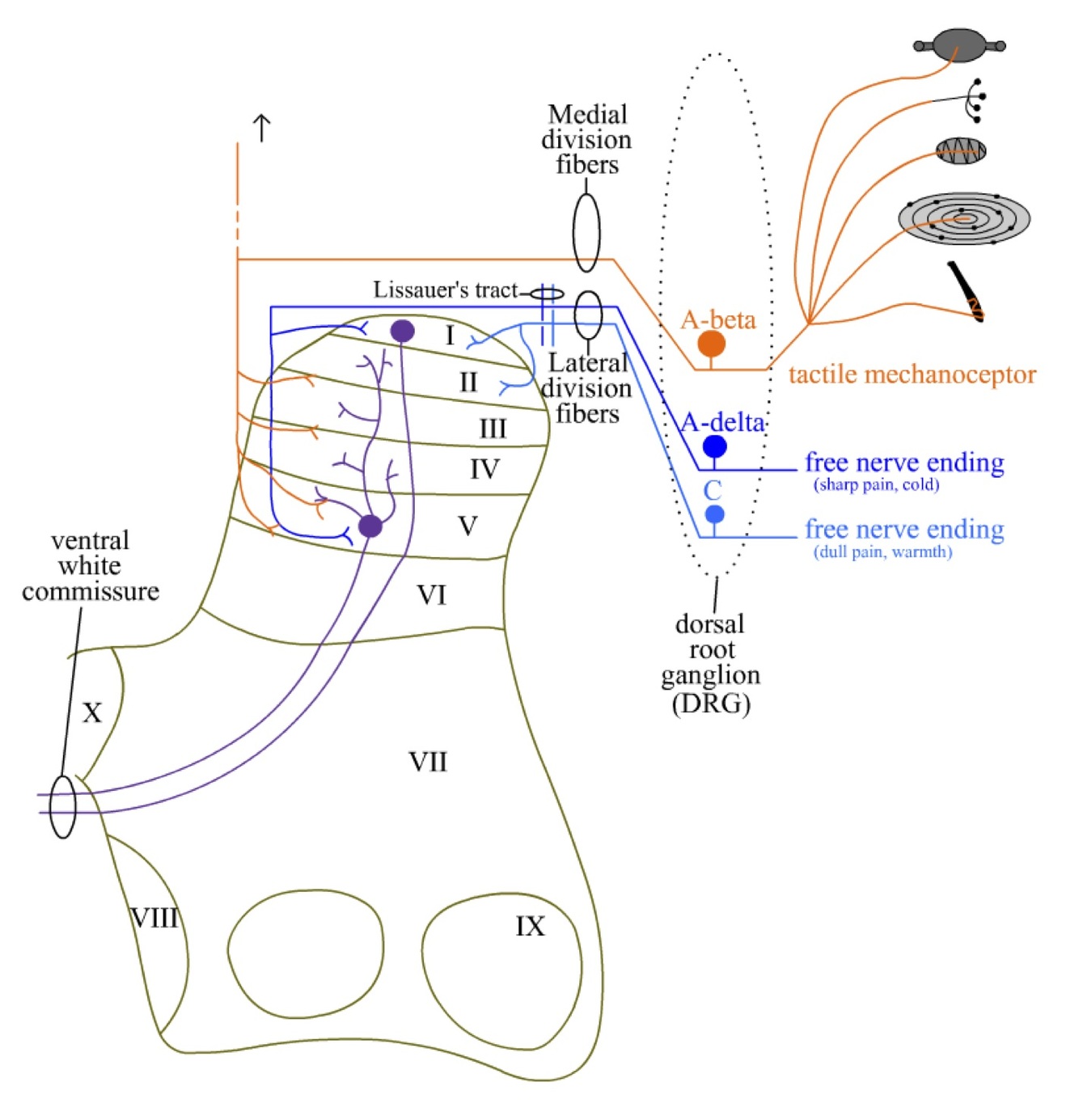
Nociceptor Projection
Nociceptors project to dorsal horn of spinal cord.
- Lamina I neurons receive input from:
- A-delta nociceptive afferents
- C fibers via interneurons in lamina II
- Lamina V neurons are predominantly wide-dynamic range type.
- Receive:
- non-noxious input from A-beta fibers
- noxious input from A-delta fibers
- noxious input from C fibers via l_amina II interneurons_
- Can be activated by hair movement or weak mechanical stimuli
- Maximal response with intense stimulation
- Participate in encoding intensity of noxious stimuli
- Receive:
- Lamina II neurons receives input from C fibers
- Relays info to other neurons and laminae via interneurons
Nociceptor Synaptic Transmission
A-delta and C-fibers Neurotransmitters
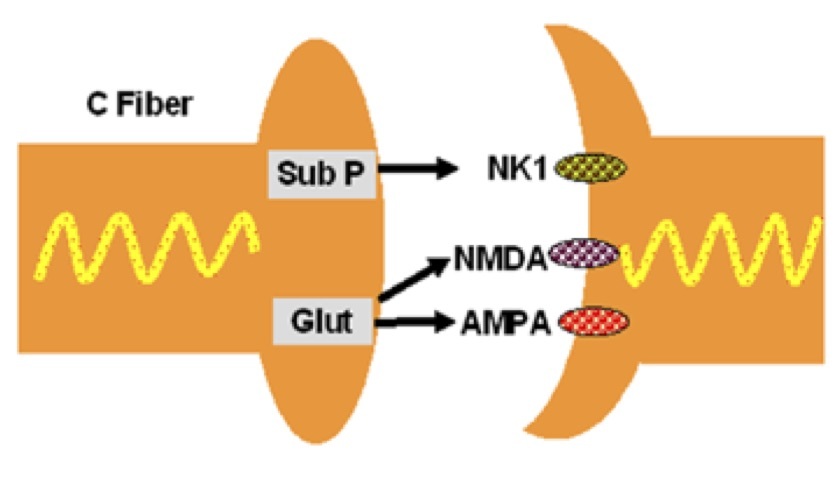
- Glutamate and peptides onto dorsal horn neurons
- Substance P
- co-released with glutamate
- enhances and prolongs glutamate action
- diffuses and affects other neuron populations
- due to no specific reuptake mechanism
Peripheral Sensitization
Nociceptors
Due to changes in nociceptor sensitivity.
Increased sensitivity to pain develops in the injured region and adjacent regions of skin.
- Cell injury releases an inflammatory cocktail including:
- prostaglandins and leukotrienes
- bradykinin
- substance P
- histamine
- calcitonin gene related peptide (CGRP)
- serotonin
- potassium
- ATP, NGF, and cytokines
- Inflammatory cocktail promotes:
- inflammation, increased vascular permeability, plasma extravasations
- sensitization and activation of nociceptors
- changes in kinetics
- lowered threshold
- number of receptors and channels
- enhances responsiveness of receptors and channels
- Inflammation invades adjacent tissue via the axon reflex
- Results in:
- lower threshold for pain at site of injury and adjacent tissues
- hyperalgesia
- allodynia
- spread of edema
- lower threshold for pain at site of injury and adjacent tissues
Axon Reflex
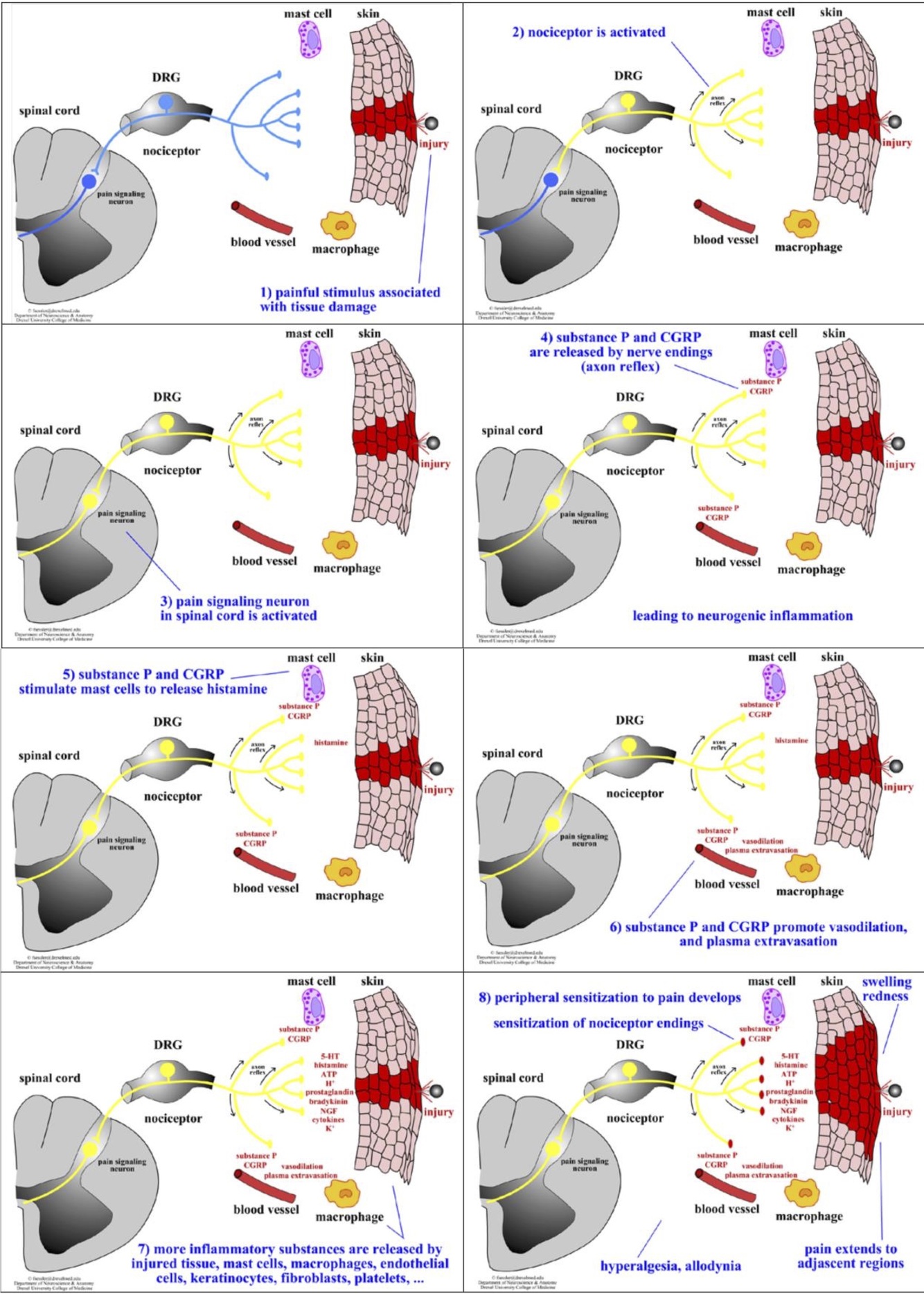
- Depolarization of nociceptor generates action potential
- travels along sensory neuron ⇒ dorsal horn of spinal cord
- depolarizes other branches of the nociceptor
- Nociceptor locally release
- substance P
- calcitonin gene related peptide (CGRP)
- Results in
- vasodilation and increased vascular permeability
- plasma transvasation
- histamine release by mast cells
- serotonin release by platelets
- Process contributes to the spread of inflammation and hyperalgesia to adjacent regions of the skin
Sun Burn
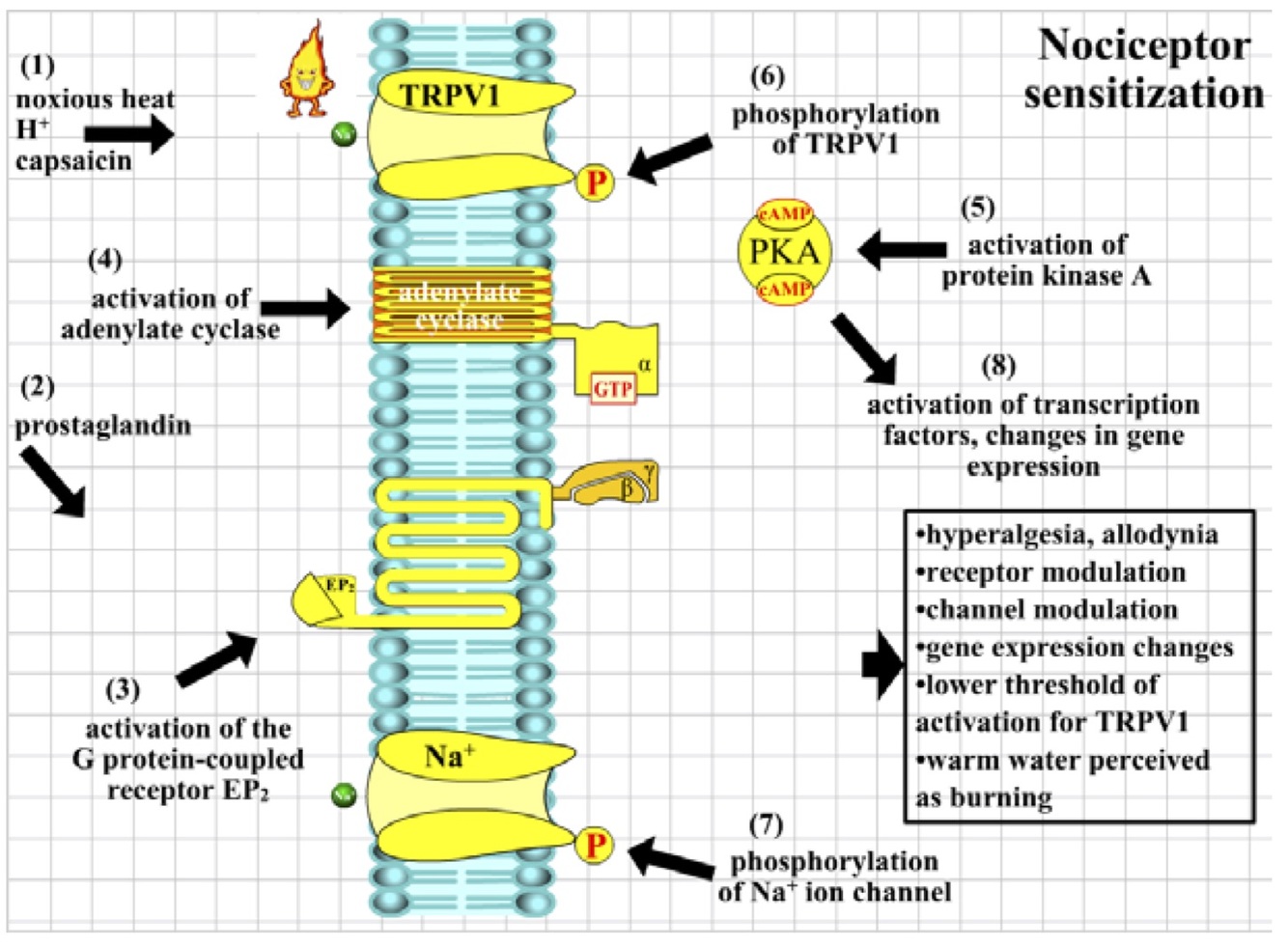
- Sun burn results in skin injury releasing prostaglandin (PGE2)
- Acts on the GPCR EP2
- Activates PKA and second messenger system
- Promotes modulation via phosphorylation of TRPV1 and Na+ channels
- Changes kinetics and threshold
- Increases number of receptors and channels
- Results in enhanced responsiveness of existing receptors/channels
- Warm shower perceived as burning after sunburn due to lowering of threshold of TRPV1 receptors ⇒ peripheral sensitization
Wind-up Phenomenon
Central Sensitization
- Nociceptor stimulation results in synaptic release
- glutamate
- substance P
- CGRP
- Elicits slow synaptic potentials in dorsal horn neurons lasting several hundred milliseconds
- Repeated nociceptor stimulation results in progressive increase in firing of dorsal horn neurons
- Summation of slow synaptic potentials depolarizes the dorsal horn pain signaling neuron more and more ⇒ wind-up phenomenon
- Repeated mechanical or noxious heat stimuli perceived as more and more painful even if stimulus intensity constant
Central Sensitization
Mechanism
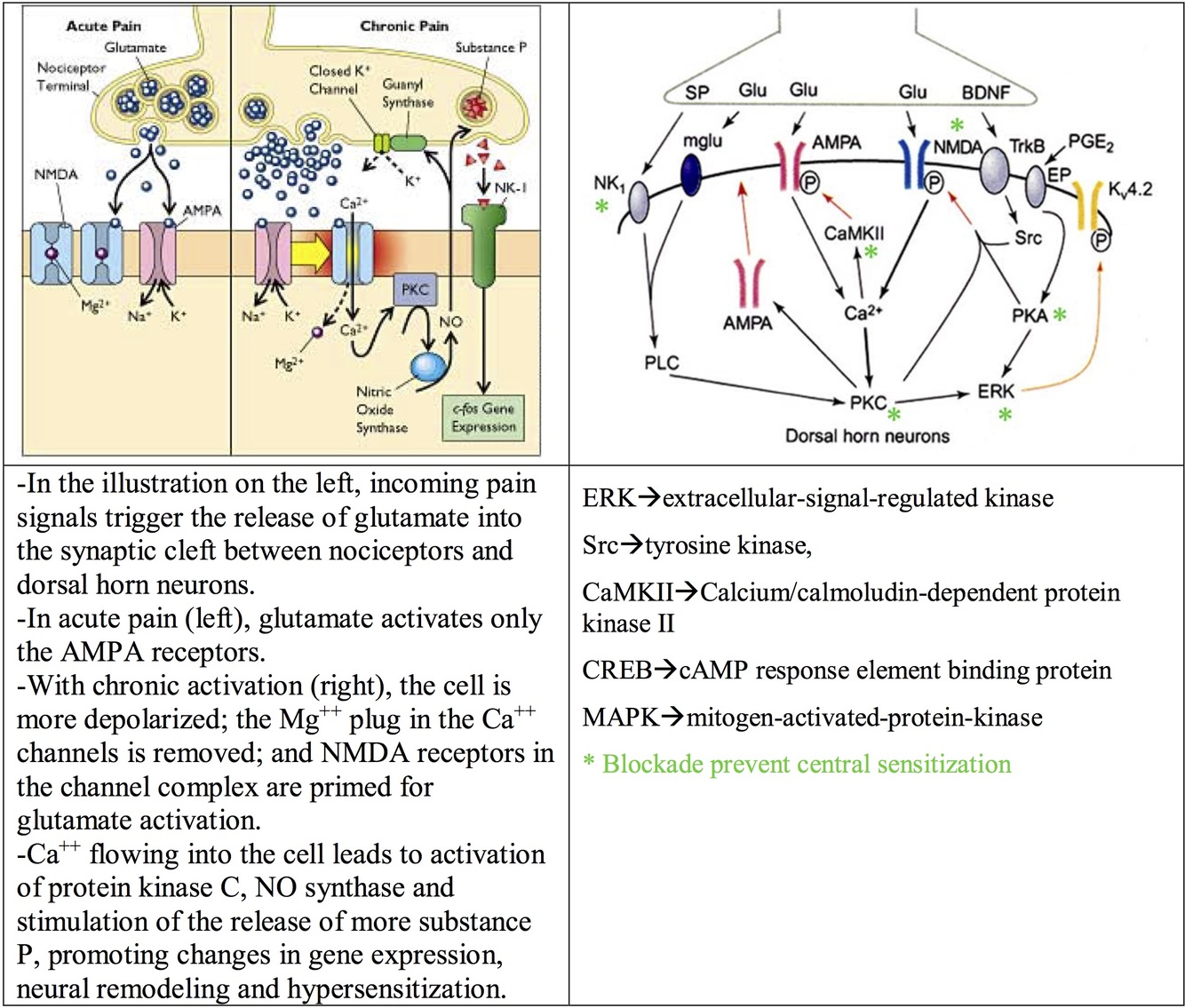
- Repeated nociceptor stimulation promotes wind-up phemonenon and progressive dorsal horn neuron depolarization
- Increased depolarization removes the voltage-dependent Mg2+ blockade of NMDA receptor ion channels
- NMDA channels now primed for activation by glutamate
- Firing-response of the neuron increases for each individual stimulus
- Entry of Ca2+ via NMDA channels leads to activation of second messengers
- PKA
- PKC
- NO synthase
- Results in alterations in ion channel properties, receptor activity, and receptor trafficking.
- Leads to changes in gene expression
- Produces long-term changes in dorsal horn neuron excitability ⇒ central sensitization
- Causes hyperalgesia, allodynia, and spontaneous pain
Neuropathic Pain
(Intractable)
- Caused by injury leading to permanent damage of PNS or CNS
- Results in rearrangement of PNS or CNS connections
- Serves no apparent biological function
- May persist for months or years beyond healing of any damaged tissues
- Tends to be only partially responsive to opioid therapy
Neuropathic Pain
Conditions
- Peripheral neuropathy
- caused by nerve damage in DM, ETOH abuse, chemotherapy, or vitamin deficiencies
- Entrapment neuropathy
- carpal tunnel syndrome
- Post-herpetic neuralgia
- hypersensitivity following herpes zoster reactivation
- Fibromyalgia
- chronic pain originating mainly GTO and muscle spindles
- “proprioceptive allodyania”
- Complex regional pain syndrome (CRPS)
- two types: sympathetlically dependent and independent
- Multiple sclerosis
- Neuroma
- Phantom limb pain
- Thalamic pain syndrome
- rearrangement of local circuits following central lesion or stroke
Neuropathic Pain
Mechanisms
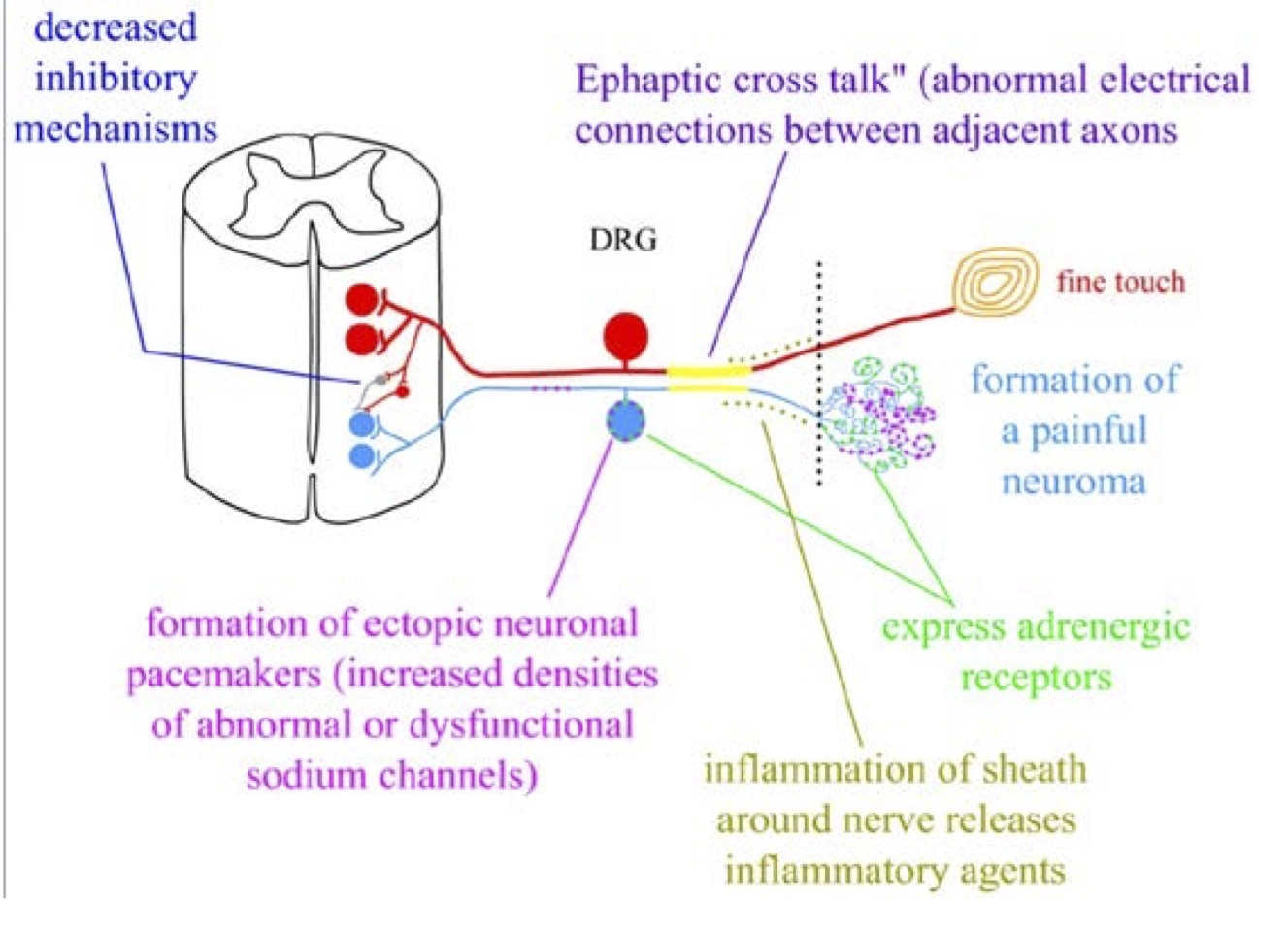
- PNS injury results in formation of neuromas
- Sprout of sympathetic fibers in DRG of injured nerves
- DRG neurons develop adrenergic receptors
- Acquire sensitivity to catecholamines
- Formation of ectopic neuronal pacemakers
- Due to increased density of abnormal or dysfunctional sodium channels
- Ephaptic cross talk
- Abnormal electrical connections between adjacent axons
- Cross talk between A & C fibers
- Connections between sensory and sympathetic fibers
- Inflammation of nerve sheaths
- Releases inflammatory agents
- Contributes to neuropathic pain
Allodynia
Mechanism
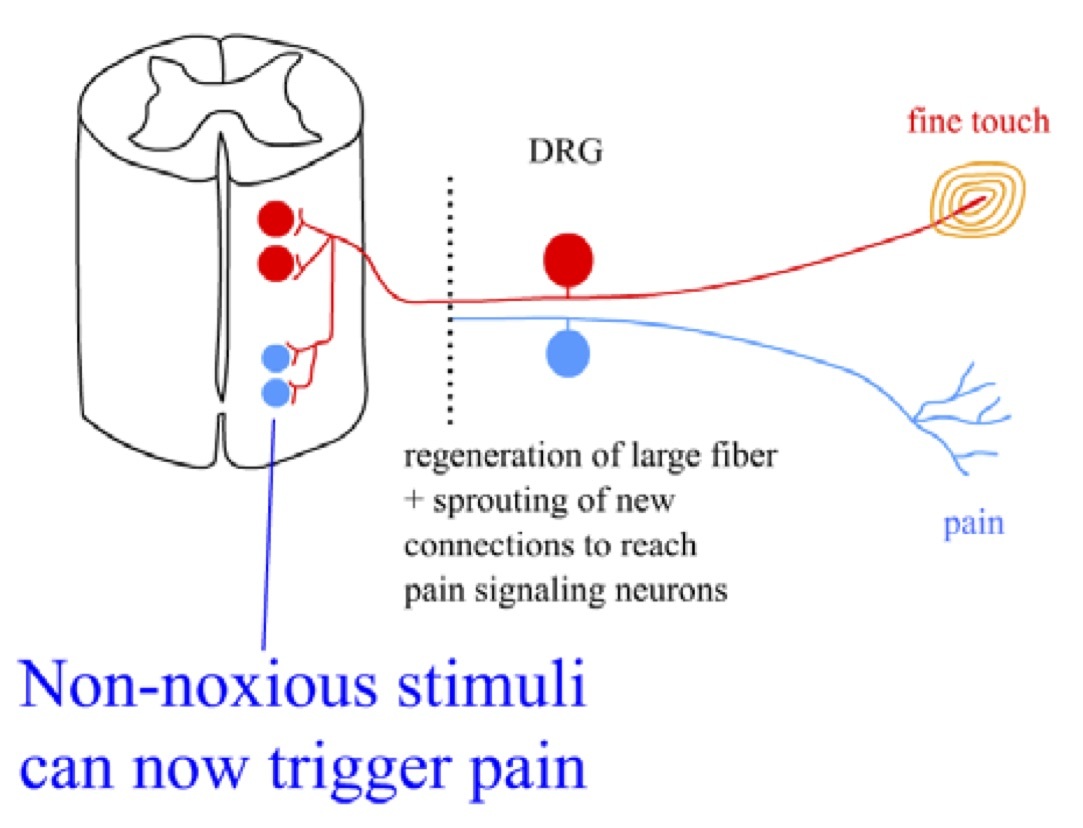
Reorganization results in neuropathic pain.
- Nerve injury results in greater loss of small fibers than large fibers.
- Axons of surviving A-beta fibers sprout new branches
- Make central connection to dorsal horn neurons vacated by lost C fibers
- Non-noxious stimuli can now activate dorsal horn pain signaling neurons and evoke pain ⇒ allodynia
Immune and Glial Cells
Role in Neuropathic Pain
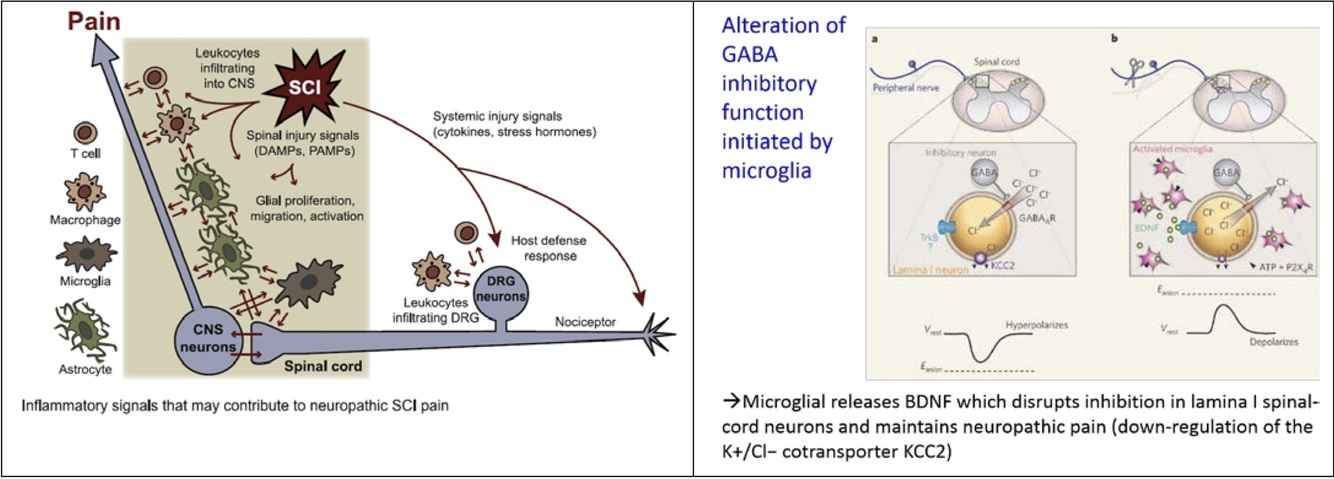
Involves Schwann cells, satellite cells in DRG, immune system components, spinal microglia and astrocytes.
- Nerve injury causes recruitment and activation of immune cells at site of lesion, DRG, and grey matter of spinal cord.
- IL-1 and IL-6 from macrophages
- NGF and neurotrophin-3 from satellite cells
- Inflammatory cytokines trigger sprouting of sympathetic fibers into DRG.
- Sensitized to catecholamines ⇒ neuropathic pain
- Activated microglia causes loss of GABA inhibition on dorsal horn lamina I neurons.
- Maintains neuropathic pain
Phantom Limb Pain
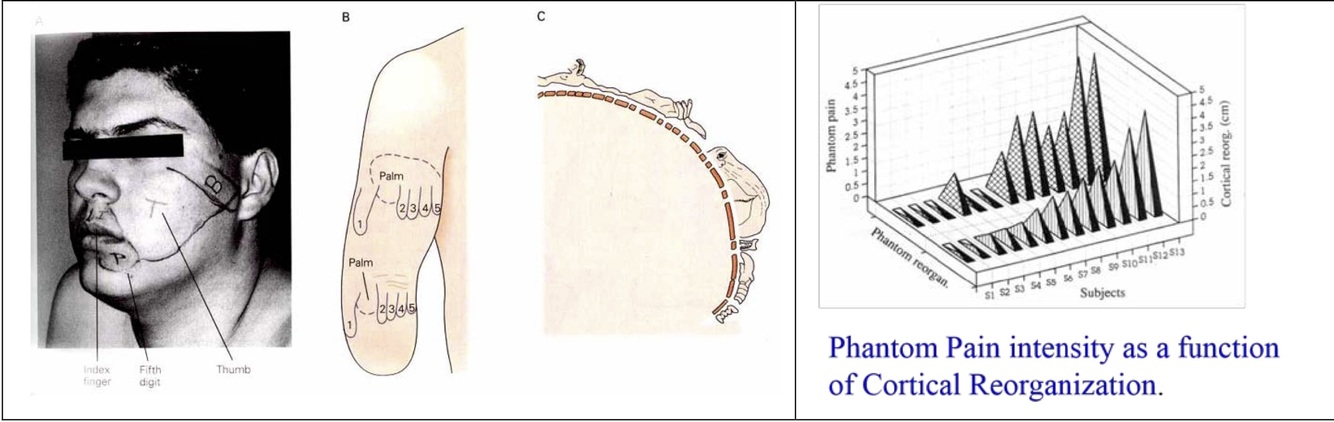
Produced by at least 4 mechanisms:
- Spinal cord “experiences” amputation causing central sensitization.
- Formation of neuromas.
- Sympathetic innervation of DRG leads to catecholamine sensitization.
- Reorganization of central connections.
Non-pharmacologial treatments:
- Mirror box
- Virtual reality googles
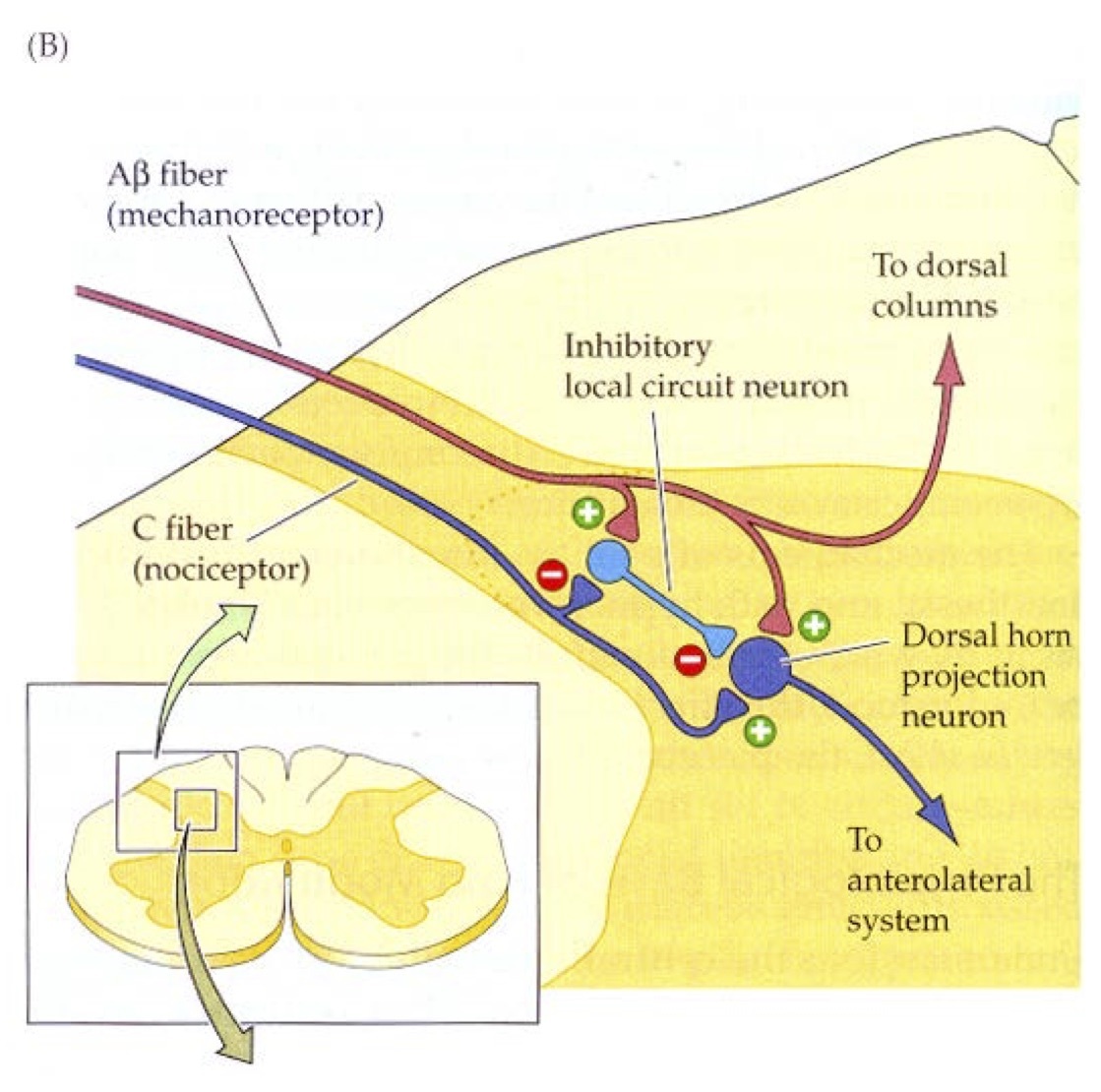
Gate Control Theory
Noxious and non-noxious inputs interact in the spinal cord.
Inhibitory interneurons activated by A-beta fibers act as a gate.
Controls transmission of pain stimuli by C fibers to higher centers.
Non-noxious stimuli can decrease pain transmission.
- Ex. rubbing skin near injury can decrease pain because it stimulates light touch associated A-beta fibers
- Applications:
- TENS
- Dorsal column stimulation
- Acupuncture
Referred Pain
Pain sensation from viscera inappropriately perceived as arising from surface structures.
May be due to visceral and somatic pain fibers converging on the same STT cells.
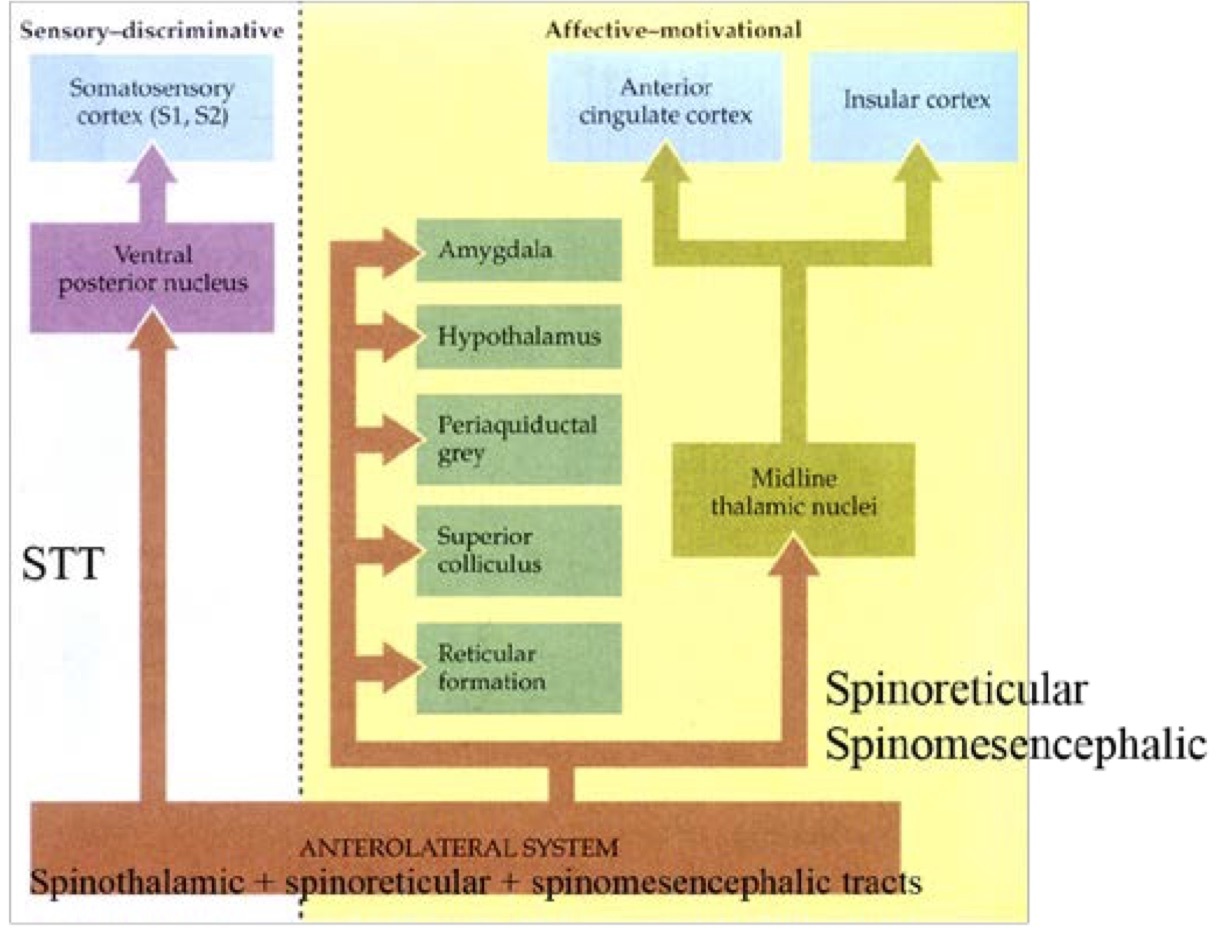
Nociceptive Pathways
3 pathways contribute to the nociceptive anterolateral system:
- Spinothalamic tract
- cell bodies in laminae I, II, and V
- cross midline and terminate in VPL thalamus
- project to primary somatosensory cortex
- carries information about localization, intensity, duration, and type of pain stimulus
- Spinoreticular tract
- ascend in the anterolateral system
- terminates in both reticular formation and intralaminar nuclei of thalamus
- projects to insula, cingulate gyrus, amygdala, and hypothalamus
- participates in the arousal and affective component of pain
- Spinomesencephalic tract
- axons ascend inside and out of anterolateral system
- terminate in mesencephalic reticular formation, periaqueductal gray matter (PAG), and parabrachial nucelus
- projects to insula, cingulate gyrus, amygdala, and hypothalamus
- participates in affective component of pain
- provides pain feedback information to PAG which is the center for suppresion of pain


-
Craniofacial Complex37
-
Nervous System Development33
-
Blood Brain Barrier21
-
Neurotransmitters27
-
Intro to Nervous System29
-
Action Potentials and Channelopathies18
-
Neuronal Degeneration and Regeneration19
-
Neuronal Interactions24
-
Nerves, Spinal cord, and Pathways124
-
Spinal Cord Lesions16
-
Pain35
-
Hypothalamus63
-
CNS Pathways & ANS35
-
Limbic System70
-
Cerebral Cortex107
-
Cerebellum50
-
Basal Ganglia30
-
Motor Systems18
-
Brainstem13
-
Cranial Nerves15
-
Thalamus23
-
Aging and Alzheimers15
-
CVA, TBI, and Coma17



