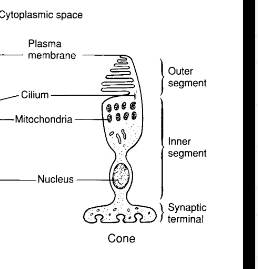
describe the structre of rods & cones
outer segment: **photoreceptive part
i) rods contain photopigment called rhodopsin
ii) cones contain photopigment called cone opsins**
* *occur in stacked plates**
inner segment: cell body (& mito)
which anterior pituitary hormone is inhibited by its hypothalamic releasing hormone?
Adrenocorticotrophic hormone (ACTH)
Prolactin (PL)
Lutenising hormone (LH)
Follicle stimulating hormone (FSH)
Thyroid stimulating hormone (TSH)
which anterior pituitary hormone is inhibited by its hypothalamic releasing hormone?
Adrenocorticotrophic hormone (ACTH)
Prolactin (PL): inhibited by prolactin inhbiting factor (e.g. dopamine)
Lutenising hormone (LH)
Follicle stimulating hormone (FSH)
Thyroid stimulating hormone (TSH)
what is the difference in anterior and posterior pituitary development? [1]
what is the difference in anterior and posterior pituitary development? [1]
- *posterior pit** = direct outgrowth of brain (specifically the hypothalamus)
- *anterior pit** = indirect growth: develops from ectoderm in roof of mouth & migrates up
how is baby sucking on a breast an example of creating a neuro-hormonal reflex? [2]
how does oxytocin promote maternal bonding? [2]
baby sucking on a teat:
- sucking action is transmitted to the hypothalamus via spinothalamic tract (neuro)
- releases oyxtocin from posterior pit. (hormonal)
- activates the milk down reflex
how does oxytocin promote maternal bonding? [2]
- suckiling - causes oxytocin release in mothers brain
- this is associated with reward - limbic system
why are anterior pituitary hormones released in ‘two hormone’ mechanism?
- double negative feedback means hormones are released in cyclic fashion (diurnal system or montly cycles)
WORK IN CYCLES !!
which of the following induces targers to produce insulin-like growth factors?
Adrenocorticotrophic hormone (ACTH)
Prolactin (PL)
Lutenising hormone (LH)
Follicle stimulating hormone (FSH)
Thyroid stimulating hormone (TSH)
Growth hormone (GH)
which of the following induces targers to produce insulin-like growth factors?
Adrenocorticotrophic hormone (ACTH)
Prolactin (PL)
Lutenising hormone (LH)
Follicle stimulating hormone (FSH)
Thyroid stimulating hormone (TSH)
Growth hormone (GH)
what is growth hormone (GH) inhibited by? [1]
•Is inhibited by growth hormone inhibiting hormone = somatostatin.
what type of cells make up the conjuctiva? [1]
function? [1]
what type of cells make up the conjuctiva? [1]
stratified columnar epithelium; goblet cells
function? [2]
mucous secreted: mixes with tears to make more viscous
covers sclera & inside of eyelids
explain the caloric stimulation test xx
- warm / cold water is irrigated into extenal auditory canal with a syringe
- creates a convective current in the endolymph of the nearby horizontal semicircular canal
- if warm: mimics a head turn to ipsilateral side (both eyes will turn slowly away from the irrigated ear towards to contralateal ear, then flick occurs towards irrigated ear_
- if cold: mimics head turn to contralateral side: lick occurs away irrigated ear_
COWS: cold flick to other ear; warm: flick to same ear
direction of the flick is called nystagmus
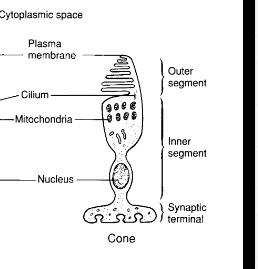
describe the structre of rods & cones
outer segment: **photoreceptive part
i) rods contain photopigment called rhodopsin
ii) cones contain photopigment called cone opsins**
* *occur in stacked plates**
inner segment: cell body (& mito)
spinal accessory nerve comes from which spinal levels? [1]
C1-5
which part of the brain gives you the ability to track an object? [1]
what does ^ connect with?
which pathway mediates neck flexes triggered by seen objects? [1]
which part of the brain gives you the ability to track an object? [1]
superior colliculi
some optic nerve fibres go to the superior colliculi -> connects to the medial longitudinal fasciculi (MLF): links together and synchronises the oculomotor nuclei
which pathway mediates neck flexes triggered by seen objects? [1]
tectospinal tract
= together give synchronised eyes and neck movement
where are most photoreceptors found in the eye? [1]
* which bit of blood circulation can you see in eye using opthalmoscope? [1] *
where are most photoreceptors found in the eye? [1]
fovea
* which bit of blood circulation can you see in eye using opthalmoscope? [1] *
inner circulation
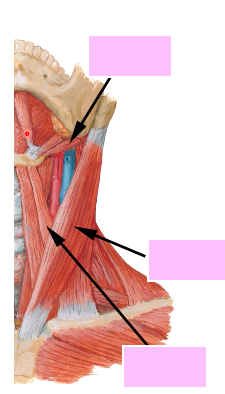
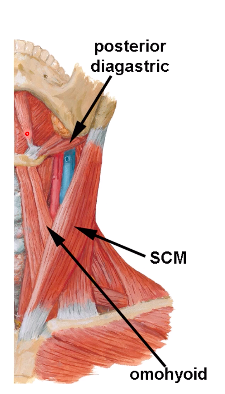
label the borders of the carotid triangle xx
which 3 cells cause seeing stuff x
- *photorceptors** (rods & cones - recive light signal & lose inhibitions) that connect to
- *bipolar** cells that connect to
- *ganglion** cels that send axons to optic nerve
- where do you find thermoreceptors? [2]
- where do you find thermoreceptors? [2]
- *i) cutaneous thermoreceptors
ii) anterior nucleus of hypothalamus: blood temp**
which of the following is released gonadotrophin releasing hormone (GnRH) [2]
Adrenocorticotrophic hormone (ACTH)
Prolactin (PL)
Lutenising hormone (LH)
Follicle stimulating hormone (FSH)
Thyroid stimulating hormone (TSH)
Growth hormone (GH)
which of the following is released gonadotrophin releasing hormone (GnRH) [2]
Adrenocorticotrophic hormone (ACTH)
Prolactin (PL)
Lutenising hormone (LH)
Follicle stimulating hormone (FSH)
Thyroid stimulating hormone (TSH)
Growth hormone (GH)
where is aq humour made in the eye? [1]
ciliary body
how does the hypothalamus regulate water balance?
- where do you find osmoreceptors? [1]
- which hypothalamic nuclei are stimulated to increase water in ur body ? how do they work?
- where do you find osmoreceptors? [1]
- *subfornical organ (wall of third ventricle): detects osmolarity**
- subforrnical organ activates cells in the:
- *i) medial preoptic nucleus**
- this nucleus connects to the limbic system: regulates concious sense of thirst
- *ii) paraventricular nucleus & supraoptic nucleus**
- secrete ADH (makes more aquaporins in CD)
- oxytocin
which nuclei in the hypothalamus do u need to know? [2]
paraventricular nucleus
supraoptic nucleus
where do you find the roots of the cervical plexus? [1]
which nerves are the roots from? [1]
where do you find the roots of the cervical plexus? [1]
around middle posterior border of SCM
which nerves are the roots from? [1]
C1-4
MESS:
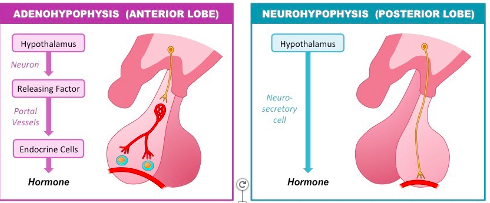
- how do supraoptic and paraventricular nuclei release peptides in circulation? [1]
- how does hypothalamic cell bodies from anterior lobe release peptides into circulation? [1]
•Posterior lobe: Hypothalamic cell bodies in the supraoptic and paraventricular nuclei have axons that project down the pituitary stalk to the posterior lobe of the pituitary. They release peptides into the capillaries in the posterior pituitary which circulate in the blood to other organs
•Anterior lobe: Hypothalamic cell bodies have shorter axons that release peptides on to the capillary plexus in the neck of the pituitary stalk
injury to superior laryngeal nerve causes? [1]
injury to recurrent laryngeal nerve causes? [1]
injury to superior laryngeal nerve causes? [1]
paralysed cricothyroid - cant ary length & tension = monotone voice
injury to recurrent laryngeal nerve causes? [1]
paralysed vocal folds: horseness (cant abduct the vocal folds)
which of the following stimulates production of spem and eggs
Adrenocorticotrophic hormone (ACTH)
Prolactin (PL)
Lutenising hormone (LH)
Follicle stimulating hormone (FSH)
Thyroid stimulating hormone (TSH)
which of the following stimulates production of spem and eggs
Adrenocorticotrophic hormone (ACTH)
Prolactin (PL)
Lutenising hormone (LH)
Follicle stimulating hormone (FSH)
Thyroid stimulating hormone (TSH)



-
FunMed EOYS251
-
FunMedEOYS347
-
FunMedEOYS459
-
FunMedEOYS153
-
FunMedEOYS427
-
FunMed EOYS Long 16
-
big boy things51
-
CR EOYS142
-
CR EOYS248
-
CR EOYS351
-
Calculations6
-
CR EOYS421
-
MET EOYS154
-
big boys29
-
MET EOYS253
-
MET EOYS343
-
MET EOYS445
-
MET EOYS538
-
BB EOYS150
-
BBB2
-
BB EOYS255
-
Short king spring65
-
BB EOYS350
-
BB EOYS446
-
:O29
-
BB EOYS447
-
Loco EOYS43
-
LOCO SSS59
-
LOCO EOYS 441
-
Loco EOYS344
-
LOCO EOYS 553
-
LOCO SSS246
-
LOCO EOYS542
-
LOCO EOYS629
-
SSS FunMed52
-
Spotter Qs130
-
SSS FunMed252
-
METSSS44
-
METSS249



