which two types of receptors could detect changes that would induce thirst? [2]
- osmoreceptors: in hypothalamus
- baroreceptors: detect when there is decreased blood volume (in great veins, right atrium of heart -> relied to vasomoto center) -> relayed to hypothalamus
what are ways you can test blood glucose? (3)
fasting glucose test - (not eating / drinking anything other than water for 8hrs)
glucose tolerance test - after fasting and again after 2 hours after being given a glucose drink
glycated haemoglobin test (HbA1C) - measure of average blood sugar level over past 3 months.
state the components of ECF [3] & ICF x
ECF:
high Na+
low K+
HCO3-
ICF:
low Na+
high K+
PO43-
protein anions
what are the 3 mechanisms of regulating H+ levels? [3]
- chemical buffer system in blood and ICF (HCO3-): immediate action.
* *H20 + CO2 ⇌ H2CO3 + HCO3- + H+** - Respiratory centre in brain stem:acts within 1-3 minutes.
- kidneys : hours to days
define anion gap
what is the equation to work out anion gap?
what is normal anion gap?
what does it indicate if you have greater than normal anion gap?
anion gap: quantity difference between cations (positively charged ions) and anions (negatively charged ions) in serum, plasma, or urine. measure of Na+, Cl- & HC03 in blood
[Na+] - ([Cl-] + [HCO3-]) = 8 to 12 mEq/L
what is normal anion gap: 8-12
high anion gap = acidosis,
how does the kidney produce bicarbonate?
- Glutamine -> glucose, HCO3-, NH4+
how does body keep H+ in renal lumen when in acidosis? [2]
when the body is acidosis:
@ distal proximal tubule:
H+ get secreted out of renal tubule cell into lumen. BUT want to stay here. SO, use NH4+ and H2PO4 buffes to keep the H+ in the filtrate
how do you test to determine if patient has metabolic acidosis? [1]
check anion gap: values greater than 12 = metabolic acidosis
why are biofilm bacterial infections problematic [2]
- extreme resistance to antiobiotics and other anti-microbrial agents
- high resistance to host immune defences
name two bacterial spreading factors and briefly state how they work
1. hyaluronidase: breaks down hyaluronic acid (intracellular cement of CT)
2. collagenase: breaks down collagen network - gives access to deeper tissues. E.g. Clostridium spp.
both allow further spreading into tissues
what are the two invasion techniques for bacteria entering cells? [2]
- *1. triggered invasion:**
- bacteria inject virulence factors into host cell cytoplasms to activate uptake by cell
- bacteria force the cell to extend local protrusion that engulf the bacterium
- = type 3 secretion system-dependent
- Salmnoella spp, Shigella flexneri
- *2. Zippered invasion:**
- bacteria produce outer membrane protein, with extracellular part exposed
- recognises receptor on target cell
- taken up by the cell
- specifc high affinity interaction between bacteria molecule and host cell receptor.
what is the role of phosphocreatine? [1]
under which conditions is it made? [1]
what is the role of phosphocreatine? [1] ATP buffer (in muscle & nerve cells)
under which conditions is it made? [1] anaerobic conditions
how can some pathogens resist toxic oxygen derived substances from host? [2]
detoxifcation of oxygen derived harmful substances from the host:
e.g. some microbes have:
- *- superoxide dismutase (SOD):** neutralises free radicals such as O2
- *- catalase** (breaks down H2O2): e.g. Staph. aureas
how can some bacteria destroy IgA? [1]
using IgA proteases
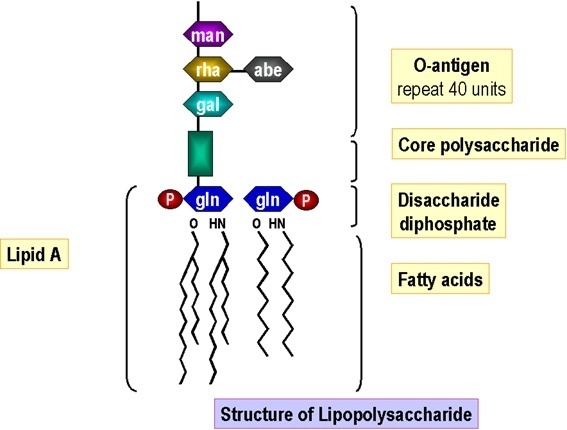
what is the basic structure of gram +ve bacteria? [3]
what does interaction with host cell cause?
structure: lipid A, core polysaccharide, O antigen
production of cytokines: results in septic shock, ferver, intravascular coagulation = haemorrage and endotoxin shock
which type of immune cell do superantigens cause expansion of?
superantigens:
- induces non-specific class II MHC and T cell receptor binding: widespread binding stimulation of T cells.
- Excessive cytokine release: fever, vomiting, diarrhea, organ failure
- *- 20 / 30% T cells activated**
which cytokines causes the differentation of ThO into:
a) Th1
b) Th2?
a) Th1: IL-12
b) Th2: IL-4
which antibiotics do you use on:
- gram +ve? [1]
- gram -ve ? [1]
glycopeptide antibiotics: gram postive
polymyxins: gram negative
name 4 methods that are acquired antiobiotic resitance mechanisms [4]
- *1. drug inactivation
2. activation of drug pumps**(pump out) - *3. modification of target**: e.g. acquire new gene that methylates Rb, so is resistant to drugs that target Rb.
- *4. alternative metabolic pathways:** e.g. with FA production, get mutations which mean that enzymes change structure so cant be targeted
name 3 ways that biofilm adherence can occur to bacteria
specific:
- Proteins on microbe cell surface binds to host cells e.g. Hemagglutinin
- Fimbriae interact with cell surface receptors
- Pili transfers DNA between Bacteria
which bacteria class have high priority antibacterial resistance? [1]
gram negative: have multi drug resistance.
what is the role of the following RNA?
Reverse transcriptase
Integrase
Protease
RNA polymerase
Reverse transcriptase – turns +ssRNA into DNA
Integrase – integrates viral DNA with host genome
Protease – help create viral building blocks
RNA polymerase – forms mRNA before going to ribosome
what are 4 ways that viruses can evade host? (not drugs)
- *Latency**: Dormancy that reactivates when host is immunocompromised e.g. HIV, Herpes
- *Phagocyte evasion**: Prevention of phagosome and lysosome fusion e.g. HIV
- *Antigenic shift and drift**: Genetic shuffling and random mutation makes immune system naïve again
- *Hiding**: Within cells: HSV, VZV, malaria
give two ways the bacteria can evade drug action [2]
1. gram-negative bacteria: outer membrane forms a permability barrier - drugs cannot cross
2. efflux pumps: active transporter. Efflux systems function via an energy-dependent mechanism (active transport) to pump out unwanted toxic substances through specific efflux pumps.



-
FunMed EOYS251
-
FunMedEOYS347
-
FunMedEOYS459
-
FunMedEOYS153
-
FunMedEOYS427
-
FunMed EOYS Long 16
-
big boy things51
-
CR EOYS142
-
CR EOYS248
-
CR EOYS351
-
Calculations6
-
CR EOYS421
-
MET EOYS154
-
big boys29
-
MET EOYS253
-
MET EOYS343
-
MET EOYS445
-
MET EOYS538
-
BB EOYS150
-
BBB2
-
BB EOYS255
-
Short king spring65
-
BB EOYS350
-
BB EOYS446
-
:O29
-
BB EOYS447
-
Loco EOYS43
-
LOCO SSS59
-
LOCO EOYS 441
-
Loco EOYS344
-
LOCO EOYS 553
-
LOCO SSS246
-
LOCO EOYS542
-
LOCO EOYS629
-
SSS FunMed52
-
Spotter Qs130
-
SSS FunMed252
-
METSSS44
-
METSS249



