which ligaments do we find around elbow joint [3] what do they help cause movement of ? [3]
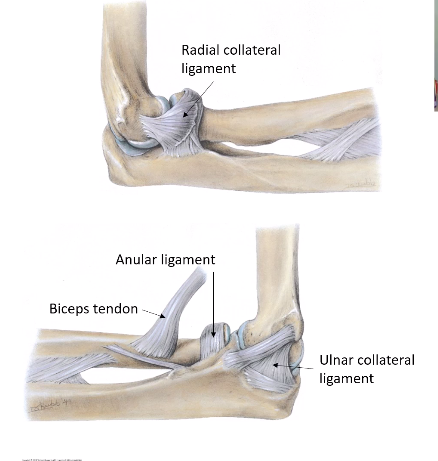
ligaments:
- radial collateral ligament
- ulnar collateral ligaments
- *reinforce hinge movement**
anular ligament: encircles the head of the radius and keeps in the radial notch of the ulnar: creates proximal radioulnar joint - pronation and supination of the formarm
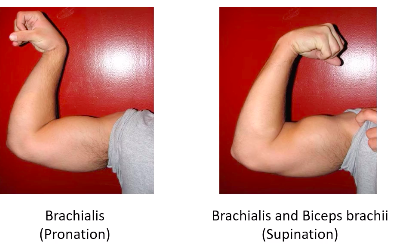
which muscles are used to flex your forarm when:
a) pronated
b) supinated
pronated forearm - brachialis used to flex elbow joint
supinated forarm - brachiali and bicep brachii flex elbow joints
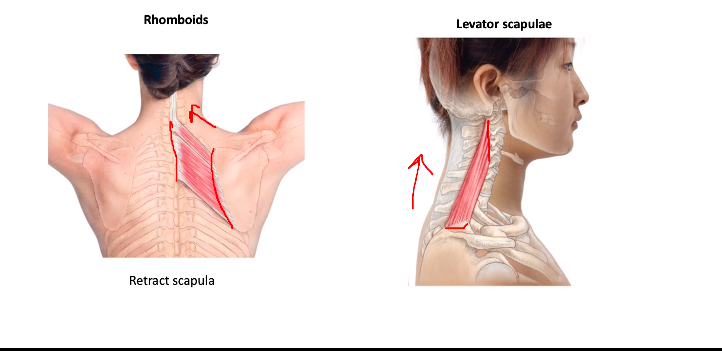
where do the the rhomboids and levator scapulae run from?
which movements do they cause?
rhomboids
medial aspect of scapula to upper thoracic vertebra. muscle fibres cause retraction of scapula
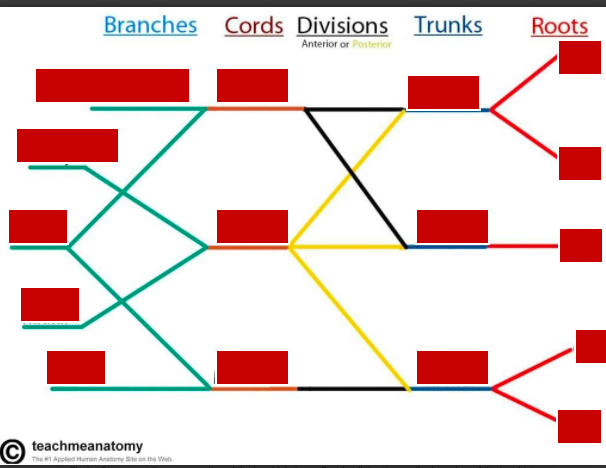
- *levator scapulae:**
- neck to superior aspect of scapular
- elevates scapula
what is the scapula-humeral rthym?
First 30 degrees of shoulder elevation involves a “setting phase”:
- the movement is largely glenohumeral.
- scapulothoracic movement is small and inconsistent.
And after the first 30 degrees of shoulder elevation:
- The glenohumeral and scapulothoracic joints move simultaneously.
- Overall 2:1 ratio of glenohumeral to scapulothoracic movement.
(e.g. when the arm is abducted 180 degrees, 60 degrees by rotation of the scapula & 120 degrees occurs by rotation of the humerus at the glenohumeral joint)
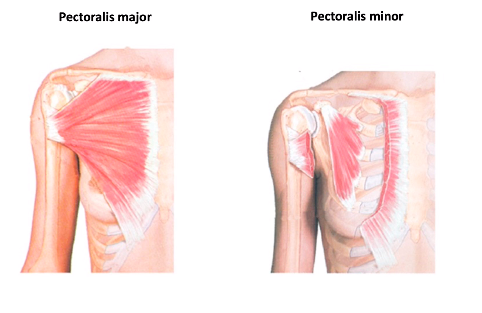
pectoralis major and minor:
where do they run?
movements?
innervation?
pectoralis major:
most superficial: runs from humerus to medial aspect of clavicle, sternum and ribs
two heads: clavicular head & sternocostal head
movment: adduct, flex and medial rotates the shoulder (hugging muscle!)
- *pectoralis minor:**
- corocoid process to upper ribs
- not much movement - stabilises the stable joint
both innervated by pectoral nerves
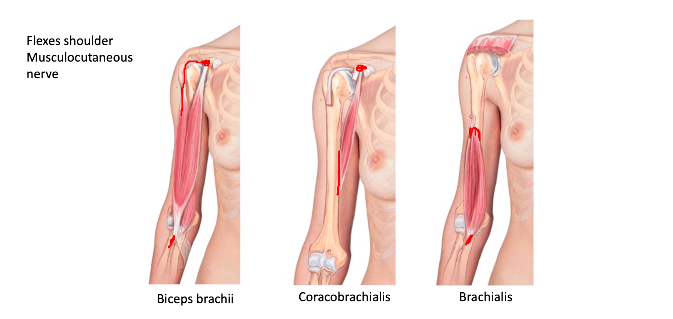
what are the three muscles found in anterior compartment of upper arm? what do they do?where do they run to?
biceps brachii - two heads:
i) one from corocoid process, distally to elbow (short head)
ii) superior border of glenoid fossa, superiorly to elbow
flex shoulder
- *coracobrachialis**: corocoid process to humerus
- flex shoulder
brachialis: mid shaft of humerus to elbow
trapezius - where found?
where does it run? [3]
what are the three different fibre parts? [3] what movements do they cause [3]
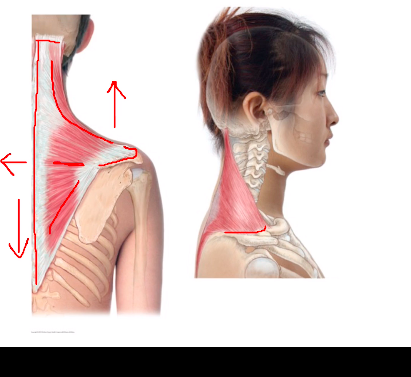
trapezius
runs from occipital bone to bottom of thoracic vertebral. attaches to spine of scapula and clavicle
three parts
- descending fibres / suprior fibres = elevate (shrug shoulders)
- middle fibres = retract scapula
- ascending / inferior fibres = depress scapula
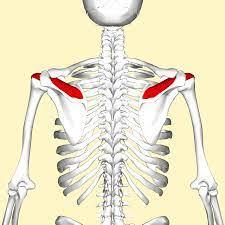
which muscle initates condcucts the first 10 degrees of abduction?
supraspinatus
what movements does scapulotharacic joint permit of shoulder?
movements: [3]
* *- elevation & depression**
- protraction & retraction
- rotation - important in abduction
what are two prominent features of the glenohumeral joint?
glenoid cavity accomodates approx/ 1/3 of the humeral head: means that should can have wider range of movement
inferior joint capusule is lax. allows elevate above head. but means is much weaker than superior portion
which ligament is commonly torn in young girls?
Ulnohumeral joint
Radio humeral joint
Proximal radioulnar joint
why?
which ligament is commonly torn in young girls?
Ulnohumeral joint
Radio humeral joint
Proximal radioulnar joint
bc annular ligament if loosely attached to the ulnar in infants
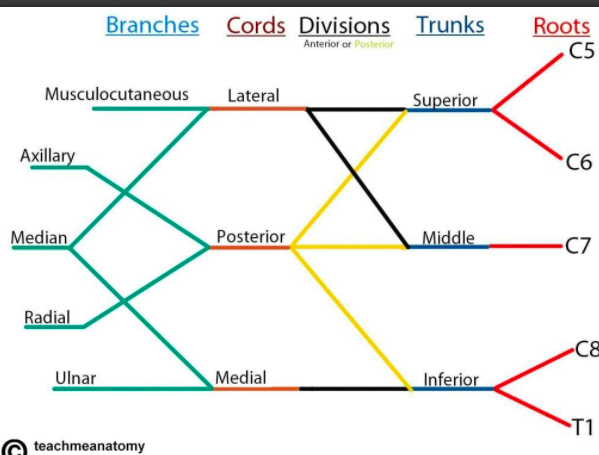
nerve roots for brachial plexus?
C5-T1
- *1. latissimus dorsi muscle**
2. teres major
runs where to where?
movements? [3]
1. latissimus dorsi muscle
runs from lower thoracic vertebra onto the lumbar vertebra & iliac crest. runs from iliac crest to anterior aspect of the humerus
movements:
- extend, adduct and medially rotate the shoulder
2. teres major:
runs from:
- inferior angle of scapula to anterior aspect of humerus
movements:
- extend, adduct and medially rotate the shoulder
trapezius - where found?
where does it run? [3]
what are the three different fibre parts? [3] what movements do they cause [3]
trapezius
runs from occipital bone to bottom of thoracic vertebral. attaches to spine of scapula and clavicle
three parts
- descending fibres / suprior fibres = elevate (shrug shoulders)
- middle fibres = retract scapula
- ascending / inferior fibres = depress scapula
rotator cuff muscles:
which muscles attach to greater tubercle?
which muscles attach to lesser tubercle?
- *greater tubercle:**
- teres minor
- supraspinatus muscle
- infraspinatus muscle:
- *lesser tubercle**
- subscapularis
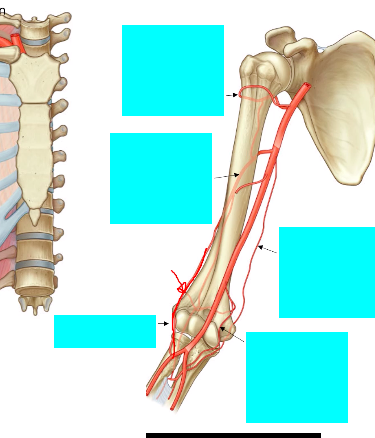
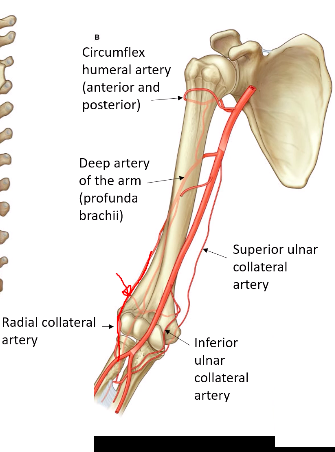
describe the path of the median nerve?
which motor muscles does it innervate? [2]
which skin does it provide sensory innervation for? [3]
describe the path of the ulnar nerve?
- runs medially in the arm and passes posterior the medial epidcondlye
which motor muscles does it innervate? [2]
- flexor carpi ulnaris
- ulnar half of flexor digitorum profundus in forearm
which skin does it provide sensory innervation for? [3]
- medial dorsal and plantar hand, digits 3.5-5
What is Erb’s palsy caused by damage to? [1]
which nerves? [3]
what does it result in? [3]
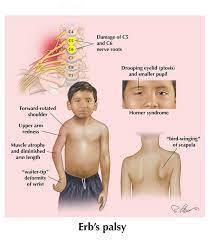
Erbs palsy:
- *- Damage to the superior trunk of the brachial plexus.**
- This happens quite commonly in difficult birth (pulling the head away from the upper limb) results in nerve palsy.
- Damaging C5 and C6 mainly affects musculocutaneous, axillary and medial nerve. It results in:
Adducted shoulder
Medially rotated arm
Extended elbow
what are the boundaries of the cubital fossa?
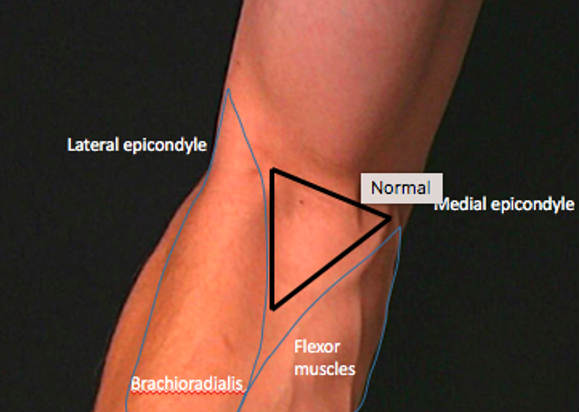
Boundaries of the cubital fossa:
- superior border: line from the lateral to the medial epicondyle
- flexor muscles of the forearm and the bracioradialias acting as borders also.
what is the shallow glenoid fossa deepened by? [2]
-glenoid labrum (fibrocart. ring that surrounds articular surface). helps deepen the socket and support the joint
- long head of the biceps - attaches to superior aspect of labrum
muscles of the arm:
anterior compartment is innervated by?
posterior compartment is innervated by?
muscles of the arm:
anterior compartment is innervated by musculocutaneous nerve = flexion
posterior compartment is innervated by radial nerve = extension



-
FunMed EOYS251
-
FunMedEOYS347
-
FunMedEOYS459
-
FunMedEOYS153
-
FunMedEOYS427
-
FunMed EOYS Long 16
-
big boy things51
-
CR EOYS142
-
CR EOYS248
-
CR EOYS351
-
Calculations6
-
CR EOYS421
-
MET EOYS154
-
big boys29
-
MET EOYS253
-
MET EOYS343
-
MET EOYS445
-
MET EOYS538
-
BB EOYS150
-
BBB2
-
BB EOYS255
-
Short king spring65
-
BB EOYS350
-
BB EOYS446
-
:O29
-
BB EOYS447
-
Loco EOYS43
-
LOCO SSS59
-
LOCO EOYS 441
-
Loco EOYS344
-
LOCO EOYS 553
-
LOCO SSS246
-
LOCO EOYS542
-
LOCO EOYS629
-
SSS FunMed52
-
Spotter Qs130
-
SSS FunMed252
-
METSSS44
-
METSS249



