RE USS and Renal Tract Obstruction
What is the sensitivitiy for dectection of chronic obstruction?
What is the sensitivity for acute obstruction?
US
- Sensitivity for detection of chronic obstruction: 90%
- Sensitivity for detection of acute obstruction: 60%
What are 6 indications of partial nephrectomy in patients with RCC?
Indications for Partial Nephrectomy in Patients With RCC
- RCC in a solitary kidney
- Significant risk factors that predispose to the development of renal failure later in life (e.g., stone disease, chronic infection, vesicoureteric reflux)
- Solitary renal tumors <7 cm
- Tumors confined to kidney
- Location that will not require extensive collecting system or vascular reconstruction
- Elective indication
2 Common causes of false-negatives on USS examinations for Renal tract obstruction
Common causes of false-negative examinations:
- US performed early in disease before dilatation has occurred
- Distal obstruction
Prostate abnormalities a/w AIDS
2
Prostate Abnormalities
- Prostatitis: bacterial, fungal, viral
- Prostate abscess
What are 3 causes of this condition?
What are 4 underlying disease?
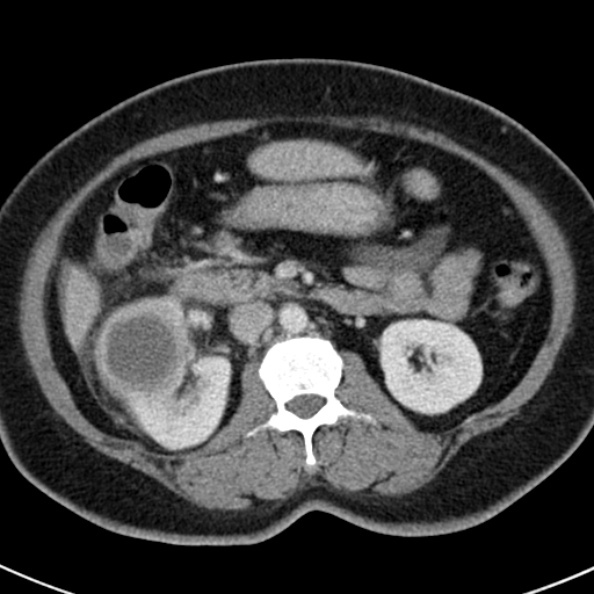
Renal Abscess
Usually caused by gram-negative bacteria, less commonly by Staphylococcus or fungus (candidiasis). Underlying disease: calculi, obstruction, diabetes, AIDS.
- Case Discussion
- Case courtesy of Dr Ian Bickle, Radiopaedia.org, rID: 29853
- Thick-walled enhancing cystic mass in the mid pole of the right kidney.
- Right perinephric inflammatory change and thickening of Gerota’s fascia.
- Renal abscesses usually form following pyelonephritis. Immuno-suppressed patients are most susceptible, particularly those with diabetes mellitus.
- Small abscesses may be treated with antibiotics only. Larger abscesses are typically treated with an image-guided percutaneous drain insertion, as in this case.
- Successful resolution was achieved in 36 hours following ultrasound-guided percutaneous drainage.
7 Testicular abnormalities A/W AIDS
Testicular Abnormalities
- Testicular atrophy:
- common
- Infection:
- bacterial,
- fungal,
- viral
- Tumors:
- germ cell tumors,
- lymphoma
What is the pathophysiology of this conditoin?
What does this condition never effect?
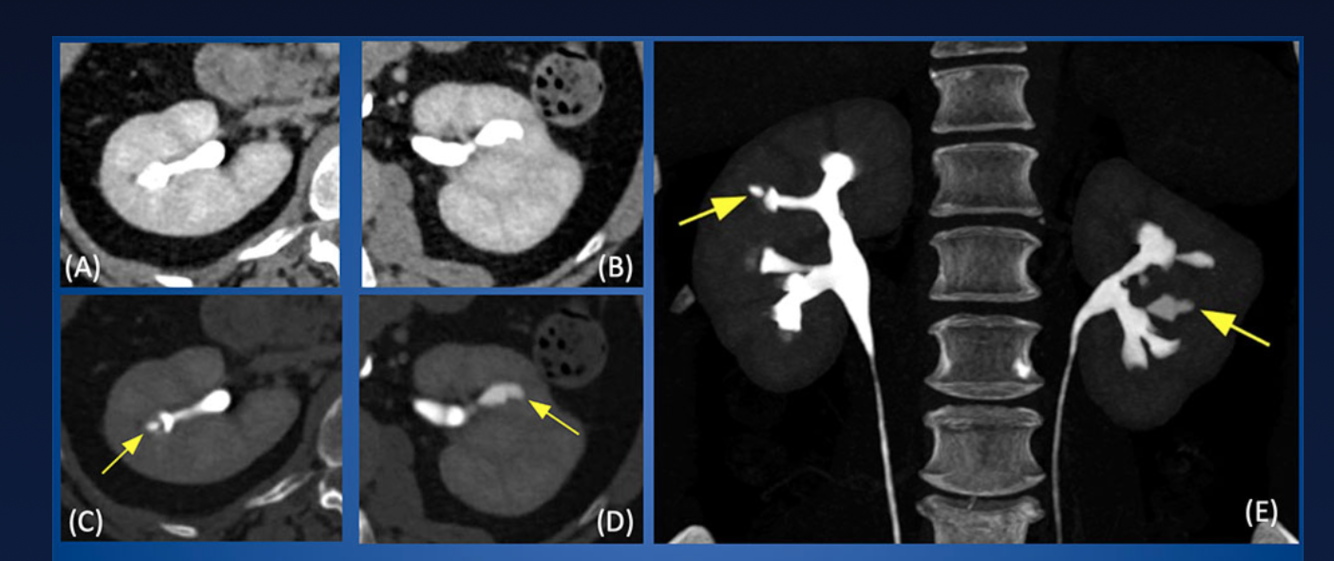
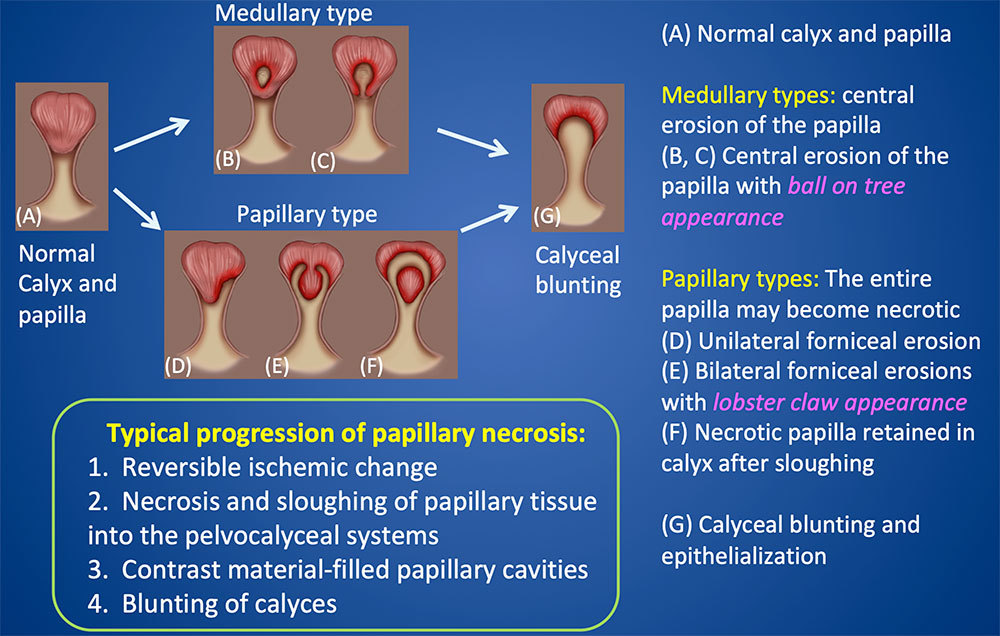
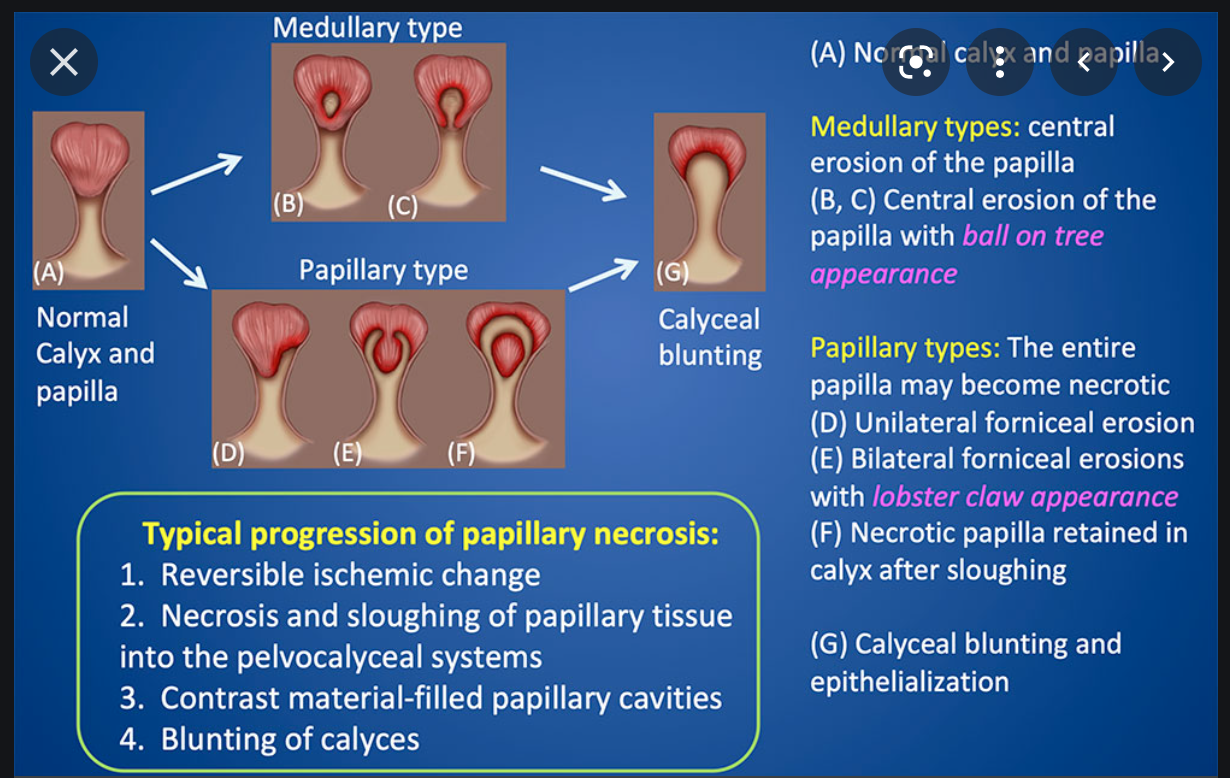
Renal Papillary Necrosis (RPN)
RPN represents an ischemic coagulative necrosis involving variable amounts of pyramids and medullary papillae.
RPN never extends to the renal cortex.
This picture shows the “Ball on tree” appearance of Medullary type RPN
https://www.ctisus.com/responsive/learning/exhibit/genitourinary/311982
CT findings of Renal stones
CT
- CT detects most calculi regardless of calcium content.
- The exceptions are matrix stones.
- Dedicated CT protocol for stone search is performed; rarely need to follow with contrast-enhanced CT (CECT) to differentiate stone in ureter from phlebolith.
- CECT may obscure a calcified ureteral calculus because it may blend in with high-density contrast material.
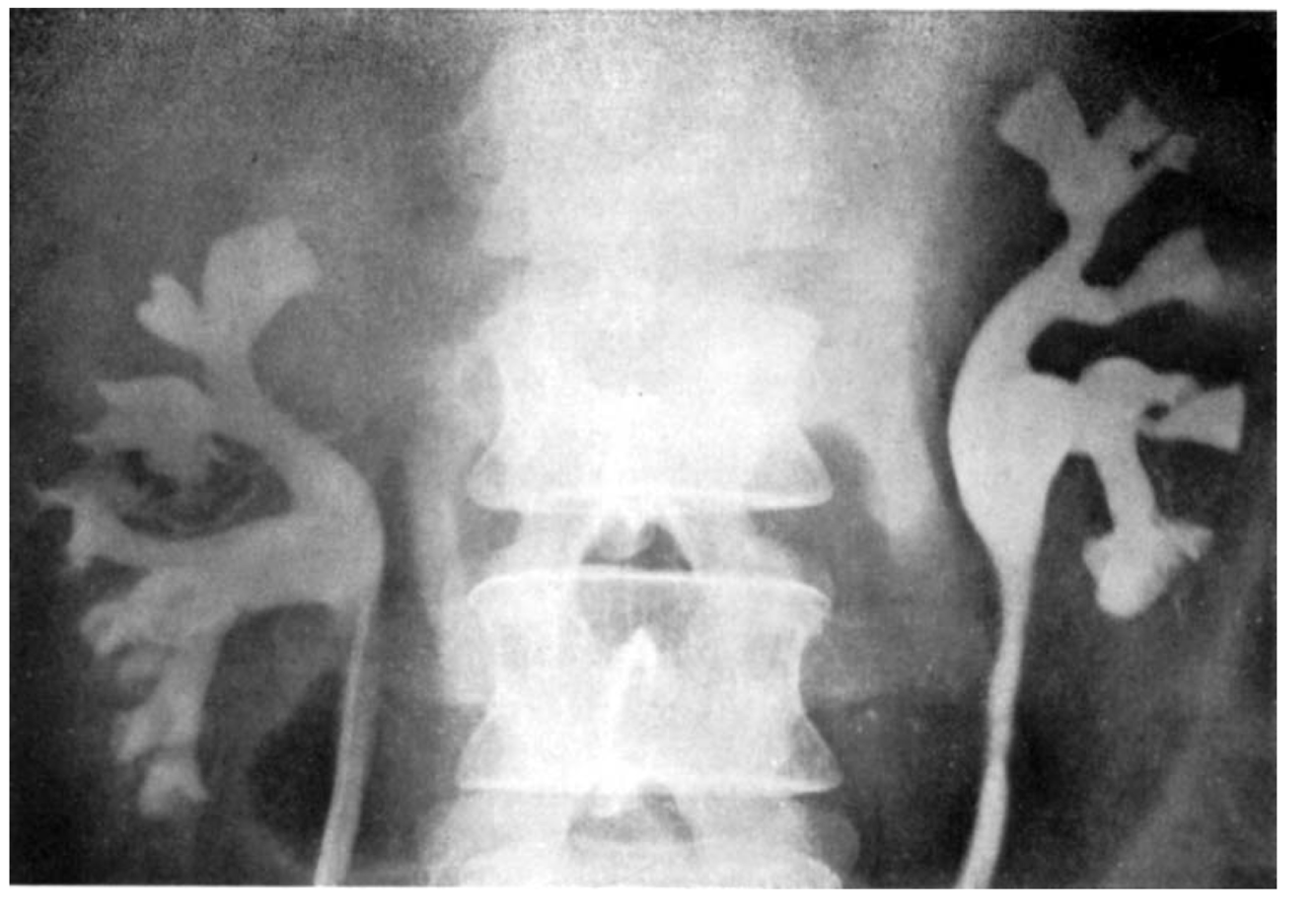
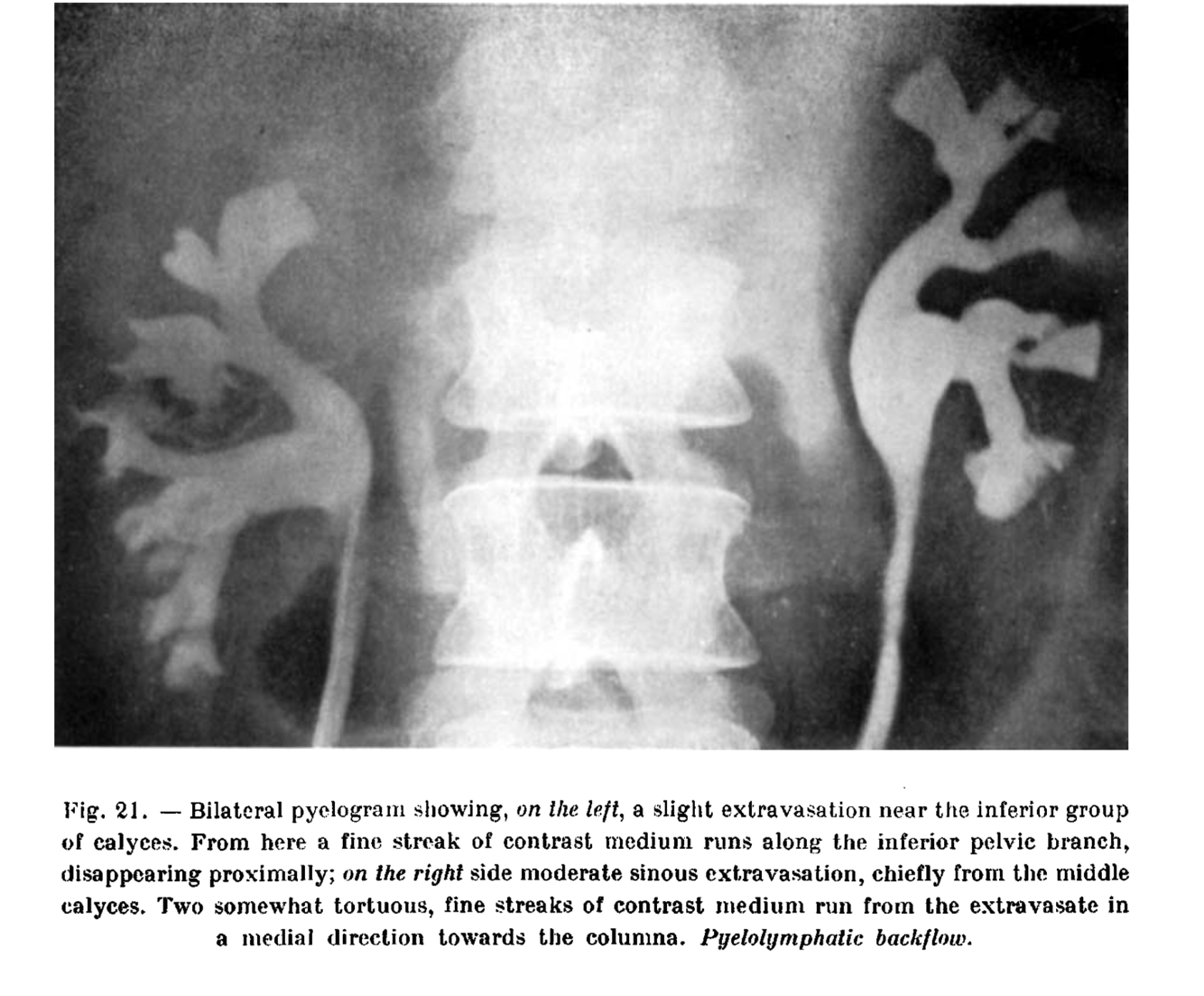
Pyelorenal Backflow
Backflow of contrast material from collecting system into renal or perirenal spaces. Usually caused by increased pressure in collecting system from retrograde pyelography or ureteral obstruction.
(lymphatic type)
https://www.tandfonline.com/doi/pdf/10.3109/00016925309175821
What are the 5 causes of RVT in Adults?
RVT may be caused by many conditions:
- Adults:
- tumor >
- renal disease >
- (nephrotic syndrome,
- postpartum,
- hypercoagulable states)
PATHOLOGY Specimen
What is this condition?
What is the cell type involved
What are the 2 forms?
What is the underlying condition a/w this?
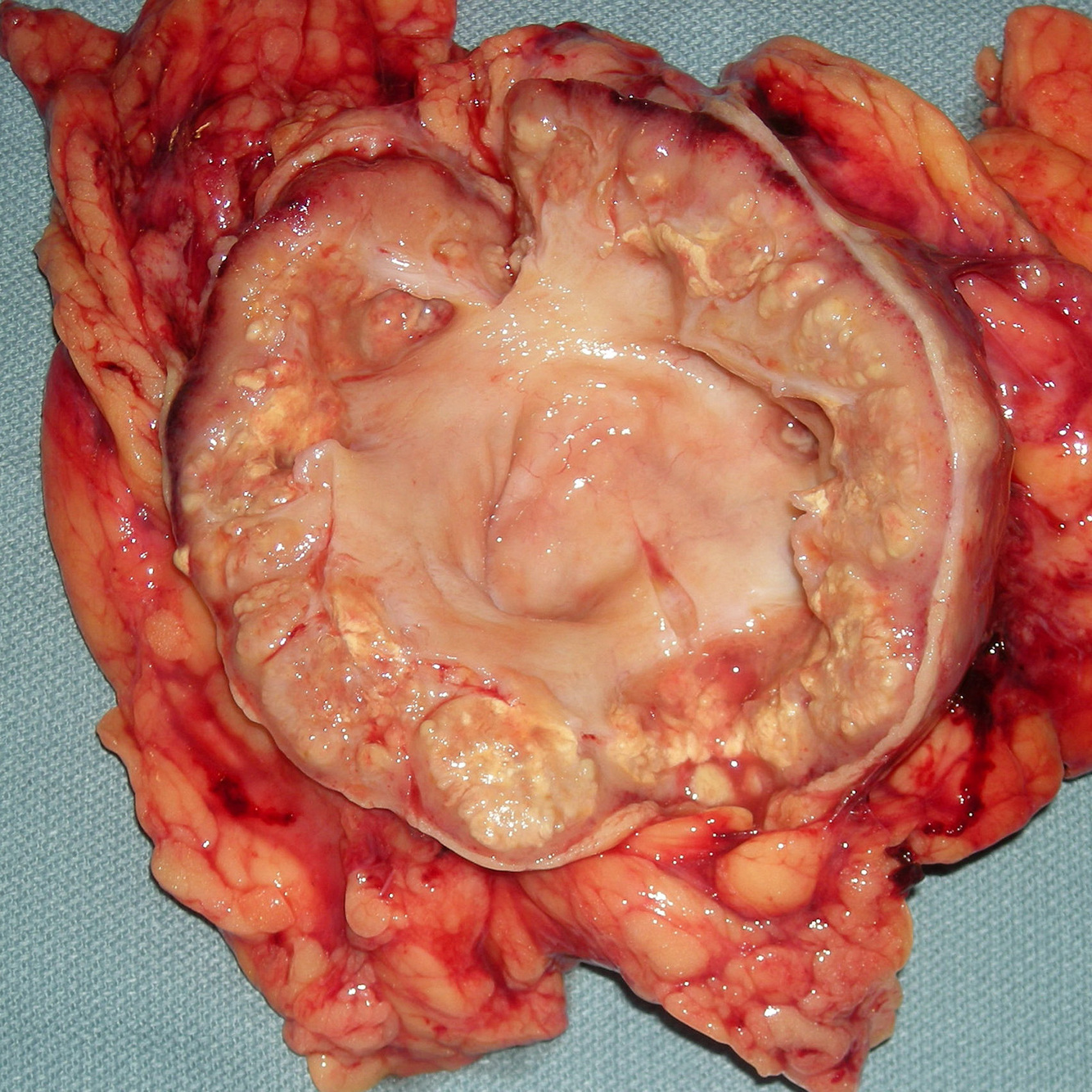
Xanthogranulomatous Pyelonephritis (XGP)
- Chronic suppurative form of renal infection characterized by parenchymal destruction and replacement of parenchyma with lipid-laden macrophages.
- Diffuse form, 90%; focal form, 10%.
- Ten percent of patients have DM. Rare.
Case courtesy of Assoc Prof Frank Gaillard, Radiopaedia.org, rID: 9949
- The specimen is received in OR and consistent with a resected kidney with abundant perirenal adipose tissue. The kidney is bivalved during intraoperative surgical pathology gross consultation. The dilated renal pelvis is filled with a large amount of pus material. The pus is sampled for culture. After washing the specimen, the walls of dilated calyces and renal pelvis are thickened with multiple yellow nodules. The renal cortex is largely atrophic.
- Image courtesy of Jian-Hua Qiao, MD, FCAP, Los Angeles, CA, USA.. Please see case description page for licence and original file information.
- This is a case of xanthogranulomatous pyelonephritis in a 35-year-old female.
- Author: Jian-Hua Qiao, MD, FCAP, Los Angeles, CA, USA.
- Original file: PathXchange.org case here
- Modifications: square crop
- License: All rights reserved by the author. Please refer to PathXchange.org case for further information.
What are the indications for angiography in Renal Trauma?
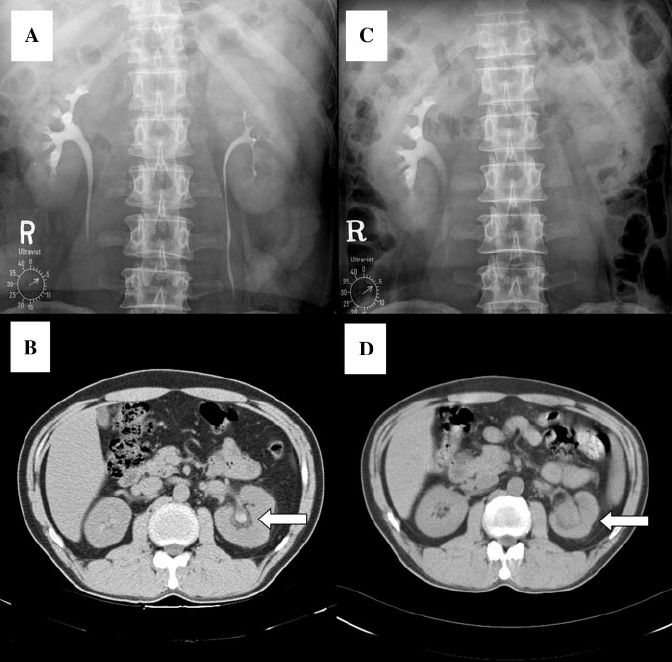
Indications for angiography:
- Nonvisualization of kidney on IVP in patient with abdominal trauma
- Persistent hematuria in a patient with abdominal trauma
- Hypotension or hypertension or persistent hematuria after an interventional urologic procedure
This case is not of trauma, Spont haematoma renal IGA but it does show non-opacification of the kidney on an IVP as an example.
https://www.researchgate.net/publication/6852479_Spontaneous_renal_pelvic_haematoma_mimicking_cancer_in_IgA_nephropathy/download
What is this?
What are the types?
Symptoms?
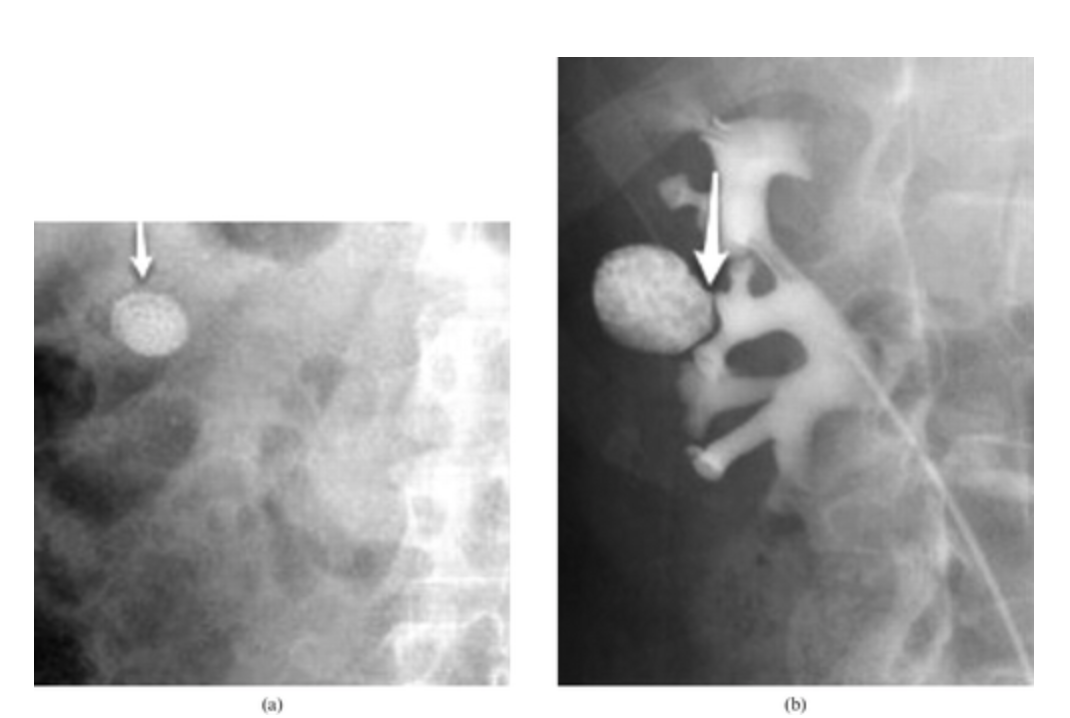
PyeloCalyceal Diverticulum
- Outpouching of calyx into corticomedullary region.
- May also arise from renal pelvis or an infundibulum.
- Usually asymptomatic, but patients may develop calculi.
- Types
- Type I: originates from minor calyx
- Type II: originates from infundibulum
- Type III: originates from renal pelvis
A 47-year-old male with right flank pain. (a) A magnified view from a control film of an intravenous urogram (IVU) demonstrates a 2 cm opacity in the right upper quadrant (arrow). This image clearly shows that the opacity is made up of multiple tiny calculi rather than a single large calculus, which should raise the suspicion that they lie within a calyceal diverticulum. (b) An oblique radiograph from a retrograde pyelogram study elegantly depicts the short, narrow infundibulum of a calyceal diverticulum arising from a mid-pole calyx (arrow).
https://www.birpublications.org/doi/10.1259/bjr/22591022
MNEMONIC
What are the causes of Cortical Nephrocalcinosis?
GOAT
Mnemonic
- G: (chronic) glomerulonephritis
- O: oxalosis
- A: Alport syndrome/ Acute cortical necrosis
- T: Transplant rejection (Chronic)
What are the 3 categories of radio-opaque calculi?
4 types/contents
Which is most common?
Which is associated with infection?
Which is a/w stag horn calculi?
- Calcium calculi (opaque), 75%
- Calcium oxalate
- Calcium phosphate
- Struvite calculi (opaque), 15%
- Magnesium ammonium phosphate:
- “infection stones”
- represent 70% of staghorn calculi
- remainder are cystine or uric acid calculi)
- struvite is usually mixed with calcium phosphate to create “triple phosphate” calculi.
- Cystine calculi (less opaque)
- Cystinuria, 2%
What is the following disease?
who does it happen do?
What are the imaging findings?
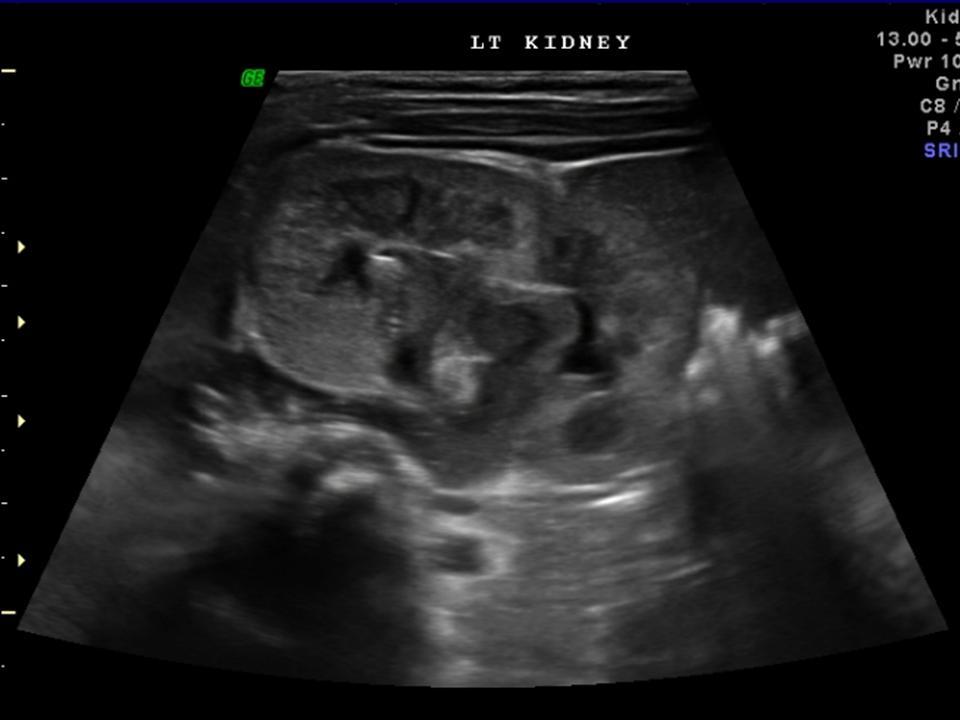
Candidiasis
- Most common renal fungal infections (coccidioidomycosis, cryptococcosis less common).
- Common in patients with DM.
- Imaging Features
- Multiple medullary and cortical abscesses
- Papillary necrosis because of diffuse fungal infiltration
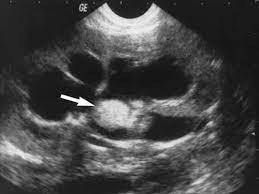
- Fungus balls in collecting system (mycetoma) cause filling defects on IVP; nonshadowing echogenic foci on US
- Hydronephrosis secondary to mycetoma
- Scalloping of ureters (submucosal edema)
What are the progressive stages of RPN?
two types
What are 4 complications of UTI?
Complications
- Abscess formation
- Xanthogranulomatous pyelonephritis (XGP)
- Emphysematous pyelonephritis
- Scarring and renal failure
Re renal trauma, what are the most common mechanisms?
Mechanism
- Blunt trauma, 70%–80%
- Penetrating trauma, 20%–30%
SIGN
What are TB findings in the renal collecting system?
What sign is this?
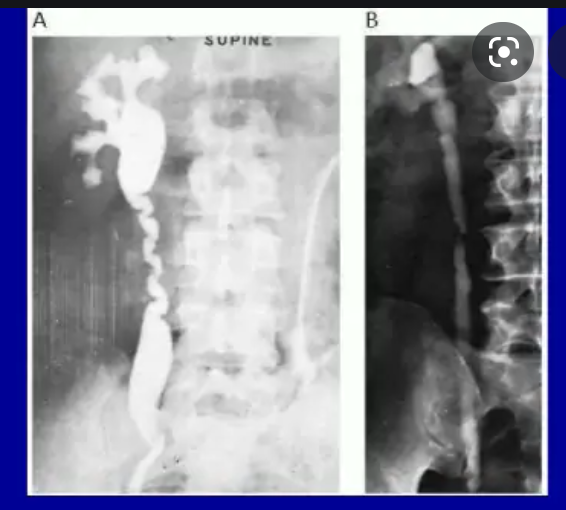
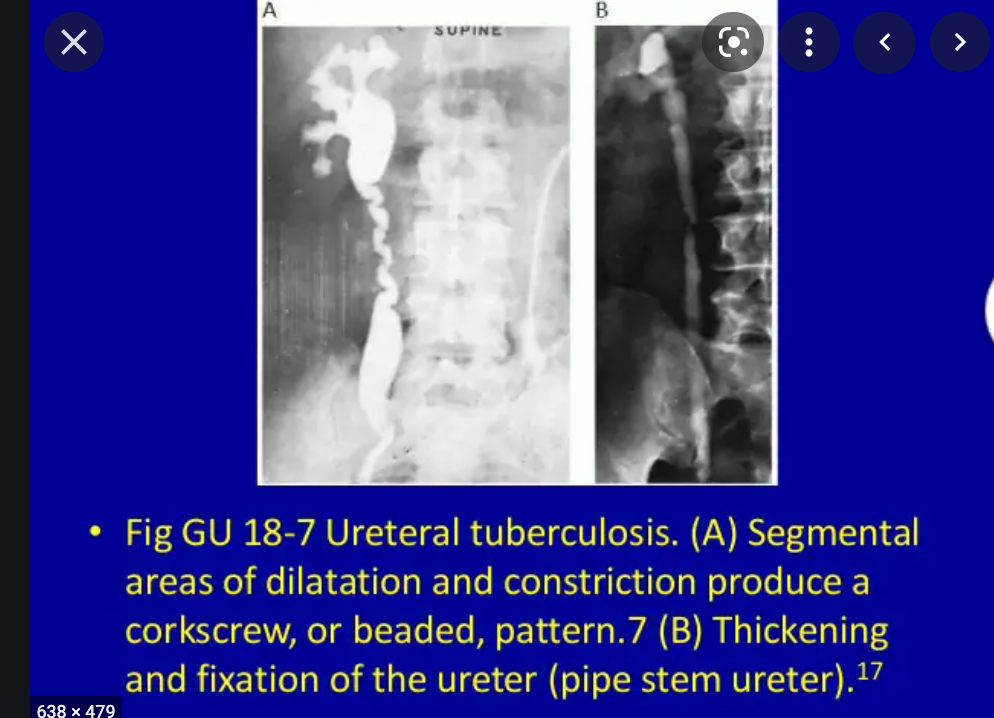
Collecting system
- Mucosal irregularity
- Infundibular stenosis, hiked-up pelvis with narrowed pelvis pointing up
- Amputated calyx
- Corkscrew ureter:
- multiple infundibular and ureteral stenoses (hallmark finding)
- “Purse-string” stenosis of renal pelvis
- “Pipestem ureter” refers to a narrow, rigid, aperistaltic segment
- Renal calculi, 10%
https://www.slideshare.net/muhammadbinzulfiqar5/18-filling-defects-in-the-ureter
What are the imaging features of renal vein thrombosis
(in the renal vein)
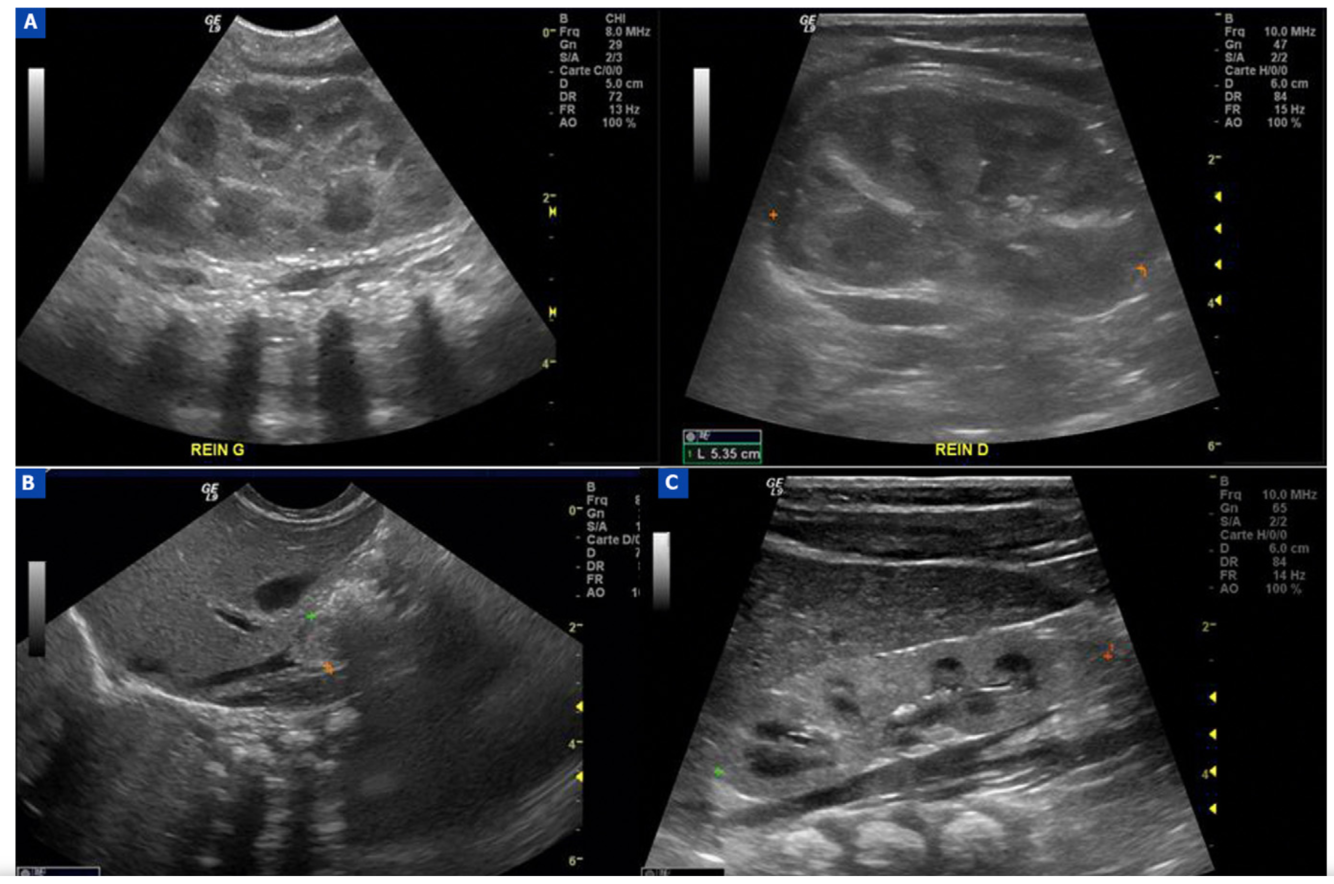
Imaging Features
- Renal vein
- Absence of flow (US, CT, MRI)
- Intraluminal thrombus
- Renal vein dilatation proximal to occlusion
- Renal venography: amputation of renal vein
- Magnetic resonance venography (MRV) or conventional venography: studies of choice
https://www.semanticscholar.org/paper/[Neonatal-renal-venous-thrombosis%3A-the-recent-of-Michot-Garnier/fcb8c065ed07786bcdc0810a6561e52259f55535
What is this?
What are the imaging features?
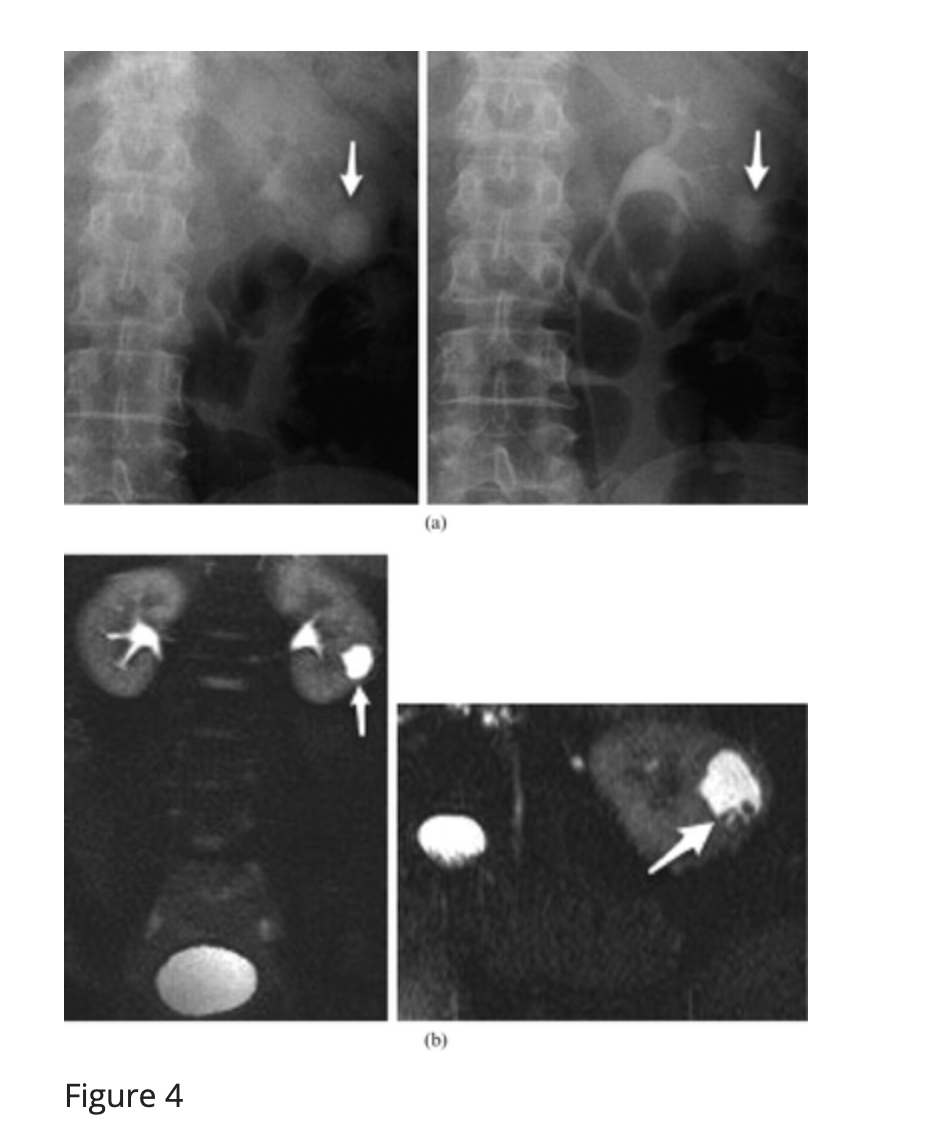
Imaging Features of Calyceal Diverticulum
- Cystic lesion connects through channel with collecting system.
- If the neck is not obstructed, diverticula opacify retrograde from the collecting system on delayed CT.
- May contain calculi or milk of calcium, 50%
- Fragmented calculi after ESWL may fail to pass because of a narrow neck. Percutaneous stone retrieval may be indicated.
- Cortical divot may overlie diverticulum.
https://www.birpublications.org/doi/10.1259/bjr/22591022
Figure 4
A 50-year-old female with left flank pain. (a) Two radiographs from an intravenous urogram (IVU) study: 20 min (left) and post-micturition (right). The images demonstrate contrast opacifying a lower pole calyceal diverticulum containing numerous calculi (arrow). Further opacification of the diverticulum is evident on the later film (right-hand image; arrow), highlighting the need for delayed images. Note that the infundibulum cannot be seen on either radiograph. (b) Coronal and transverse images from an MR urogram identify the lower pole calyceal diverticulum on the left side (arrow). Multiple areas of low signal are identified within the diverticulum and correspond to calculi (arrow).
RE renal stones, what are 6 indications for percutaneous Nephrostomy?
Indications for Percutaneous Nephrostomy
- Large stones requiring initial debulking (e.g., staghorn calculus)
- Calculi not responding to ESWL (e.g., cysteine stones)
- Body habitus precludes ESWL
- Patients with certain types of pacemakers
- Renal artery aneurysms
- Calculi >5 cm
Where does this tumour arise from?
What is the unique growth pattern?
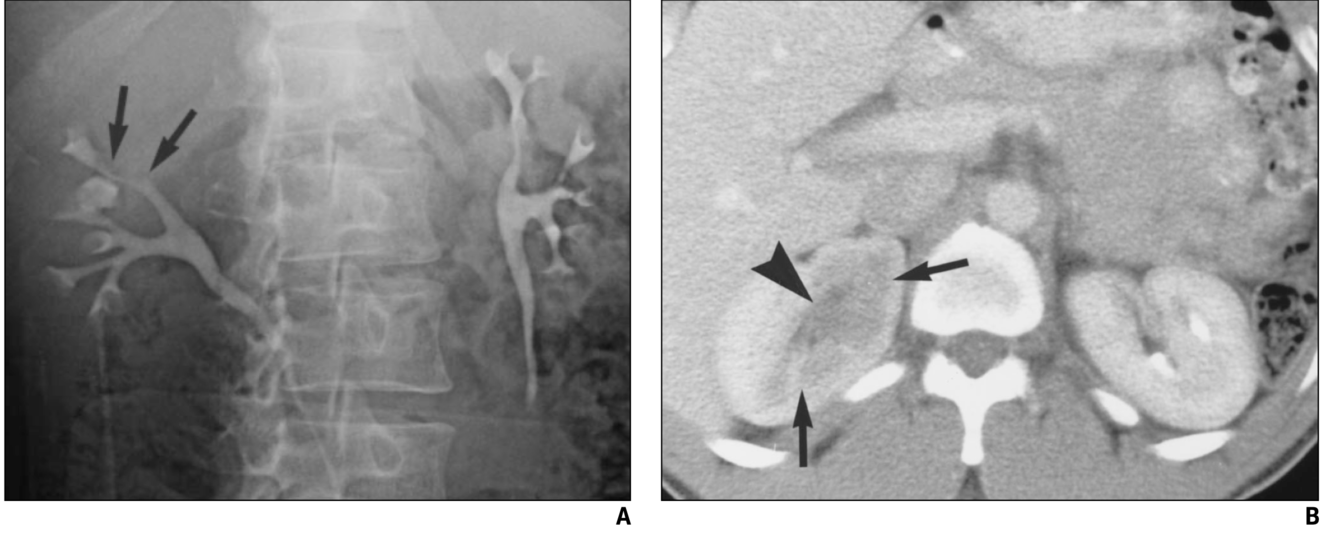
Collecting Duct Carcinoma
- Uncommon yet distinct epithelial neoplasm of the kidney.
- Aggressive malignancy derived from the renal medulla, possibly from the distal collecting ducts of Bellini.
- Propensity for showing infiltrative growth, which differs from the typical expansible pattern of growth exhibited by most renal malignancies.











-
CHEST IMAGING 1100
-
CHEST IMAGING 2100
-
CHEST IMAGING 343
-
CHEST IMAGING 4 (TUMOURS)81
-
CHEST IMAGING 5 PATHOLOGY2
-
CARDIAC IMAGING 1100
-
CARDIAC IMAGING 2100
-
CARDIAC IMAGING 3100
-
CARDIAC IMAGING 443
-
GIT 1101
-
GIT 2100
-
GIT 3100
-
GIT 4102
-
Hepatobilary155
-
Biliary System76
-
Pancreas66
-
Spleen24
-
Adrenal Glands70
-
GENITOURINARY IMAGING 197
-
GENITOURINARY IMAGING 2100
-
GENITOURINARY IMAGING 3100
-
GENITOURINARY IMAGING 4100
-
GENITOURINARY IMAGING 545
-
RETROPERITONEUM33
-
Male Pelvis10
-
GIT PATHOLOGY31
-
Skeletal Dysplasias18
-
MSK104
-
MSK Crack the Core70
-
MSK 295
-
MSK 3100
-
Neuro100
-
Neuro 222
-
NEURO 375
-
Head and Neck 1100
-
Head and Neck 2100
-
Head and Neck 3100
-
Head and Neck 4100
-
Head and Neck 555
-
DDX Head and Neck35
-
Vascular10
-
IR30
-
BREAST IMAGING52
-
OBSTETRICS17
-
GYNAECOLOGY40
-
PAEDIATRICS 196
-
PAEDIATRICS 297
-
PAEDIATRICS 395
-
Nuclear Medicine 134
-
PET CT16
-
Syndromes94
-
HAEMATOLOGY6
-
PATHOLOGY 141
-
Crack the core WHen I Say you say...489
-
Physics31
-
crack the core exam case companion18
-
EPONYMOUS Diseases/signs22
-
What the F&^# is that word?10
-
Radiology Signs25
-
Mnemonics36
-
GIT Pathology1
-
NEURO MRI PHYSICS14
-
GREAT CHEST XRAY CASES1
-
THIS PATIENT IS TYPICAL OF X CONDITION2



