What is this condition?
What does it predispose to?
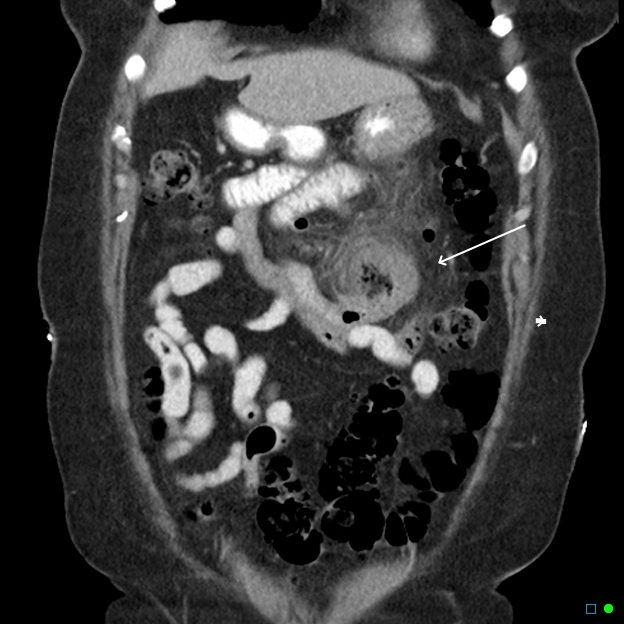
Jejunal (+/- ileal) diverticuli
outpouchings may predispose to:
- bacterial overgrowth
- Vit B12 deficiency
- Megoblastic anemia
Jejunoileal diverticula
Dr Michael P Hartung◉ and Dr Bruno Di Muzio◉◈ et al.
Jejunoileal diverticula, also referred to as jejunal diverticula or diverticulosis as most of the diverticula are located in the jejunum, are outpouchings from the jejunal and ileal wall on their mesenteric border that represent mucosal herniation through sites of wall weakening 1.
Jejunoileal diverticulitis is much rarer than colonic diverticulitis.
See also
Please refer to the articles on duodenal diverticula and on Meckel diverticulum for a discussion of other small intestine diverticular disease.
What is blind loop syndrome?
- syndrome develops after bypassing SB by an entero- anastomosis with subsequent stagnation of bowel contents.
- Malabsorption in large diverticulae may cause similar dynamics.
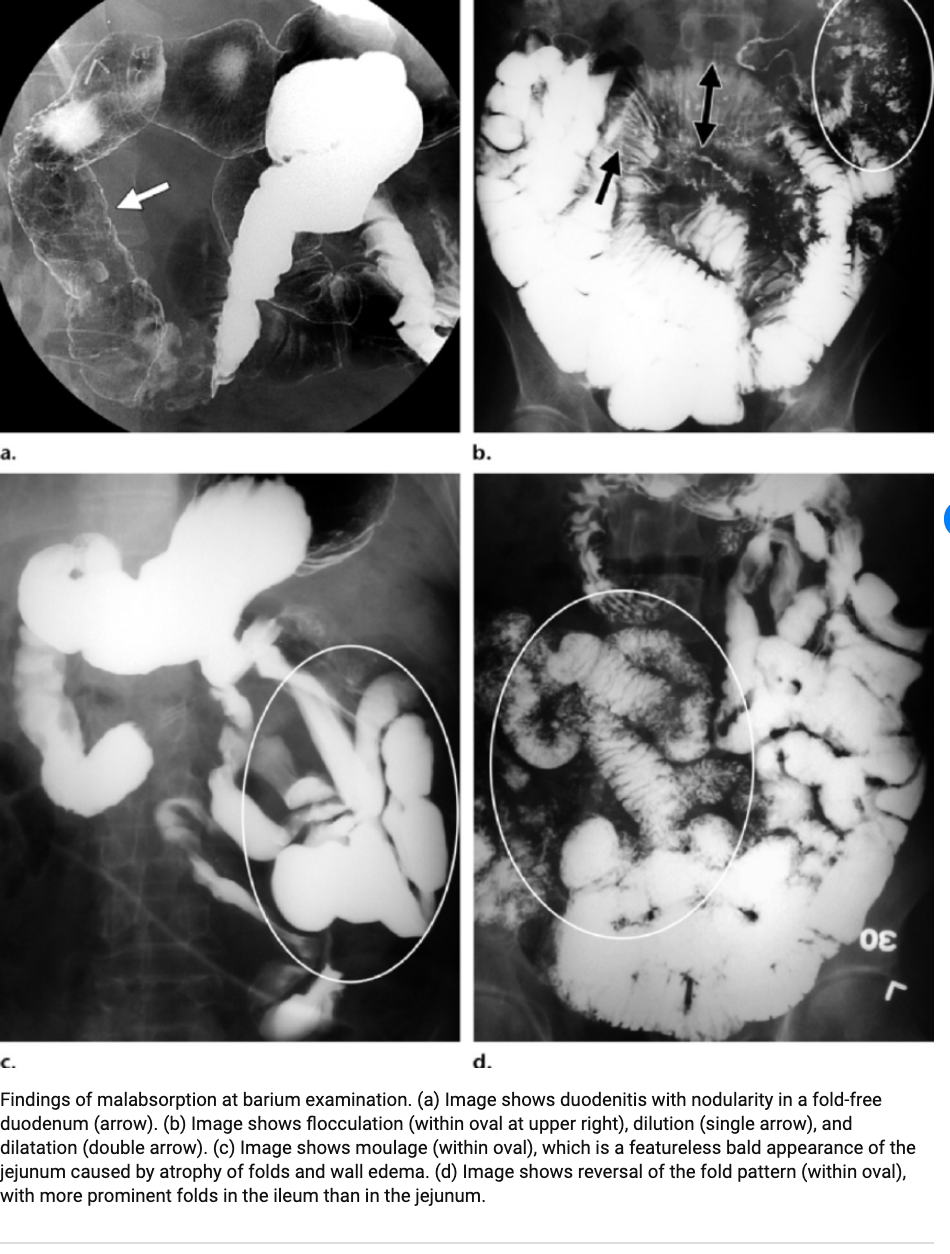
What is malabsorpation re small bowel and what are the imaging features?
- Abnormal absorption of fat, water, protein and carbs from the SB
- Imaging features:
- dilation of bowel
- diluted barium (mixes with watery bowel content)
- Flocculated barium
- barium aggregates into partcles
- Slow transit
- segmentation of barium
- lack of continuous column, rarely occurs with new agents
- Moulage pattern
- featureless barium collection
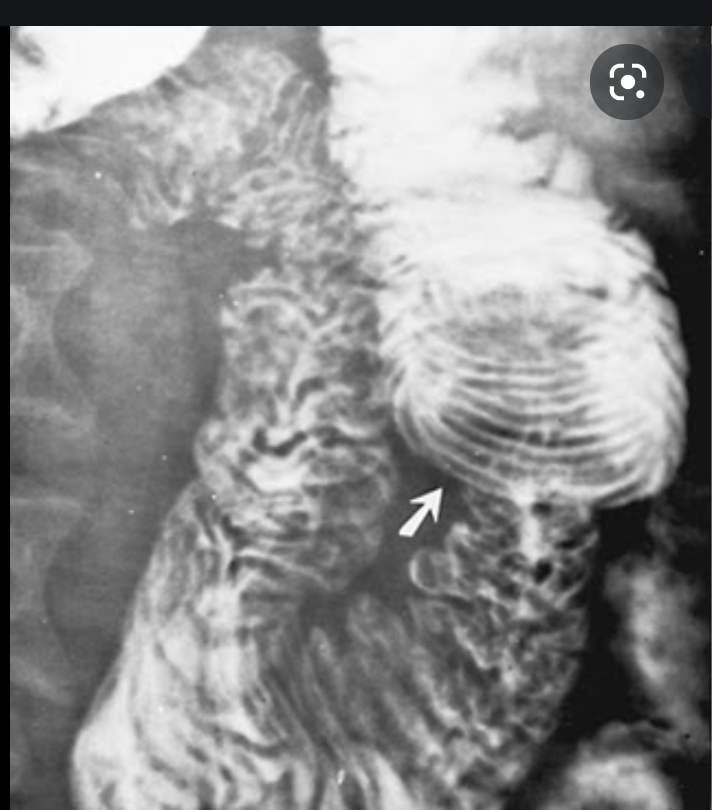
- Hidebound pattern:
- valvulae thinner, closer together
- wrinkled look
Moulage sign (bowel)
Dr Jeremy Jones◉ et al.
The moulage sign is related to sprue, in particular coeliac disease. It occurs where there is a dilated jejunal loop with complete loss of jejunal folds 1. It is said to appear like a tube into which wax has been poured.
History and etymology
Moulage (French: casting/moulding) is the art of applying mock injuries to aid in the education of medical emergency teams. It was used as early as the renaissance when wax figures were used.
https://www.researchgate.net/figure/Findings-of-malabsorption-at-barium-examination-a-Image-shows-duodenitis-with_fig1_51501338
Three types of Sprue
- Tropical sprie
- Unknown cause, responds to Abx
- Nontropical
- adules
- intolerance to gluten in when and other grains
- HLA RD3, IgQA, IgM antibodies
- Celiac disease (kids)
Sprue
Dr Daniel J Bell◉ and Dr Jeremy Jones◉ et al.
Sprue is the collective term for the malabsorptive gastrointestinal enteropathies although it may be used to refer directly to tropical sprue. It is composed of two entities:
tropical sprue
non-tropical sprue/coeliac disease
In each, the radiologic features are not sensitive enough to confirm an absolute diagnosis. However, they do help to characterise the disease process. The gold standard investigation is upper GI endoscopy with duodenal biopsy.
Imaging features of Sprue:
- dilatation of small bowel
- nodular changes in duodenum (bubbly appearance)
- Reversal of jejunal and ileal fold patterns
- Segmentation
- hypersecreation and mucosal atrophy cause the Moulage sign (rare)
- Transient intussusception pattern (coiled spring) is typical
- Increaased secreations: flocculation with older barium suspensions
- Increased incidence of malignancy, aggressive lymphoma, carcinoma
Disorders a/w Sprue (5)
- Dermatitis herpetiformis
- slective IgA deficiency
- Hyposplenism
- Adenopathy
- Cavitary mesenteric LN syndrome
Complications of Sprue
- Ulcerative Jejunoileitis:
- several segments of bowel wall thickening with irregularity and ulceration strictures may follow
- Enteropathy: associated T-cell lymphoma
- Increased incidence of Cancers of the oesophagus, pharynx, Duodenum and rectum
- Sprue, SBO, Sclerderm (SOS): dilated, prolonged motility, normal folds.
What is mastocytosis?
Clinical findings
Imaging findings
- Systemic mast cell proliferation in Reticuloendothelial system (SB liver spleen , LNs bone marrow and skin, with histamine release
- Clinical findings:
- diarrhea
- steatorrhea
- histamine effects
- flushing
- tachycardia
- pruritis
- PUD
- Imaging:
- SB:
- irregular fold thickening
- diffuse small nodules
- Other:
- Sclerotic bone lesions
- Hepatosplenomegaly
- PUD
- SB:
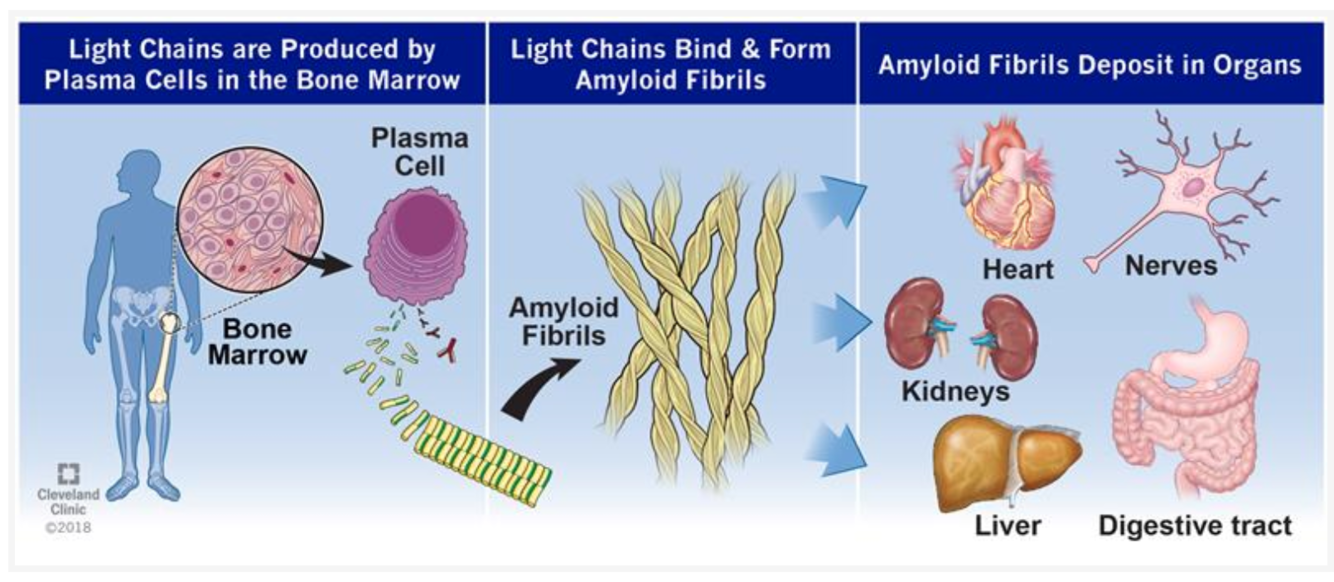
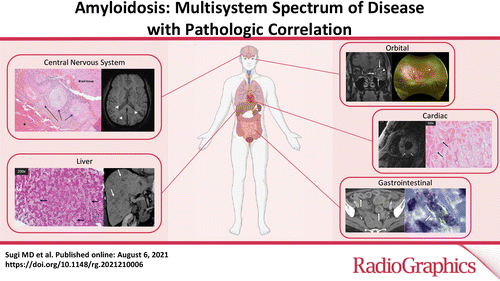
What is Amyloidosis?
How to Dx?
- Heterogenous group of disorders
- abnormal extracellular deposition of insoluble fibrillar protein material
- Dx
- bx of affected organs
- birefringence
- staining with congo red
What are the major clinical amyloidosis syndromes?
- Systemic Amyloidosis
- immunocyte dyscrasia
- myeloma
- Monoclonal gammopathy
- chronic/active disease
- hereditary syndromes
- neuropathy form
- nephrophatic form
- cardiomyopathic form
- Chronic Hemodyalisis
- Senile Form
- immunocyte dyscrasia
- Localised Amyloidosis
- cerebral amyloid angiopathy
- Alzheimer disease
- senile dementia
- Cutaneous form
- Ocular form
- others
- cerebral amyloid angiopathy
What chronic/active diseases are a/w Systemc Amyloidosis?
- Infections
- TB
- Chronic OM
- Decubitus Ulcers
- Bronchiectasis
- Chronic Pyelo
- Chronic inflammatory disease
- RhArthritis (5-25% of cases)
- AnkSpond
- Crohns disease
- Reiter Syndrome
- Psoriasis
- Neoplasms
- Hodgkin Disease (4% of cases)
- RCC (3% of cases).
Imaging featuers of Amyloidosis
Renal
GIT
Heart
CNS
- Renal
- neprotic syndrome
- Renal insufficiency
- Renal tubular acidosis
- Renal vein thrombsosis
- GIT
- diffuse thickening of SB folds
- Jejunisation of ileum
- SB dialtion
- multiple nodular filling defects >2mm
- Hepatosplenomegaly
- macroglossia
- colonic pseudodiverticulosis
- hearth
- cardiomyopathy (restrictive)
- rhythm abnormalities
- CNS
- dementia
- Carpal Tunnel sundrome
- Peripheral neuropathy.
Radiographics article:
https://pubs.rsna.org/doi/10.1148/rg.2021210006
What is Intestinal Lymphangiectasia?
what are the two forms?
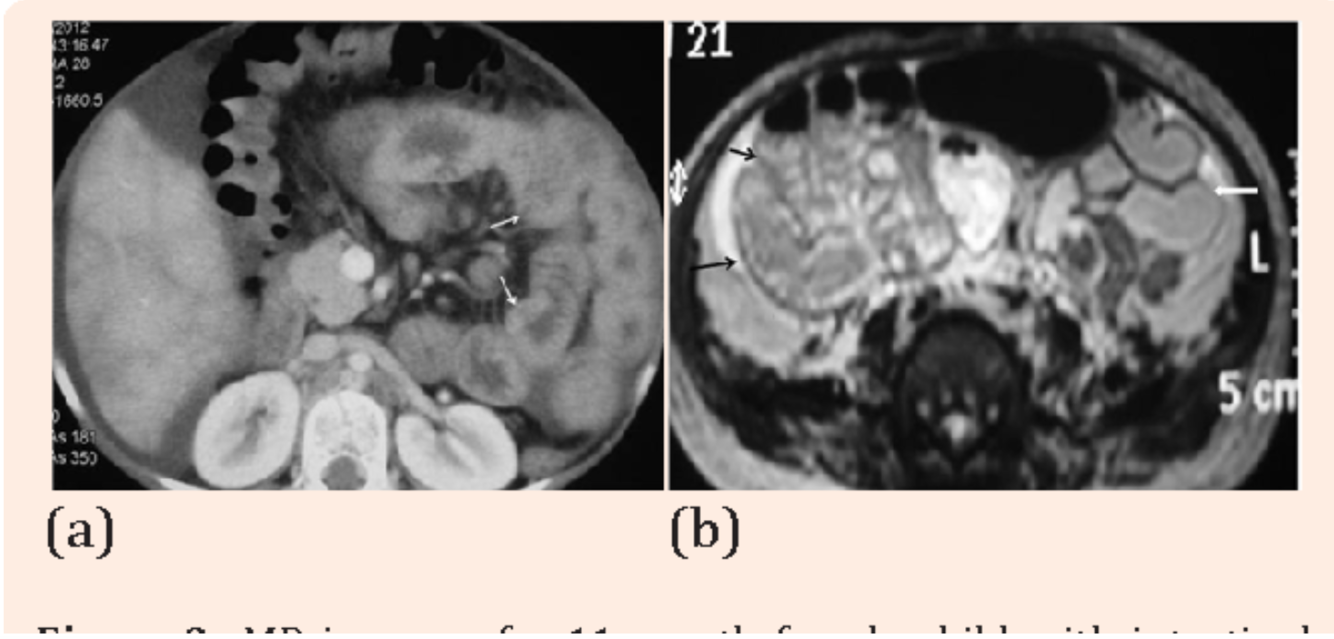
- spectrum of lymphatic abnormality
- dilated lymphatics in Lamina propria of SB
- Clinically reslts in protein losing enteropathy
- The congenital form (infantile)
- generalised lymphedema
- chylous pleural effusions
- diarrhea, steatorrhea
- lymphocytopenia
- Aquired/Adult form is the result of
- obstruction of the thoracic duct
- radiation
- tumours
- retroperitoneal fibrosis
- SB lymphoma
- Pancreatitis.
- obstruction of the thoracic duct
https://www.semanticscholar.org/paper/MRI-in-Primary-Intestinal-Lymphangiectasia%3A-A-Tool-Varma-Jana/c7a775f543215caae95dd0270f1cada7a5ddc146/figure/1
Figure 2: MR images of a 11 month female child with intestinal lymphangiectaisa. Coronal HASTE (a) and axial T2W spin echo fat saturated (b) images show ascites and diffuse thickening of the mid and distal jejunal and ileal loops. There are multiple tubular and tortuous hyperintense channels in the jejunum (arrow); note the normal thickness of the proximal jejunal walls (block arrow)
Imaging features of Intestinal lymphangiectasia
- Diffuse nodular thickening of folds in jejunum and ileum caused by dilated lymphatics and hyoalbuminemic edema
- Mesenteric adenopathy on CT.
- Dilution of contrast material as a result of hypersecretion.
- Lymphographic studies
- hypoplastic lymphatics of lower extremity
- tortuous thoracic duct
- hypoplastic LNs
GI Lymphoma
- Distinct subgroup of lymphoma that primariliy arises in lymphoid tissue of the bowel rather than in LNs
*
WHAT does MALT stand for?
- Type of GI lymphoma
- Gastric lymphoma arising from Mucosal associated lymphoid tissue (MALT)
- Muscosal associated lymphoid tissue
- usually low grade malignancy
- represents 20% of malignant SB tunmours.
- usual age is in the 5th to 6th decades
- Imaging features
- Mass, nodule, fold thickening (focal or diffuse)
- Confined to the GIT in 50%
- Adenopathy in 30%
- Extra abdominal findings 30%
- Large ulcerated mass presenting as endoenteric or exoenteric tumour
- DDx
- GI stromal Tumour
- metastatic Melanoma
- Jejunal diverticulitis with abscess
- ectopic pancreas
- DDx
- aneurysmal dilation
- localized dilated tick walled, noncontractile lumen bc of mural tumor
- Auerbach plexus neuropathy
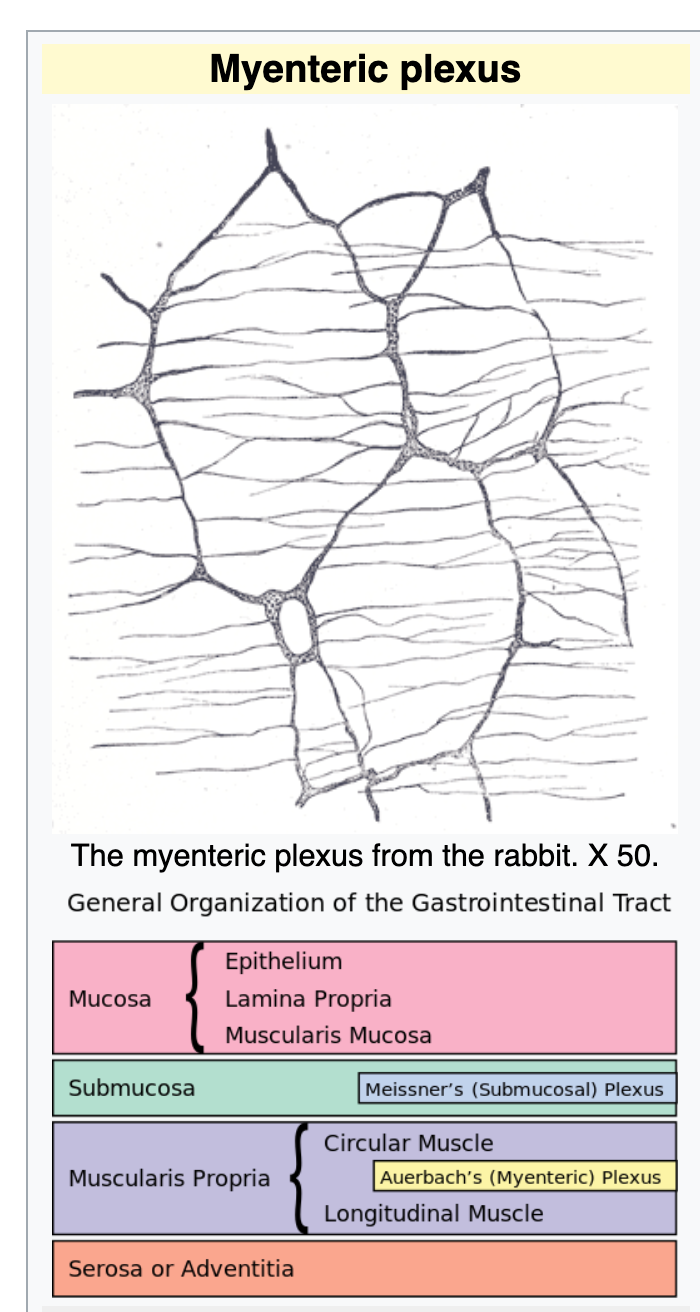
DDx for a Large ulcerated mass presenting as endoenteric or exoenteric tumour
Large ulcerated mass presenting as endoenteric or exoenteric tumourDDx
- GI stromal Tumour
- metastatic Melanoma
- Jejunal diverticulitis with abscess
- ectopic pancreas
- MALT
Which type of GI lymphoma do immunosupressed patients get?
- Immunosupressed/HIV patients usually get aggressive NHL with rapid spread, poor response to chemo and short survivial
- widespread extraintestinal involvement 80%
- Imaging features
- nodules
- fold thickening
- mass
- splenomegaly 30%
- Adenopathy 30%
- Ascites 20%
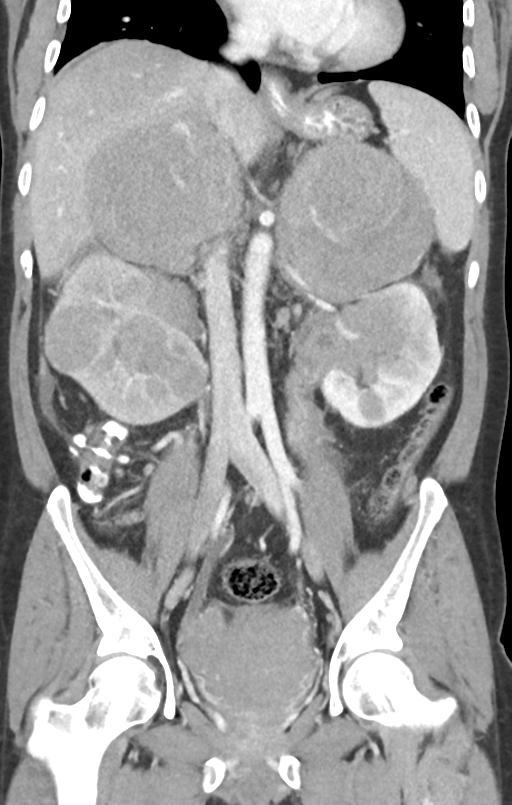
What is Graft Vs Host reaction (GVH)
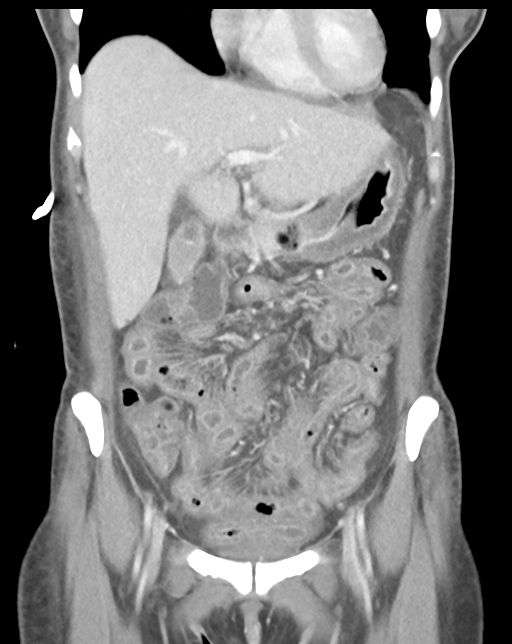
- Donor lymphocytes react against organs (GIT, SKin, liver) of the recipient after Bone marrow transplant
- Pathology
- granular necrosis of crypt epithelium
Imaging features:
- Ribbon Bowel
- luminal narrowing is due to edema of the bowel wall
- flattening of mucosal folds (edema)
- prolonged coating of barium for days.
What sign is this and which disease is it seen in?
what GIT and non-GIT signs of this disease are possible?
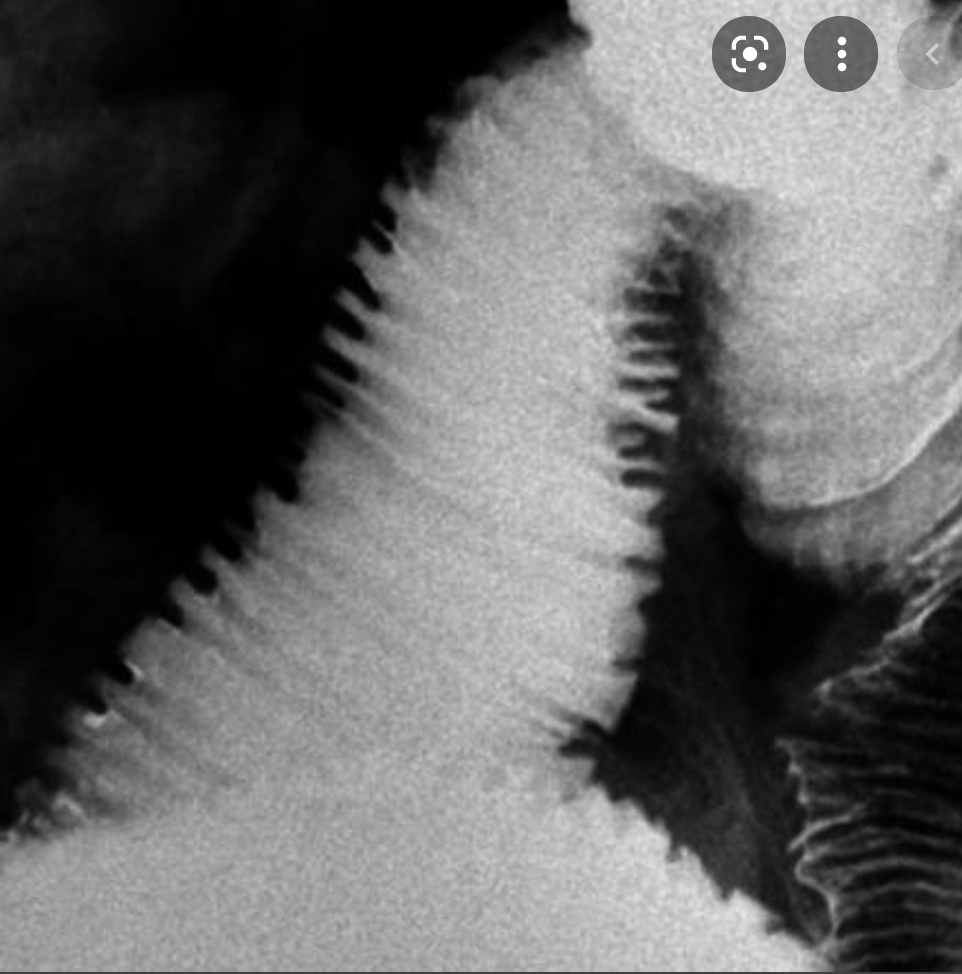
- AKA Progressive systemic sclerosis
- systemic disease that involves primarily skin, joins and the GIT
- Esophagus>SB>colon>stomach
- Age 30-50 years
- Female > Male
Imaging features
- SB
- dilation of bowel loops with hypomotility KEY FEATURE
- Mucosal folds are tight and closer together (fibrosis) HIDEBOUND APPEARANCE
- Pseudosacculations along antimesenteric border may involve both small and large bwoel.
- Segmentation, fragmentation and hypersecretion are ABSENT.
- Other
- dilated dysmotile oesophagus, oesophagitis, incompetent LES, Reflux stricture
- dilated duodenum and colon (pseudoobstruction)
- Pneumatosis cystoids coli (steroid therapy)
- Pulmonary intersitial fibrosis
- Acroosteolysis
- Soft tissue calfdication.
Hide-bound sign (bowel)
Dr Evyn Arnfield and Dr Andrew Dixon◉ et al.
The hide-bound bowel sign refers to an appearance on a barium study of the small bowel in patients with scleroderma. The sign describes the narrow separation between the valvulae conniventes which are of normal thickness despite dilatation of the bowel lumen.
Although the term hide-bound is used specifically to describe scleroderma, the same appearance may also be seen in sprue. The stack of coins sign, although similar, should not be confused with the hide-bound sign. The former is seen in intramural haematoma as adjacent, thickened folds with sharp demarcation and crowding of the valvulae conniventes.
Pathology
The cause of hidebound appearance in scleroderma is thought to be asymmetric smooth muscle atrophy of the inner circular muscularis layer relative to the outer longitudinal layer. Contraction of the longitudinal layer results in foreshortening of the bowel and close packing of the valvulae conniventes.
History and etymology
The term hide-bound sign was coined by Alfred Horowitz and Morton Meyers in a study published in 1973, although according to their article the appearance had been described prior to that 3. The term hide-bound was originally used to describe emaciated cattle.
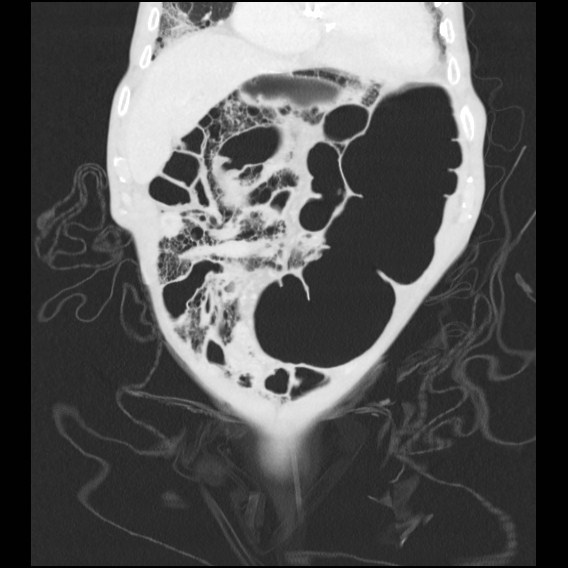
What is Whipple Disease?
- Rare multisystem disease
- Tropheryma Whippelii
- Involves
- SIJ
- joint capsule
- heart valves
- CNS
- Jejunum
- Clinical
- middle aged men, USA and North europe
- Diarrhea, steatorrhea
- Immune defects
- Imaging
- 1-2mm diffuse micronodules in jejunum
- no dilation or increased secrions
- Nodal masses in mesentery
- nodes have low CT density and are echogenic on USS
- sacroiliac.
- BUZZ WORDS
- intestinal lipdystrophy
- sand like nodules
- low density nodes on CT
- rare
- Multi-system
- Tropheryma Whippelii
Whipple disease (gastrointestinal manifestations)
Dr Hamish Smith◉ and Dr A Tachibana et al.
Gastrointestinal manifestations are a key component of Whipple disease. The gastrointestinal manifestations of Tropheryma whipplei are also known as intestinal lipodystrophy.
Pathology
Extensive infiltration of the lamina propria with large macrophages infected by intracellular T. whipplei causes marked swelling of intestinal villi and thickened irregular mucosal folds primarily in the duodenum and proximal jejunum.
When they become large enough to be macroscopically visible, they may appear as innumerable small filling defects superimposed on irregularly thickened folds (sand-like nodules)
Radiographic features
Reported radiologic features include:
diffuse 1-2 mm micronodules (“sand-like nodules”) in the jejunum
thickened mucosal folds: especially the jejunum
small bowel calibre: normal or slightly dilated
mesenteric lymphadenopathy: nodes of very low (near fat) density 2
In what diseases are Enteric fistulas seen?
- Fistulas of the SB with adjacent struts can be seen with Crohn Disease, CRC, post op and in diverticular disease.
Drug Chemotherapy induced enteritis
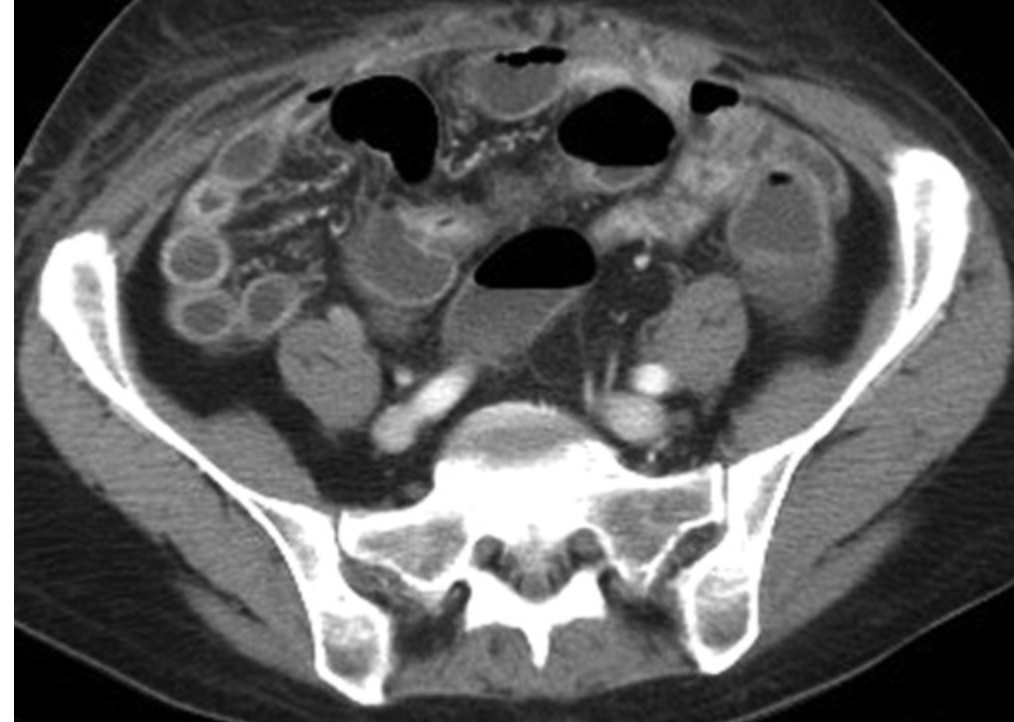
- GI edema
- necrosis
- perforation
- most common in long term immunosuppered pts to prevent homograft rejection or pts getting chemo for leukaemia or lymphoma
- CT findings can be seen in diseased or undiseased segments of bowel.
- IMAGING FINDIGNS:
- nonspecific focal or diffuse bowel wall thcikening with or without the target sign or as regional mesenteric vascular engorement and haziness more often in distal SB
- DDx
- ACE inhibitors may cause angioedema resulting in reversible wall thickening.
- Figure 11a: Irinotecan-induced enteritis. Patient with recurrent metastatic colorectal cancer developed abdominal pain and constipation 2 months after initiation of chemotherapy regimen containing irinotecan. (a) Axial contrast-enhanced CT image reveals mild small-bowel wall thickening and dilatation. (b) Upper gastrointestinal tract series demonstrates terminal ileitis with featureless small bowel and loss of normal fold pattern.
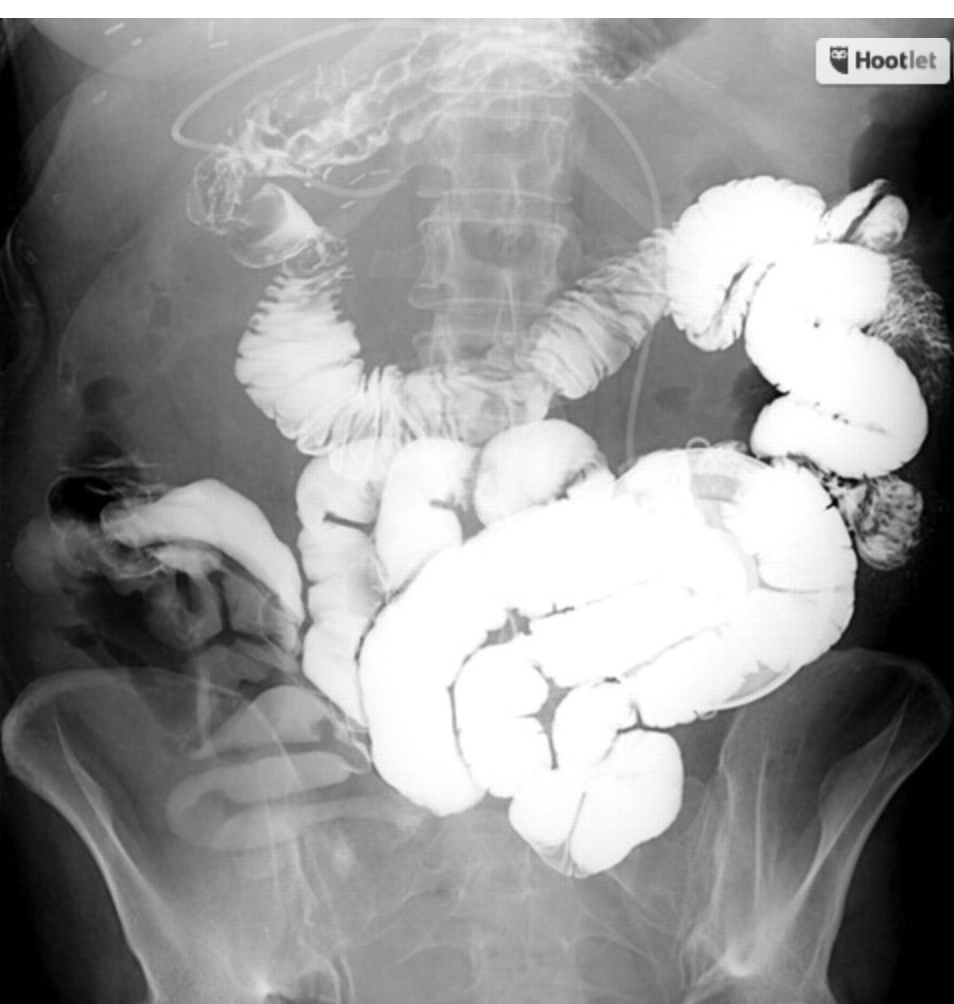
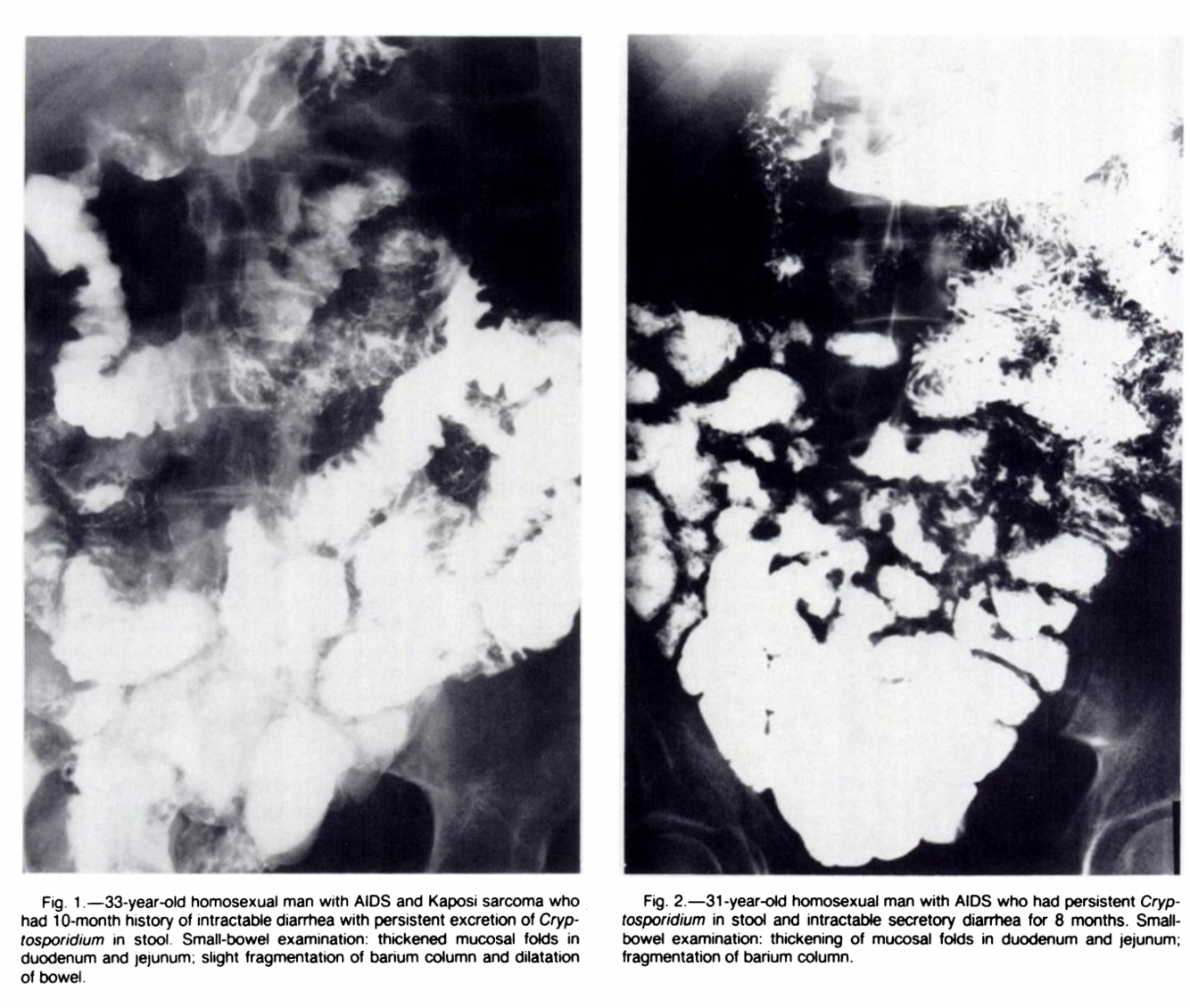
In which patient group does cryptosporidiosis infectious enteritis occur?
- Cryptosporidium species are protozoa that frequently cause enteritis in AIDs patients and rarely in immunocompetent patients
- Imaging features
- thickened SB folds
- SB dilatation
https://www.ajronline.org/doi/pdf/10.2214/ajr.143.3.549


-
CHEST IMAGING 1100
-
CHEST IMAGING 2100
-
CHEST IMAGING 343
-
CHEST IMAGING 4 (TUMOURS)81
-
CHEST IMAGING 5 PATHOLOGY2
-
CARDIAC IMAGING 1100
-
CARDIAC IMAGING 2100
-
CARDIAC IMAGING 3100
-
CARDIAC IMAGING 443
-
GIT 1101
-
GIT 2100
-
GIT 3100
-
GIT 4102
-
Hepatobilary155
-
Biliary System76
-
Pancreas66
-
Spleen24
-
Adrenal Glands70
-
GENITOURINARY IMAGING 197
-
GENITOURINARY IMAGING 2100
-
GENITOURINARY IMAGING 3100
-
GENITOURINARY IMAGING 4100
-
GENITOURINARY IMAGING 545
-
RETROPERITONEUM33
-
Male Pelvis10
-
GIT PATHOLOGY31
-
Skeletal Dysplasias18
-
MSK104
-
MSK Crack the Core70
-
MSK 295
-
MSK 3100
-
Neuro100
-
Neuro 222
-
NEURO 375
-
Head and Neck 1100
-
Head and Neck 2100
-
Head and Neck 3100
-
Head and Neck 4100
-
Head and Neck 555
-
DDX Head and Neck35
-
Vascular10
-
IR30
-
BREAST IMAGING52
-
OBSTETRICS17
-
GYNAECOLOGY40
-
PAEDIATRICS 196
-
PAEDIATRICS 297
-
PAEDIATRICS 395
-
Nuclear Medicine 134
-
PET CT16
-
Syndromes94
-
HAEMATOLOGY6
-
PATHOLOGY 141
-
Crack the core WHen I Say you say...489
-
Physics31
-
crack the core exam case companion18
-
EPONYMOUS Diseases/signs22
-
What the F&^# is that word?10
-
Radiology Signs25
-
Mnemonics36
-
GIT Pathology1
-
NEURO MRI PHYSICS14
-
GREAT CHEST XRAY CASES1
-
THIS PATIENT IS TYPICAL OF X CONDITION2



