What is the RMP/RMS?
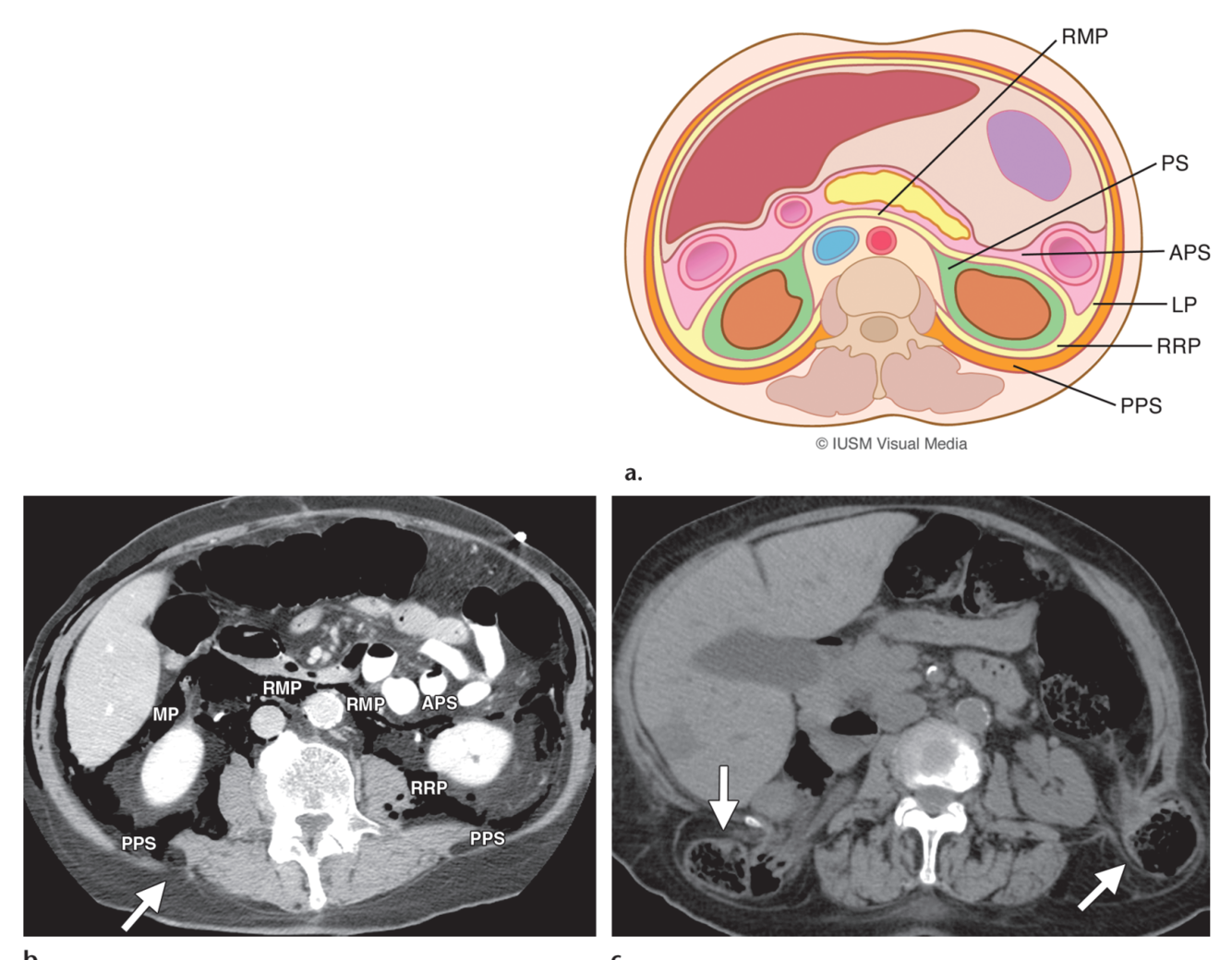
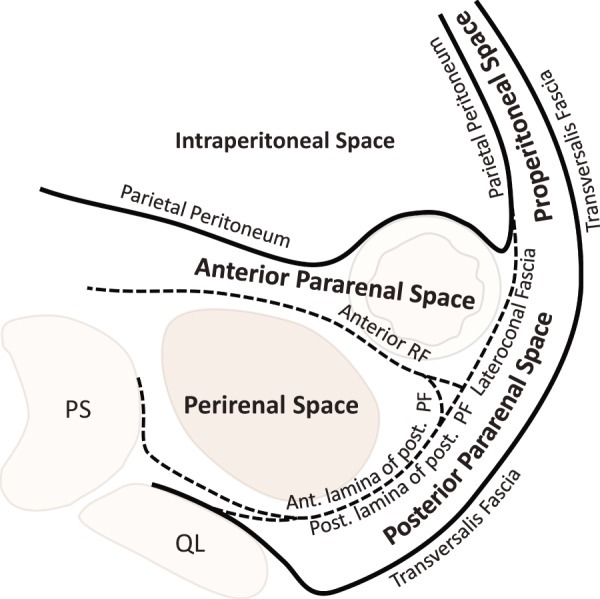
- The retromesenteric plane is a potentially expansile plane located between the anterior pararenal space and the perirenal space (Fig 12a).
- It communicates across the midline and is a major source of fluid spread in patients with pancreatitis. The presence of fluid in the retromesenteric plane is often erroneously attributed to the anterior pararenal space.
- Figure 12. Retroperitoneal anatomy.
- (a) Diagram shows the anterior (APS) and posterior (PPS) pararenal spaces, perirenal space (PS), retromesenteric plane (RMP), retrorenal plane (RRP), and lateral conal (LP) planes.
- (b) Axial CT image, obtained in a 76-year-old man with duodenal perforation who underwent endoscopic retrograde cholangiopancreatography, shows a large amount of dissected retroperitoneal air outlining the retromesenteric plane (RMP)— which connects across the midline—and retrorenal plane (RRP).
- The anterior pararenal space (APS) is mostly free of gas.
- Note that it is possible for disease to extend from the posterior pararenal space (PPS), through the quadratus lumborum muscle (arrow), and into the subcutaneous space, the site of an inferior lumbar hernia as well as the GreyTurner sign, which manifests as lateral abdominal discoloration in patients with severe pancreatitis.
- Extravasated air has dissected into the Morison pouch (MP), a finding indicative of abrupt accumulation of air or fluid that crosses the peritoneal and retroperitoneal spaces.
- (c) Axial unenhanced CT image shows bilateral lumbar hernias arising from the superior lumbar triangles (arrows).
- https://pubs.rsna.org/doi/pdf/10.1148/rg.322115032
retrorenal posterior interfascial space
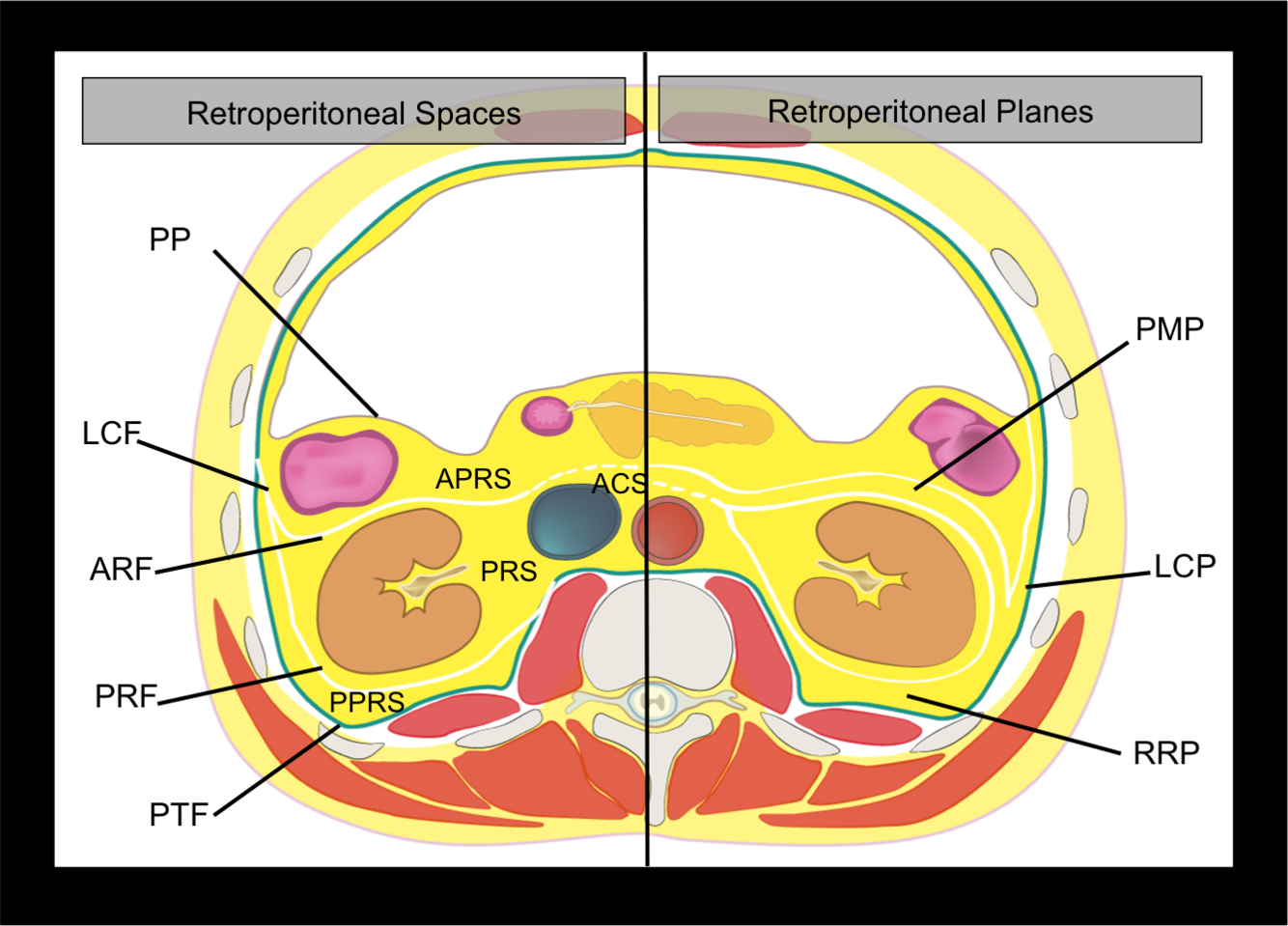
- Retrorenal Plane
- The retrorenal plane is a potentially expansile plane located between the perirenal space and posterior pararenal space (Fig 12a).
- It does not cross the midline because it is interrupted by the great vessel space.
- Fluid collections in the anterior pararenal space and the retromesenteric plane may extend to the retrorenal space.
- The retrorenal plane combines with the retromesenteric plane inferiorly to form the combined interfascial plane, which extends into the pelvic retroperitoneum (Fig 13) (14,15).
- The interfascial plane extends into the pelvis anterolaterally to the psoas muscle and is a route for the spread of some infections, such as tuberculosis.
- The lateral conal interfascial plane is a potentially expansile space between the layers of the lateroconal fascia that communicates with the retromesenteric and retrorenal interfascial planes at the fascial trifurcation.
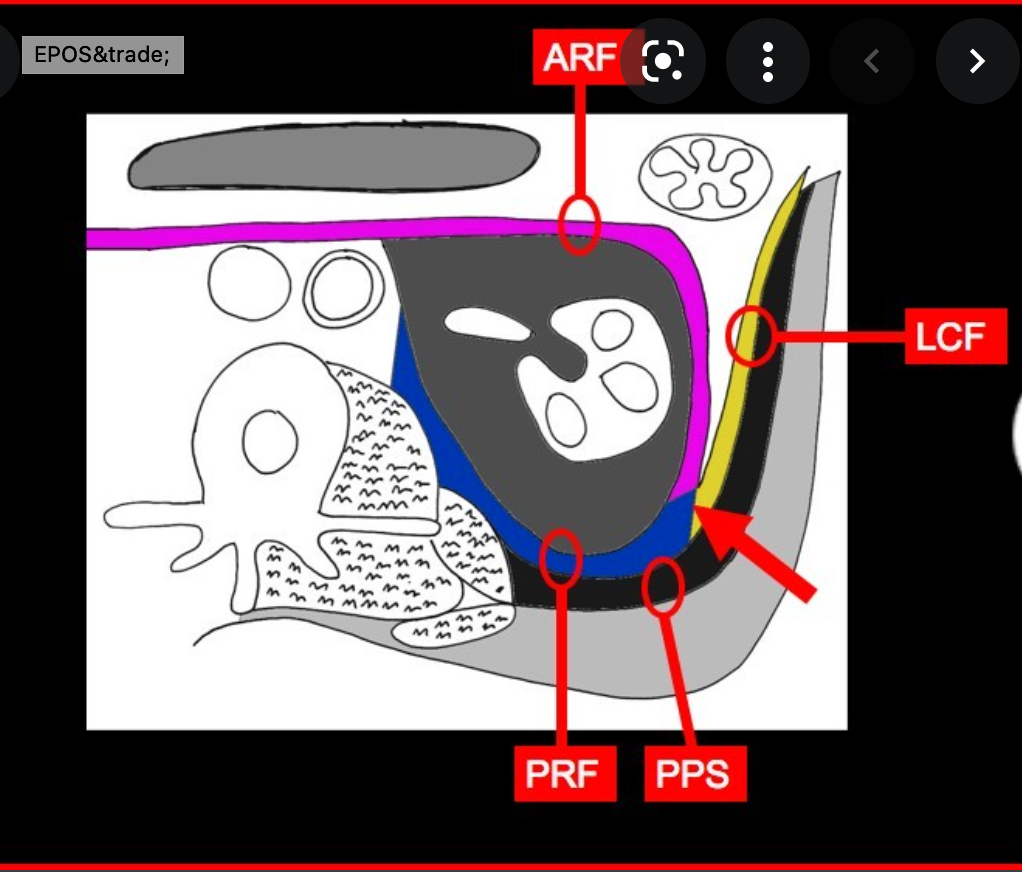
- Fig. 1: Drawing of the anatomy of the retroperitoneal spaces at the level of the kidneys.
- PP: Posterior Parietal Peritoneum,
- LCF: Lateroconal Fascia,
- ARF: Anterior Renal Fascia,
- PRF: Posterior Renal Fascia,
- PTF: Posterior Transversalis Fascia,
- APRS: Anterior Pararenal Space,
- PRS: Perirrenal Space,
- PPRS: Posterior Pararenal Space,
- ACS: Aorto-Caval Space,
- PMP: Premesenteric Plane,
- LCP: Lateroconal Plane,
- RRP: Retrorenal Plane.
What is the Anterior interfascial retromesenteric plane.
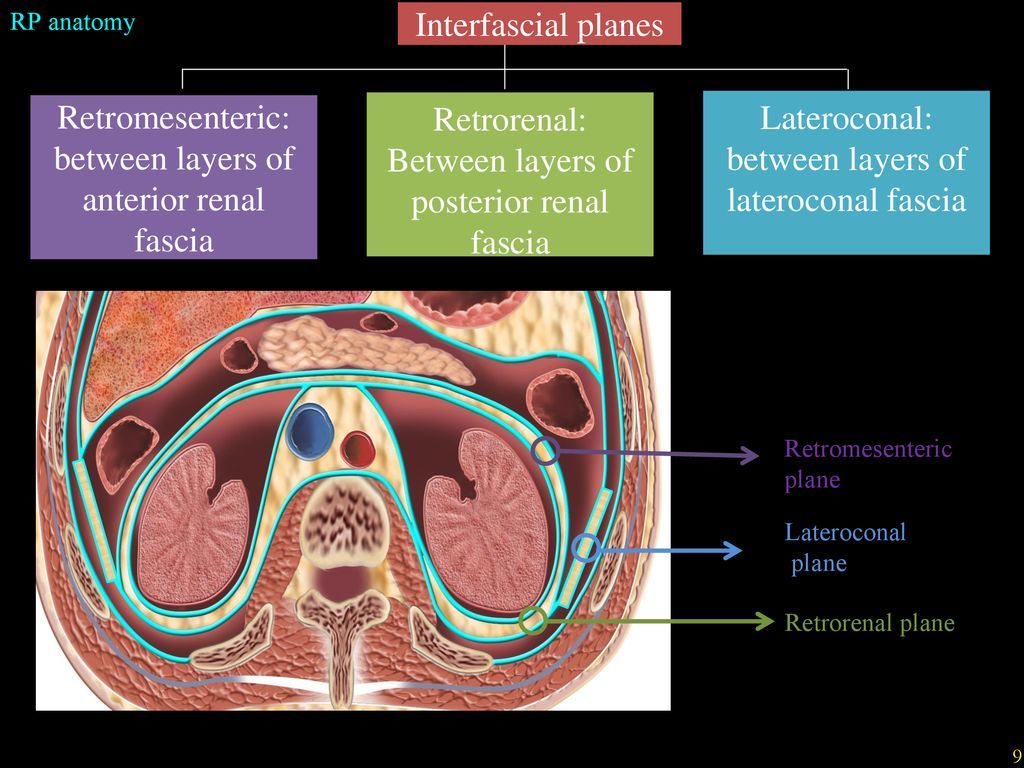
Anterior interfascial retromesenteric plane.
Potentially expansile plane between the anterior pararenal space and perinephric space ; continuous across the midline.
It is an important potential route of contralateral spread of retroperitoneal collections.
What is the posterior interfascial retrorenal plane?
Posterior interfascial retrorenal plane.
- Potentially expansile plane between the perinephric space and posterior pararenal space;
- anterior pararenal, peritoneal, or intrafascial fluid may reside within the retrorenal space.
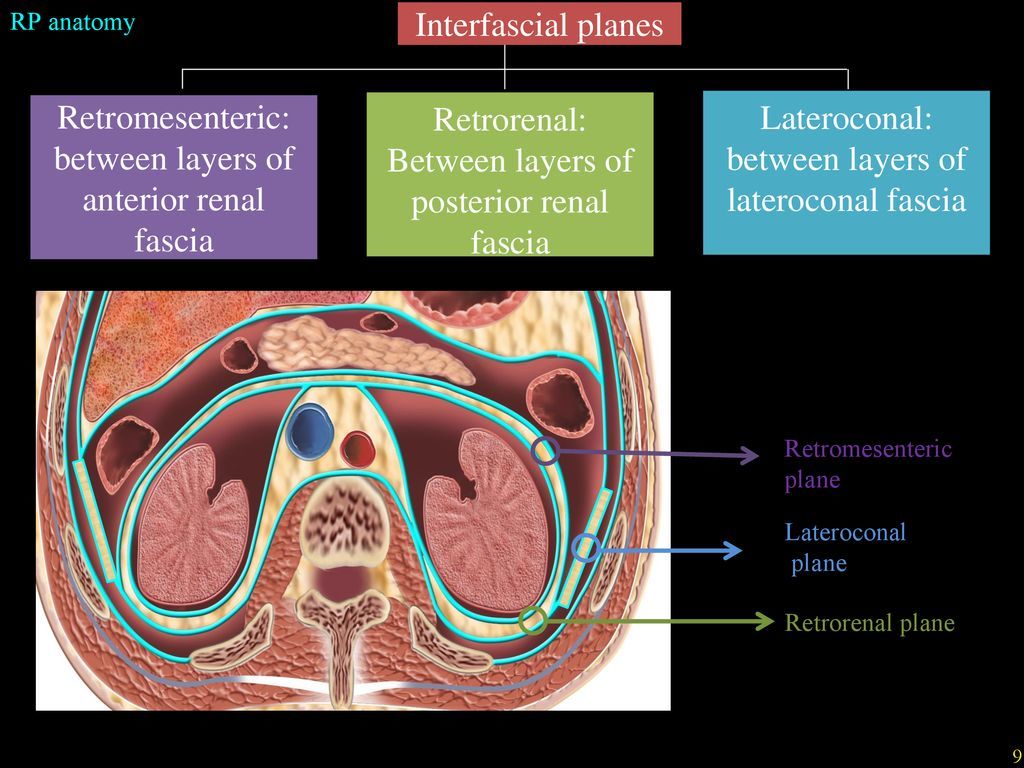
What is the Lateroconal interfascial plane.
What does it communicate with?
- Lateroconal interfascial plane.
- Potentially expansile plane between layers of LCF;
- communicates with anterior and posterior interfascial planes at the fascial trifurcation.
- https://epos.myesr.org/posterimage/esr/ecr2008/28533/mediagallery/227131
What is the
Combined interfascial plane.
Combined interfascial plane.
- Potentially expansile plane formed by the inferior blending of the anterior renal fascia, posterior renal fascia, and lateroconal fascia
- continues into the pelvis,
- providing a route of disease spread from the abdominal retroperitoneum into the pelvis.
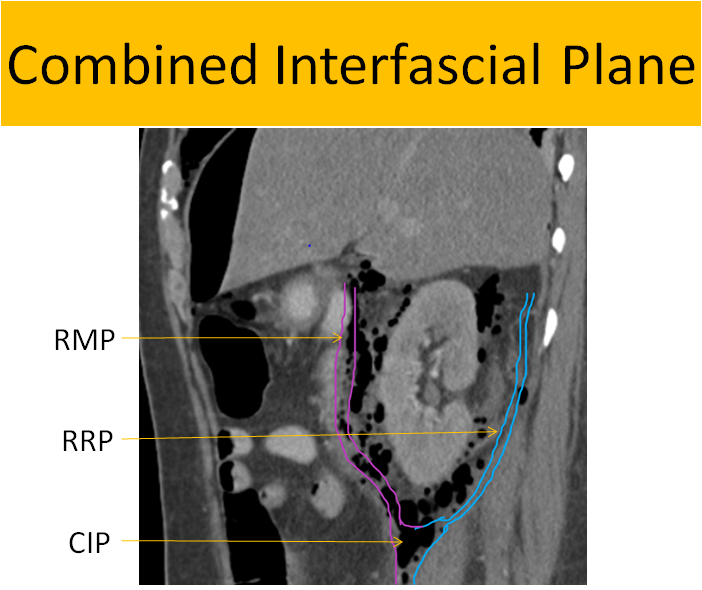
Fig. 2: Sagittal CT image shows inferior fusion of retromesenteric plane (RMP) with retrorenal plane (RRP) to form the combined interfascial plane (CIP). This point creates a route for spread of diseases between the abdominal and pelvic retroperitoneal spaces
What does ‘c’ lable?
Combined interfascial plane.
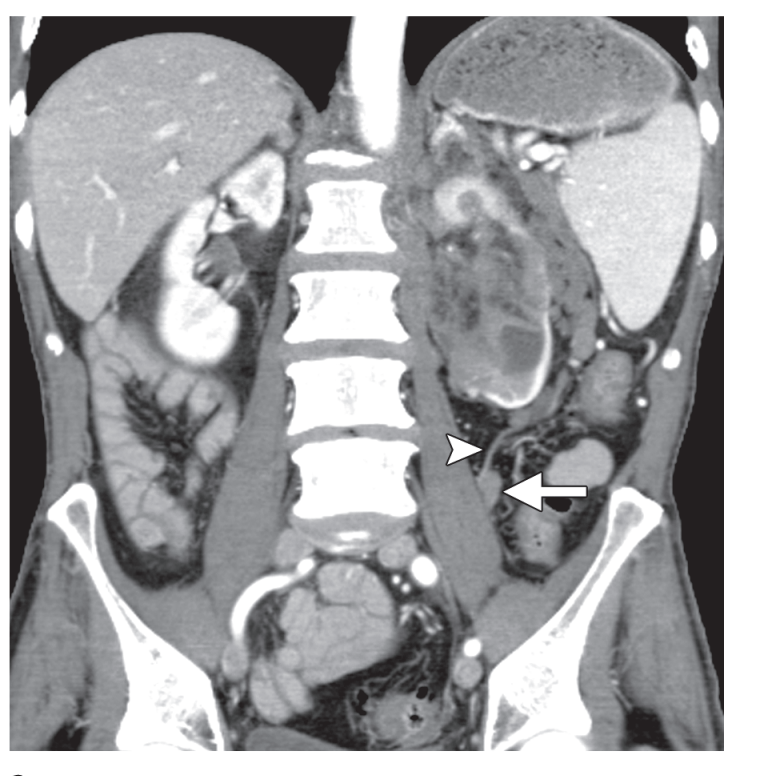
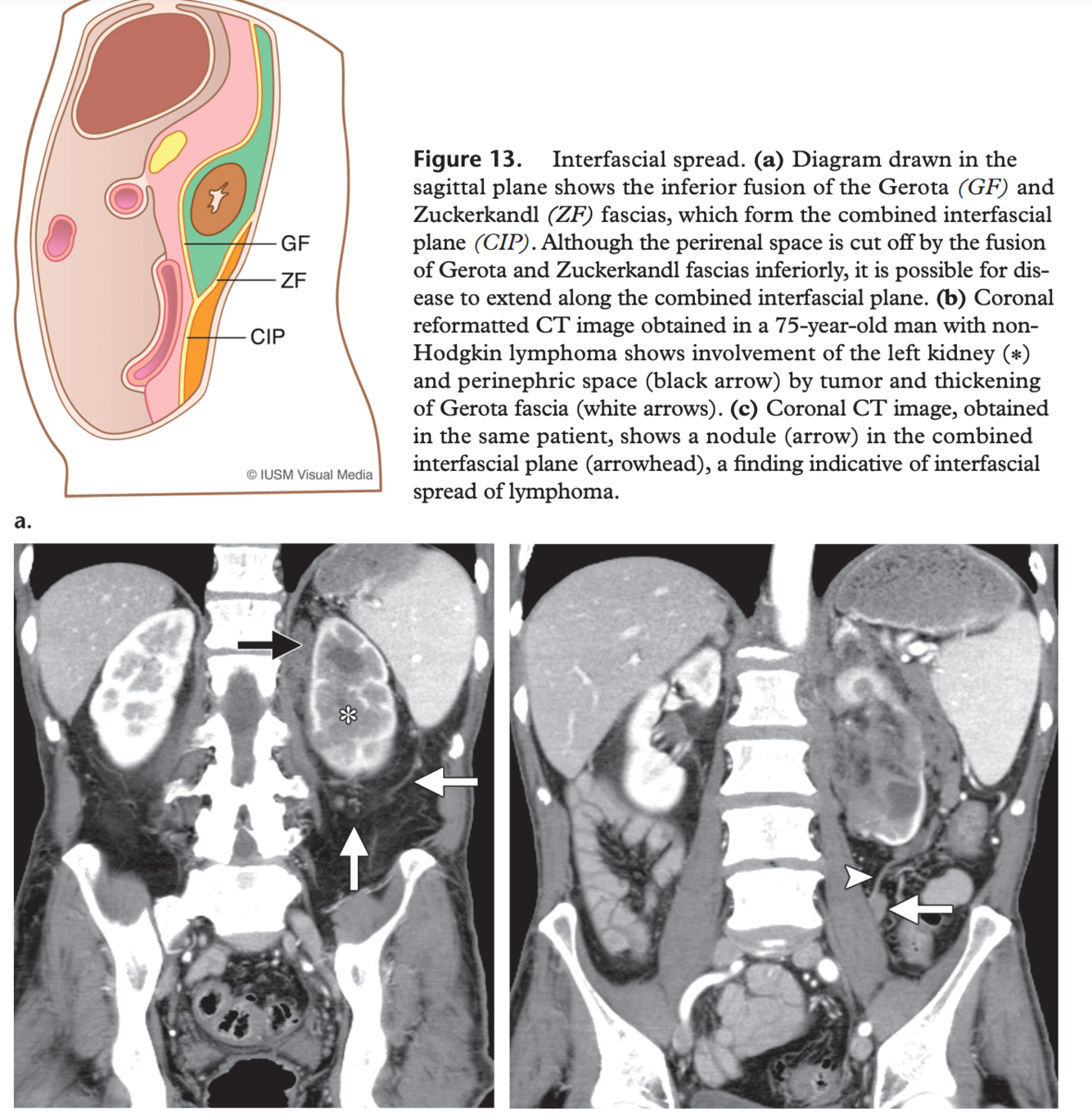
Figure 13. Interfascial spread. (a) Diagram drawn in the sagittal plane shows the inferior fusion of the Gerota (GF) and Zuckerkandl (ZF) fascias, which form the combined interfascial plane (CIP). Although the perirenal space is cut off by the fusion of Gerota and Zuckerkandl fascias inferiorly, it is possible for disease to extend along the combined interfascial plane. (b) Coronal reformatted CT image obtained in a 75-year-old man with nonHodgkin lymphoma shows involvement of the left kidney (*) and perinephric space (black arrow) by tumor and thickening of Gerota fascia (white arrows). (c) Coronal CT image, obtained in the same patient, shows a nodule (arrow) in the combined interfascial plane (arrowhead), a finding indicative of interfascial spread of lymphoma.
https://pubs.rsna.org/doi/pdf/10.1148/rg.322115032
What is Happening here?
What is the anatomy involved?
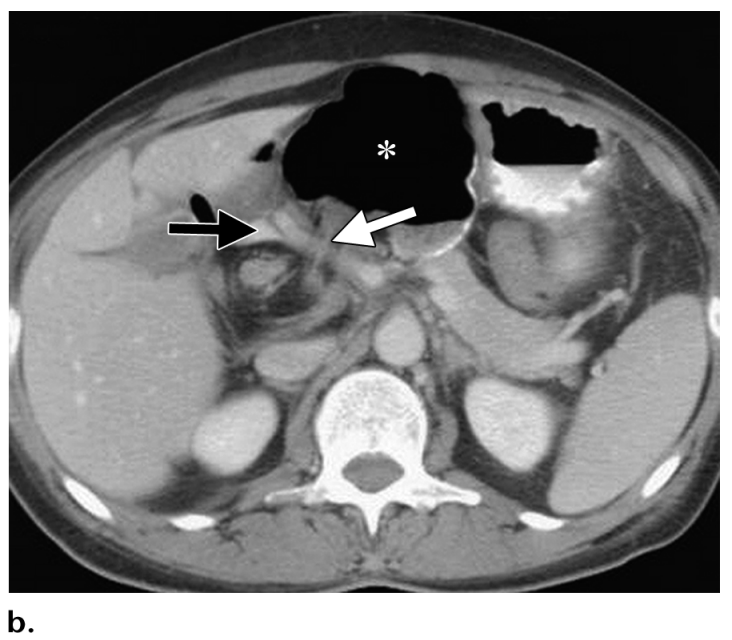
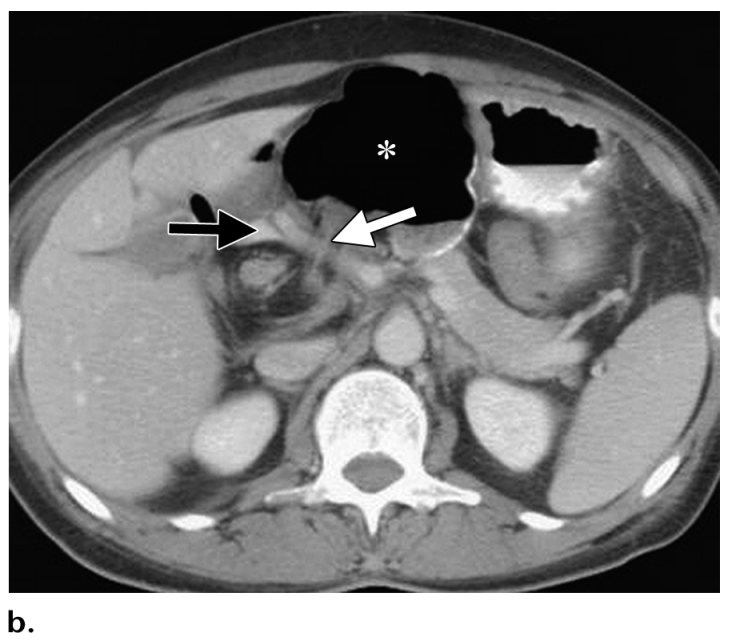
Foramen of Winslow Hernia
Axial CT image obtained in a 48-year-old woman shows the cecum (*) adjacent to the stomach, an unusual position, and passage of the right colic vessels (white arrow) across the foramen of Winslow, findings indicative of a foramen of Winslow hernia.
The foramen is marked posteriorly by the hepatic vessels (black arrow).
The presence of a foramen of Winslow hernia was confirmed at surgery.
https://pubs.rsna.org/doi/pdf/10.1148/rg.322115032
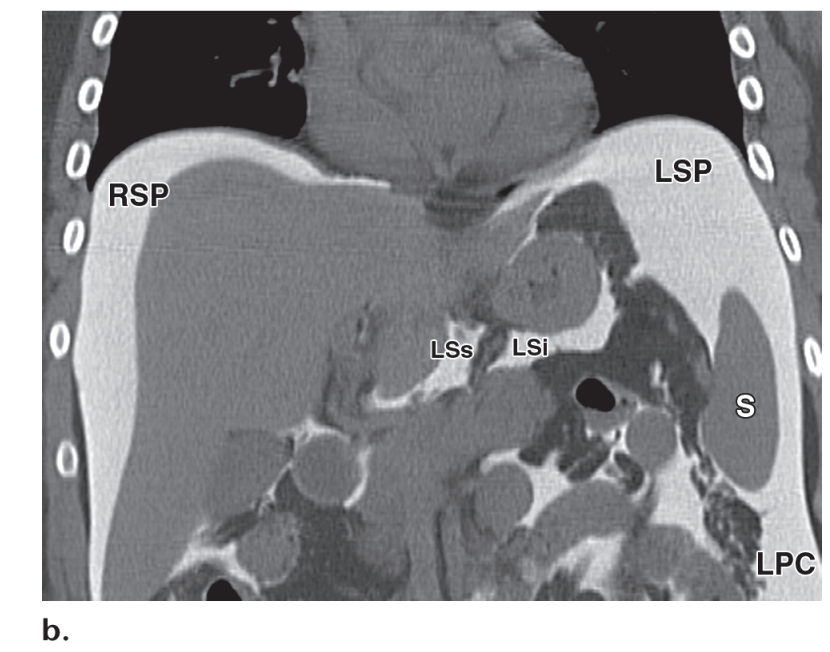
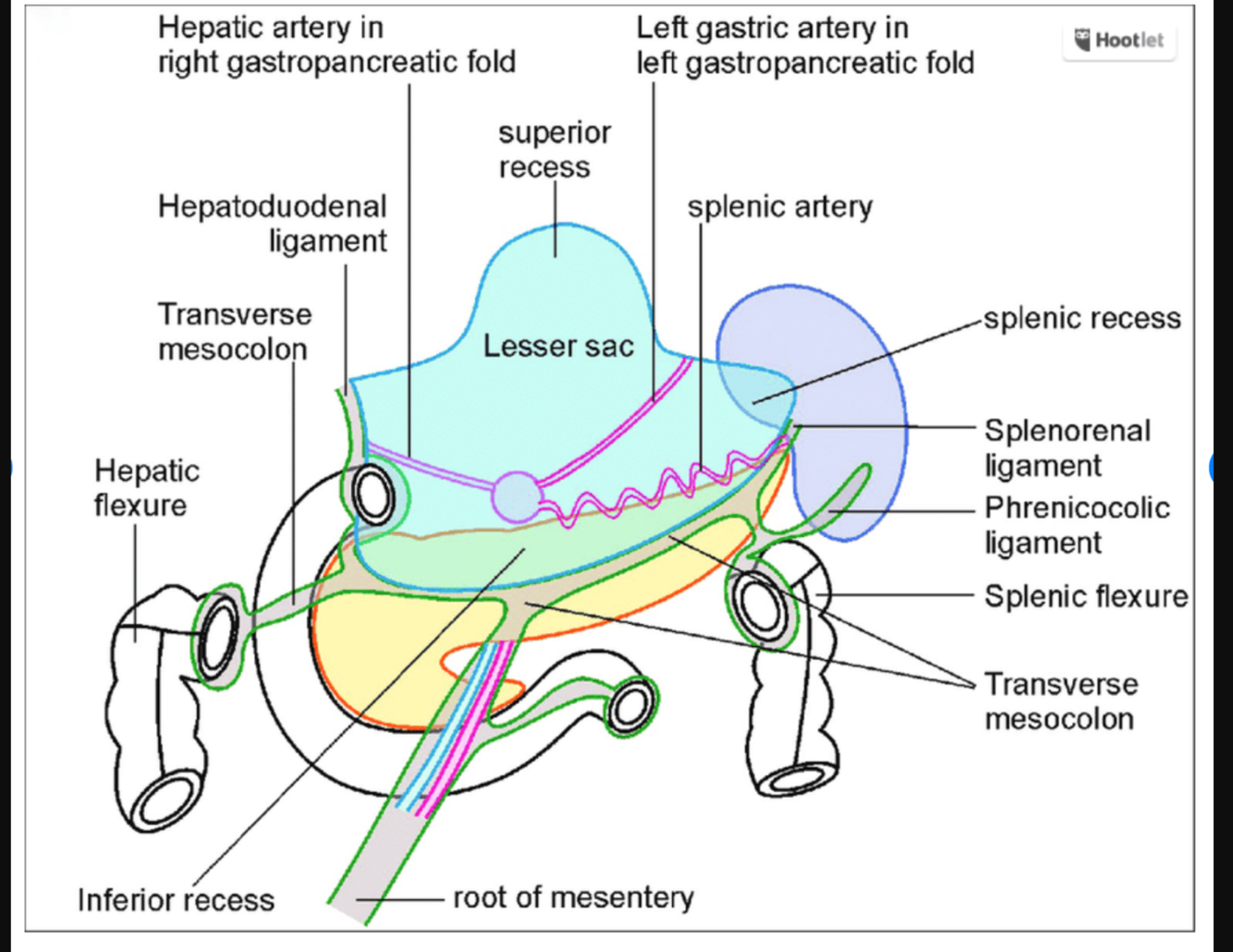
What separates the superior and inferior lesser sac?
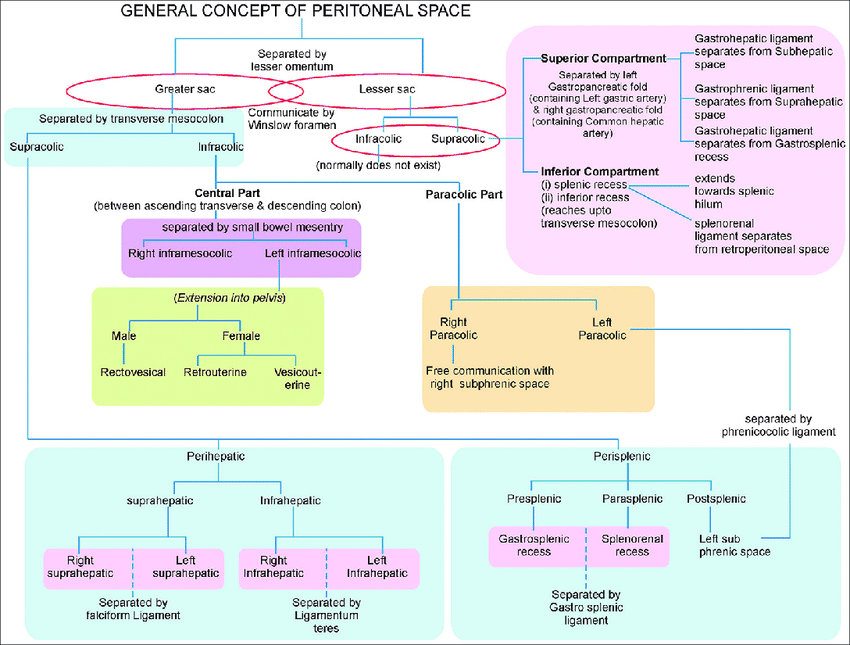
A schematic diagram showing the lesser sac following the removal of the stomach and the transverse colon. The line of attachment of the transverse mesocolon and the mesentery is shown. The left gastric artery and common hepatic artery project into the lesser sac, raising the left and right gastropancreatic folds, which divide the lesser sac into the superior and inferior recesses. The splenic recess of the lesser sac is seen extending toward the splenic hilum
https://www.researchgate.net/figure/A-schematic-diagram-showing-the-lesser-sac-following-the-removal-of-the-stomach-and-the_fig3_316332115
Sharma, Malay & Madambath, JayanGopinath & Somani, Piyush & Pathak, Amit & Babu, Ramesh & Bansal, Raghav & Ramasamy, Kovil & Patil, Amol. (2017). Endoscopic ultrasound of peritoneal spaces. Endoscopic Ultrasound. 6. 90. 10.4103/2303-9027.204816.
Describe the retroperitoneal spaces and their relation ships
What is the Fascial trifurcation.
Fascial trifurcation. Site at which the LCF emerges from Gerota fascia; anterior, posterior, and lateroconal interfascial planes communicate at the fascial trifurcation, usually located laterally to the kidney.
What does the anterior pararenal space contain?
Anterior pararenal space
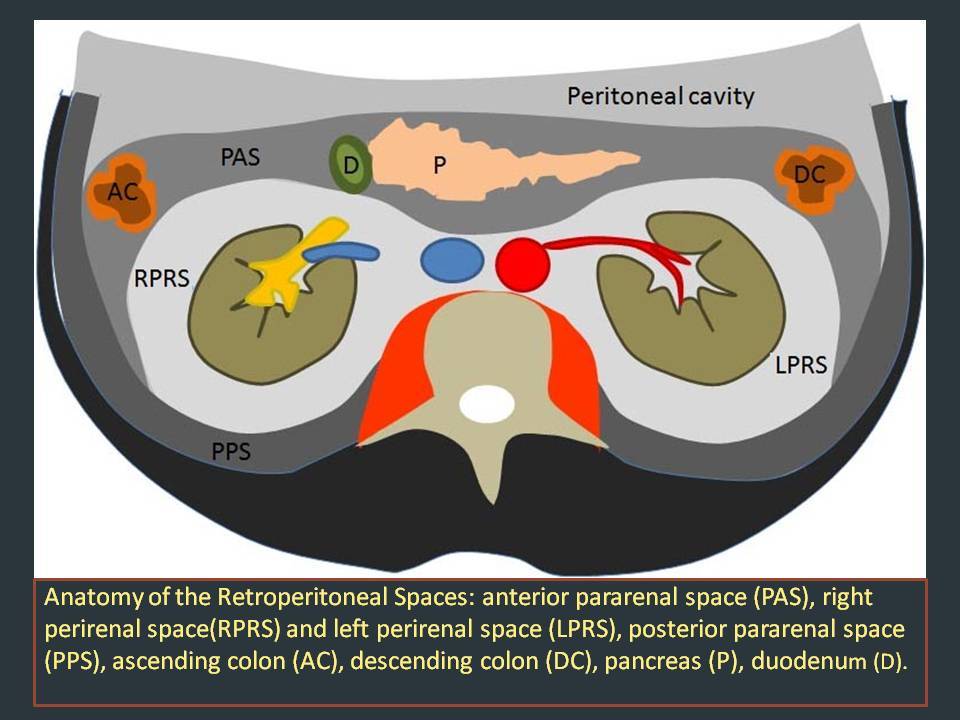
Between parietal peritoneum and anterior renal fascia ; contains pancreas and bowel
What are the contents of the posterior pararenal space
What does it lie between?
What does it continue as?
- posterior pararenal space
- Between posterior renal fascia and transversalis fascia,
- Contains no organs.
- Fat continues laterally as properitoneal flank stripe.
What does the perirenal space contain?
What is it between?
Perirenal space.
Between anterior renal fascia and posterior renal fascia
Contains kidney, adrenal gland, proximal collecting systems, renal vessels, and a variable amount of fat
Are the perinephric spaces are closed ________.
The retromesenteric space is _______.
The perinephric spaces are closed medially.
The retromesenteric space is continuous across midline.
What are the contents of the perirenal space?
- The PRS contains a rich network of:
- bridging septa,
- lymphatics,
- arteries, and
- veins.
- The perirenal lymphatics communicate with small lymph nodes at the renal hilum, and these, in turn, connect with periaortic and pericaval lymph nodes.
- This lymphatic network provides a potential route of spread for metastatic tumors into the PRS.
What are 5 causes of Retroperitoneal Hematoma?
Retroperitoneal Hematoma
Causes
- Anticoagulation
- Trauma
- Iatrogenic
- Ruptured AAA (particularly if >6 cm)
- Tumor:
- RCC
- large AML
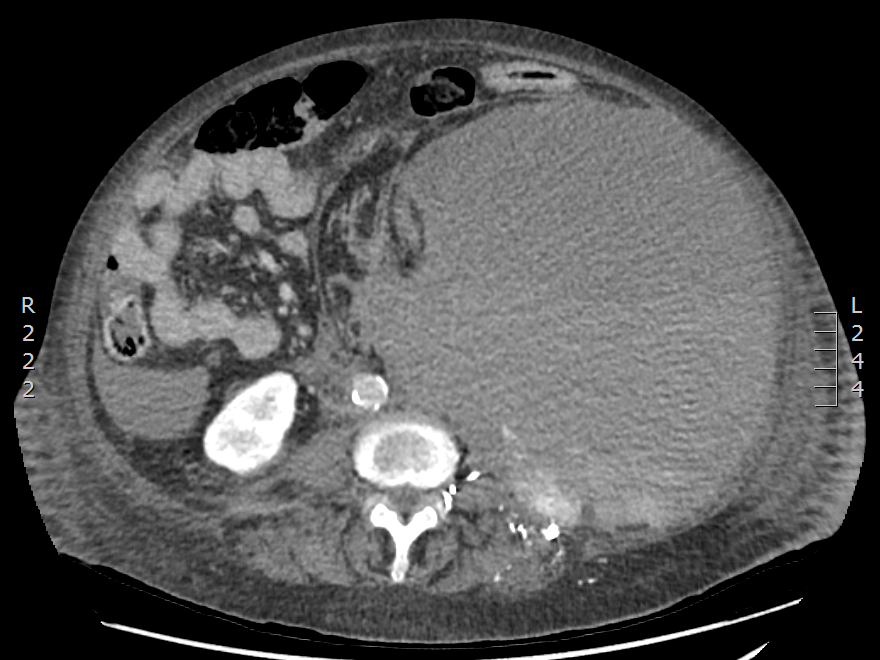
Interventional angiogram identified her primary bleeding source from the left circumflex iliac artery a branch of the external iliac artery and also to a lesser degree from the left L4 and L5 lumbar arteries.
Case Discussion
The patient was emergently transferred to a tertiary center for endovascular embolization. Endovascular angiography revealed the above primary bleeding sources. Each artery received Onyx embolization. Immediate post embolization images showed satisfactory control however her time in ICU continued to be turbulent with dependency on vasoactive medications and continued transfusion of blood products. Repeat abdominal CT angiogram confirmed an increase in the size of her retroperitoneal hematoma. The patient continued to deteriorate falling into multiorgan dysfunction syndrome thought to be contributed by abdominal compartment syndrome. An emergency midline laparotomy was performed. The massive hematoma was evacuated with a rough calculated volume of 10 L. No active arterial bleeding was identified, perhaps from the massive hematoma achieving tamponade. Fortunately, the patient made a full recovery.
Case courtesy of Dr Paul Clarke, Radiopaedia.org, rID: 69556
What are the imaging features of Retroperitoneal Haemorrage?
What are the HU for Acute hemorrhage?
Imaging Features
- Dissection through retroperitoneal spaces
- Acute hemorrhage: 40–60 HU
- Hematocrit level
Abscess in x = y cause
- anterior pararenal space
- Perirenal space
- posterior pararenal space
Abscess
Location and Causes
- APS (>50%): pancreatitis
- Perirenal space: renal inflammatory disease
- PPS: osteomyelitis
What are 3 causes of Retroperitoneal Air?
Retroperitoneal Air
Causes
- Trauma (perforation)
- ERCP
- Emphysematous pyelonephritis
8 Causes of retroperitoneal fibrosis
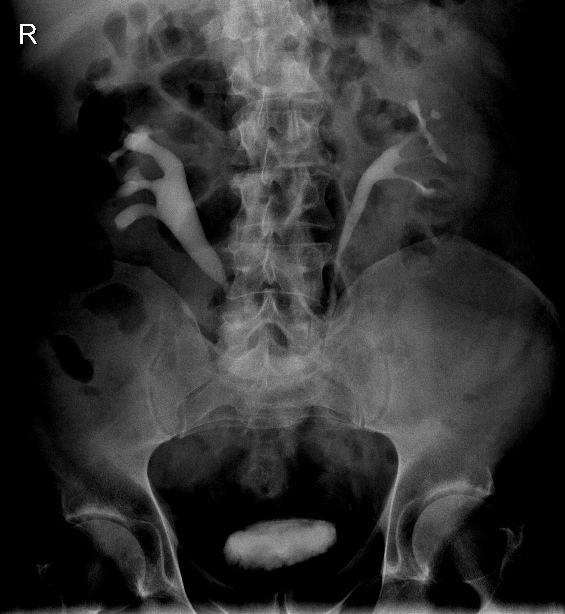
Retroperitoneal Fibrosis
Fibrotic retroperitoneal process that can lead to ureteral and vascular obstruction.
Causes
- Idiopathic (Ormond disease), 70%
- Benign
- Medication:
- methysergide,
- ergotamine,
- methyldopa
- Radiation
- surgery
- Inflammation extending from other organs
- Retroperitoneal fluid:
- hematoma,
- urine
- Medication:
- Malignant
- Desmoplastic reaction to tumors:
- Hodgkin disease >
- NHL >
- anaplastic carcinoma,
- metastases
Which is most likely to cause a desmoplastic reaction and retroperitoneal fibrosis?
NHL, Mets, HL, Anaplastic Ca?
Desmoplastic reaction to tumors:
- Hodgkin disease >
- NHL >
- anaplastic carcinoma,
- metastases
What medications cause retroperitoneal fibrosis?
- Methysergide
- Ergotamine
- Methyldopa
What are the imaging features of Retroperitoneal Fibrosis?
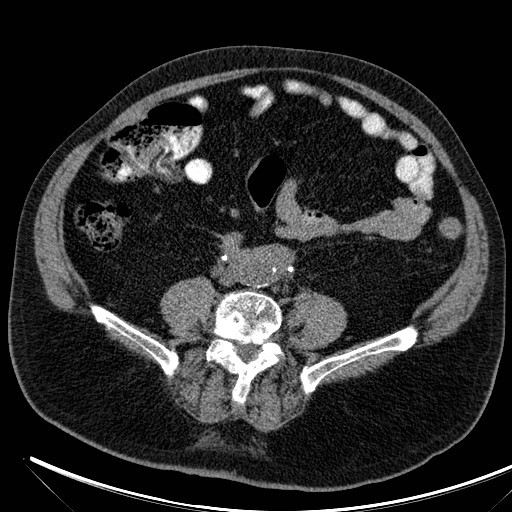
Imaging Features
- Fibrotic tissue envelopes retroperitoneal structures.
- Fibrosis may enhance after contrast administration.
- Extrinsic compression of ureter
- Medial deviation of ureters
- Extrinsic compression of IVC, aorta, iliac vessels
- On T1W MRI,
- fibrous tissue appears hypointense.
- Active inflammation has an intermediate to hyperintense SI on T2W.
Case courtesy of Dr Luke Danaher, Radiopaedia.org, rID: 17435


-
CHEST IMAGING 1100
-
CHEST IMAGING 2100
-
CHEST IMAGING 343
-
CHEST IMAGING 4 (TUMOURS)81
-
CHEST IMAGING 5 PATHOLOGY2
-
CARDIAC IMAGING 1100
-
CARDIAC IMAGING 2100
-
CARDIAC IMAGING 3100
-
CARDIAC IMAGING 443
-
GIT 1101
-
GIT 2100
-
GIT 3100
-
GIT 4102
-
Hepatobilary155
-
Biliary System76
-
Pancreas66
-
Spleen24
-
Adrenal Glands70
-
GENITOURINARY IMAGING 197
-
GENITOURINARY IMAGING 2100
-
GENITOURINARY IMAGING 3100
-
GENITOURINARY IMAGING 4100
-
GENITOURINARY IMAGING 545
-
RETROPERITONEUM33
-
Male Pelvis10
-
GIT PATHOLOGY31
-
Skeletal Dysplasias18
-
MSK104
-
MSK Crack the Core70
-
MSK 295
-
MSK 3100
-
Neuro100
-
Neuro 222
-
NEURO 375
-
Head and Neck 1100
-
Head and Neck 2100
-
Head and Neck 3100
-
Head and Neck 4100
-
Head and Neck 555
-
DDX Head and Neck35
-
Vascular10
-
IR30
-
BREAST IMAGING52
-
OBSTETRICS17
-
GYNAECOLOGY40
-
PAEDIATRICS 196
-
PAEDIATRICS 297
-
PAEDIATRICS 395
-
Nuclear Medicine 134
-
PET CT16
-
Syndromes94
-
HAEMATOLOGY6
-
PATHOLOGY 141
-
Crack the core WHen I Say you say...489
-
Physics31
-
crack the core exam case companion18
-
EPONYMOUS Diseases/signs22
-
What the F&^# is that word?10
-
Radiology Signs25
-
Mnemonics36
-
GIT Pathology1
-
NEURO MRI PHYSICS14
-
GREAT CHEST XRAY CASES1
-
THIS PATIENT IS TYPICAL OF X CONDITION2



