Complete the table
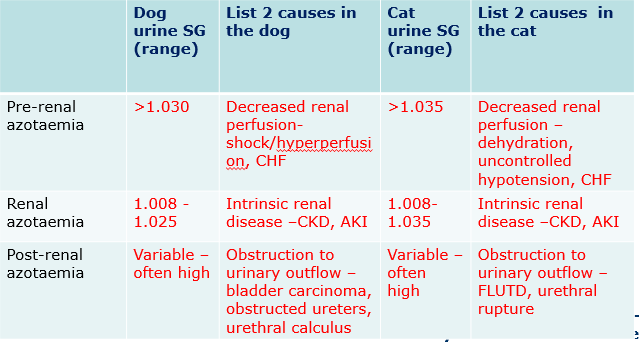
- Hypoadrenocorticism in dogs can cause polydipsia, vomiting, diarrhoea, dehydration, azotaemia and hyperkalaemia. Urine SG is often in the range 1.008-1.025
- Why are dogs with hypoadrenocorticism unable to concentrate their urine?
–Hypoadrenocorticism ( → hyponatremia → hypovolemia → decreased renal perfusion)
•What test would differentiate between a dog with hypoadrenocorticism and one with acute kidney failure?
–Basal cortisol level
•What treatment would you give while waiting for this result?
–IV fluids and correct electrolyte levels (think about glucose and insulin or Ca borogluconate)
What type of drug is benazepril?
ACE inhibitor
•What is Semintra and how does it work?
–Aldosterone receptor antagonist, for proteinuria in cats
Mojo: 7 mth old MN DSH
•Acute onset (24-48hrs)
–vomiting
–weakness/poor coordination
–tremors
- Indoor/outdoor cat
- Multi cat house
–one other cat seems quiet/off food
- He is usually a very well cat
- Heart/pulse rate 160 HIGH
- T 36.7°C LOW
- Poor pulse quality
- Dehydrated (7.5%)
- Twitching
- Bladder small
- Systolic blood pressure 80mmHg LOW
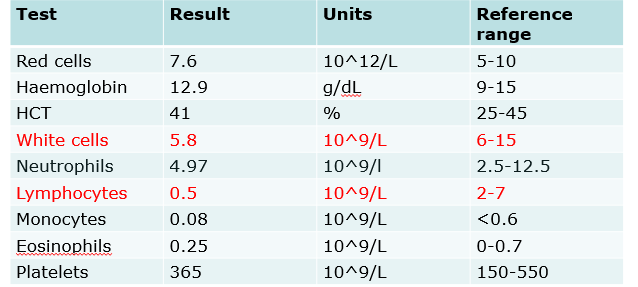
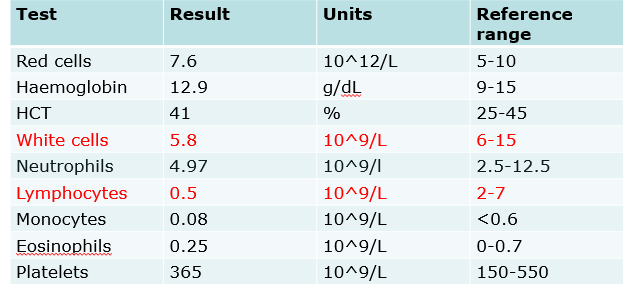
Haemtology - low WBC and lymphocytes
What do you do next?
URINALYSIS
What type of crystals are these?
How can they be explained?
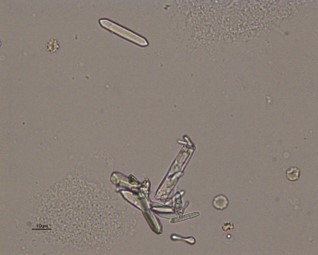
Calcium oxalate monohydrate
Renal azotaemia, inappropriately low SG for the level of dehydration, electrolyte imbalances. acute onset likely
•These are calcium oxalate monohydrate crystals which are generally seen in the very early stages of ethylene glycol toxicity. We should always look at a sediment exam of urine from cats if we suspect ethylene glycol toxicity as it can be a useful way to help support a suspected diagnosis. Sometimes we see calcium oxalate dihydrate crystals which form a little later in the disease (see next slide). Calcium oxalate dihydrate crystals are seen in cats that have not had exposure to ethylene glycol toxicity and therefore this is not a specific test. Seeing calcium monohydrate crystals is more specific.
How can the biochemistry be interpreted?
Along with low WBC and lymphocytes?
- Results show severe renal azotaemia, hyperphosphataemia (consistent with reduced renal function/GFR), and hyperkalaemia (a marker of AKI). We also have hypocalcaemia (low total calcium) which is likely to be genuine because protein levels are normal- if you remember, most blood calcium is protein bound and if serum protein levels are low then calcium can also be low. In this case we have a low total calcium and normal protein suggesting this is a real concern. If we are unsure or are running additional tests then we would request an iCa (ionized calcium). Hypocalcaemia is also a marker for AKI associated with ethylene glycol toxicity.
- Haematology was not very helpful in this case.
What does this show and how can we interpret in relation to ethylene glycol?
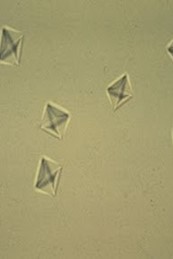
- These are calcium oxalate dihydrate crystals.
- NOT specific for ethylene glycol but could be indicative of eythlene glycol toxicity if other blood changes are consistent.
How would you categorise the acid/base disturbance?
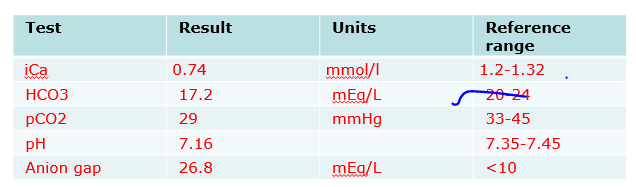
Metabolic acidosis, with compensatory respiratory alkalosis
metabolic acidosis (with a high anion gap)
hypocalcaemia occurs due to chelation of calcium by oxalate (one of the toxic metabolites of EG)
Ethylene glycol poisoning:
What are the differentials?
Prognosis?
What would we do if any other cats in the house?
Differentials: pyelonephritis, lily toxicity or ureteric obstruction
- What is the prognosis for Mojo? bad
- Does the prognosis vary with your other differentials? better
- Do you have any concerns about the other cats in the house? What will you do? Treat with alcohol
I have an animal in renal failure and suspect ethylene glycol toxicity. Can you test for that?
Ethylene glycol can be detected as a single agent or as part of the General Toxicology Panel (TO1).However, it takes several days for the increases in nitrogenous waste products to accumulate after the renal damage is caused by ethylene glycol, by which time the compound itself usually has been excreted. So often by the time the animal is presented the ethylene glycol has gone from blood and urine.
However, urine cytology can be helpful in that it will identify both acute renal tubular injury and the presence of calcium oxalate monohydrate crystals which very commonly accompany this specific toxicity.
Is fomepizole a magic antidote for ethylene glycol toxicity?
Would you ever really give vodka?
You might have found discussion of fomepizole as a treatment/antidote for ethylene glycol toxicity but sadly it’s not available in time for most cases. Vodka has however been used as a treatment (see resources) and can be effective in some cases. The prognosis is grim but this does not mean that occasional “miracle stories” don’t occur.
What does this hsitopath show?
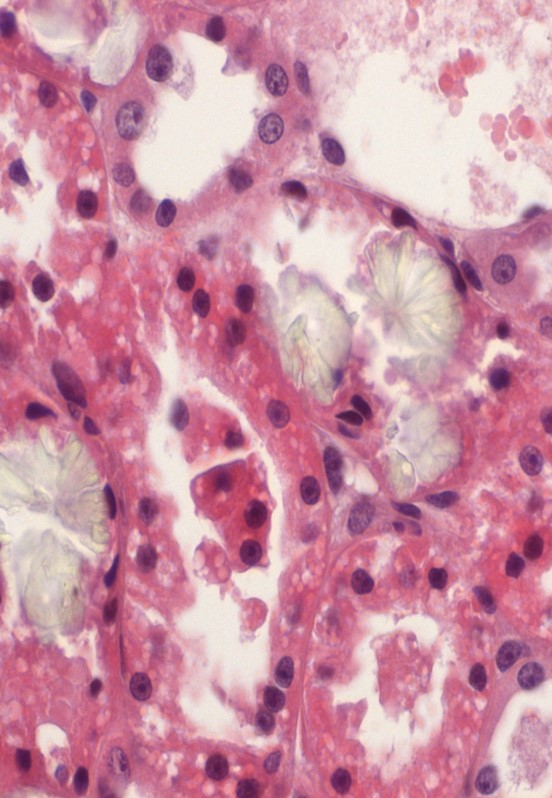
Renal tubules containing calcium oxalate deposits
How does ethylene glycol toxicity come about and what is seen?
- minimum toxic dose of just 1.4 ml/kg
- The toxic products of the metabolism of ethylene glycol cause metabolic acidosis and renal tubular damage resulting in acute renal failure (ARF). EG is metabolised by the enzyme alcohol dehydrogenase (AD) to glycoaldehyde and further metabolised to acidic products and oxalate. Formation of calcium oxalate crystals occurs resulting in hypocalcaemia and crystalluria.
- Initial clinical signs ( less than 12 hours post intoxication) are gastrointestinal (vomiting) and neurological (ataxia, depression, ‘drunken’ appearance) representing intoxication due to the EG and glycoaldehyde.
- 12 to 24 hours after EG ingestion further depression is observed along with anorexia, tachycardia and the start of ARF.
- After 24 hours clinical signs reflect ARF and include oliguria or anuria and vomiting. If the cat is hyperkalaemic bradycardia may be noted. Unfortunately it is unusual to identify a cat in the earlier stages and most have ARF at presentation. With ingestion of large volumes of EG severe signs including ARF can occur sooner ( less than 12 hours).
How do we diagnose and treat ethylene glycol poisoning?
- Diagnosis - Azotaemia is present if ARF has developed, along with hyperphosphataemia. Hypocalcaemia (total and ionised) may be noted. Hyperkalaemia may be present with oliguric or anuric renal failure. An increased anion gap acidosis is commonly observed. Urinalysis will reveal isosthenuria and calcium oxalate monohydrate crystals, which vary in appearance from rounded to more pointed (see figure). Renal ultrasound may demonstrate hyperechoic cortices. The bladder may be small, reflecting reduced urine production. Ethylene glycol blood levels are rarely measured due to the delay receiving results and low toxic dose in cats.
- Treatment
- If cats are observed ingesting EG and examined rapidly ( less than one hour) then gastric decontamination with induction of emesis can be attempted. This is contraindicated if consciousness is reduced due to the risk of aspiration. Metabolism of EG can be inhibited by ethanol, which acts as a preferred substrate for AD.
- After 12 hours or once ARF has developed treatment with ethanol is unlikely to be effective and may complicate management of ARF. However, prior to the development of ARF then 20% medical ethanol can be administered IV at a dose of 5 ml/kg intravenously over 15 minutes and repeated every 6 hours for five treatments then every 8 hours for four treatments.
Lily toxicity:
When is it seen?
Clinical signs?
Treatment?
Prognosis?
- Cats have been shown to be extremely sensitive to the toxic effects of lilies. As little as 2 leaves or part of a single flower have resulted in deaths. It should be pointed out that the whole plant—petals, stamen, leaves, and pollen are toxic.
- The quick onset of clinical signs suggests a rapid absorption rate of the toxin. The renal tubular epithelium appears to be the target of the toxin
- clinical signs of lily intoxication include salivation, vomiting, anorexia, and depression. Polyuric renal failure leads to dehydration and anuric renal failure and death results
- Successful treatment includes initiation of fluid diuresis before the onset of anuric renal failure. Once anuria develops, peritoneal dialysis or hemodialysis is the only potential treatment
- Prognosis is excellent if fluid diuresis is started before anuric renal failure has developed
Alfie:
Clinical history
•Vague…. lethargy?
–“not quite right”
- Appetite used to be good, now variable
- Less keen to go for walks
- Mild weight loss
Physical examination
- No abnormal findings
- BCS 6/9
- Alfie’s owner is worried he has “Cocker Spaniel Kidney Disease”
What is she referring to?
What investigations would you suggest for Alfie to see if her concerns are valid?
What treatment options might there be?
- What is she referring to? Familial nephropathy
- What investigations would you suggest for Alfie to see if her concerns are valid? DNA test
- What treatment options might there be? None to treat, but can slow the rate damage
–Specialised diets for dogs with renal failure - low protein, phosphate, salt and potassium (to reduce the work of the kidneys)
–angiotensin converting enzyme (ACE) inhibitor (reduces blood pressure and reduce the rate of blood proteins passing into the urine).
–Dependent on electrolyte levels, blood pressure and dehydration
Lola:
Long term history:
•“Weak bladder”
–since she was a puppy stress/excitement has often made Lola urinate
- Urinary incontinence sometimes when she is asleep
- Occasionally urinates by the kitchen door overnight
Recent history:
- Polydipsia 3-4 mths
- Increasingly lethargic compared with her usual “mad Boxer” approach to life
- T, R: normal
- BCS (3/5)
- Bright & alert (very)
- Cardiovascular:
–heart/pulse rate 116 HIGH
–good peripheral pulses
–systolic grade I/VI murmur
- Pale pink mm, CRT good
- Abdominal palpation is normal
- No urine scalding seen
How worried are you about Lola’s heart murmur?
- What are 2 possible reasons for Lola’s incontinence?
- Give 3 likely differentials for Lola’s polydipsia
- What is your initial diagnostic plan?
- How worried are you about Lola’s heart murmur? Low grade, but high HR. Compensating? But not in heart failure
- What are 2 possible reasons for Lola’s incontinence?
–Polyuria
–Poor urethral sphincter
•Give 3 likely differentials for Lola’s polydipsia
–Juvenile nephritis
–pyometra
–Addison’s
•What is your initial diagnostic plan?
–Urinalyisis – SG, protein/glucouria
–Biochemistry - electrolytes
Mild normochromic normocytic anaemia, renal azotaemia – with proteinuria and heamtouria
What else do we need to know?
Is she entire? Ever had kidney investigations before? Family history
UTI?
Thinking about all the information we have so far, what reasons could there be for Lola’s infection?
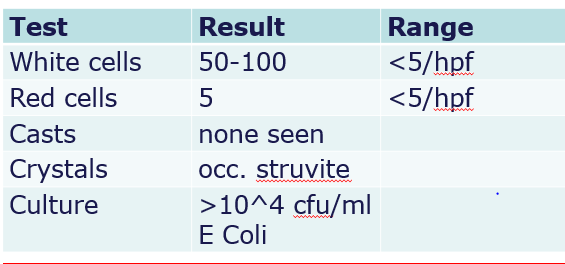
UTI
•148mmHg
–Doppler method
–Systolic reading
Lola was quite excitable for her blood pressure measurement….
is this reading normal?
Can we believe it?
Do we need to repeat it?
- is this reading normal? Yes
- can we believe it? Not entirely
- do we need to repeat it? Ideally, but not hypertensive
Both kidneys
- were small
- had irregular margins
- showed loss of the normal corticomedullary definition
Both ureters seemed to enter the bladder normally.
The bladder was normal. No calculi were seen.
- Lola has renal azotaemia- you can IRIS stage her if you assume this is stable azotaemia. She has proteinuric renal disease. She has mild anaemia likely 2ry to CKD- revise the mechanisms for anaemia in dogs with renal disease.
- Is her UTI 2ry to CKD/incontinence or does she have pyelonephritis which has resulted in CKD…sometimes we don’t know what the initial problem was and we just need to manage what we can.
•
- Diagnostic imaging changes were probably more consistent with CKD associated with juvenile renal disease rather than pyelonephritis causing CKD…but again this is not an easy decision. Often with pyelonephritis all we will see is a mildly dilated renal pelvis on ultrasound– imagine how easy that is to miss!
- Ultrasound seemed to rule out ectopic ureters…if you were not confident with ultrasound you might need to do an IVU or a positive contrast retrograde urethrogram to check this.
- What treatment would you like to give Lola?
- What is your follow up plan for her?
•What treatment would you like to give Lola?
–Antibiotics for UTI
–Renal diet
–ACE inhibitors
–Fluids if needed
•What is your follow up plan for her?
–Repeat bloods in a month of renal diet?


-
CRS 1 Revision13
-
Infectious Respiratory Disease in Small Animals74
-
Bonzo has a cough..17
-
Freddie has Nasal Discharge26
-
A difficult pet show9
-
ECG revision26
-
Tracheostomy10
-
Coughing in SAs39
-
Foxy Eosinophilic bronchpneumopathy16
-
Help my dog can't breath32
-
Radiology quiz16
-
Thoracic Imaging 263
-
Thoracic imaging 338
-
Respiratory Tract Neoplasia in SA50
-
SA Airway Disease45
-
Approach to LRT Disease in SA48
-
Diseases and Conditions of the Avian Respiratory System47
-
Thoracic Radiography Quiz8
-
Lung Disease Gross Pathology25
-
SA surgery and nasal disease Wrap Up30
-
Respiratory Tract Disease in Small Animals28
-
Pleural Disease54
-
Respiratory Endoscopy35
-
Lower Airway Disease in Cats42
-
Feline Asthma (SDL)15
-
Chest Drains20
-
Sam The Dog Can't Breath6
-
Lung histopathology18
-
Small Animal respiratory parasites39
-
Blood Pressure SDL8
-
Dysrhythmias SDL41
-
SA Endocardial Disease58
-
The Ascitic Dog Cases11
-
Dysrhythmias Management25
-
Feline Cardiomyopathies52
-
Hypertension57
-
Canine Myocardial Disease53
-
Collapse, Weakness, Exercise Intolerance31
-
Cardiac Radiography50
-
Congenital Cardiac Disease48
-
Cyanosis35
-
Radiography of CRS8
-
Management of Heart Failure78
-
Heart Failure Problems10
-
Management Of Heart Failure 223
-
Echocardiograpy Images10
-
Pericardial disease in SA37
-
How to echo33
-
Pericardiocentesis5
-
Thoracic Surgery14
-
Cardiac Cases6
-
Felix11
-
AB selection for respiratory disease37
-
ECG generation14
-
ECG interpretation27
-
CPCR32
-
Triage58
-
Emergency and Critical Cases12
-
Important factors to consider in the emergency and critical care patient27
-
Traumatic Brain Injury38
-
Important factors to consider in the emergency and critical care patient COPY27
-
Nutrition for critically ill patients54
-
Anaesthesia For The Critical Patient: Is It Different?31
-
Critical patients monitoring37
-
CRS ECC Cases20
-
Formative questions46
-
Adrenal glands6
-
Pancreas4
-
Pituitary gland11
-
Thyroid and parathyroid7
-
Hyperglycaemia7
-
Canine hypoadrenocorticism30
-
Canine hyperadrenocorticism37
-
Hepatic lipidosis/ketosis/farm16
-
Feline DM34
-
Canine diabetes mellitus45
-
Diabetic Ketoacidosis27
-
Hypoglycaemia23
-
Feline hyperthyroidism37
-
Canine hypothyroidism34
-
Calcium disorders in SA25
-
Dermatology64
-
Endocrine cases29
-
PU/PD21
-
Uncommon endocrine disorders15
-
Bacterial skin disease43
-
Fungal skin disease22
-
Viral and protozoal skin disease23
-
Parasitic skin disease49
-
Autoimmune and immune mediated diseases of the skin32
-
Practical information14
-
Pattern analysis21
-
Allergic skin disease: pathophysiology and presentation18
-
Management of allergic skin disease29
-
Clinical signs of and approach to pruritus22
-
Appraoch to cutaneous masses35
-
Feline eosinophillic granuloma complexes11
-
Cytology of cutaneous masses28
-
FNA cytology practice7
-
Non-neoplastic masses21
-
Approach to alopecia27
-
Approach to pustular, papular, scaling and crusting skin disease36
-
Otitis48
-
Otitis available treatments and choice15
-
Otic surgery33
-
Dermatological therapeutic case discussion7
-
Feline specific aspects of dermatology18
-
Dermatology cases18
-
SA Anatomy Refresher17
-
Year 2 Formative (Revision)46
-
Introduction5
-
Clinical Approach To GI Disease in SA34
-
Sickly Dog35
-
Vomiting In Dogs and Cats54
-
Gastric Disease in Dogs and Cats57
-
Diagnostic Imaging of GI15
-
Practical: Dog anatomy32
-
SA GI radiography and Ultrasonography71
-
Management of SA oesophageal and gastric SA disease39
-
Pancreatitis43
-
Intro To Intestinal Disease72
-
SI Disorders in Dogs and Cats61
-
Chronic Diarrhoea in SA50
-
Management Plans for Vomiting SA16
-
Devising a Plan12
-
SA Large Intestinal Disease49
-
Why Is This Patient Vomiting Cases27
-
Approach to abdominal radiography21
-
Abdo surgery: intro and biopsy techniques38
-
Abdominal Palpation9
-
Sedation and GI plans for GI patient15
-
Abdominal radiology cases10
-
Weight loss and ascites58
-
Feline Liver Disease72
-
Liver Disease Introduction71
-
Chronic Liver disease in dogs51
-
SA Acute Liver Disease49
-
What Is Wrong With These Patients?19
-
GDV and Gastropexies54
-
Small Animal Acute Abdomen60
-
Abdominal surgery13
-
Feline infectious peritonitis40
-
Gastrotomy, Enterotomy and Enterectomy38
-
Liver, biliary tract and portosystemic shunts48
-
Surgical Diseases of The Oesophagus25
-
Anal and Rectal Conditions66
-
Hernias & Ruptures47
-
Oral tumours, oral surgery & stick injuries50
-
Rabbit Dental Disease15
-
Common Intoxications58
-
Peridontal Disease10
-
Toxiocology cases32
-
Extraction Technique28
-
Oral surgery: surgical extraction technique34
-
GI Disease in Herbivorous Rodents53
-
Formative27
-
Developmental and Genetic Dental Abnormalities9
-
Supporting the Poison Case34
-
Clinical Case10
-
Feline Oral Disease23
-
Pancreatic disease16
-
Bella and her liver16
-
Oral cavity exam33
-
Oral cavity trauma and infection32
-
Introduction COPY4
-
Erythroid110
-
Leukogram62
-
Leukaemia and Lymphadenopathy28
-
Anaemia54
-
Pathology of Lymphoid System58
-
Haemostatic Disease67
-
Diagnosis and Management of Lymphoid Diseases96
-
Immune Mediated Disease64
-
Viruses and Lymphoid System44
-
Blood Transfusions41
-
Formative assessment87
-
Revision practical16
-
Bone pathology51
-
Bone: Diagnostic Imaging70
-
SA MSK Radiography and Radiology20
-
Spine Head and Neck Imaging37
-
Autoimmunity37
-
Principles of Fracture Management 1125
-
Principles of fracture management 2100
-
Case: Bony swelling in dog16
-
NSAIDs58
-
Examination of the Lame Dog and Cat49
-
SA Joint Dx and OA51
-
Sprains and luxations46
-
Joint Treatment6
-
Decision making in Diagnostic Tests CR11
-
Antibiotics51
-
Bones and Joint Histology (and a few pics)28
-
Synoviocentesis7
-
Joint - Inflammatory Conditions60
-
SA bandaging30
-
Triage COPY19
-
Soft Tissue Trauma65
-
Radiology wrap up25
-
Orthopaedic infections46
-
CSGTR Flat Cat10
-
SA developmental disease66
-
SA Developmental Disease Part 260
-
Small Animal Distal Limb78
-
Surgical Planning2
-
Restricting Exercise8
-
SA Muscle Disease27
-
Muscle Pathology10
-
Post Op Managment60
-
SA Hindlimb51
-
SA Forelimb63
-
SA Trauma55
-
Salvage Procedures48
-
Neurodegenerative Disease33
-
Vascular Disease35
-
Neurology Infectious Diseases84
-
Ophthalmic Exam85
-
Conjunctiva and KCS60
-
Corneal Ulcers58
-
Pain Assessment17
-
Non-Notifiable Viral Disease44
-
Notifiable Neuro Viruses26
-
Neuropharmacology47
-
Eye and Disease30
-
Feline Ophthalmology32
-
Behaviour21
-
Ocular Emergencies40
-
Ocular Pharmacology81
-
Toxicities72
-
Inflammatory Disease59
-
Pain Treatment16
-
Neuropathology36
-
Neurosurgery37
-
Exotics Neurology17
-
Pharmacological Control Of Pregnancy and Parturition25
-
Formative COPY43
-
Principles of Pregnancy Failure14
-
Intro to repro pathology137
-
Principles of Cycle Manipulation32
-
Bitch and queen when to spay and why?25
-
Principles of managing dystocia45
-
Monkey (not even a monkey) at the clinic16
-
Approach to Examining the Female Tract42
-
Male Castration63
-
Principles of Contraception42
-
Principles of Neonate Care and Disorders of the Neonate37
-
Principles of therapeutics and anaesthesia in of the neonate and pregnant animal40
-
Reproductive Anaesthesia44
-
Reproductive anaesthesiaCase based seminar13
-
Approach to Examining the Male Reproductive Tract47
-
Reproductive Exam19
-
Facillitator Cases17
-
Spay practical notes28
-
The optimal mating time in the bitch22
-
Urinary Incontinence30
-
Clinical Research - Cystic Endometria Hyperplasia15
-
Diagnostic Methods in the Bitch and Queen82
-
When Will Sasha Have Her Pups?31
-
Abnormalities of pregnancy, parturition and puppies65
-
Abnormalities and Infertility in Female Small Animals45
-
Dystocia Cases31
-
Manipulation of Reproduction and Contraception45
-
Pregnancy Case studies - bitch13
-
First Opinion Reproduction Cases4
-
Unwanted Mating in the Bitch10
-
Pre-pubertal neutering14
-
Bitch Spay Complications21
-
Ovariectomy/Ovariohysterectomy34
-
Surgery of the Female Reproductive Tract34
-
Abnormalities of the Mammary Gland19
-
Peri-operative management and anaesthesia for pyometra in a dog28
-
Common Diseases and Surgery in the Male Dog and Cat37
-
Reproductive Tract Diagnostic Methods and Prostatic Disease in Males76
-
Imaging SA Repro43
-
Exotic reproduction44
-
Repro formative case 16
-
Repro formative case 24
-
Repro formative MCQ23
-
Evaluation of urinary tract disease54
-
Renal Physiology21
-
CKD & AKI26
-
Fluid Therapy9
-
Infectious Diseases7
-
Drug Choices and Therapeutics21
-
Blood Results28
-
Chronic kidney disease79
-
Acute Kidney Injury65
-
Urinary pathology98
-
Urinary Imaging112
-
Fluid therapy in urinary tract disease56
-
Diagnostic approach to polyuria and polydipsia (PUPD)48
-
Neoplasia of Urinary Tract62
-
Congenital And Neonatal Abnormalities82
-
Urinary tract infections39
-
Urinary Tract Disease in Reptiles and Birds85
-
Q and A with steve and jane3
-
Small Animal Urinary Tract Imaging Cases13
-
Interpreting Urinalysis Results48
-
Haematocrit stuff5
-
Crystal quiz9
-
Pu/Pd toolkit20
-
Lower Urinary Tract Disease60
-
Feline Lower Urinary Tract Disease, Calculi and Blocked Cats48
-
Urinary Tract Surgery11
-
Is It Incontinent?8
-
FLUTD7
-
Calculi in Dogs (and Other Pets)18
-
Hypertension/renal failure CR14
-
Practical urinary pathology14
-
FLUTD CR10
-
Contrast Radiographs16
-
Fluid Therapy In Practice36
-
Urinary Incontinence COPY32
-
Principles of urinary surgery53
-
CR Billy the dalmation18
-
Formative MCQ20
-
Formative clinical reasoning6



