An 8-year old, 25 kg dog is having surgery to remove an abdominal tumour.
Premed = Methadone
Induction = Propofol + Diazepam
Maintenance = Isoflurane
1 hour into surgery this is what you see
- Is there a problem?
- No, everything is ok
- The heart rate is too high
- The respiratory rate is too high
- The blood pressure is too low
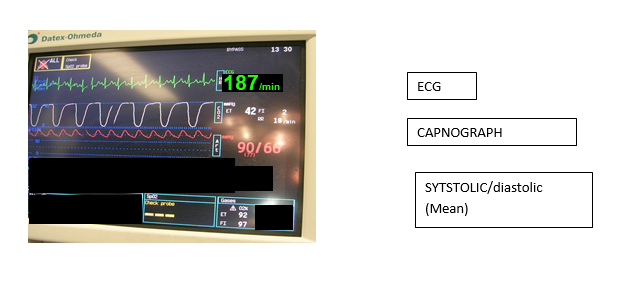
The heart rate is too high
An 8-year old, 25 kg dog is having surgery to remove an abdominal tumour.
Premed = Methadone
Induction = Propofol + Diazepam
Maintenance = Isoflurane
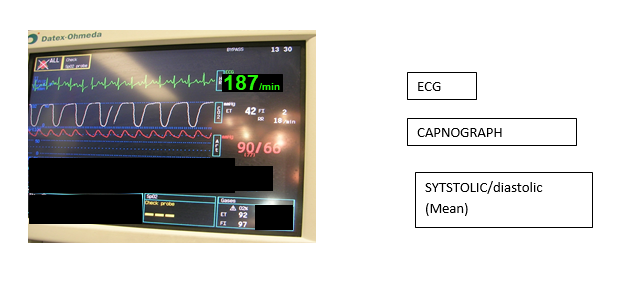
1 hour into surgery this is what you see - the heart rate is too high
- What might have caused the tachycardia?
* Pain
* Light anaesthesia
* Hypovolaemia
* Hypotension
* Hypoxaemia
* Hypercapnia
* Hyperthermia
- Pain
- Light anaesthesia
- Hypovolaemia
- Hypotension
- Hypoxaemia
- Hypercapnia
- Hyperthermia
All of the above potentially can
In this dog, BP is okay
End CO2 is okay,
Most likely is one of the first 2 – pain or too light
An 8-year old, 25 kg dog is having surgery to remove an abdominal tumour.
Premed = Methadone
Induction = Propofol + Diazepam
Maintenance = Isoflurane
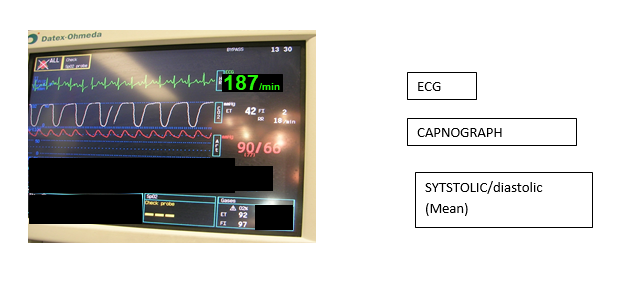
1 hour into surgery this is what you see - the heart rate is too high. Lots of things could have caused this, most likely pain or light anaesthesia.
- What do you do to work out what is going on?
- ANALGESIA
- Check dog isn’t awake, check reflexes
- Palpate pulses
- Take a blood pressure
- Look at mucous membrane colou
- Evaluate blood loss
- Evaluate anaesthetic depth
- Jaw tone, eye position, reflexes etc.
- Check pulse oximeter, capnograph, blood gas (evaluate O2 and CO2)
An 8-year old, 25 kg dog is having surgery to remove an abdominal tumour.
Premed = Methadone
Induction = Propofol + Diazepam
Maintenance = Isoflurane
1 hour into surgery this is what you see - the heart rate is too high. Lots of things could have caused this, most likely pain or light anaesthesia. You have given analgesia, checked the anaesthetic depth etc. You note the following
- What do you do next?
* Calculate blood loss
* Administer a bolus of crystalloid fluid
* Administer a bolus of colloid
* Give a blood transfusion referral practice, autologous transfusion if not due to tumour
* Decrease anaesthetic depth
* Switch anaesthesia to a less cardio-depressant drug
* Start a dopamine infusion to increase blood pressure – probably try something else first
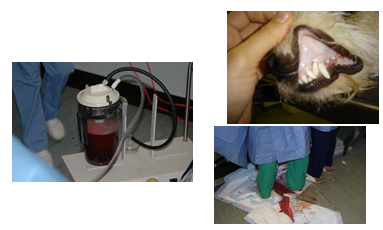
- Calculate blood loss Would be good to calculate blood loss by weighing swabs and tank. At around 15% of blood loss you would start to see clinical signs, therefore if clinical signs can jump to 15% at least.
- Get someone else to do it ideally whilst you try and sort the dog out! But still good to do!
- Administer a bolus of crystalloid fluid – might haemodilute blood so care
- Administer a bolus of colloid
- Give a blood transfusion referral practice, autologous transfusion if not due to tumour
- Decrease anaesthetic depth
- Switch anaesthesia to a less cardio-depressant drug - would if you had one but all dugs essentially depress. Perhaps give more analgesia so that can turn iso down.
- Start a dopamine infusion to increase blood pressure – probably try something else first
An 8-year old, 25 kg dog is having surgery to remove an abdominal tumour.
Premed = Methadone
Induction = Propofol + Diazepam
Maintenance = Isoflurane
1 hour into surgery this is what you see - the heart rate is too high. Lots of things could have caused this, most likely pain or light anaesthesia. You have given analgesia, checked the anaesthetic depth etc. You note a large amount of blood loss and you deal with it.
You manage to stabilise the patient and surgery continues. It is now 4 hours since the dog received his methadone. You note the following changes
- What is happening?
- The patient is bleeding
- The depth of anaesthesia is too light - plane is not where it needs to be!!
- The patient is having a reaction to the anaesthetic
- The CO2 is causing a tachycardia this time
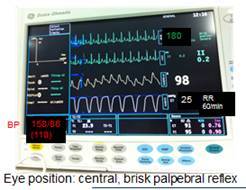
The depth of anaesthesia is too light - plane is not where it needs to be!!
An 8-year old, 25 kg dog is having surgery to remove an abdominal tumour.
Premed = Methadone
Induction = Propofol + Diazepam
Maintenance = Isoflurane
1 hour into surgery this is what you see - the heart rate is too high. Lots of things could have caused this, most likely pain or light anaesthesia. You have given analgesia, checked the anaesthetic depth etc. You note a large amount of blood loss and you deal with it.
You manage to stabilise the patient and surgery continues. It is now 4 hours since the dog received his methadone. You note the following changes
- What would you do immediately?
- Increase vaporiser setting
- Nothing- the patient is still anaesthetised
- Ventilate the patient – will not increase the amount of iso the patient is getting
- Give more blood
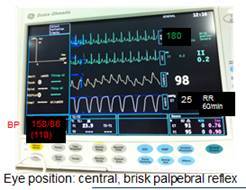
Increase vaporiser setting
An 8-year old, 25 kg dog is having surgery to remove an abdominal tumour.
Premed = Methadone
Induction = Propofol + Diazepam
Maintenance = Isoflurane
1 hour into surgery this is what you see - the heart rate is too high. Lots of things could have caused this, most likely pain or light anaesthesia. You have given analgesia, checked the anaesthetic depth etc. You note a large amount of blood loss and you deal with it.
You manage to stabilise the patient and surgery continues. It is now 4 hours since the dog received his methadone. Vaporiser settings have been increased as the dog was too light.
- What would you do now?
* Increase vaporiser setting some more
* Nothing- the patient is still anaesthetised
* Administer more analgesia
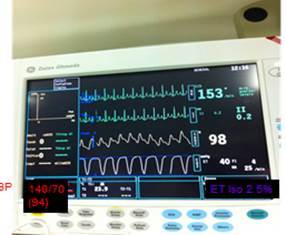
Administer more analgesia – full mu agonist as going through major surgery. Can give methodone IV (lasts 4 hours, this is 4 hours later). Pethidine can be given but IM and not licensed
An 8-year old, 25 kg dog is having surgery to remove an abdominal tumour.
Premed = Methadone
Induction = Propofol + Diazepam
Maintenance = Isoflurane
1 hour into surgery this is what you see - the heart rate is too high. Lots of things could have caused this, most likely pain or light anaesthesia. You have given analgesia, checked the anaesthetic depth etc. You note a large amount of blood loss and you deal with it.
You manage to stabilise the patient and surgery continues. It is now 4 hours since the dog received his methadone. Vaporiser settings have been increased as the dog was too light. The dogs heart rate was stil high, so he was given some more analgesia.
You administer a second dose of methadone (0.2 mg/kg i/v) and after a few minutes you note the following:
- HR = 100/ minute
- Mean arterial blood pressure = 80 mmHg
- Eye: rotated ventrally, weak palpebral reflex
- RR = 2/minute
- End-tidal CO2 = 60mmHg
- What has happened?
* The patient is having an unexpected adverse reaction to the methadone
* The patient is bleeding again
* The patient is too deep
* The methadone has caused respiratory depression
- The methadone has caused respiratory depression -
common after bolus with methadone, fentanyl, pethidine etc. might stop breathing, will start again.
Would make sure to turn down the iso – treat the pain and bring down the iso
Especially if given as a bolus IV, respiratory depression - HR and BP is okay. Hypoventilation. Common to see
An 8-year old, 25 kg dog is having surgery to remove an abdominal tumour.
Premed = Methadone
Induction = Propofol + Diazepam
Maintenance = Isoflurane
1 hour into surgery this is what you see - the heart rate is too high. Lots of things could have caused this, most likely pain or light anaesthesia. You have given analgesia, checked the anaesthetic depth etc. You note a large amount of blood loss and you deal with it.
You manage to stabilise the patient and surgery continues. It is now 4 hours since the dog received his methadone. Vaporiser settings have been increased as the dog was too light. The dogs heart rate was stil high, so he was given some more analgesia.
You administer a second dose of methadone (0.2 mg/kg i/v) and this methadone has caused respiratory depression. This is common. You give the patient a few breaths from the breathing system and the ET CO2 decreases to 40mmHg. You nip off, come back and see this:
- What is happening?
- What should you do?
- Squeeze the bag to ventilate the patient
- Administer atropine- that heart rate is too slow
- Open the pop-off valve to relieve the pressure
- Check depth of anaesthesia
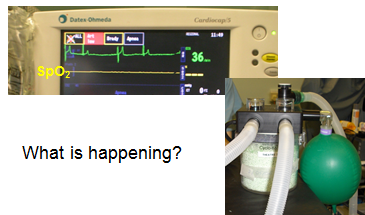
- People close the valve, squeeze the bag and forget to reopen the valve! Always remember to open the valve - don’t even need to close the valve, squeezing bag will still give a good enough breath
- Open the pop-off valve to relieve the pressure – if you’re going to ventilate a patient do not take your hand off the valve! Must open it again – can even give the bag a big squeeze without closing the valve.
What does increased alveolar pressure cause?
- Increased alveolar pressure causes:
- Compression (collapse) of pulmonary capillaries (reduced preload)
- Compression of heart chambers (decreased filling)
- Compression of aorta (increased afterload)
- => Dramatic reduction in cardiac output
- **Circulatory arrest**
- Alveolar damage / rupture
You anaesthetise a 3 year-old DSH cat for a dental.
Premed = Medetomidine + Buprenorphine
Induction agent = Propofol
Maintenance = Isoflurane in 100% oxygen
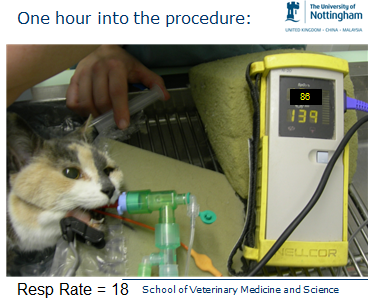
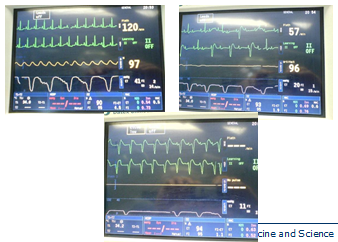
One hour into the procedure you see this
- What is happening?
- The heart rate is 86
- The blood pressure is 86mm Hg
- The oxygen saturation is 86%
- The CO2 is 86mm Hg
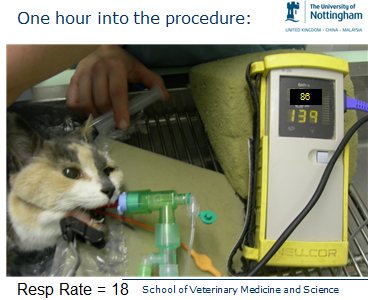
The heart rate is 86 which is too low – medetomidine (alpha 2) causes HR to decrease
The blood pressure is 86mm Hg which is ok
The oxygen saturation is 86% which is too low
The CO2 is 86mm Hg which is too high
You anaesthetise a 3 year-old DSH cat for a dental.
Premed = Medetomidine + Buprenorphine
Induction agent = Propofol
Maintenance = Isoflurane in 100% oxygen
One hour into the procedure you see this: the oxygen saturation is 86% , which is too low
- Why might this occur?
- The respiratory rate is too low
- It is due to medetomidine causing vasoconstriction
- There is an obstruction of the ET tube
- The cat is anaemic
- You have intubated one bronchus only (tube too long)
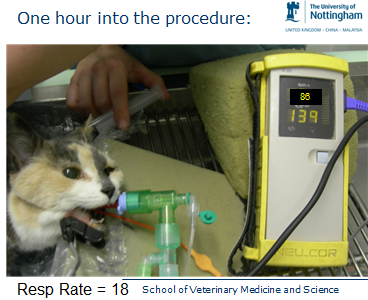
- The respiratory rate is too low - potentially, but it cannot be medetomidine as the effects of this should have worn off by now - resp rate isn’t too low to be honest
- It is due to medetomidine causing vasoconstriction – yes possibly
- There is an obstruction of the ET tube – possibly, capnograph will show typical shape
- The cat is anaemic – unlikely and this won’t alter the pulse oximeter reading!
- You have intubated one bronchus only (tube too long) – can happen, pre-measure from nose to thoracic inlet. But number 3 is mostly likely
You anaesthetise a 3 year-old DSH cat for a dental.
Premed = Medetomidine + Buprenorphine
Induction agent = Propofol
Maintenance = Isoflurane in 100% oxygen
One hour into the procedure you see this: the oxygen saturation is 86% , which is too low.
Despite exaggerated chest movements, the reservoir bag is barely moving. You are worried about airway obstruction
- What could be the cause of this?
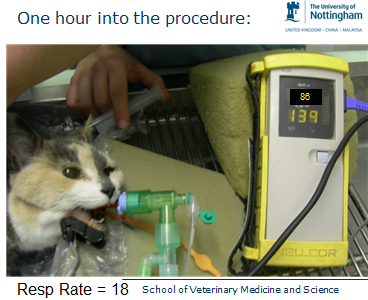
- Kinking the endotracheal tube
- Material within the endotracheal tube
- Over-inflation of the tube cuff – happens a lot, don’t be over generous
- Be sure to disconnect the patient before you flip them!
You anaesthetise a 3 year-old DSH cat for a dental.
Premed = Medetomidine + Buprenorphine
Induction agent = Propofol
Maintenance = Isoflurane in 100% oxygen
One hour into the procedure you see this: the oxygen saturation is 86% , which is too low.
Despite exaggerated chest movements, the reservoir bag is barely moving. You are worried about airway obstruction
- What would you do?
- Squeeze the bag to ventilate the cat –
- Remove the ET tube
- Administer doxapram to stimulate respiration
- Xray the chest
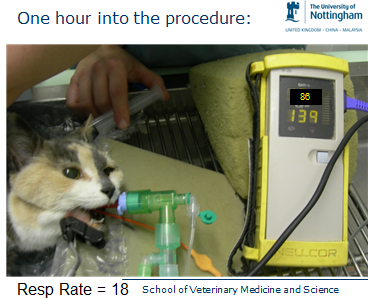
Remove the ET tube
Get rid of the problem, can always reintubate!
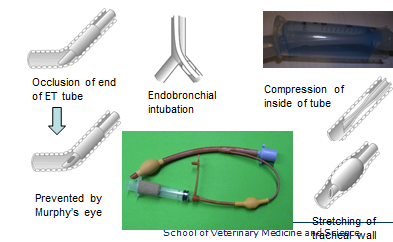
What are some problems you can get with ET tubes?
Endobronchial intubation – other lung collapses, progressive problems
Red tubes are bad – cause many problems with necrosis etc.
Care with over inflation, can occlude tubes and cause a significant narrowing!! Significant in small ET tubes, espeically cats - gets worse as they warm up and tube becomes more pliable, so bend gets more and can be a real problem
You anaesthetise a 3 year-old DSH cat for a dental.
Premed = Medetomidine + Buprenorphine
Induction agent = Propofol
Maintenance = Isoflurane in 100% oxygen
One hour into the procedure you see this: the oxygen saturation is 86% , which is too low.
Despite exaggerated chest movements, the reservoir bag is barely moving. You are worried about airway obstruction.
You remove and replace the tube and the oxygen saturation improves. At the end of the procedure you switch off the anaesthetic agent. One hour later the cat shows no sign of anaesthetic recovery.
Eventually the cat recovers. Later that day the nurse calls you to wards as the cat is having difficulty breathing
On examination, the cat is dyspnoeic with subcutaneous emphysema
- What is the most likely explanation?
* The cat is in heart failure due to excessive i/v fluids
* Anaphylactic reaction to anaesthesia with bronchospasm
* The cat has a ruptured trachea –
* The cat has developed a respiratory infection
- The cat is in heart failure due to excessive i/v fluids
- Anaphylactic reaction to anaesthesia with bronchospasm -would have been a possibility 2 hours ago, drugs should be metabolised by now
- Would have seen this by now!!
- The cat has a ruptured trachea – as removed and replaced tube, most likely. Can check with small endoscope. Will get worse over time. Each time it breaths in it is dragging air subcutaneously.
- Phone VDS! Referral surgery at this stage!! Something that can just happen. Give oxygen and call
- The cat has developed a respiratory infection – too soon
What are some causes of prolognued anaesthetic recovery?
- Hypothermia
- Hypoglycaemia – these cases have been starved for 24 hours or so
- Anaesthetic overdose
- Hepatic or renal failure
- Very thin/ very fat animal
- Hypovolaemia
- Hypotension
- Cardiovascular collapse
- DIFFERENTIATE WITH A CLINICAL EXAM
You anaesthetise a 20kg, 4-year old Springer Spaniel for repair of a radius-ulna fracture.
Premed = Morphine + Medetomidine
Induction = Propofol
Maintenance = Isoflurane in oxygen
You administer a brachial plexus block for analgesia
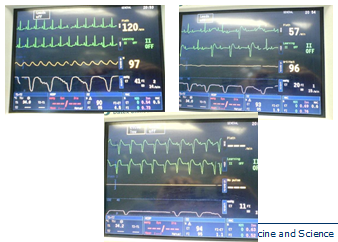
You observe the following over the next 2 minutes
- What has happened?
- The dog had an abnormal reaction to the premed
- You have disconnected your monitoring leads
- The dog has had a cardiopulmonary arrest
- The dog has had a cardiopulmonary arrest
- Just after block - might need to call VDS again!
You anaesthetise a 20kg, 4-year old Springer Spaniel for repair of a radius-ulna fracture.
Premed = Morphine + Medetomidine
Induction = Propofol
Maintenance = Isoflurane in oxygen
You administer a brachial plexus block for analgesia. Ropivacaine 1.5mg/kg and lidocaine 1.5mh/kg - total volume 8ml diluted with saline.
You observe the following over the next 2 minutes and the dog has gone into cardiopulmonary arrest.
- Why has this happened?
* Isoflurane overdose
* Pre-existing cardiac disease which was missed pre-op
* Delayed histamine release from morphine premed
* Intra-vascular injection of local anaesthetic
* Always pull back when doing blocks!!!!!
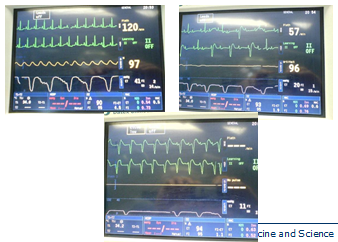
- Intra-vascular injection of local anaesthetic – Ropivaciane is very cardiotoxic
- Always pull back when doing blocks!!!!!
You anaesthetise a 20kg, 4-year old Springer Spaniel for repair of a radius-ulna fracture.
Premed = Morphine + Medetomidine
Induction = Propofol
Maintenance = Isoflurane in oxygen
You administer a brachial plexus block for analgesia. Ropivacaine 1.5mg/kg and lidocaine 1.5mh/kg - total volume 8ml diluted with saline.
You observe the following over the next 2 minutes and the dog has gone into cardiopulmonary arrest. This is due to IV injection of LA - ropivacaine is very cardiotoxic.
- What do you do to treat this?!
- Don’t panic!
- Start CPR - keep the brain alive while the dog gets through it. Once the drug is out of the system, the dog will come back. If seeing signs of arrest, no excuse not to start CPR!
- Specific treatment for local anaesthetic overdose?
- Lipid infusion: Intralipid 20% absorbs the LA – very expensive, won’t stock it. Propofol and diazepam are very oily suspension so boluses of these drugs during CRP may work. Can also try IV nutrition containing lipid. Propofol is a lipid,
- Bolus 1 ml/kg over 1 min Q 3-5mins
- Total dose 3-4 ml/kg
- CRI: 0.25 ml/kg/min “until haemodynamic recovery”

-
CRS 1 Revision13
-
Infectious Respiratory Disease in Small Animals74
-
Bonzo has a cough..17
-
Freddie has Nasal Discharge26
-
A difficult pet show9
-
ECG revision26
-
Tracheostomy10
-
Coughing in SAs39
-
Foxy Eosinophilic bronchpneumopathy16
-
Help my dog can't breath32
-
Radiology quiz16
-
Thoracic Imaging 263
-
Thoracic imaging 338
-
Respiratory Tract Neoplasia in SA50
-
SA Airway Disease45
-
Approach to LRT Disease in SA48
-
Diseases and Conditions of the Avian Respiratory System47
-
Thoracic Radiography Quiz8
-
Lung Disease Gross Pathology25
-
SA surgery and nasal disease Wrap Up30
-
Respiratory Tract Disease in Small Animals28
-
Pleural Disease54
-
Respiratory Endoscopy35
-
Lower Airway Disease in Cats42
-
Feline Asthma (SDL)15
-
Chest Drains20
-
Sam The Dog Can't Breath6
-
Lung histopathology18
-
Small Animal respiratory parasites39
-
Blood Pressure SDL8
-
Dysrhythmias SDL41
-
SA Endocardial Disease58
-
The Ascitic Dog Cases11
-
Dysrhythmias Management25
-
Feline Cardiomyopathies52
-
Hypertension57
-
Canine Myocardial Disease53
-
Collapse, Weakness, Exercise Intolerance31
-
Cardiac Radiography50
-
Congenital Cardiac Disease48
-
Cyanosis35
-
Radiography of CRS8
-
Management of Heart Failure78
-
Heart Failure Problems10
-
Management Of Heart Failure 223
-
Echocardiograpy Images10
-
Pericardial disease in SA37
-
How to echo33
-
Pericardiocentesis5
-
Thoracic Surgery14
-
Cardiac Cases6
-
Felix11
-
AB selection for respiratory disease37
-
ECG generation14
-
ECG interpretation27
-
CPCR32
-
Triage58
-
Emergency and Critical Cases12
-
Important factors to consider in the emergency and critical care patient27
-
Traumatic Brain Injury38
-
Important factors to consider in the emergency and critical care patient COPY27
-
Nutrition for critically ill patients54
-
Anaesthesia For The Critical Patient: Is It Different?31
-
Critical patients monitoring37
-
CRS ECC Cases20
-
Formative questions46
-
Adrenal glands6
-
Pancreas4
-
Pituitary gland11
-
Thyroid and parathyroid7
-
Hyperglycaemia7
-
Canine hypoadrenocorticism30
-
Canine hyperadrenocorticism37
-
Hepatic lipidosis/ketosis/farm16
-
Feline DM34
-
Canine diabetes mellitus45
-
Diabetic Ketoacidosis27
-
Hypoglycaemia23
-
Feline hyperthyroidism37
-
Canine hypothyroidism34
-
Calcium disorders in SA25
-
Dermatology64
-
Endocrine cases29
-
PU/PD21
-
Uncommon endocrine disorders15
-
Bacterial skin disease43
-
Fungal skin disease22
-
Viral and protozoal skin disease23
-
Parasitic skin disease49
-
Autoimmune and immune mediated diseases of the skin32
-
Practical information14
-
Pattern analysis21
-
Allergic skin disease: pathophysiology and presentation18
-
Management of allergic skin disease29
-
Clinical signs of and approach to pruritus22
-
Appraoch to cutaneous masses35
-
Feline eosinophillic granuloma complexes11
-
Cytology of cutaneous masses28
-
FNA cytology practice7
-
Non-neoplastic masses21
-
Approach to alopecia27
-
Approach to pustular, papular, scaling and crusting skin disease36
-
Otitis48
-
Otitis available treatments and choice15
-
Otic surgery33
-
Dermatological therapeutic case discussion7
-
Feline specific aspects of dermatology18
-
Dermatology cases18
-
SA Anatomy Refresher17
-
Year 2 Formative (Revision)46
-
Introduction5
-
Clinical Approach To GI Disease in SA34
-
Sickly Dog35
-
Vomiting In Dogs and Cats54
-
Gastric Disease in Dogs and Cats57
-
Diagnostic Imaging of GI15
-
Practical: Dog anatomy32
-
SA GI radiography and Ultrasonography71
-
Management of SA oesophageal and gastric SA disease39
-
Pancreatitis43
-
Intro To Intestinal Disease72
-
SI Disorders in Dogs and Cats61
-
Chronic Diarrhoea in SA50
-
Management Plans for Vomiting SA16
-
Devising a Plan12
-
SA Large Intestinal Disease49
-
Why Is This Patient Vomiting Cases27
-
Approach to abdominal radiography21
-
Abdo surgery: intro and biopsy techniques38
-
Abdominal Palpation9
-
Sedation and GI plans for GI patient15
-
Abdominal radiology cases10
-
Weight loss and ascites58
-
Feline Liver Disease72
-
Liver Disease Introduction71
-
Chronic Liver disease in dogs51
-
SA Acute Liver Disease49
-
What Is Wrong With These Patients?19
-
GDV and Gastropexies54
-
Small Animal Acute Abdomen60
-
Abdominal surgery13
-
Feline infectious peritonitis40
-
Gastrotomy, Enterotomy and Enterectomy38
-
Liver, biliary tract and portosystemic shunts48
-
Surgical Diseases of The Oesophagus25
-
Anal and Rectal Conditions66
-
Hernias & Ruptures47
-
Oral tumours, oral surgery & stick injuries50
-
Rabbit Dental Disease15
-
Common Intoxications58
-
Peridontal Disease10
-
Toxiocology cases32
-
Extraction Technique28
-
Oral surgery: surgical extraction technique34
-
GI Disease in Herbivorous Rodents53
-
Formative27
-
Developmental and Genetic Dental Abnormalities9
-
Supporting the Poison Case34
-
Clinical Case10
-
Feline Oral Disease23
-
Pancreatic disease16
-
Bella and her liver16
-
Oral cavity exam33
-
Oral cavity trauma and infection32
-
Introduction COPY4
-
Erythroid110
-
Leukogram62
-
Leukaemia and Lymphadenopathy28
-
Anaemia54
-
Pathology of Lymphoid System58
-
Haemostatic Disease67
-
Diagnosis and Management of Lymphoid Diseases96
-
Immune Mediated Disease64
-
Viruses and Lymphoid System44
-
Blood Transfusions41
-
Formative assessment87
-
Revision practical16
-
Bone pathology51
-
Bone: Diagnostic Imaging70
-
SA MSK Radiography and Radiology20
-
Spine Head and Neck Imaging37
-
Autoimmunity37
-
Principles of Fracture Management 1125
-
Principles of fracture management 2100
-
Case: Bony swelling in dog16
-
NSAIDs58
-
Examination of the Lame Dog and Cat49
-
SA Joint Dx and OA51
-
Sprains and luxations46
-
Joint Treatment6
-
Decision making in Diagnostic Tests CR11
-
Antibiotics51
-
Bones and Joint Histology (and a few pics)28
-
Synoviocentesis7
-
Joint - Inflammatory Conditions60
-
SA bandaging30
-
Triage COPY19
-
Soft Tissue Trauma65
-
Radiology wrap up25
-
Orthopaedic infections46
-
CSGTR Flat Cat10
-
SA developmental disease66
-
SA Developmental Disease Part 260
-
Small Animal Distal Limb78
-
Surgical Planning2
-
Restricting Exercise8
-
SA Muscle Disease27
-
Muscle Pathology10
-
Post Op Managment60
-
SA Hindlimb51
-
SA Forelimb63
-
SA Trauma55
-
Salvage Procedures48
-
Neurodegenerative Disease33
-
Vascular Disease35
-
Neurology Infectious Diseases84
-
Ophthalmic Exam85
-
Conjunctiva and KCS60
-
Corneal Ulcers58
-
Pain Assessment17
-
Non-Notifiable Viral Disease44
-
Notifiable Neuro Viruses26
-
Neuropharmacology47
-
Eye and Disease30
-
Feline Ophthalmology32
-
Behaviour21
-
Ocular Emergencies40
-
Ocular Pharmacology81
-
Toxicities72
-
Inflammatory Disease59
-
Pain Treatment16
-
Neuropathology36
-
Neurosurgery37
-
Exotics Neurology17
-
Pharmacological Control Of Pregnancy and Parturition25
-
Formative COPY43
-
Principles of Pregnancy Failure14
-
Intro to repro pathology137
-
Principles of Cycle Manipulation32
-
Bitch and queen when to spay and why?25
-
Principles of managing dystocia45
-
Monkey (not even a monkey) at the clinic16
-
Approach to Examining the Female Tract42
-
Male Castration63
-
Principles of Contraception42
-
Principles of Neonate Care and Disorders of the Neonate37
-
Principles of therapeutics and anaesthesia in of the neonate and pregnant animal40
-
Reproductive Anaesthesia44
-
Reproductive anaesthesiaCase based seminar13
-
Approach to Examining the Male Reproductive Tract47
-
Reproductive Exam19
-
Facillitator Cases17
-
Spay practical notes28
-
The optimal mating time in the bitch22
-
Urinary Incontinence30
-
Clinical Research - Cystic Endometria Hyperplasia15
-
Diagnostic Methods in the Bitch and Queen82
-
When Will Sasha Have Her Pups?31
-
Abnormalities of pregnancy, parturition and puppies65
-
Abnormalities and Infertility in Female Small Animals45
-
Dystocia Cases31
-
Manipulation of Reproduction and Contraception45
-
Pregnancy Case studies - bitch13
-
First Opinion Reproduction Cases4
-
Unwanted Mating in the Bitch10
-
Pre-pubertal neutering14
-
Bitch Spay Complications21
-
Ovariectomy/Ovariohysterectomy34
-
Surgery of the Female Reproductive Tract34
-
Abnormalities of the Mammary Gland19
-
Peri-operative management and anaesthesia for pyometra in a dog28
-
Common Diseases and Surgery in the Male Dog and Cat37
-
Reproductive Tract Diagnostic Methods and Prostatic Disease in Males76
-
Imaging SA Repro43
-
Exotic reproduction44
-
Repro formative case 16
-
Repro formative case 24
-
Repro formative MCQ23
-
Evaluation of urinary tract disease54
-
Renal Physiology21
-
CKD & AKI26
-
Fluid Therapy9
-
Infectious Diseases7
-
Drug Choices and Therapeutics21
-
Blood Results28
-
Chronic kidney disease79
-
Acute Kidney Injury65
-
Urinary pathology98
-
Urinary Imaging112
-
Fluid therapy in urinary tract disease56
-
Diagnostic approach to polyuria and polydipsia (PUPD)48
-
Neoplasia of Urinary Tract62
-
Congenital And Neonatal Abnormalities82
-
Urinary tract infections39
-
Urinary Tract Disease in Reptiles and Birds85
-
Q and A with steve and jane3
-
Small Animal Urinary Tract Imaging Cases13
-
Interpreting Urinalysis Results48
-
Haematocrit stuff5
-
Crystal quiz9
-
Pu/Pd toolkit20
-
Lower Urinary Tract Disease60
-
Feline Lower Urinary Tract Disease, Calculi and Blocked Cats48
-
Urinary Tract Surgery11
-
Is It Incontinent?8
-
FLUTD7
-
Calculi in Dogs (and Other Pets)18
-
Hypertension/renal failure CR14
-
Practical urinary pathology14
-
FLUTD CR10
-
Contrast Radiographs16
-
Fluid Therapy In Practice36
-
Urinary Incontinence COPY32
-
Principles of urinary surgery53
-
CR Billy the dalmation18
-
Formative MCQ20
-
Formative clinical reasoning6



